Chicago Repertory Ballet’s The Capulets Puts a New Spin on a Shakespeare Classic

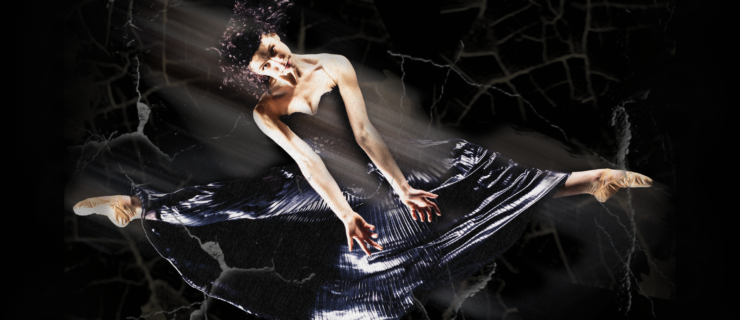
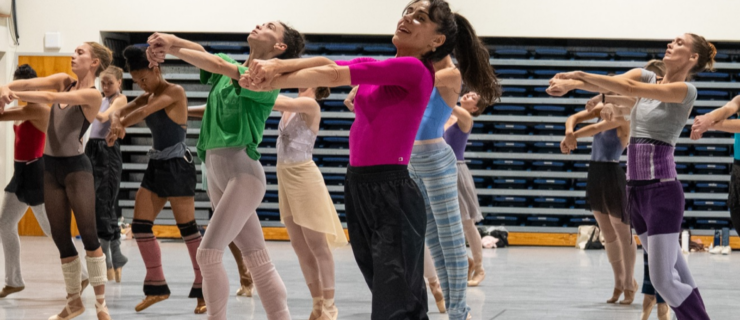
We don’t often see a new production of Romeo and Juliet that isn’t centered on its star-crossed lovers. But this November, Chicago Repertory Ballet presents a fresh take on the Shakespeare classic through the lens of an unlikely protagonist: Lady Capulet. Choreographed by artistic director Wade Schaaf, The Capulets will run from November 7–9 and November 14–16 at The Ruth Page Center for the Arts.
Schaaf, a devoted Shakespeare fan, explains that the company’s production redirects focus to Juliet’s mother and her relationships with Tybalt, Lord Capulet, and Paris (Juliet’s suitor). The plot shift is rooted in a monologue she delivers in Shakespeare’s play after Romeo kills Tybalt, who is technically Lady Capulet’s nephew. “She has this very big reaction where she’s overcome with emotion,” Schaaf says. “She says, ‘Oh, Tybalt, my cousin, my husband, my countrymen,’ and scholars have questioned why she does this, because there’s no explanation in the text.” The Capulets is Schaaf’s answer to this question.

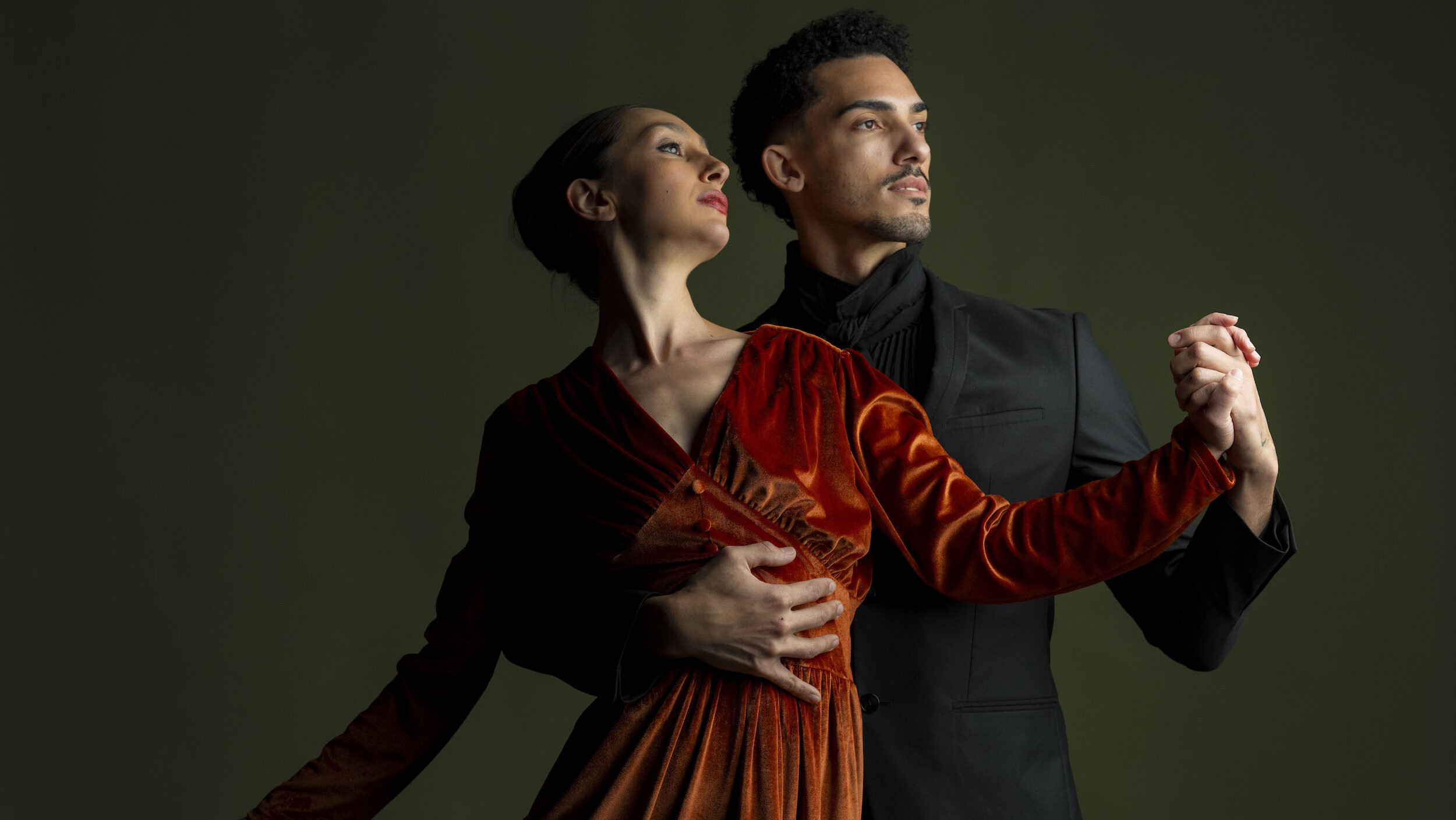
The story revolves around two unlikely love affairs unfolding in the Capulet household: one between Lord Capulet and Paris, and another between Lady Capulet and Tybalt in response. Schaaf describes Paris as a complex and opportunistic aristocrat who drives the plot forward by manipulating the family, who are newly wealthy. “He’s just bored, trying to create a little drama, because that’s who he is.”
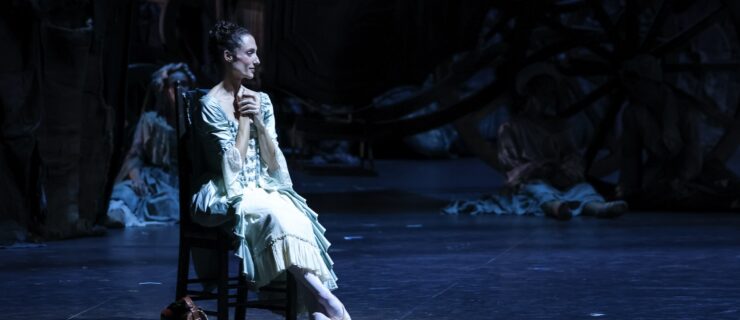
Miriam-Rose LeDuc, who has been dancing with Chicago Repertory Ballet for nine seasons, is performing the role of Lady Capulet. She says that since Juliet’s mother is more of a side character in Shakespeare’s play, they’ve had to work to fill in the gaps. “I think her original motive is really driven by seeing Juliet being happily married [to Paris] and getting that security for her own family, until she sees that her husband is putting that at risk with his affair,” says LeDuc. “In that moment, she makes a different choice to say, ‘Okay, well, maybe I can have some fun too. Maybe, it doesn’t all have to be about security and foundation. Maybe, there’s an opportunity for love.’ ”

Schaaf’s choreography nods to classical ballet, but with a more contemporary edge, including an athletic, passionate pas de deux for Lord Capulet and Paris. The ballet also weaves in humorous moments. For instance, Lady Capulet and Tybalt’s romance unfolds in the Capulet’s armory, where dancers inside suits of armor audibly weigh in with “hmmm”s and “oooh”s. They then join the couple in a habanera, spinning drama into comedy.
Schaaf enlisted a team of collaborators, including a commissioned score by Matty Mattsson, costumes by Nathan Rohrer, and digital projections by John Pobojewski. “We’re not in Elizabethan times and we’re not necessarily far into the future, but, rather, suspended in time,” Schaaf says. “I’m very focused on building a world true to itself for this production, rather than trying to capture a time and place that we already know.”
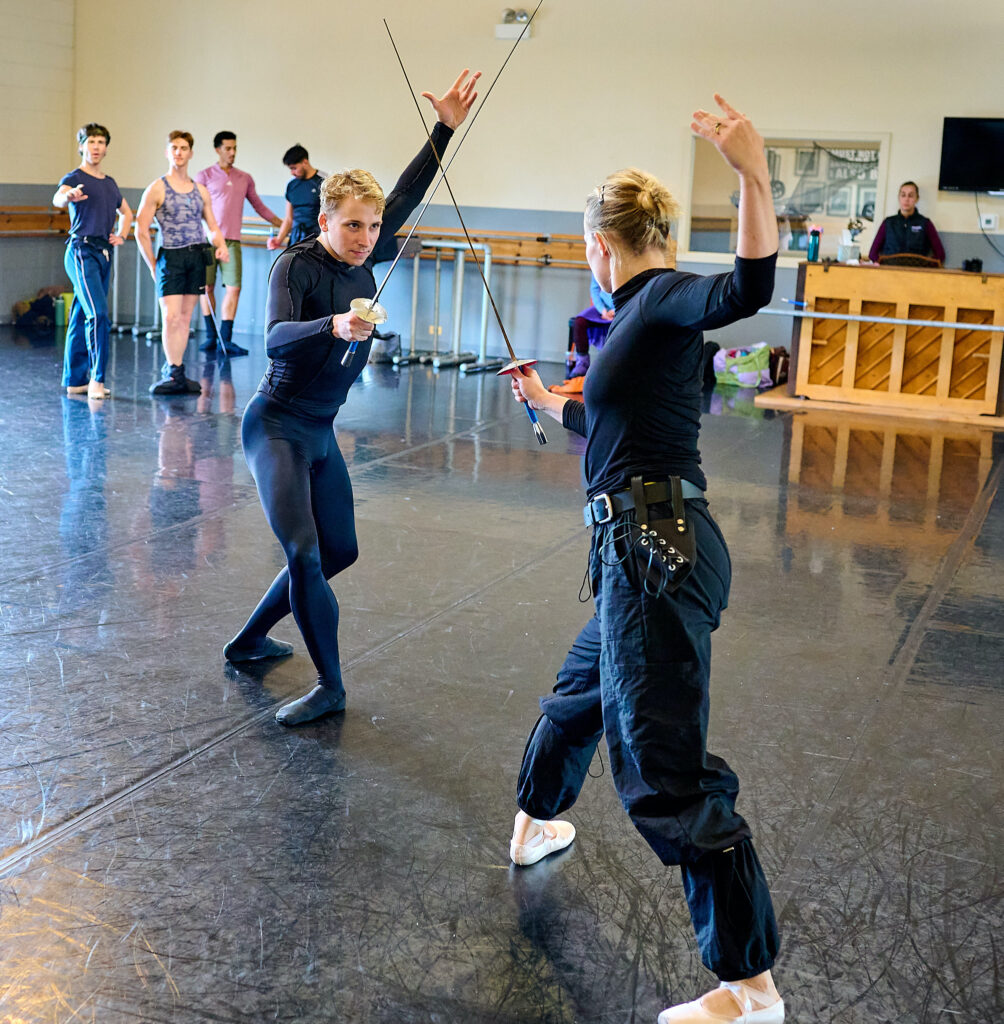
Schaaf, who is nonbinary, also hopes to highlight underrepresented voices in the story. “I focus on making my work something that’s very true to me, and, of course, being a part of the LGBTQ community, I want to see all different types of stories represented onstage.”