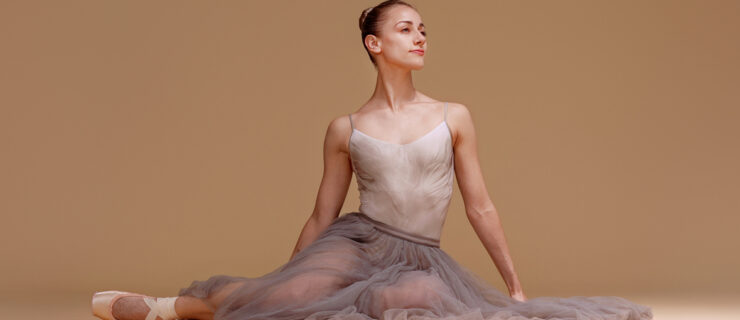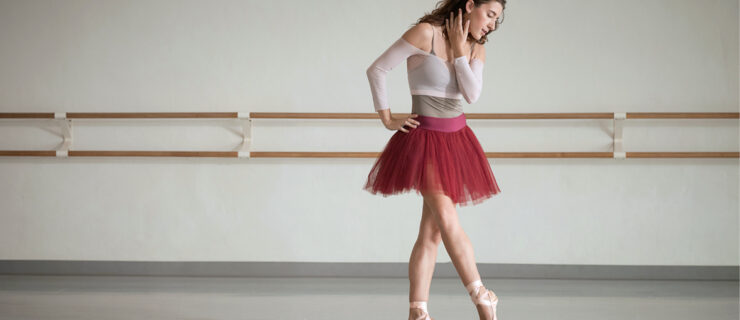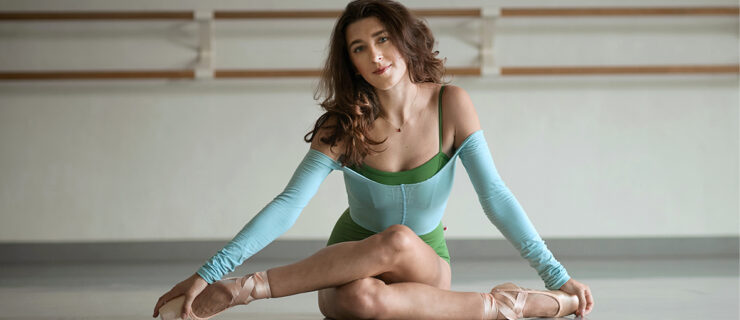
Léa Fleytoux, ABT’s Refined New Soloist, Is Dancing With Newfound Freedom

Dance careers don’t normally happen in a continuous line from obscurity to stardom. More often, they progress in fits and starts, usually marked by particular roles or performances, and by signals given and received in ballet studios away from the eyes of the audience. For Léa Fleytoux, who was promoted to soloist at American Ballet Theatre last year, these signs have lately begun to accumulate.
Fleytoux’s promotion, after five years in the company (including the pandemic), was the greatest sign yet that her talent and hard work are being noticed. It came not long after her performances in Woolf Works, Wayne McGregor’s ballet inspired by the life and writings of Virginia Woolf, at the Metropolitan Opera House last summer. Fleytoux was cast as Young Clarissa, a younger version of the protagonist in Woolf’s novel Mrs. Dalloway. In this tautly choreographed section of the ballet, six dancers convey a distilled story, illustrated by a series of shifting relationships. Every movement, glance, and touch counts.
The five other characters were played by principal dancers. Fleytoux, still in the corps, not only held her own, but created a distinct aura, a combination of delicacy, depth, and ease. “I was really taken by her Young Clarissa,” Susan Jaffe, ABT’s artistic director, recently said of that moment. “It made me think: Maybe she could be good at this role, or that role.”
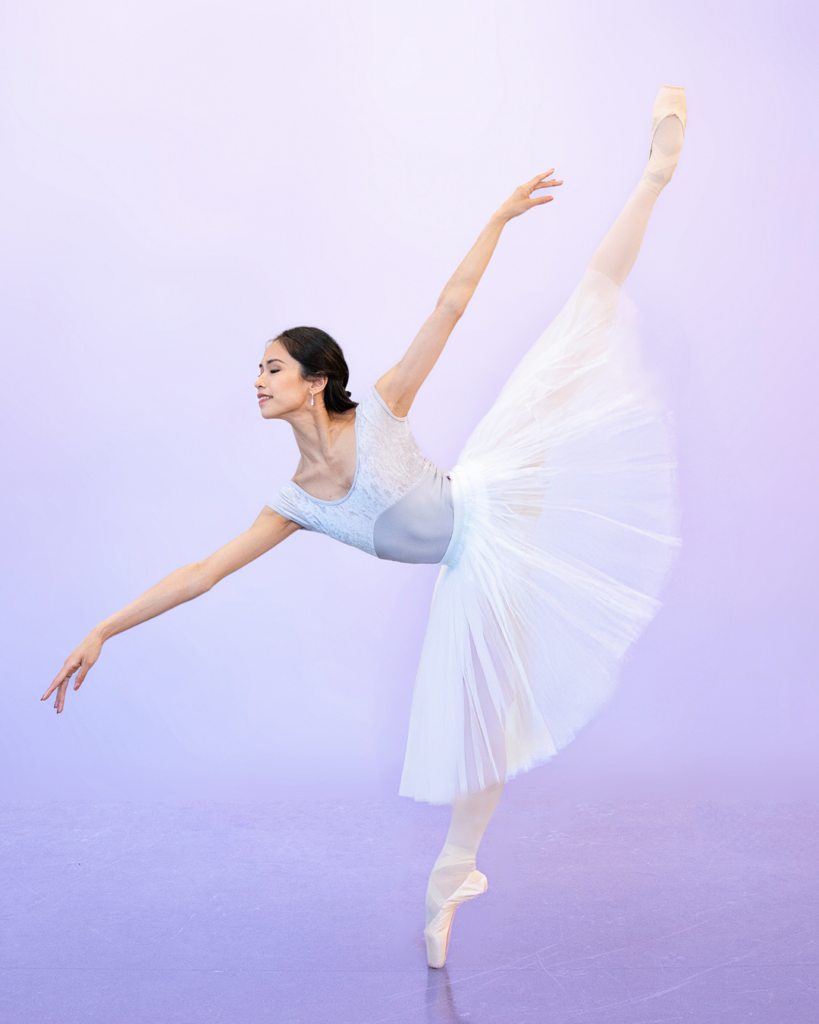
It was an important moment for Fleytoux, 26, who before now has tended to be cast in either sprightly roles, like Amour in Don Quixote—in which she lit up the stage in her 2022 debut—or more technical secondary roles, like the peasant pas de deux in Giselle and the Act I pas de trois in Swan Lake. During the company’s Metropolitan Opera season, she added Zulma, one of the lead Wilis in Giselle, a role that requires more gravitas. “She’s coordinated and clean and has such beautiful, refined technique,” says Jaffe. What Fleytoux has been working on more recently is letting loose, allowing more of herself to emerge in performance. It is a quality that her husband, Jarod Curley, also recently promoted to the rank of soloist at ABT, describes as “owning the space.”
As a petite dancer (Fleytoux is 5′ 2 1/2″ tall) who resists being typecast, this is particularly important. “Shorter women tend to do a lot of technical parts, and those are great, but I want to be able to play characters where I can really tell a story and connect with people onstage,” she says.

Finding More Freedom
Her focus on technique and precision propelled her to where she is, but now she is ready to push beyond the technical. Part of the process has involved slightly letting go of her pure French training, acquired at the Conservatoire National Supérieur de Musique et de Danse de Paris. “I grew up learning how to do things the proper way,” she says, “but I feel like in a way I have to undo that in order to be more free.”
Fleytoux, who is adopted, was born in Vietnam and raised in Paris. She came to ABT’s Jacqueline Kennedy Onassis School in 2016 after earning a scholarship there at the Prix de Lausanne. The following year she joined ABT’s Studio Company, became an apprentice in 2018, and joined the corps in 2019.
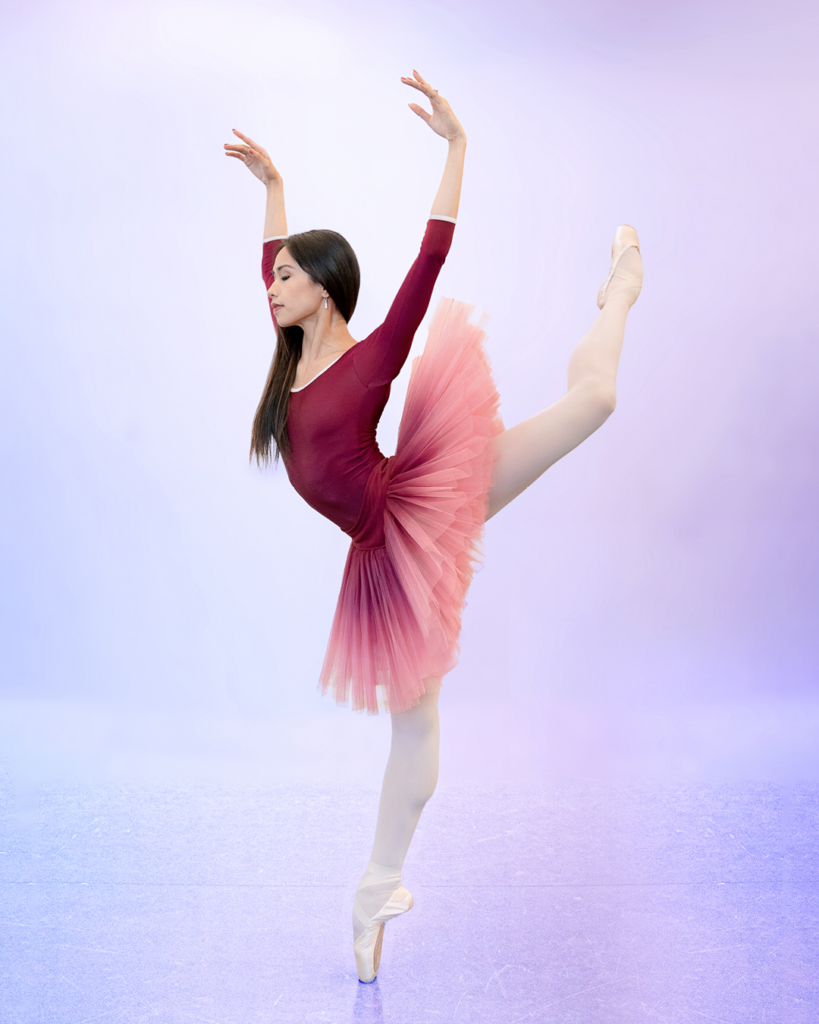
In recent years, she has adopted a more elongated, more Vaganova-inspired port de bras, she says. “I see her using her body more, her neck and her back,” says Susan Jones, régisseur at the company, who has worked with her since she joined ABT.
Fleytoux is a keen student of the form. She and Curley frequently watch ballet videos together, particularly of dancers from earlier generations: Irina Kolpakova, Ulyana Lopatkina, Vladimir Vasiliev, Marcelo Gomes, Sarah Lane. Their dancing, she finds, is more emotionally vivid. “For them it was less about technique and more about what they made the audience feel,” says Fleytoux, who tries to identify aspects of their dancing that she can apply to her own.
She and Curley have a busy freelance schedule during breaks in ABT’s calendar, which they use as a training ground for roles they have yet to perform with the company, like the leads in Don Quixote, Sleeping Beauty, and Swan Lake. (In contrast, at ABT they never dance together and are seldom in the same rehearsals, partly because of the difference in height; Curley is 6′ 3″.) They’ve danced together on Celebrity Cruises and with Port Angeles City Ballet and BalletNova, as well as at various galas.
They are a good team, says Fleytoux, committed to giving each other honest feedback and suggestions. Their contrasting approaches complement each other: She is more analytical, while Curley is more emotionally driven and spontaneous. “We push each other to be the best we can, and we both believe we wouldn’t be where we are without the other,” says Fleytoux. But they admit it can be hard to balance their personal ambitions with the desire to be sensitive to the other partner when he or she is feeling vulnerable or deflated. And the stress follows them home. As Fleytoux puts it, “It can be a bit hard to get out of our heads.”

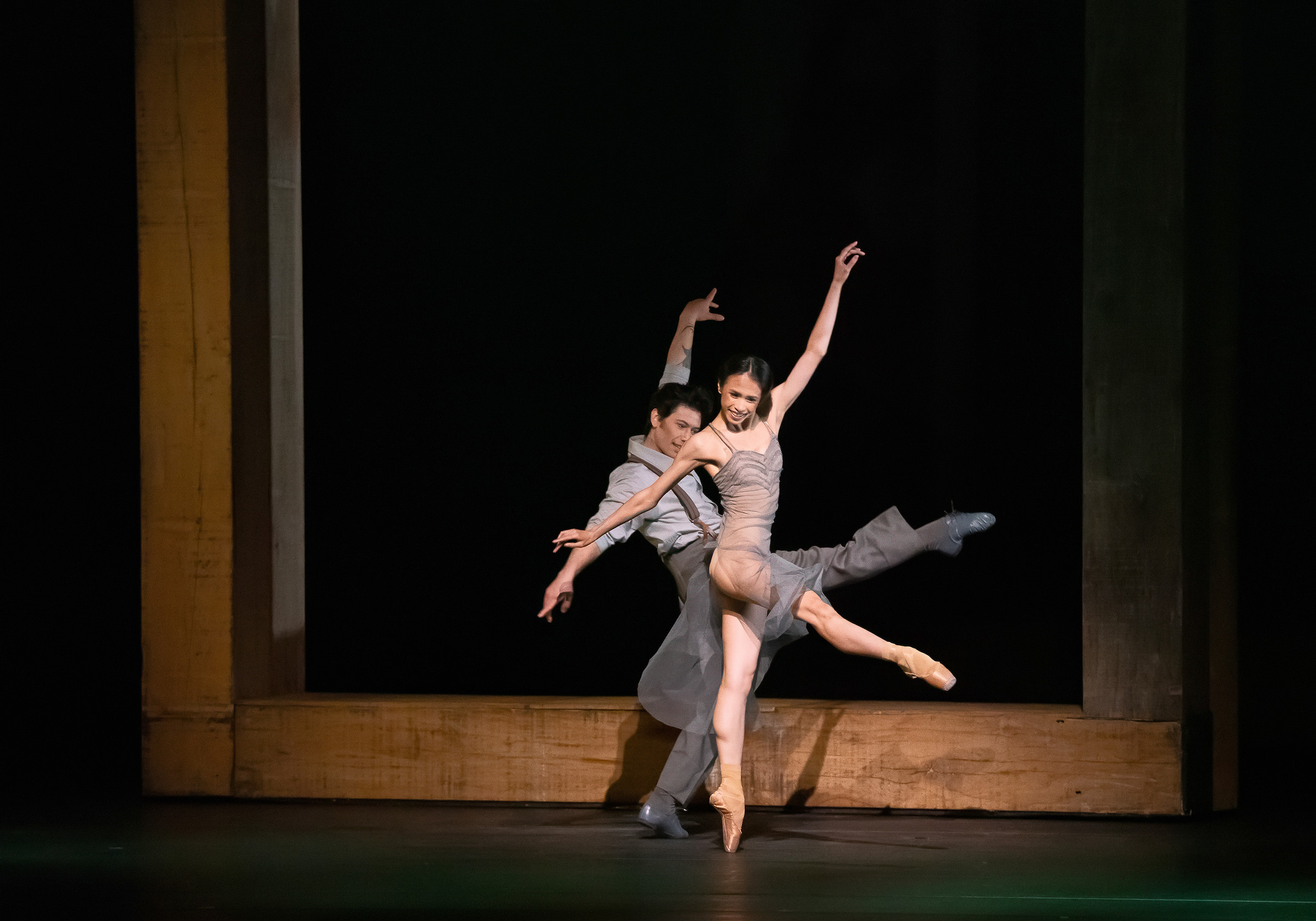
When they can, they seek out coaching from ABT repertory directors, like Carlos López, or from independent coaches, like the husband-and-wife duo Irina Dvorovenko and Maxim Beloserkovsky. Fleytoux has also had a few sessions with ABT’s legendary coach Irina Kolpakova, who works mostly with the principal dancers. She has found these moments to be transformative. “It’s about how she wants me to hold myself, opening the shoulders and projecting with my port de bras. Tiny details, but they make such a difference.” These finer points allow her to create a sense of freedom and amplitude in her dancing.
Laying the Groundwork
The net result of all this work is a feeling of confidence that Fleytoux brings not only to her current roles but to potential future ones. When an opportunity comes, she is ready. “I see a graceful determination to rise to the occasion of every opportunity she is given,” says Jones.
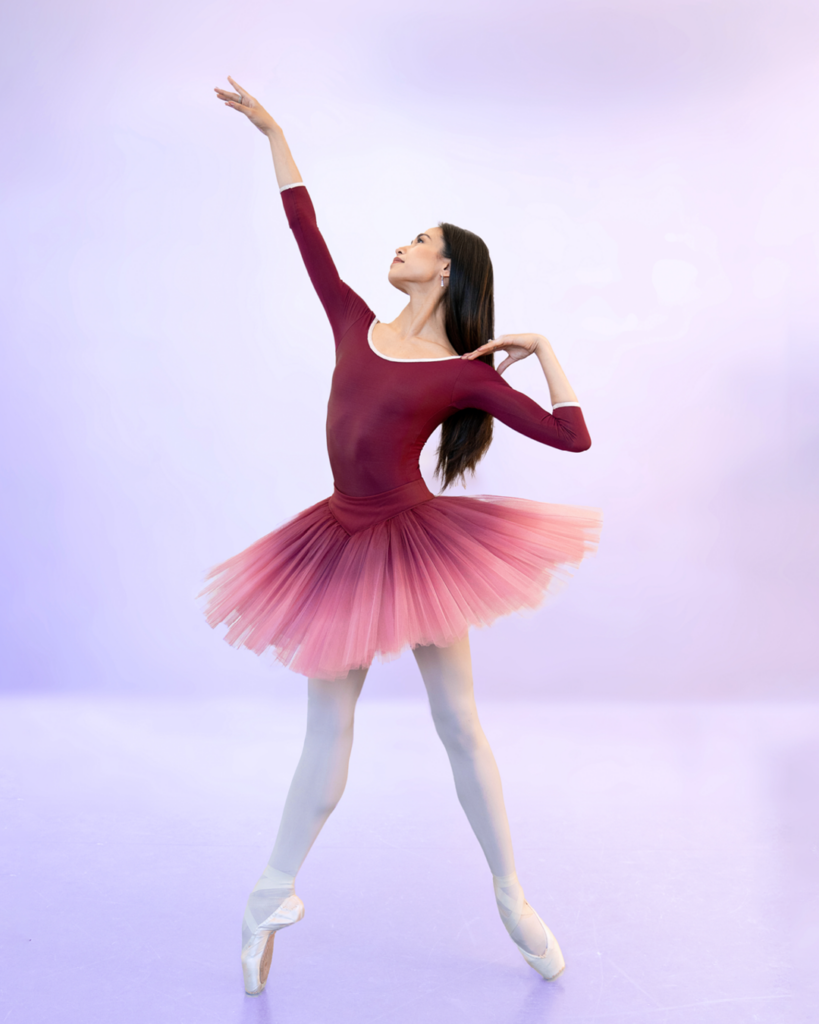
And when she is onstage, she lights up. “I absolutely love performing,” Fleytoux says. She projects poise both on and off the stage, and to her partners. “Léa is calm and reliable, and reassuring if anything goes wrong. And so technically strong. With her you can just relax and enjoy the moment,” says Jake Roxander, a fellow ABT soloist with whom she has danced frequently both inside the company and on freelance engagements. A recent performance of the Peasant Pas in Giselle proved this—both dancers sailed through the technical aspects, projecting ease and confidence. Roxander, Curley, and Fleytoux have also become close friends. They often get together to watch movies, play video games, and, yes, talk about ballet. “We are literally the most lazy, boring little group of friends,” jokes Roxander.
Recently, Fleytoux has begun to understudy more and more roles: Perdita, in Christopher Wheeldon’s The Winter’s Tale, and Sylvia, in Ashton’s ballet by the same name. At a recent rehearsal of Sylvia, as one of the Huntresses, she not only danced with wonderful clarity, but also asked the sorts of questions that helped everyone in the studio get on the same page. She has a natural authority—she can own the space.

This self-possession has been noticed by the people upon whom her career, to some extent, depends on. “She’s strong in all the areas that afford her the ability to do more difficult roles,” says Jaffe. “It takes time, but I can see her progressing through the ranks in the future.”