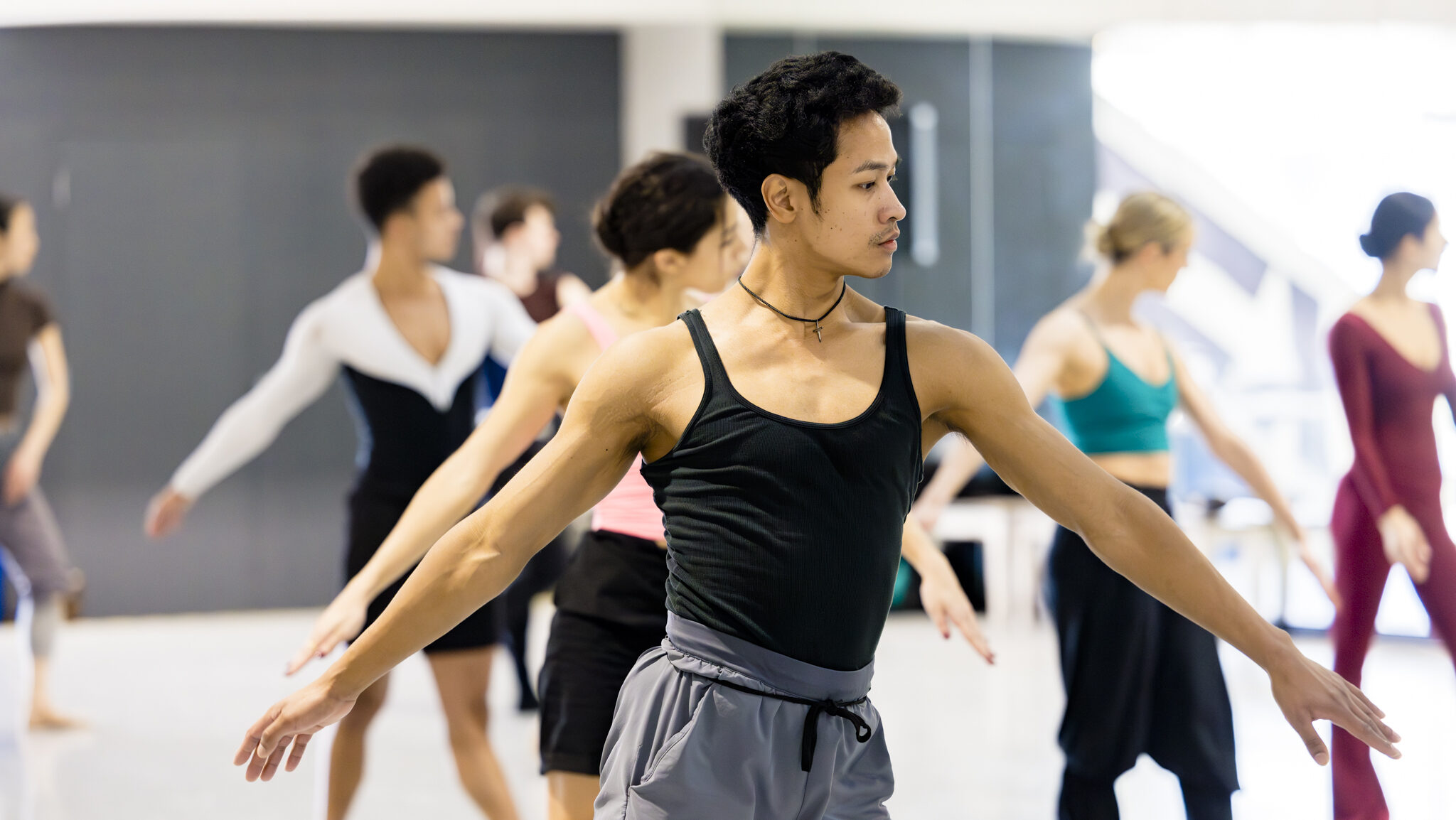
BalletX Looks to the Future With The Four Seasons Reimagined

How can we think about the future if there is no planet Earth?
This is the foundational question that struck BalletX artistic director Christine Cox while pondering the future of the United States. Last year, Cox had been asked to envision a new forward-looking ballet for a program celebrating America’s 250th at Philadelphia’s Highmark Mann Center for the Performing Arts. “For me, there is no future without this beautiful Earth,” she says.
For the program, co-commissioned by the Mann with ArtPhilly’s What Now: 2026 Festival, Cox landed on the idea of reimagining Vivaldi’s 1723 composition, The Four Seasons. She commissioned a new score by Dan Deacon, who composes electronic music, and reached out to four different choreographers—Morgann Runacre-Temple, Penny Saunders, Jamar Roberts, and Trey McIntyre—who each chose one season. For Cox, integrating four different voices in one ballet captured nature’s unpredictability, and the artistic team met several times over Zoom to discuss its overall look and flow. But in the studio, each choreographer had free rein over their season’s movement, themes, and structure.
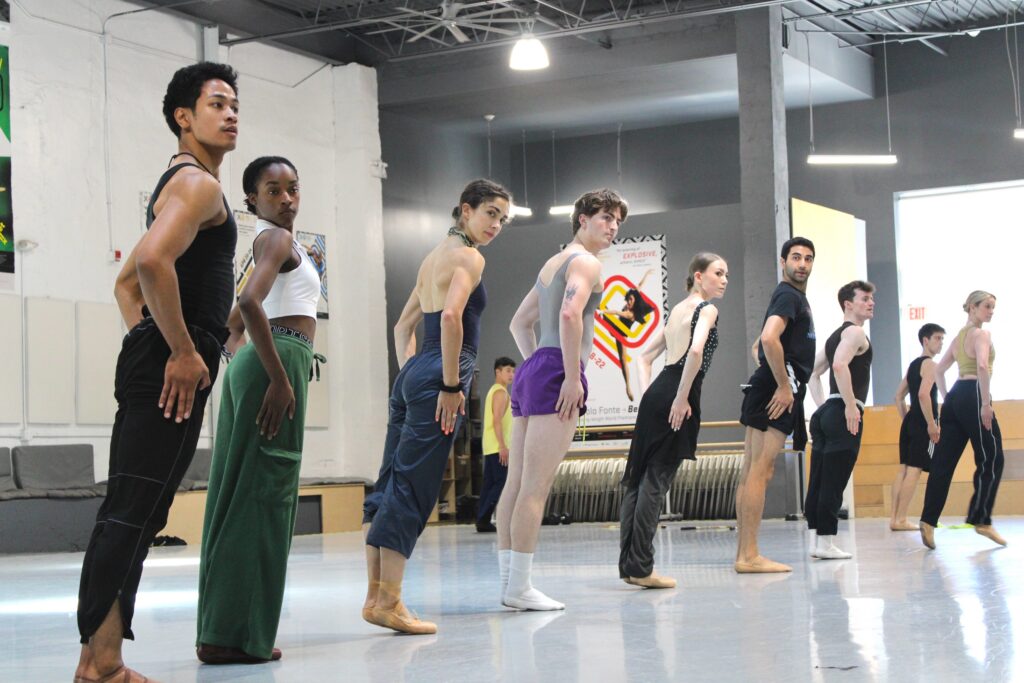
The Four Seasons Reimagined will debut at the Highmark Mann in Philadelphia (June 4–5) before touring to the Saratoga Performing Arts Center in Saratoga Springs, New York, on June 11. This will be BalletX’s second engagement at SPAC, New York City Ballet’s summer home and the longtime host of the Philadelphia Orchestra. “It’s the honor of a lifetime to be invited with a brand-new work,” says Cox, “especially one that takes so many risks.”
The ballet begins with Summer, choreographed by British dancemaker Runacre-Temple. Of the Four Seasons choreographers, Runacre-Temple is the only one who hadn’t previously worked with BalletX. In her interpretation of summer, Runacre-Temple focused on connecting with Deacon’s score. “I was trying to get into where summer hits, emotionally—that dreamlike, or almost hallucinatory, feeling,” she says. She explored the idea of time seeming to stretch, as well as how the dancers could interact to create “organisms” evoking flowers or plants.
For Autumn, Saunders tapped into her lived experience. “Autumn is my favorite season. It’s also where I feel like I am in my life,” she says. “Things have to slow down. You’re not the same as you used to be—but there’s joy in that.” Her movement integrates falling sensations with moments of revelry; her favorite section is a pensive, all-women part when Deacon’s score, which frequently changes tempo and time signature, transitions to slow six-count phrases. “It feels like time suspending,” she says.
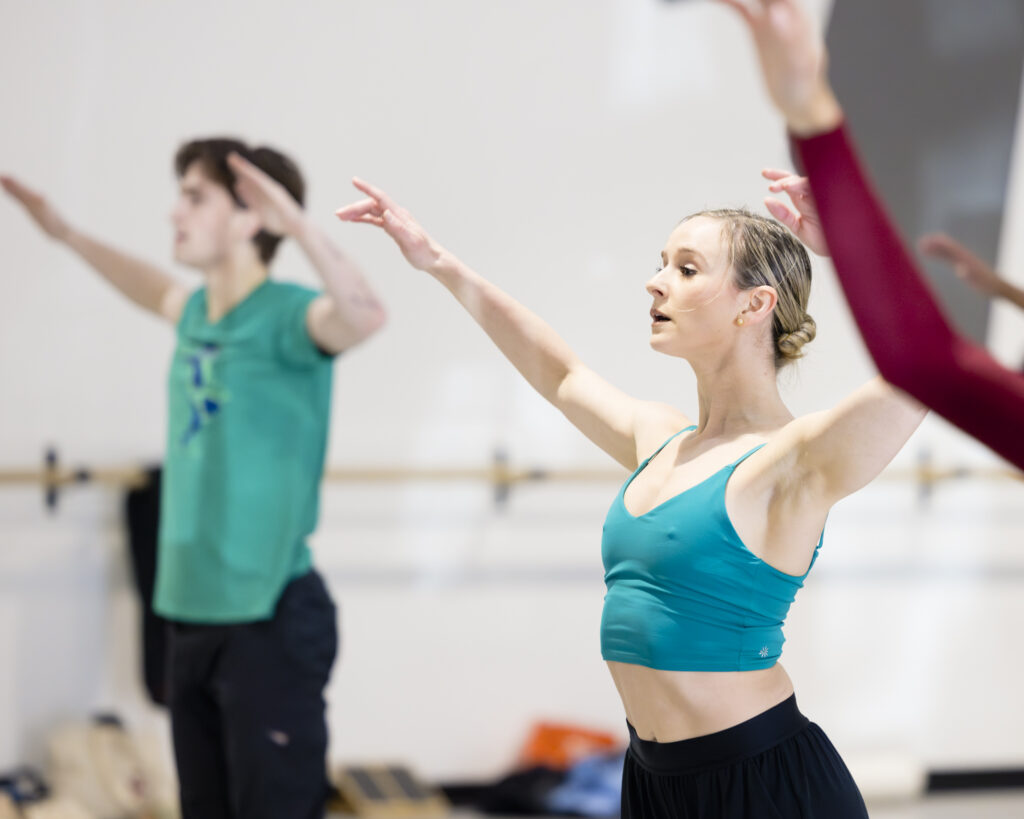
Tackling Deacon’s score was also a welcome challenge for Roberts, who chose Winter. He describes the music as sweeping and crystalline, with a sense of weightedness at times. “It reminds me of a snowstorm, or animals having to hunker down,” he says, adding that winter’s emotional depth—a complex play between levity and heaviness—drew him to the season from the get-go. “It’s moody,” he says, “and I like mood.” While ideating movement, he pictured birds flying south for the winter, using that image to create flocking patterns punctuated by moments of stillness.
With Spring, McIntyre, who was tasked with ending the ballet, chose to focus on growth, or continuation. “I think of spring as sort of punk rock,” he says. “It’s not asking anyone how it should come to be. No matter our plans for them, plants do what they’re going to do.” To prepare, McIntyre watched sped-up videos of seeds germinating. But rather than illustrating growth literally, he focused on what he describes as an invisible force guiding each life cycle. “It’s natural for dancers to want to create an emotional story,” he says, “but there’s no subtext with plants. I’ve learned a lot in coaching the dancers to move with a different kind of purpose that doesn’t come from any emotion other than the need to be.”
All four choreographers chose to leave each other’s work a surprise until the premiere. Emma Kingsbury’s minimalist scenic and costume design, which uses lighting by Christopher Ash to change colors and textures, will contribute to the ballet’s overall cohesion. But come performance week, Runacre-Temple looks forward to seeing how the dancers will “thread” the seasons together through their movement. Rather than being responsible for every element of a production, working with other creatives has felt freeing for all four dancemakers. “I’ve been very conscious of myself as one of four—a cycle,” says Runacre-Temple. “It’s been quite refreshing.”