How Choreographers and Composers Collaborate to Create an Original Ballet

Have you ever wondered how a choreographer and a composer come together to create a dance work? (Just imagine the conversations that Marius Petipa and Pyotr Ilyich Tchaikovsky had when they were developing The Sleeping Beauty and The Nutcracker.) To get a better understanding, let’s explore the deep collaborative union involved in constructing a new ballet with original music.

Getting Started
First, a choreographer must explore whom they would like to work with. In seeking a composer, Ruth Brill, a freelance choreographer and co-artistic director of London Children’s Ballet, studies a composer’s previous compositions to gauge their style and experience level and reaches out to connect. She then looks for an affinity with the person and shared enthusiasm for the project.

From there, “the dance commissions the music,” explains New York City–based choreographer Jessica Lang. “Usually, the composer sends music as a thread, and you react in response,” says Lang. “Then we go back and forth between us, making sure we’re united on the process.” Tight deadlines normally mean the music is then complete by the time Lang starts to create.
Philip Feeney, resident composer for Ballet Central in London, sends an “ideas menu” to dancemakers he works with to get the ball rolling. “Choreographers need to hear music even if it’s entirely wrong; it cuts down our options to find what they want,” says Feeney. “The choreographer is the prime creator—the music has to serve the dance. I have enormously high standards for music, but you cannot be purist; if things have to change to support the dance, then things have to change.”
When a choreographer finds a composer they gel with, they often return to them. When Lang choreographed her piece EN for Alvin Ailey American Dance Theater, she turned to composer Jakub Ciupinski, commending their rapport built through previous work together. “I saw time passing and had a pendulum idea that I shared with Jakub, and he bounced off that,” Lang says. She also choreographed a Shakespearean piece for Birmingham Royal Ballet and wanted to include spoken word, so Ciupinski musically followed the patterns of spoken sonnets.
Development
When Ian Stephens composed for Brill’s ballet Ella’s Big Chance at London Children’s Ballet last summer, they first worked on key character themes to get a feel for the world they were creating. Then Brill sent Stephens a detailed scenario, which included a minute-by-minute breakdown of the narrative for each scene. He then used influences (such as his family cat) and his experience as a jazz bassist to develop his writing.
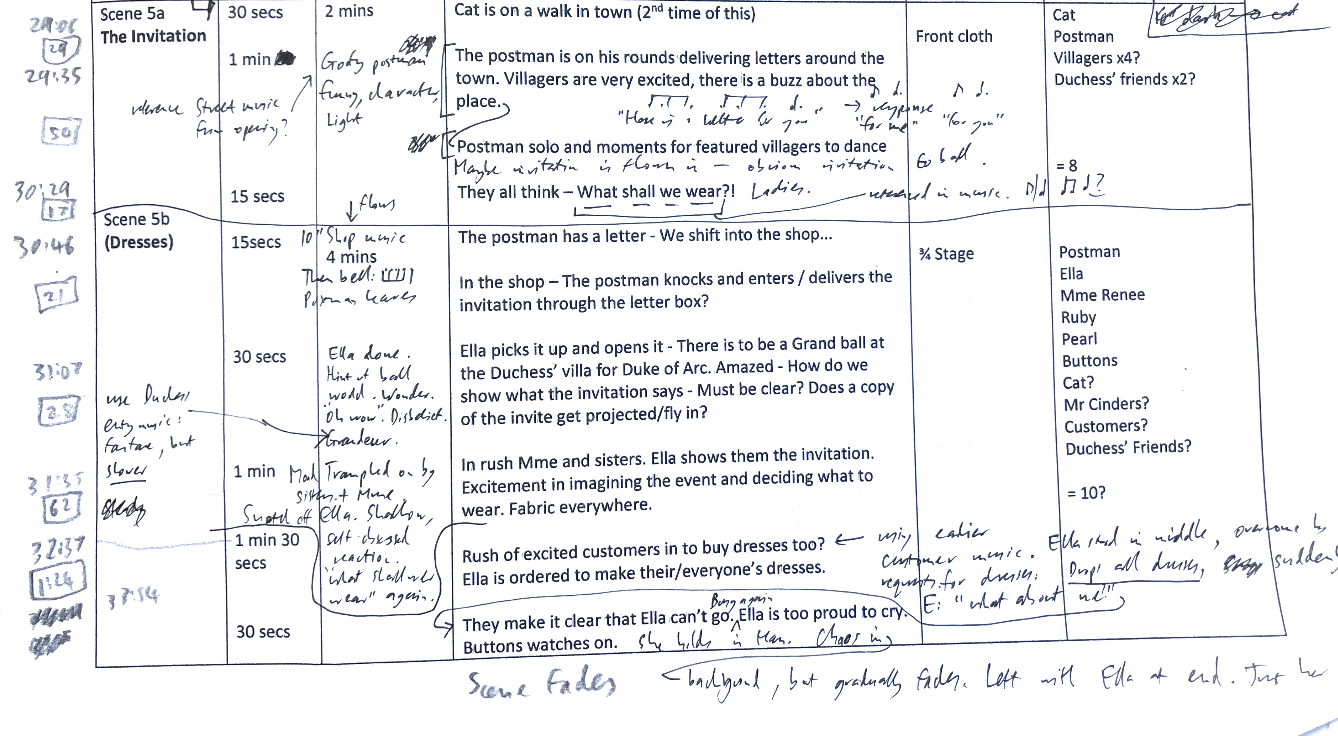
Part of Ruth Brill’s scenario for Scene 5 of ella’s Last Chance, with composer Ian Stephens’ scribbled annotations. Photo courtesy Stephens. 
Part of the clarinet and saxophone part from Scene 4 of Ian Stephens’ score for Ella’s Last Chance, showing narrative labels. Photo courtesy Stephens. 
From left: Accompanist Andy Higgs, choreogrpaher Ruth Brill, and composer Ian Stephens at the premiere of Ella’s Big Chance at London Children’s Ballet. Photo by Rahil Ahmad, courtesy Stephens.
“I was asked to create a snippet of theme for each main character,” says Stephens, who kept Shirley Hughes’ children’s book on which the ballet is based, on hand. “I then brought those individual musical references in each time that character was in focus. Ruth and I met regularly for feedback and to flesh out what came next.”
Brill adds: “We discussed instrumentation, pacing, and viewpoints. I suggested lines that might be spoken if it were a play. Ian used some of those ‘lines’ in his melodies and rhythms, and I also hummed ideas and danced around a lot!”
When working with a composer, choreographer Hannah Joseph also uses singing, humming, and tapping rhythms, as well as flow-graphs through which musical phrasing can be shown. In Gridlock, her ballet commissioned and performed by The Royal Ballet School in July, a significant portion of the sound sculpting by composer Cairo Joseph was complete prior to choreographing. “A lot happens through trial and error, so I find it beneficial to be in the music studio at some point during the process.” Hannah says. “The movement I visualize influences my music choice, then the music shapes the movement in return.”
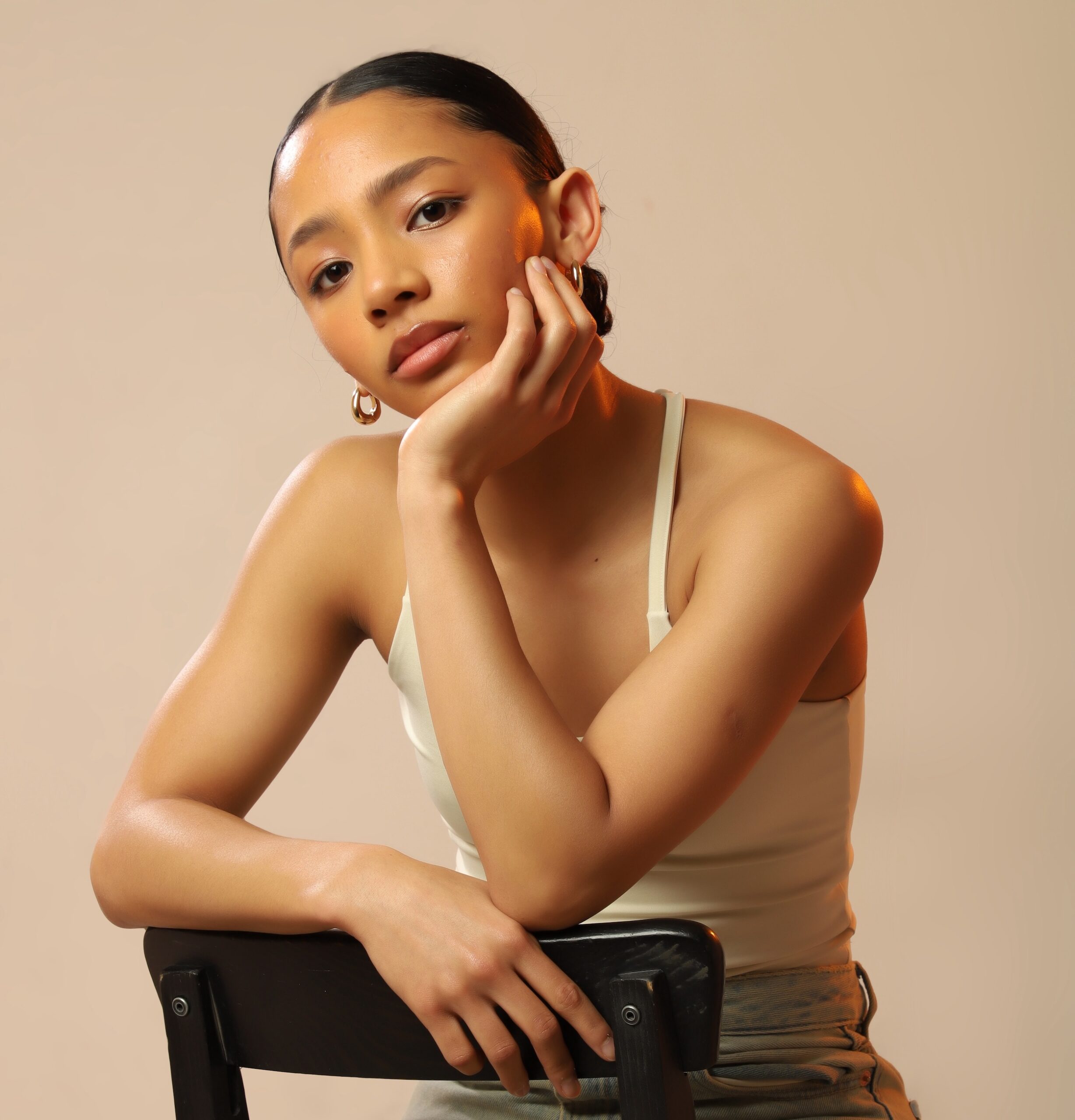
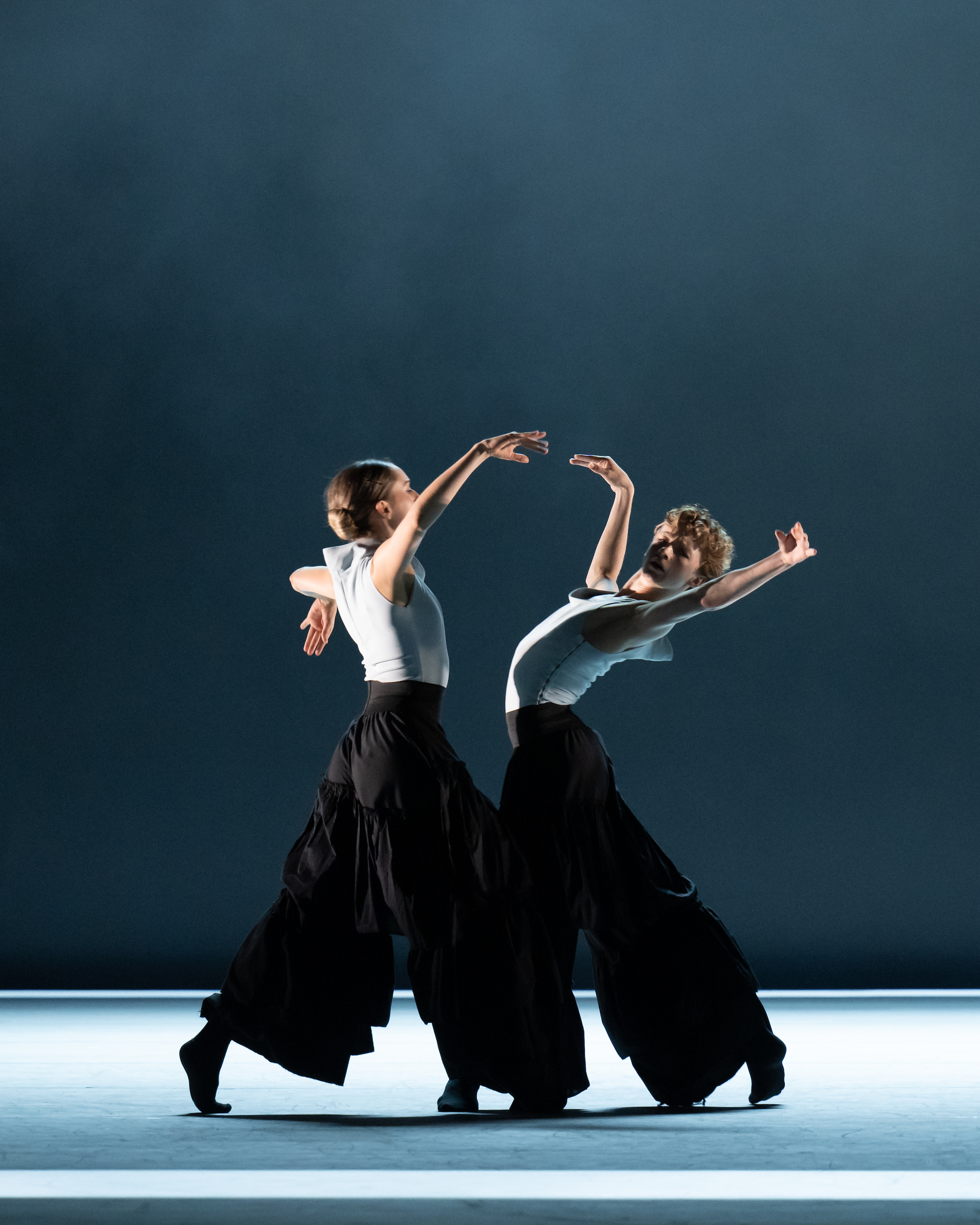
Dickson Mbi, who directs the UK-based Dickson Mbi Company, both choreographed and composed the powerful Twice-Born for Scottish Ballet, which premiered earlier this year. He offers a similar view: “Sometimes more time is spent on the music, and the dance responds. And sometimes the other way ’round, like a conversation between them. They form each other,” he says. The instrumentalists and dancers are also inspirational during creation: “It’s not always what they do, it’s how they do it,” he explains.
The Final Product
The back-and-forth between choreographer and composer can continue, with adjustments potentially being needed right up until performance. “Every creative’s input counts; their individual knowledge, skillset, and judgment. I value the process as much as the final product,” says Brill.
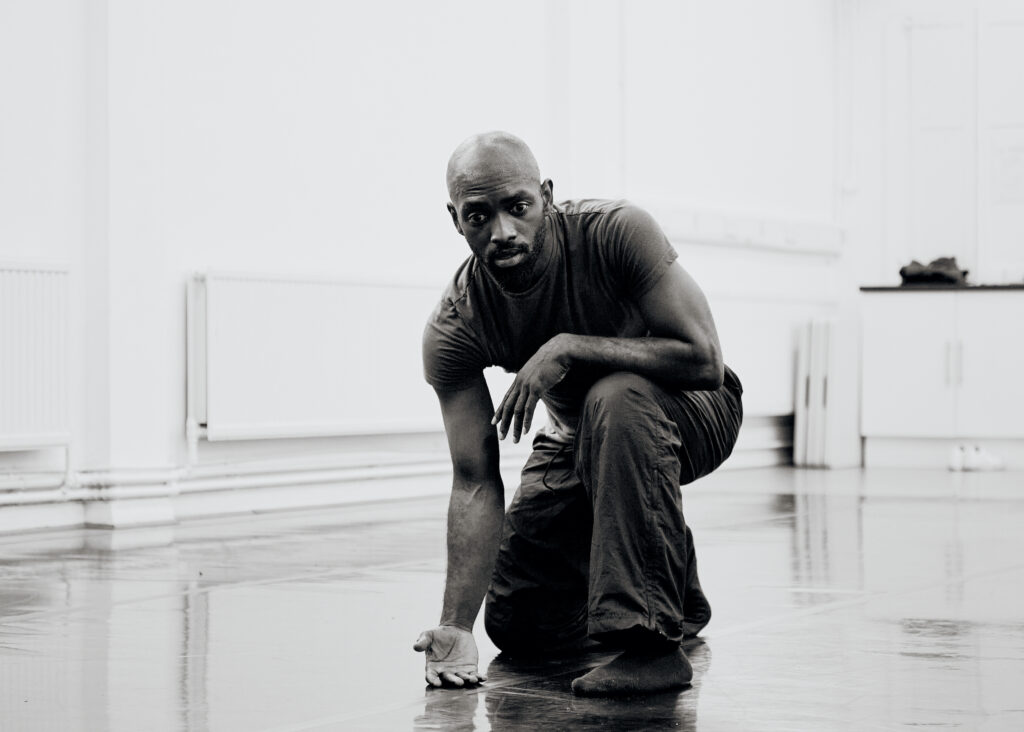
Mbi says his biggest strength is being able to let go of music that isn’t working. “For Twice-Born, there were 20 tracks, and eight made it,” he says. “I’m not precious—I serve the work. If I can’t feel something working, how can I expect someone else to?”
“Many times, I’ve had to work on rewrites,” Feeney says. “It’s a lot of work changing orchestral parts, but it’s got to suit.” He compares the process to making a costume: “It never fits perfectly the first time around and you go in with pins and tucks. The size of the stage might impact the choreography, and late musical changes might be needed. Every adventure is different.”