Backstage Magic: How Stage Managers Help Ballets Come to Life

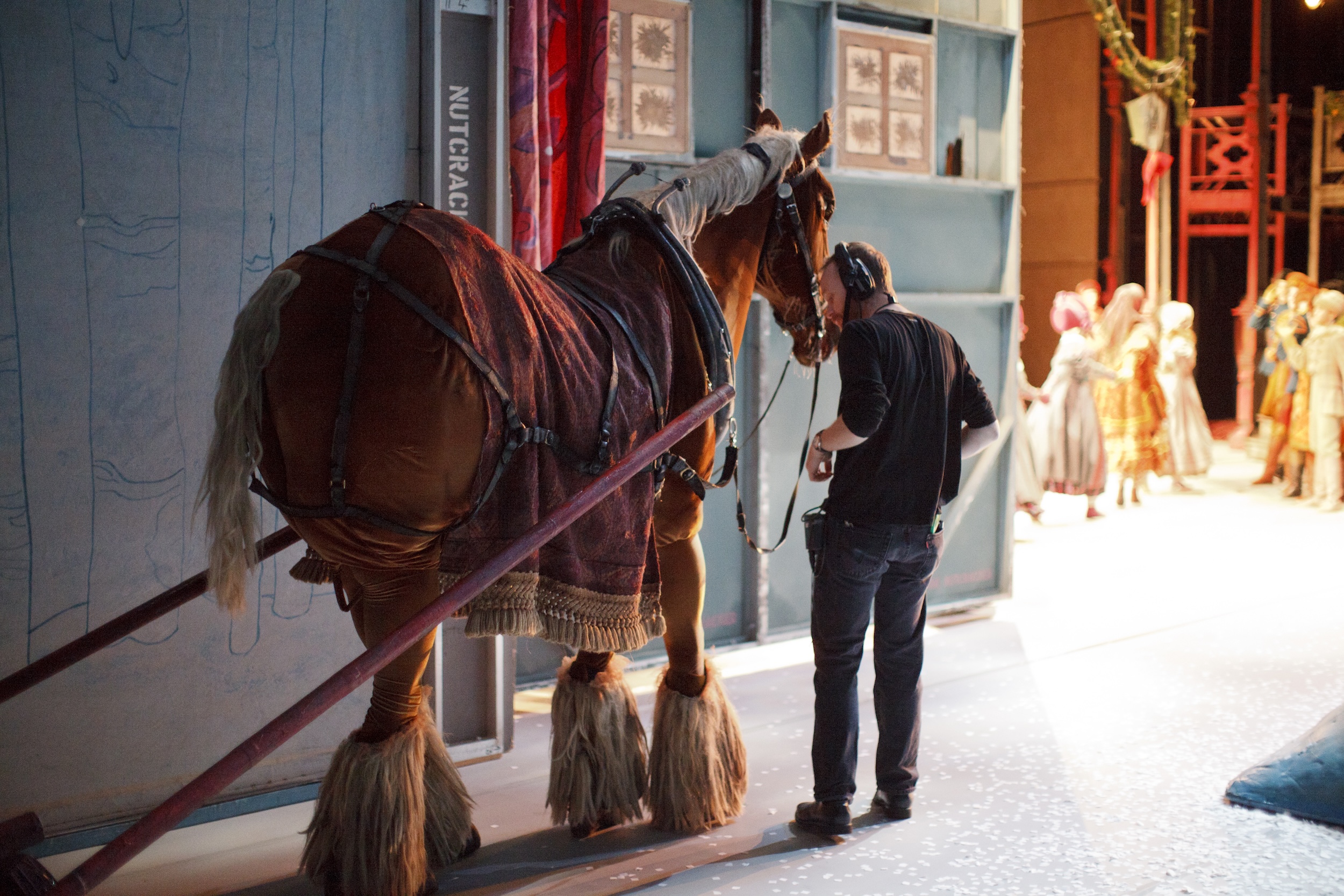
Whether they’re ensuring the Mouse King has his sword for rehearsal or cuing Myrtha’s spotlight during a show, stage managers are the critical people behind the scenes making it all happen. The role they play in a ballet company’s operations is multifaceted, nuanced, and extremely important. Below, three seasoned stage managers pull back the curtain on what their occupation entails.
Pre-Production
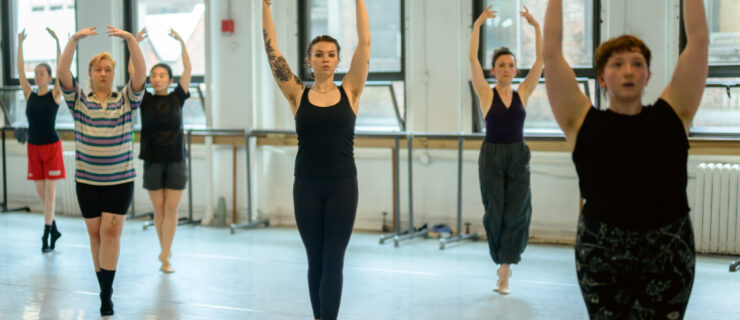
A stage manager’s job begins early in the rehearsal process. While those working in theater or opera typically help run rehearsals and document the director’s artistic intention, stage managers working with ballet companies have slightly different responsibilities. “In dance, there is always a choreographer, ballet master, or répétiteur at the front of the room running the rehearsals,” says Jeff Morris, one of National Ballet of Canada’s stage managers. “I would never, ever give a dancer a technical dancing correction. That’s not my place.”
Even so, ballet stage managers are hard at work before opening night. They help organize logistics for those involved with the production, including guest artists, designers, répétiteurs, and stagers. Their duties include distributing schedules and making sure any essential props, costumes, and scenic elements are in the studio, as well as CDs or DVDs. They also video rehearsals for documentation, distribution, or archival purposes. “If it’s a new production, then we’ll record once a whole section is finished,” says Laura Cadieux, stage manager for Ballet Arizona. “If we’re not going to touch it for a while, we’ll record it so we can go back to it.”
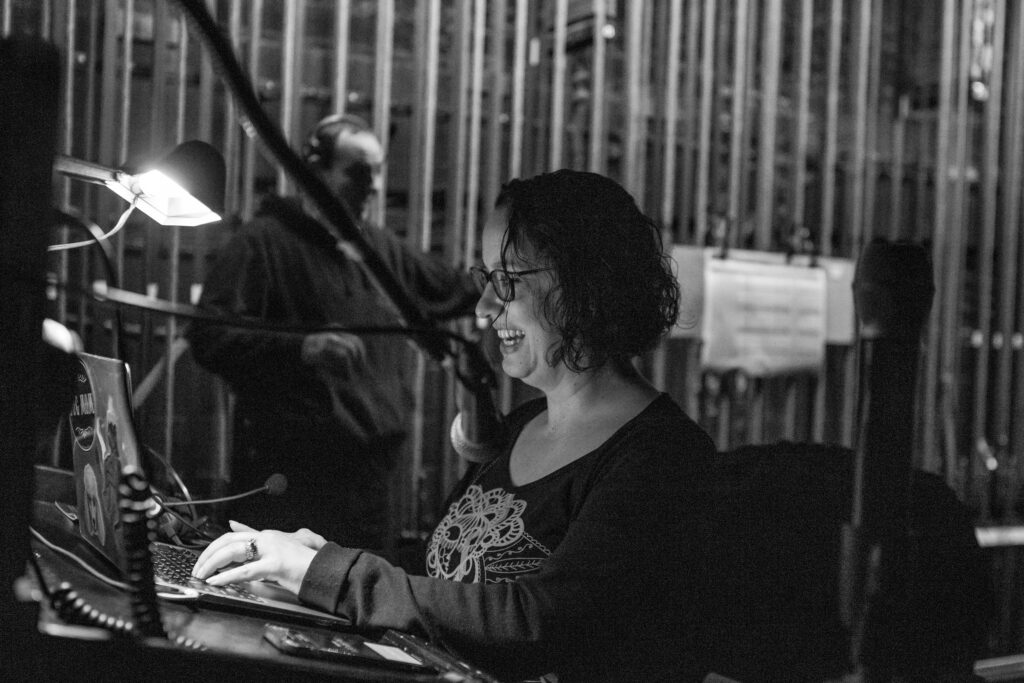
A large part of their job involves logging lighting and music cues and scenery changes, as well as keeping lines of communication open with other departments, like the costume and scenic shops. “I’m the conduit between the rehearsal studio and all of my production colleagues putting it together physically,” says Oklahoma City Ballet stage manager Courtney DiBello. “I connect them with what is happening with the artistic people in the studio.”
Because ballet is not text-based, documenting cues and scene changes can be challenging. Many stage managers take note of them on the ballet’s musical score. But if they can’t read music, or if the score doesn’t have traditional musical notation, they have to get creative with how they capture those cues.
In the Theater
All the work stage managers do to collect, document, and share production information during rehearsals is to help things run as smoothly as possible during performances. Once in the theater, they need to keep track of various rules between the dancer, stagehand, and orchestra unions. “That’s challenging, particularly when you have three collective agreements that all have different terms for break requirements and how time is used,” Morris says, laughing.
Another obstacle is how quickly the production department has to load in and set everything up, since most ballet companies don’t have their own theaters. In dance, says DiBello, “there is no aspect of [the production team] that doesn’t simply have to do their job in less time than the other performing art forms. You have 16 hours to figure it out, instead of days.”
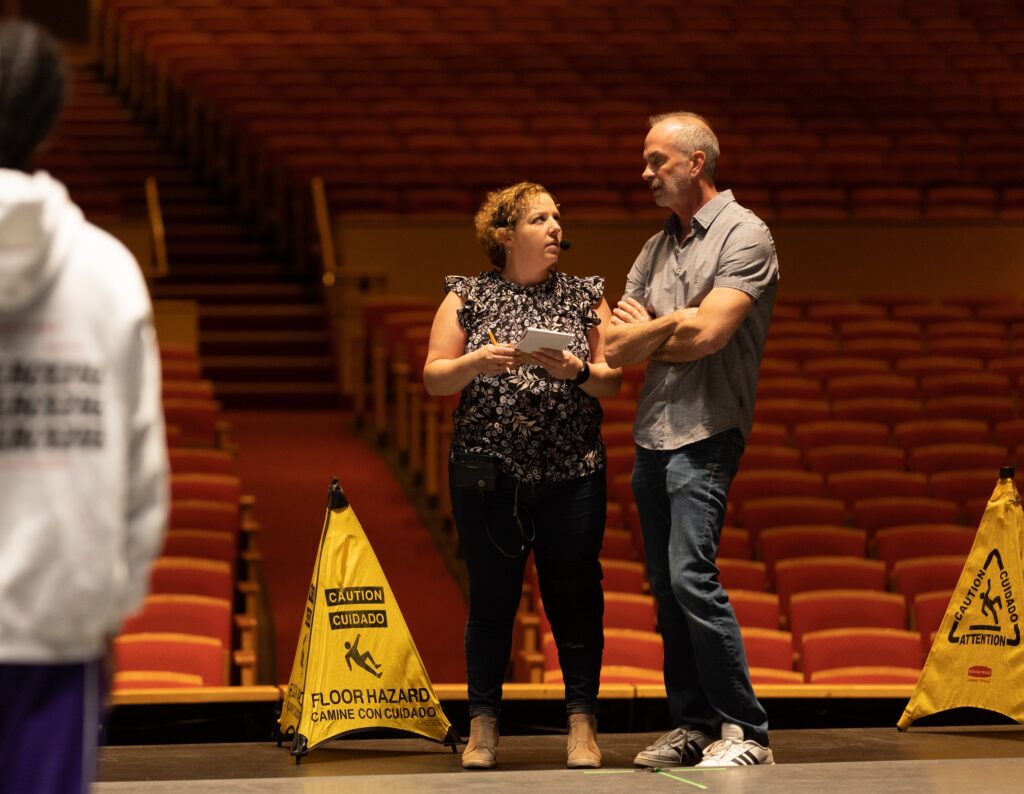
As tech/dress rehearsals begin, Cadieux says, stage managers are “running all the technical aspects, with direction from the designers and the choreographer, and then putting the production on.” During performances, they are typically backstage at a podium, directing scenery changes and calling curtain, lighting, music, and other cues. A headset allows them to communicate with stagehands in the wings and the tech crew in the back of the house controlling the lights, projections/videos, and any pre-recorded music.
Stage managers are also the first line of defense if something goes wrong during a performance, whether that’s a dancer getting injured or a backdrop getting stuck. “At the end of the day, my job is to ensure that the audience doesn’t know anything happened,” Cadieux says. Stage managers need to be organized, calm, and be able to anticipate problems—in addition to having a sense of humor.
On-the-Job Joy
All three stage managers say that, despite sometimes having to navigate chaotic situations, they find their work deeply gratifying. DiBello particularly enjoys watching the dancers’ and choreographers’ artistry come together. “It’s a perk of the job that nobody knew they were giving me.”
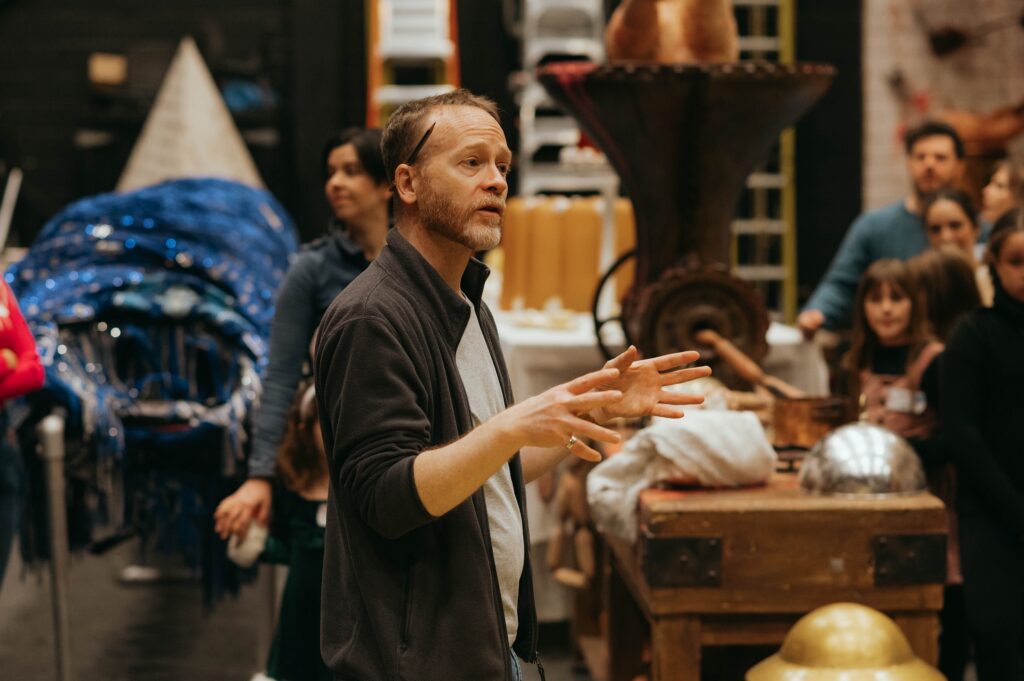
Morris, who has a background in musical training, feels fortunate that NBoC has such a strong commitment to live music. “Listening to 80 musicians playing an extraordinary score—it never fails to remind me how lucky I am,” he says. Collaboration, whether it’s with musicians, designers, dancers, or choreographers, is another aspect of the job that Morris finds rewarding.
Cadieux says she loves creating “magic” for the audience. “[Especially] for somebody that’s possibly never been to the theater before, and to have them walk away saying, ‘Wow, I would love to come back to a live performance.’ ”