Tap-Dance History Inspires Micaela Taylor’s New Work for English National Ballet, Bow Out

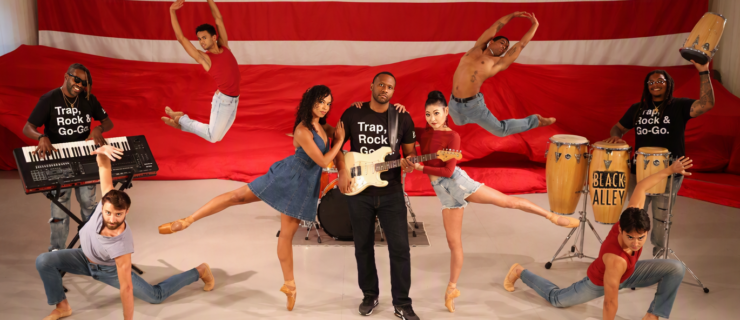
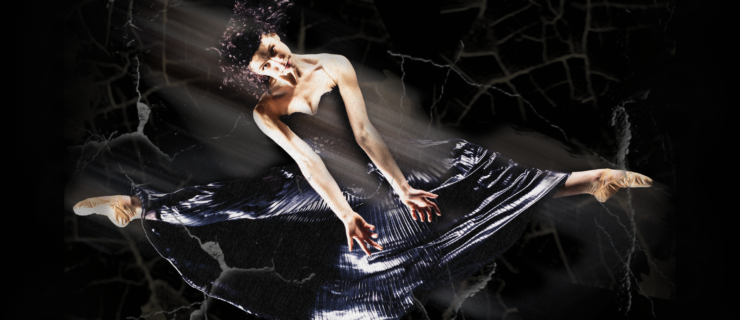
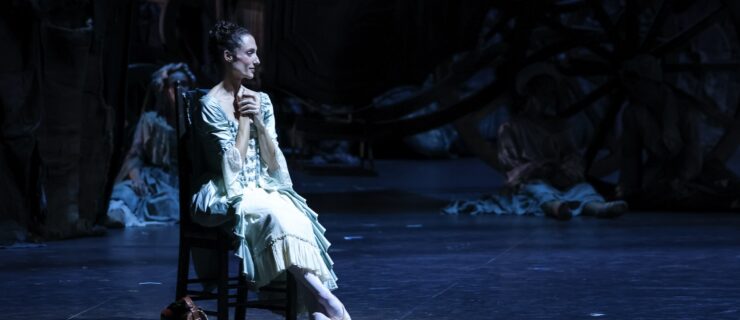
Los Angeles–based choreographer Micaela Taylor may have launched her career in the contemporary-dance world, but she’s recently received commissions from renowned ballet companies, including Paris Opéra Ballet and English National Ballet. For Bow Out, her new work for ENB, she drew inspiration from a third dance genre: tap; specifically, an iconic 1943 routine by the Nicholas Brothers. Bow Out premieres as part of Rhythm Riot, a mixed-bill program running from September 24 through October 3 at Sadler’s Wells Theatre in London that also includes George Balanchine’s Symphony in Three Movements and South Korean choreographer Jae Man Joo’s Auguries of Innocence.
Taylor, a Dance Magazine “25 to Watch” alum and a Dance Magazine 2025 Harkness Promise Award winner, spoke to Pointe about the legends that inspired Bow Out, her choreographic process, and bringing her unique stylistic point of view into the ballet studio.
As a contemporary choreographer, what is it like to work with ballet dancers?
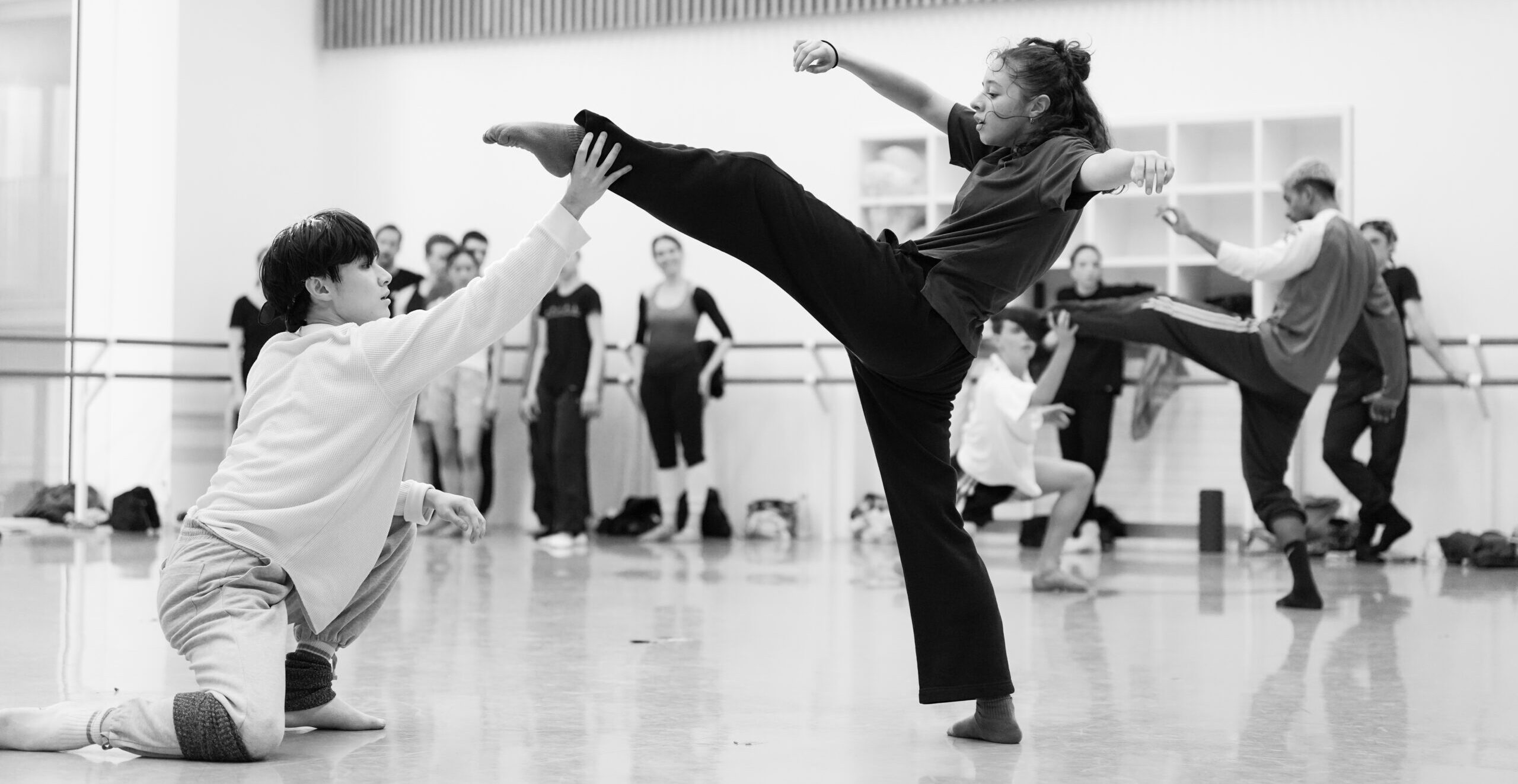
It’s a pleasure and an honor. Ballet dancers challenge me creatively: I come into the room with my strengths and with ideas of phrase-work, and then I’m inspired by their partnering, the articulation in their feet, their explosive flexibility.
One of the challenges that can come up is that it can take time for us to get on the same page physically, since my style is new to a lot of them. Stepping into the ballet world, I have learned to be quite specific with each movement. What is this arm doing? How are you holding your hand and head? I’ll physicalize it and be very detailed [in my descriptions] so they can latch onto the material more quickly.
What would you say are the hallmarks of your movement style?
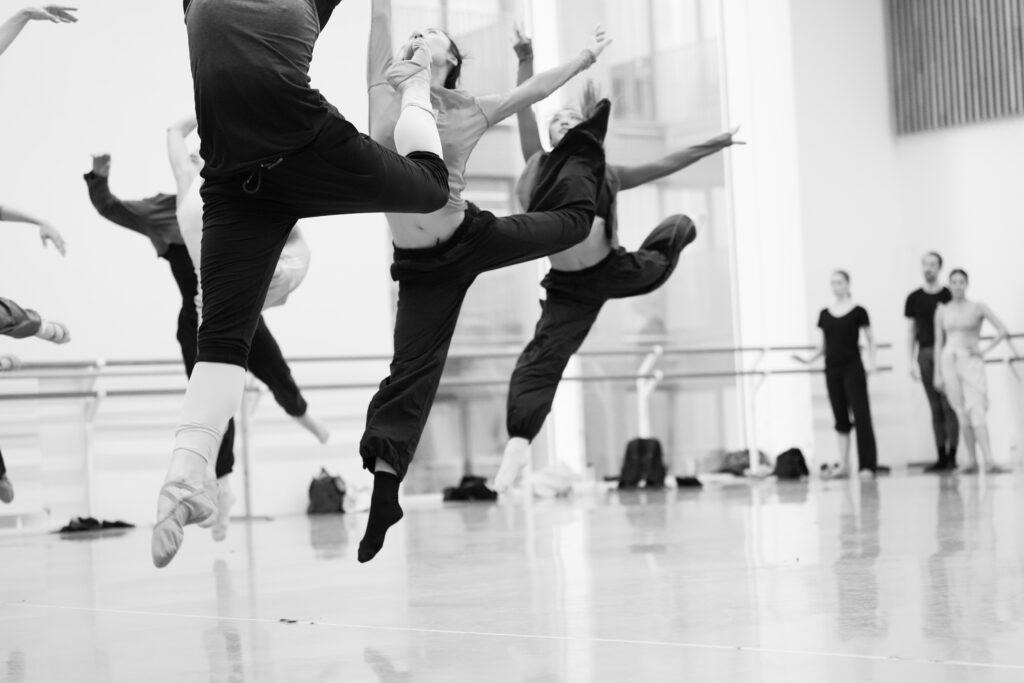
I love to see storytelling within the face. You’re dancing from the top of your head all the way down to your feet. I love unison movement. Finally, there is always an element of speed to my work. When the dancers first hear the music, they might not think they can move that fast—but they can!
How did the commission from English National Ballet come about?
Aaron S. Watkin, ENB’s artistic director, reached out to me after seeing some clips of my work. [An American dance peer first put Taylor on Watkin’s radar.] We discussed what I was interested in creating and what inspired me. I mentioned the Nicholas Brothers—in particular, their performance of “Jumpin’ Jive” from the movie Stormy Weather. Their energy is explosive, but they also have such sophistication. It’s not just how they’re dressed, but also how they hold their posture and how they interact with each other. Aaron wanted to create an evening around the theme of rhythm, and this idea felt like common ground.
How does the inspiration come out in the finished piece? Is tap part of Bow Out’s movement vocabulary?
I trained at the Debbie Allen Dance Academy, and the Nicholas Brothers’ granddaughters were students and teachers there. I took some tap, though I never pursued it seriously, but having those women in the space inspired all of us. When I was looking at “Jumpin’ Jive” as inspiration, I thought, What a way to marry my background with this ballet world, which is full of poise and sophistication. I was raised in this street-style, highly energetic world as a dancer, but then I started to train in more classical forms as I got older, so that refinement is also there in my work. What the Nicholas Brothers did in “Jumpin’ Jive” had a resemblance to my own dance history.
Bow Out is a contemporary ballet. You’ll see lines and shapes and partnering and weight-shifting, along with some “jazzy” isolations. We’re not tap dancing, but we’re inspired by the charismatic performance and atmosphere of “Jumpin’ Jive.” The composer, Tru, and I also asked a tap dance artist, Scott Kelley Thomas, to record his tapping, and we used that sound as part of the score.
What’s your rehearsal process in the studio?
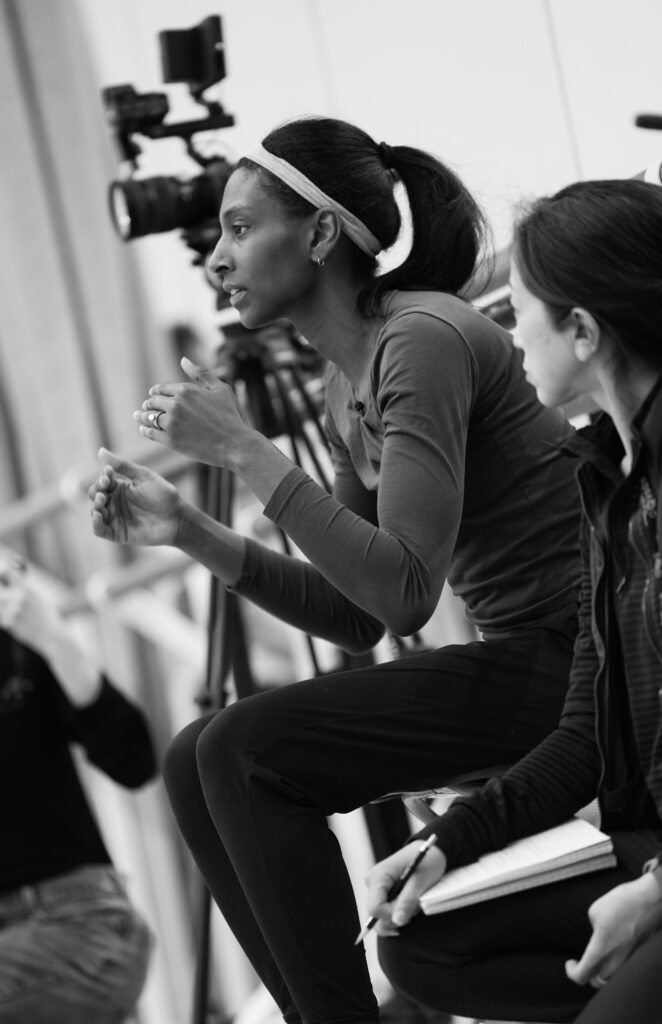
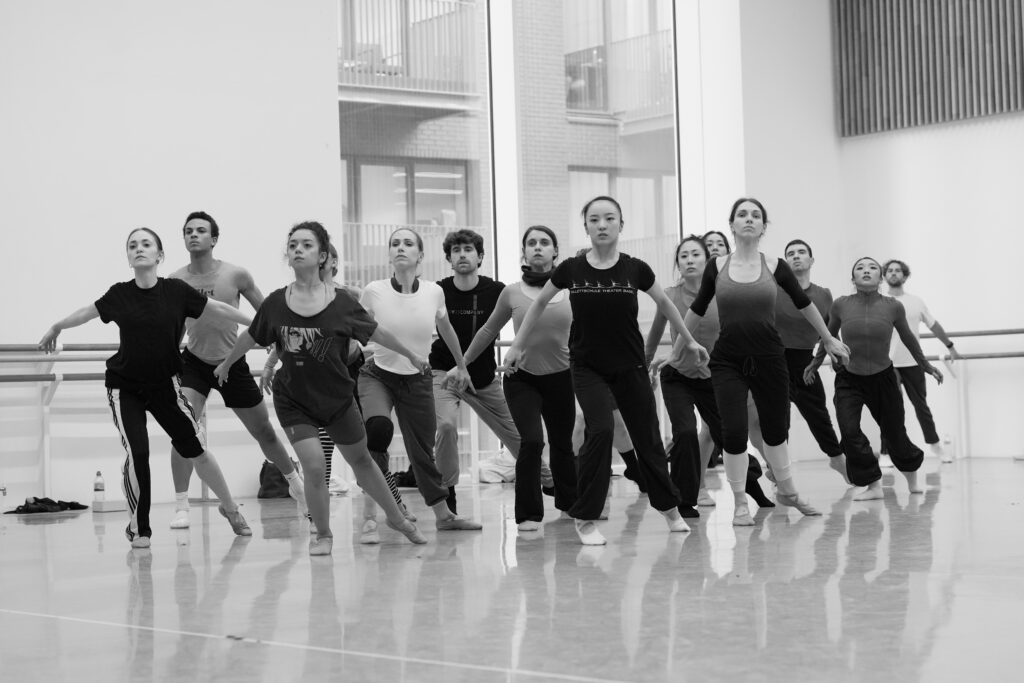
On day one, I usually have an idea of how I want the work to flow. We’ll gather to do some pliés together, loosen up the sternum, and try to get in tune with our core, because the core is really the initiator for my work. Once we’re all on the same page, I teach a phrase of choreography. As they learn more phrases and we clean what we’ve got, I start to give them the intention behind the work. So first, we unify ourselves physically, and then I add the layer of “Why are we moving? What is the meaning of this section?” The work blossoms as they connect narratively and make it their own.
How do you push yourself to create something new with each premiere?
For me, it’s all about life experience and where I am in the moment. Sometimes, I’m inspired by emotion. If I want to slow down because I’ve been going, going, going, a work may be about time slowing down. Or I might see something that sparks something within me creatively, like how “Jumpin’ Jive” inspired Bow Out. As I get older, though, I would love to restage existing works. I’d like to dive deeper, make adjustments, and see what it’s like to have a work be able to have many different lives.