How Social Cues in Ballet Can Affect Perfectionism

Ballet dancers tend to be perfectionists. That knowledge is widespread within, and even beyond, the dance community. Whether people with more perfectionistic tendencies thrive in ballet settings, whether the art form elicits it, or both, the association has been proven again and again.
But a team of researchers recently added a new side to the discussion: The social cues dancers encounter in their workplace environment can affect how they manifest perfectionistic traits. For their research article published in the Academy of Management Journal, “Under Pressure to Be Perfect: How Dehumanizing and Rehumanizing Social Cues Lead to Maladaptive and Adaptive Perfectionism in Professional Ballet,” Dr. Rachael Goodwin (Syracuse University), Dr. Lyndon E. Garrett (Melbourne Business School), and Ali P. Block (Mount Sinai) interviewed 61 professional and pre-professional dancers from 24 U.S.-based ballet companies to map out the relationship between social cues and perfectionism.
Below, Goodwin talks about some of the study’s key takeaways.
Adaptive vs. Maladaptive Perfectionism
Goodwin, a former dancer who struggled with perfectionism herself, explains that “maladaptive” and “adaptive” are industry-standard terms in clinical psychology. Maladaptive perfectionism, she says, is driven by a fear of mistakes and involves intense self-criticism and feelings of inadequacy. It can exacerbate anxiety, depression, or impostor syndrome and can lead to harmful behaviors (like obsession, restrictive eating, or dancing through injury) as a coping mechanism.

“Most of the literature out there focuses on the maladaptive outcomes,” says Goodwin. “But perfectionism doesn’t have to be a uniformly harmful experience. When you define adaptive perfectionism as pursuing excellence without fear and obsession over mistakes, we could argue that there’s a healthier form.” Adaptive perfectionism, she continues, involves pursuing excellence with a growth mindset, rather than dwelling on failure. And while scholars remain divided on whether adaptive perfectionism can be considered “healthy,” it is associated with enhanced performance, resilience, and focus, with fewer negative effects on mental health.
Dehumanizing and Rehumanizing Cues
Goodwin explains that dancers shift between maladaptive and adaptive perfectionism over time, or even throughout the day, depending on the cues they encounter. Those cues can include spoken or unspoken rules or feedback, body language, cultural values, or assumptions made through observing others. For example, she says, some company cultures discourage dancers from asking questions and remind them that they are replaceable. Dancers may also feel underlying pressure to conform to a particular body image after seeing those qualities prioritized onstage and in auditions.
Examples of rehumanizing cues include allowing room for error, celebrating diversity, and valuing emotional well-being. Dehumanizing cues, says Goodwin, prioritize a person’s instrumentality, or what they can do, over who they are. Combined with high pressure, they can lead to maladaptive perfectionism with destructive behaviors. In their research, Goodwin, Garrett, and Block identified four forms of organizational dehumanization that occurred most regularly in the dancers they interviewed: denial of fallibility, denial of agency, denial of subjectivity, and denial of individuality.
“The social cues dancers encounter in their workplace environment can affect how they manifest perfectionistic traits.”
Dr. Rachael Goodwin, Assistant Professor of Management at Syracuse university’s whitman school of management
Denial of Fallibility
In ballet, Goodwin explains, dancers are often expected not to make mistakes. Among perfectionists, that can come at the expense of celebrating successes. “You can do 99 things great, but if you make one little mistake, that’s what the director or choreographer points out, and that’s what you’ll focus on,” she says.
Dancers often take cues from each other; seeing a colleague obsess over a mistake can reinforce a person’s instinct to do the same. Goodwin cites interviews in which dancers observed other company members practicing a step over and over—even pushing past the point of their physical ability—after receiving negative feedback. To help dancers shift from maladaptive to adaptive perfectionism, she encourages artistic leadership to empower them to learn from (rather than feel ashamed of) mistakes and incorporate genuine positive feedback that recognizes their individuality. Dancers should also intentionally celebrate their successes and have self-compassion.
Denial of Subjectivity
Dancers often avoid acknowledging their emotions in the studio out of fear of penalty. “They hear: ‘Check your bags at the door,’ ” says Goodwin. “ ‘Forget about your human needs. Just focus on the work.’ ” (The irony, she says, is that the best performances are often those which tap into authentic feeling.)
Suppressing emotions can lead to a vicious cycle of maladaptive perfectionism. For example, says Goodwin, if a dancer starts to tear up or cry in rehearsal, they’ll likely begin to self-criticize because showing that emotion is discouraged. This can also apply to fatigue or pain, which puts dancers at risk of injury. One study participant expressed: “I don’t want to sit out, because then there’s a chance of getting fired. I’m not going to get parts, or I’m going to be labeled as that ‘injured’ dancer.” Goodwin says that dancers often support each other through intense emotions or pain, which is a start in helping break maladaptive cycles.
Denial of Individuality
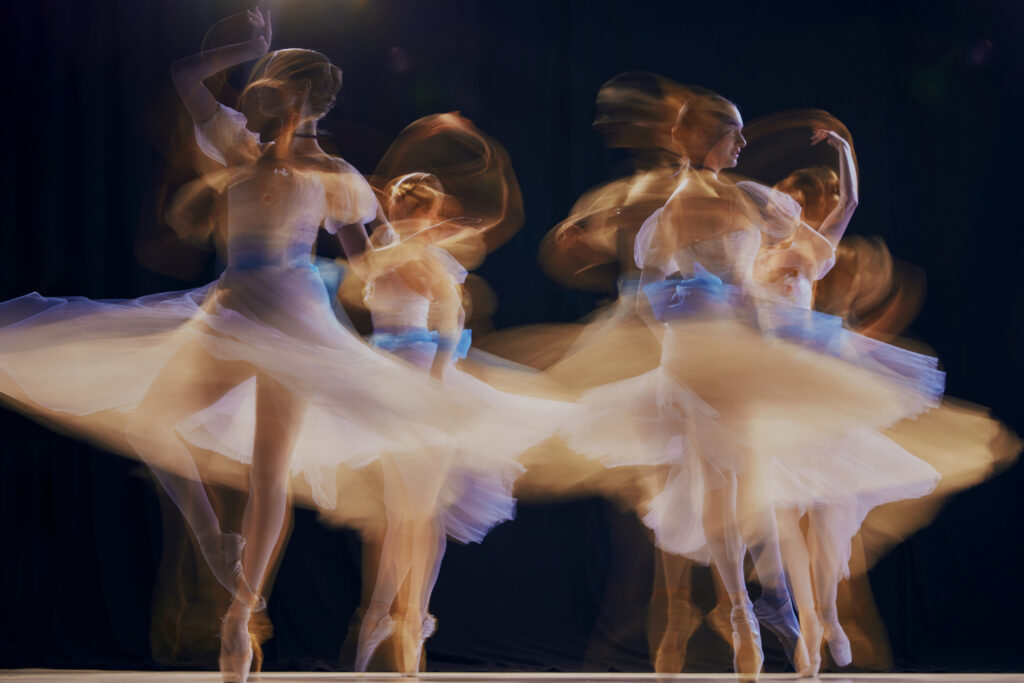
Many of the study’s participants described an expectation to look and dance the same. There has been progress, with companies hiring more diverse dancers in terms of race, gender, and body type. “But the art form in general is still deeply ingrained within the tradition of the cookie-cutter ballet corps,” says Goodwin. When dancers face constant reinforcement to look and dance a particular way, they are more likely to obsess over fitting into a mold, physically or artistically. One study participant recalls fearing losing her contract for “sticking out” in the corps, and another experienced severe body dysmorphia while comparing herself to her colleagues.
In a comment separate from the study, Goodwin notes that the dynamic can change at the soloist or principal level, where dancers “earn” a level of artistic freedom. “But it takes years to get to that point,” she says, “so for choreographers and directors, it’s important to give other dancers those opportunities, even if it’s in rehearsal or as an understudy.”
Denial of Agency
Finally, the ballet work environment often minimizes a dancer’s agency, making them feel replaceable and discouraging them from using their voices. With one-year contracts, and a seemingly endless pool of auditionees, many dancers (especially women) feel pressured to prove they deserve to remain employed. And because the art form is inherently subjective, they have little to no control over what informs leaders’ preferences.
Many dancers adjust their behavior out of perfectionism, censoring themselves in the workplace. “So many dancers are told not to speak up when something goes wrong,” says Goodwin. Deep-seated cultural biases against race or gender may also play into these dynamics.
Goodwin notes that overall, dancers are developing more agency: “They’re finding ways, on social media, for example, to get their voices out there about the issues they’re seeing.” The study also indicates that dancers tend to encourage and support each other to speak up when something is wrong. “Some organizations are also starting to bring in therapists or counselors,” she adds. “We are starting to see that shift. But it’s going to take years to transform the culture.”