Alessandra Ferri Shares Her Vision for Vienna State Ballet

Two years ago, Vienna State Opera made a huge announcement: Internationally renowned Italian ballerina Alessandra Ferri would become the ballet company’s new artistic director, effective September 1, 2025. She succeeds Martin Schläpfer, who has led the company since 2020.
Ferri, who danced as a principal with American Ballet Theatre, The Royal Ballet, and La Scala Ballet in Milan, and as a guest artist with major companies all over the world, has worked closely with the industry’s most recognized choreographers. While she has never led a company before, she has produced international touring productions, coached extensively, and served as the Spoleto Festival’s director of dance programming from 2008–14.
Interestingly, Ferri has no prior connection to the Vienna State Opera, whose leaders asked her to apply for the ballet company’s directorship position. She sees this as a positive, especially in light of the two years she’s had to prepare for the role. “I have no personal agenda, and it gave me a lot of freedom to step back and observe,” she told Pointe in a Zoom interview earlier this summer. “It has been really lovely to discover the company—not just the dancers, but the whole team.”
Below, she shares her vision for Vienna State Ballet, what she looks for in dance artists, and how she plans to lead.
You had been asked to direct La Scala Ballet in 2007, but you didn’t feel like it was the right time. What’s different now?
I’m at a point where I’m really here for other dancers, not for myself. I’m more generous. I want to pass on what I learned from Kenneth MacMillan, Roland Petit, John Neumeier, Jerome Robbins, Agnes de Mille—all the people I worked with personally. I think the younger generation really needs that, because sometimes when I work on these ballets, I can see that they can be a bit lost in how to approach a role. And for me that’s a great joy. It’s not just a matter of doing good programs, it’s a matter of being an inspiration and motivating them. And I get inspired by the dancers, so for me it’s a way to keep this wonderful art form alive.
Do you plan to be in the studio a lot?
Yes. When they asked me to direct, I said, “If I have to be in the office all day, I’m not interested.” It’s not very difficult for me to create a great program, and I want to be with the dancers.
You’ve had two years to prepare for this new position. What has that experience been like?
At first I thought, Two years is too long! But now I’m glad I had all this time, especially because the company is in a city and country that I don’t know well. It was very important for me to understand the audiences, the company, the team, how the opera house works. I was able to observe the dancers and understand who’s who, as well as see what I think can be implemented and what works well. It will obviously take a while to get to know everyone, but those initial observations were key. Without all of the preparation time, it would have been a tsunami of information, but this has allowed me to slowly find my way.
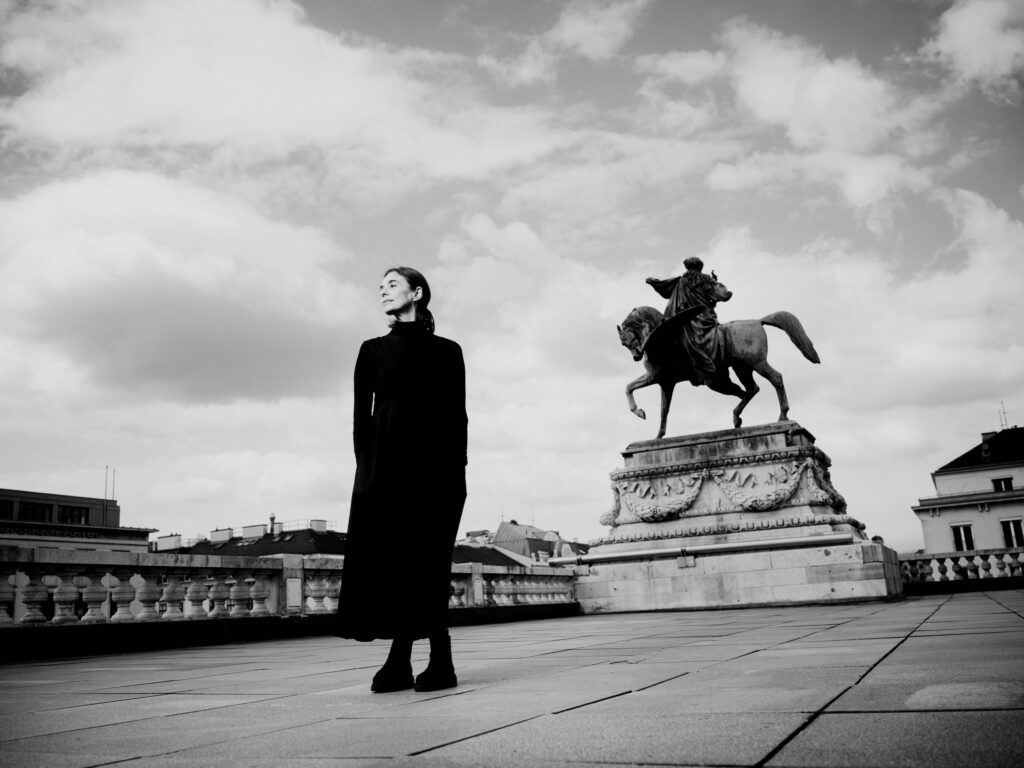
In addition to the Vienna State Opera, the company also performs at the slightly smaller Volksoper Vienna theater. How challenging is it to go between them, and also share space with the opera company?
The opera house calls for very big productions, while the Volksoper allows you to do more intimate work. The challenge is in the logistics, because you only have a certain amount of hours where one can work, and a certain amount of studios. Sometimes you want to do a lot, but there’s not time to rehearse. But it’s also very exciting! And I love the Volksoper—the connection with the audience is different than at the opera house, where you feel the majesty of the place.
What is your overall vision for the company? Do you plan to make big changes or ease into things?
I don’t plan to make big changes. It is a classical company and should continue being a classical company. I very much believe in classical ballet—and by classical ballet, I don’t mean stuck 200 years ago, but that the technique and the language should be classical. What I really look for is the excellency of how you put things onstage, of the coaching, of the dancing, of the performing. That’s how you keep ballet alive, by the quality and approach. And for dancers to understand that not all classical ballets are the same.
You have some major new artists joining the company, including Cassandra Trenary, Victor Caixeta, and António Casalinho. Now that you’re in a position to hire dancers, what do you look for?
To quote Balanchine, I really love dancers who need to dance, who are not afraid to let themselves go and open their souls. On the other hand, they need to have a huge range of technical ability in order to be able to dance all of these works. But I want them to have heart and soul. The company is like that already, it’s not just the dancers that I’m bringing in. But sometimes you just need a little fresh air to help water the garden. I spent 40 years with ABT, and there were dancers from all over the world with very different experiences. We all fed each other, and it was so nourishing.
Did you program the 2025–26 season?
Yes, because I had two years to do it!
Can you share more about it? For instance, you’re presenting Alexei Ratmansky’s Kallirhoe, which was originally titled Of Love and Rage when it premiered at ABT in 2020.
Yes, Alexei wanted to change it to reflect the title of the ancient novel it comes from. The season mainly captures the great masters who have shaped the history of our art form. We have Giselle, and then ballets by Ratmansky, Roland Petit, Balanchine, and MacMillan. We have the triple bill with Justin Peck, Wayne McGregor, and Twyla Tharp; and programs featuring Ashton, Christopher Wheeldon, Jerome Robbins, Lar Lubovitch, Jessica Lang, and Pam Tanowitz. They are people from the past, present, and future who are shaping the history of our art form, and that is the level that I want to work with.

Have the audiences in Vienna had much of an opportunity to see choreographers like Justin Peck or Lar Lubovitch?
Justin, Lar, Pam Tanowitz, and Jessica Lang will be new to Vienna.
You are also artistic director of the school.
I’m the artistic director, but I’ve named a new director, Patrick Armand, who led the San Francisco Ballet School for many years. I’m thrilled, because he is an amazing director and an incredible teacher. I think dancers should come out of the school with very clean technique and be artistically aware. That artistic side I sometimes don’t see too much. Of course, the results are not immediate—it’s slow work. There will be some new teachers, because Patrick wants to make some changes.
What is it about Patrick’s teaching that inspired you to bring him to Vienna?
The cleanliness of his students’ technique and his knowledge of how technique works. I think the risk today is that we confuse technique with tricks: how many pirouettes you do, how high you lift your leg, how much you can bend back. Real technique is in knowing how you move from position to position. That’s when you see a great dancer—the quality of how they go from one step to the next.
What is the city of Vienna and its audiences like?
The city is gorgeous—you walk around and just can’t believe how beautiful it is. Unfortunately, I don’t speak German, and that’s a bit of a shame, but it is what it is.
The audiences, from what I can perceive, really love art and culture. They love beauty. And I think the company should reflect the glamour and elegance of the place.
You have so much knowledge to pass on. What advice would you like to share with younger dancers?
Never forget the enthusiasm that made you start ballet. Stop worrying about being famous—it’s about enjoying what you love. Don’t look at yourself from the outside, but follow the love for what you do. And don’t be in a rush!