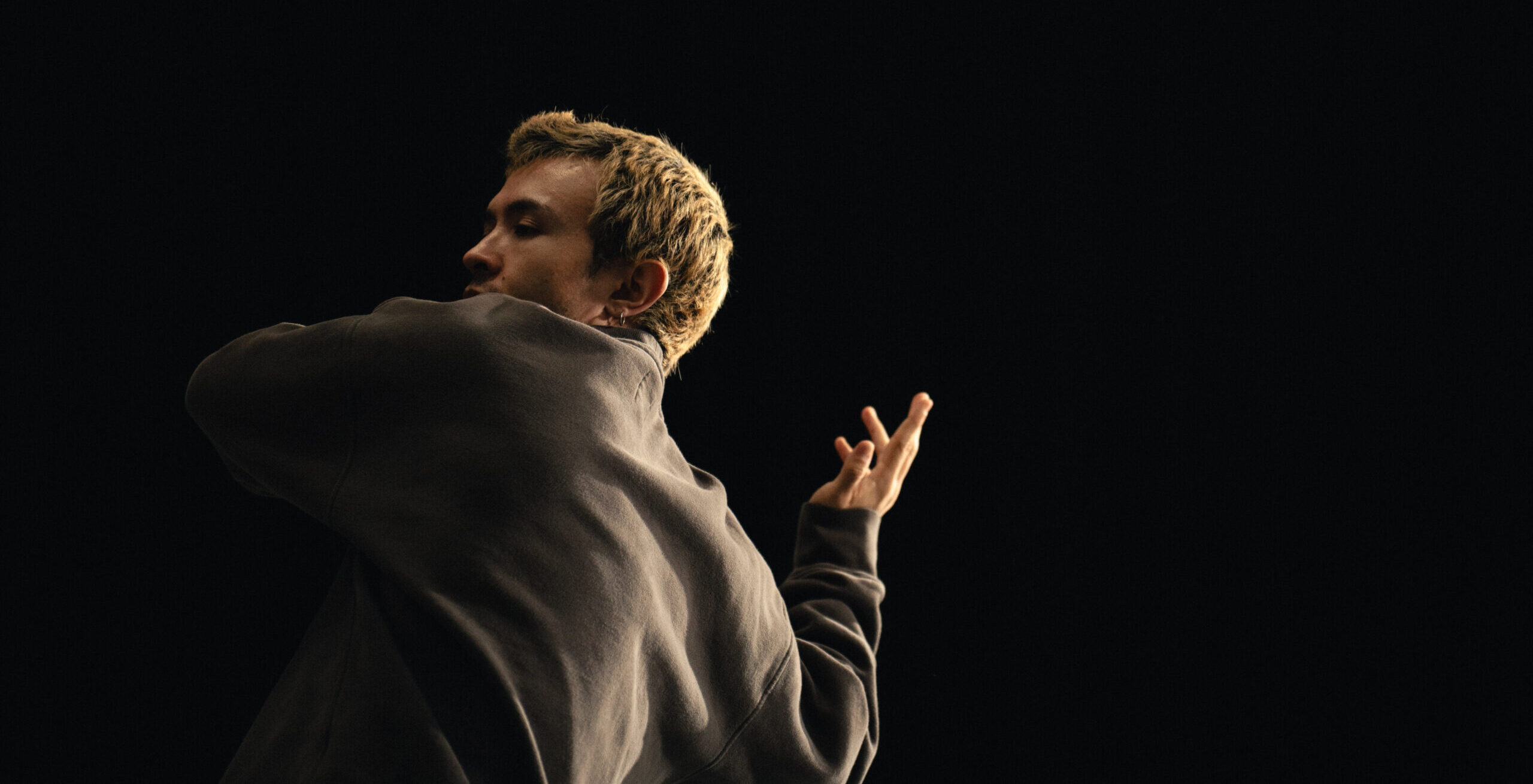
BalletBoyz’s Six Lethargies Melds Body, Mind, and Music on an Epic Scale

This month, BalletBoyz will premiere Six Lethargies, an epic feat of 44 dancers, 37 onstage musicians, and 2 choreographers. Now in its 25th year, the England-based dance troupe is known for its cinematic dance productions. Inspired by Keaton Henson’s 2019 score of the same title, BalletBoyz directors Michael Nunn and William Trevitt wanted to explore Henson’s musical study of trauma, personal memory, and universal truth. The show will premiere on November 18 at the Sadler’s Wells Theatre in London.
After establishing their theme, Nunn and Trevitt offered the choreography to dancemakers Iván Peréz and Seirian Griffiths, who have each worked with BalletBoyz on separate projects. Peréz and Griffiths had never choreographed together before, and the project’s scale might have seemed intimidating, but the prompt was too good to turn down. “There’s something about having so many bodies and so many faces onstage,” Griffiths says. “It’s an opportunity you can’t say no to.”
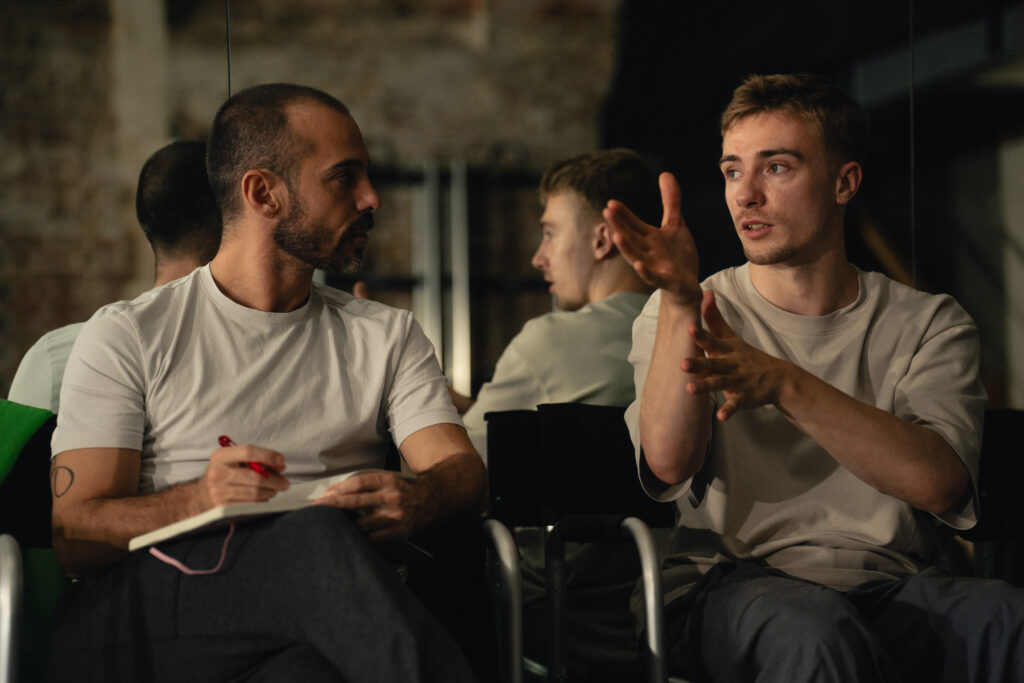
Peréz and Griffiths’ collaboration began with the music. “Keaton has spoken many times about the somatic experience of trauma,” says Peréz, who previously worked with Henson for BalletBoyz’s Young Men. “How do you experience that in your own body? So we’re trying to [make] something that is felt more than seen.”
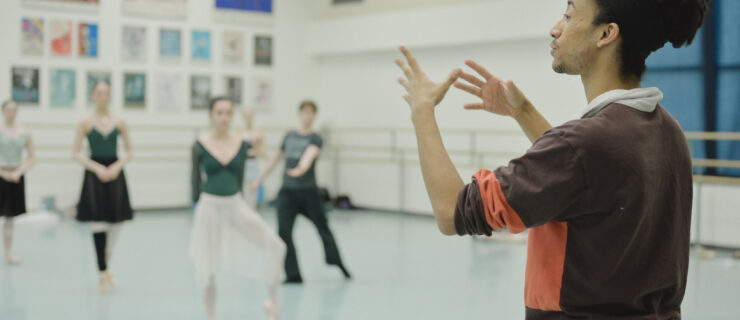
What came next was a “physical conversation,” Griffiths says. He and Peréz used improv to examine memory and trauma in their own bodies, and asked the dancers for input as well. “We had a whole afternoon of exploring our own authentic movement through prompts,” company member Joshua Attwood says. “It [helped] get us out of our dancer bodies and into moving as beings.”
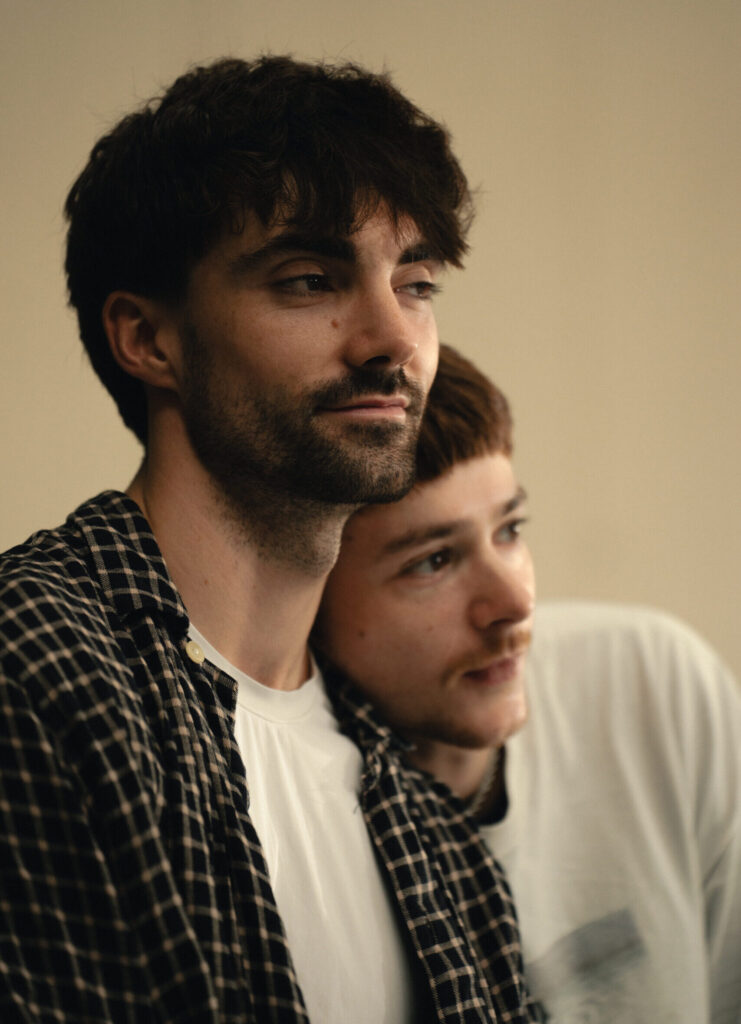
From these initial workshops, Peréz and Griffiths landed on a core image: embrace. They asked the group to consider how embrace manifests in each person differently. “To have a voice, both physically or intellectually, it does feel like a collaborative work,” company member Kai Tomioka says.
After the improv stage, Peréz and Griffiths planned to split the 70-minute piece into parts and work separately. “But we tried it, and then an hour later we were like, ‘No, we need each other’s input,’ ” Griffiths says.
In fact, both choreographers say working together has influenced their understanding of movement. “Seirian is a genius mind of space and body and mechanics,” Peréz says. “He envisions choreography in the most essential, fundamental form of how the body functions in space.” Likewise, Griffiths points to Peréz’s understanding of weight. “A lot of the time I think quite structurally, and then Iván brings this amazing layer [of] ‘How is the weight connected?’ ”
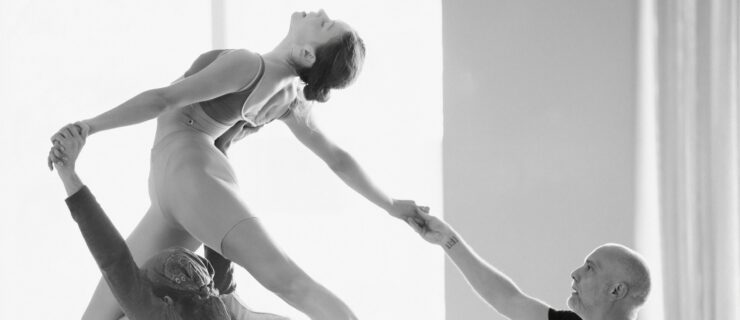
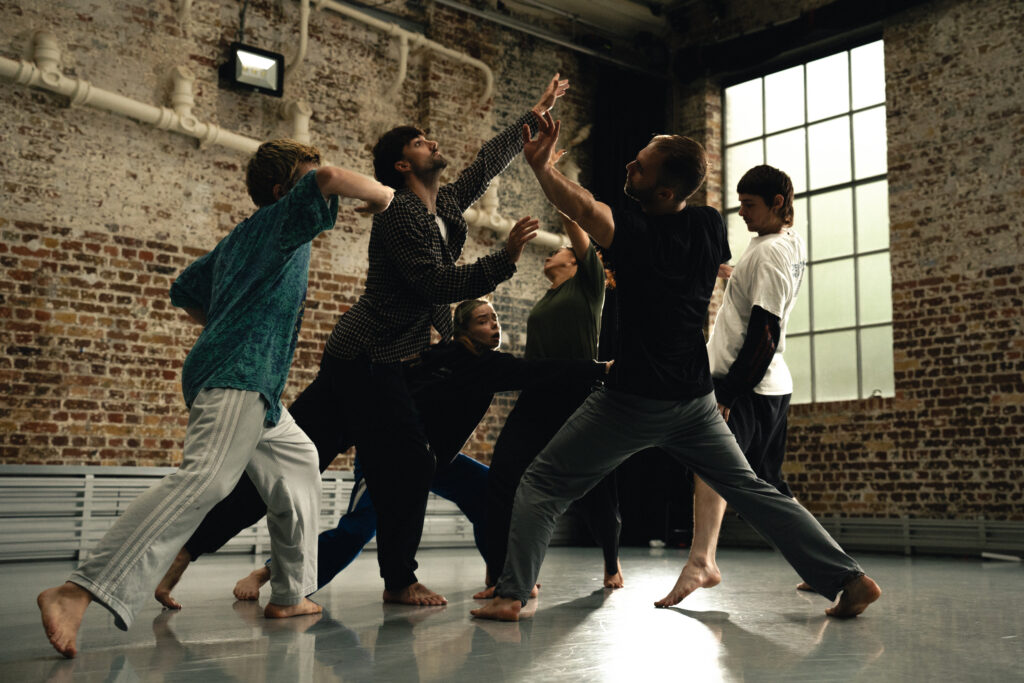
The resulting choreography braids together solos, duets, and ensemble work across the seven pieces which make up Henson’s Six Lethargies album. The boundaries between these entries, though, have remained fluid throughout the rehearsal process. “From [the improv] we had a duet that was rolling and lifting and pulling and counterweight, and that became the central material for the work,” Griffiths says. “From there you can take things apart, you can take a duet and make it into two solos, you can make that into group stuff…while maintaining that sensation of what it is to be moved, what it is to move someone.”
In this sense, Peréz and Griffiths’ movement will ask the same questions which inspired Henson’s score. This is why Nunn and Trevitt wanted the musicians onstage with the dancers. “We as movers on the stage are just a vessel to let the music enter us and let the stories then come out of us,” Attwood says. “However, it does will vary each night.”
For Tomioka, it’s this willingness to embrace Henson’s score which will give individual meaning to all 44 dancers onstage. “Everyone’s own feelings are their own truth,” he says. “I can have the confidence that how I feel is how I’m supposed to feel because it’s authentic to myself.”
With that individualism comes vulnerability, but Peréz says this is the point. “Many [BalletBoyz] choreographers have shown the power and the joy of seeing men dance,” he says. “But I think it’s more than that. It’s wonderful to see how [Nunn and Trevitt] dare to bring these topics forward that are not easy to talk about.”