As the Black Swan Musical Premieres, Dancer Ava Noble Takes Us Behind the Scenes

Black Swan, the Darren Aronofsky movie thriller that catapulted ballet into pop culture (while ruffling many dancers’ feathers), just made its stage premiere, 16 years after hitting the silver screen. Black Swan—the musical by Jen Silverman, with lyrics and score by Dave Malloy—officially opened on June 3 at Harvard University’s Loeb Drama Center in Cambridge, Massachusetts. Presented by American Repertory Theater, the production plays through July 12. With Sonya Tayeh at the helm as director and choreographer, many in the dance industry have high hopes for the show.
Pointe recently spoke with Black Swan ensemble dancer Ava Noble, a Broadway performer and graduate of the University of Southern California’s Glorya Kaufman School of Dance who has a background in several dance genres, including ballet and musical theater. Noble is also understudying the musical’s lead role of Nina Sayers (played by Melanie Moore), and she shares what it’s like to bring the movie’s story to the stage, how she prepared for the show’s intense physical demands, and why this adaptation may surprise the film’s most devoted fans.
How did you get involved with Black Swan?
I heard whispers of Black Swan happening. I’d written in my high school journal that it was my dream to work with Sonya Tayeh, so when I heard she was directing and choreographing, I was very eager to audition.
My agent wasn’t able to get me an appointment because I was fresh to New York City, people didn’t know my name yet, and it was a very competitive audition. My only other option was to attend the Equity chorus call. Since I was in a Broadway show at the time, I was a member of the union, which meant I could sign up for a slot and be seen, which was a huge privilege.
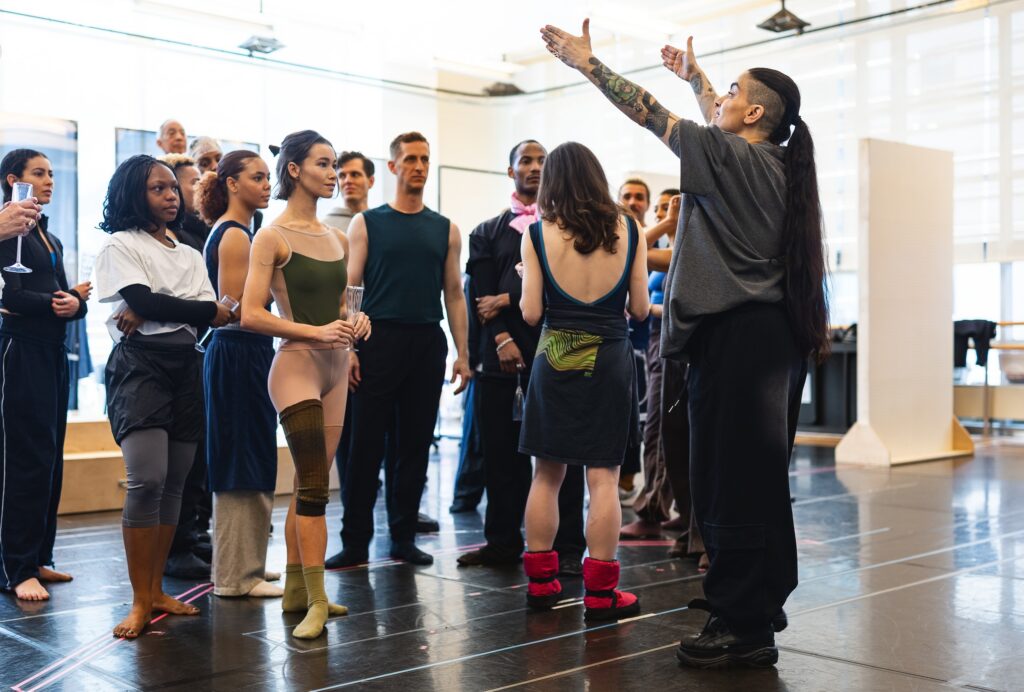
I went to the open call, learned the combination, and left without any idea whether I’d get a callback. I’m so grateful that I showed up that day and took a chance. It can be hard to put yourself out there, but that one decision changed my trajectory. I participated in two Black Swan workshops over the following two years, and now we’re finally doing our out-of-town run in Boston.
How dance-heavy is the production, and what kind of movement styles does it incorporate?
I’m understudying the role of Nina, originally played by Natalie Portman, and the role definitely dives into pointe. Without giving away too much, she shows her dedication to pointework as a ballerina before having an exciting switch-up. We have updates within our musical that highlight Sonya’s grounded and strength-heavy choreography in a way that also beautifully juxtaposes ballet.
Can you walk us through the rehearsal process and how it compares to working in a traditional ballet company?
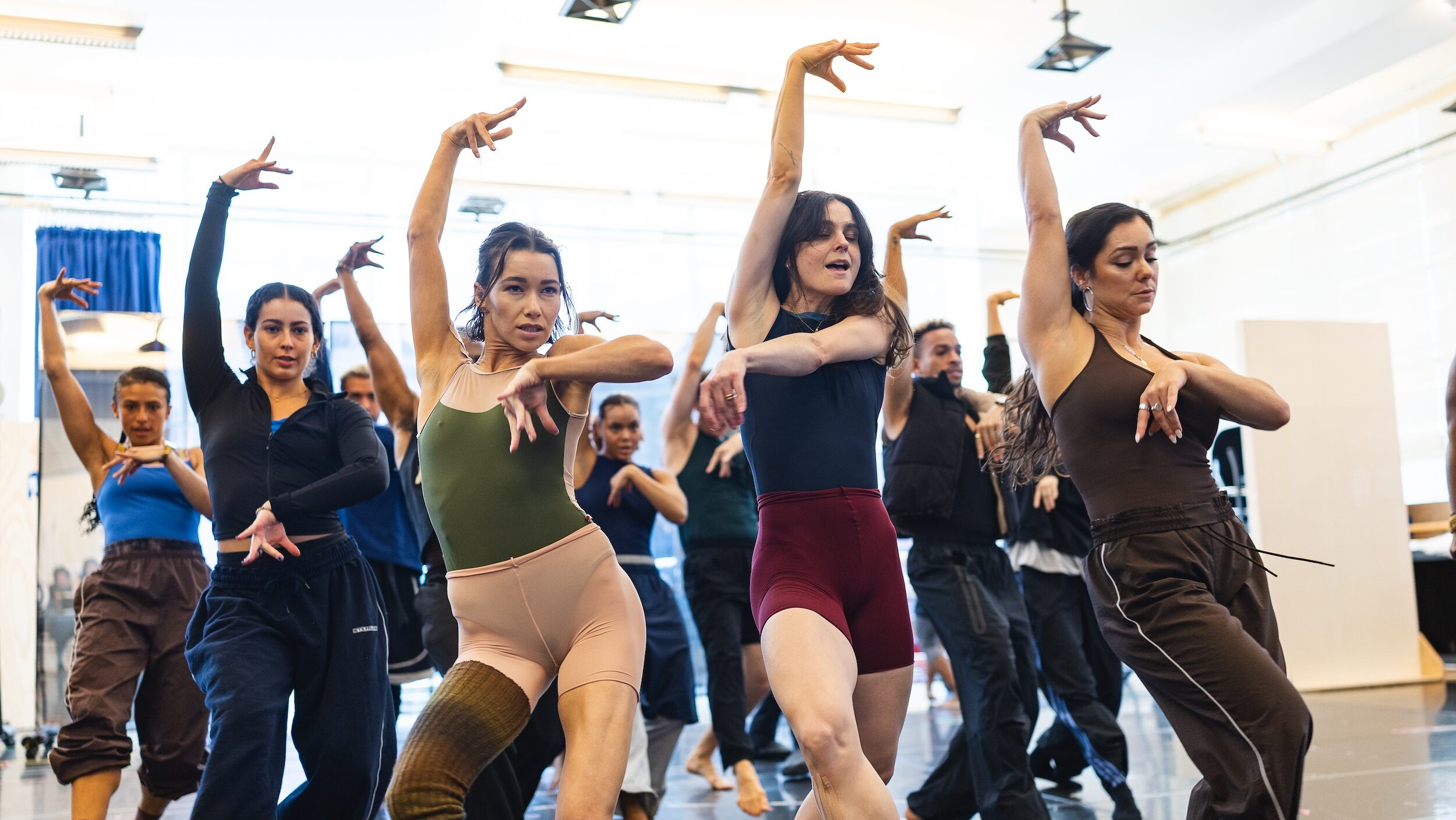
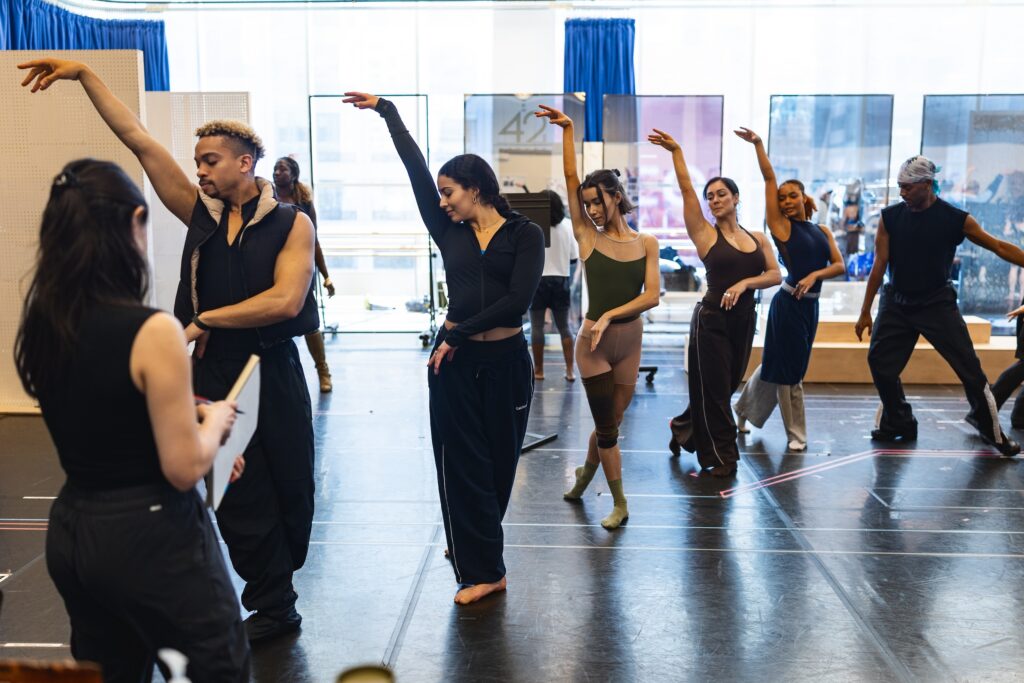
We start the morning with ballet class at 10 am before rehearsals start, and that is a testament to how dedicated we are to telling a ballet dancer’s story accurately onstage. We also hold ballet class during tech days and dress rehearsal. The rehearsal process is different from a ballet company, since it is a Broadway-style show, but there are elements that are similar, and since the show is portraying that life, we try to maintain some continuity with ballet classes. The material is incredibly physically and emotionally demanding, and it asks us to live in an intersection between technical precision and psychological unraveling.
What did you personally do to prepare for this production?
As soon as I got the call that I was in the cast, I enrolled in ballet privates once a week. I also took ballet classes four to five times a week, vocal lessons once a week, and acting classes. I shifted the entire next six months of my life toward training for the role. I quickly realized that I needed to go to physical therapy and get my body ready for eight shows a week. My experience in musical theater, combined with training at summer intensives with Alonzo King LINES Ballet and Alvin Ailey, gave me a strong foundation for the demands of this production.
What’s been your favorite part about working with choreographer Sonya Tayeh?
Sonya has such a brilliant vision and leads with so much care and grace. It’s easy to create choreography that’s performative to make an audience feel something, but Sonya is so in tune with dancers and what they’re thinking. She uses the word “synergy” a lot, and how we have to be beautifully connected with each other for the big picture to work. I think her ability to tune into where every dancer is on a spiritual level creates a larger synergy within the company that brings this production to the next level.
You’re a member of the ensemble while also understudying the principal role. How do you balance those two responsibilities?
Understudying Nina, which incorporates pointework as well as more contemporary choreography, is a different beast because it’s not only about knowing what to say, sing, and dance, but also maintaining physical strength without rehearsing that specific role every day. It’s also about understanding Nina’s psychological journey and carrying that responsibility quietly, while supporting the company and still showing up in my ensemble track on a day-to-day basis.
I was a swing in & Juliet on Broadway, and after that, I was in the ensemble of an off-Broadway show, so I’ve had my fair share of understanding my role as an understudy, a swing, and an ensemble member over the last two years. Those experiences have really prepared me to tackle anything, but it is a massive responsibility.
The original Black Swan has often been criticized within the ballet world for amplifying stereotypes about dancers and ballet culture. Does the stage adaptation characterize the industry differently than the film?
The musical uses different storytelling tools than the film to delve into Nina’s psyche. This adaptation explores a different power imbalance than the movie did. I think it also does a really great job of representing dancers as a whole. I’m really excited for people in the audience to experience, in real time, the pressure cooker that dancers put themselves through mentally, as well as experience the deep reward they get from performing onstage and sharing what we spend so many hours crafting in a studio. So I think it gives a fuller picture of who dancers are.
Has there been anything surprising about working on the musical?
I’m deeply interested in fashion, and working with Shiona Turini, our costume designer—who, by the way, designed Beyoncé’s last two tours—has sparked a passion in me. You’ll see on my Instagram videos of me cutting up and layering tights, exploring balletcore, and finding new ways to highlight a dancer’s body in an exciting way. Black Swan has made me think more about how dancers are often expected to look and move the same, and so experimenting with my own style—digging out old Yumikos I haven’t worn in years and reworking tights—has allowed me to express more of myself and who I am outside the studio.