Eco-Conscious Apparel: 3 Eco-Friendly Dancewear Brands Prioritizing Sustainability

What does the full lifespan of your tights, leotards, and shoes look like—including the time before you bought them and after they’re no longer useable?
Most dancewear contains synthetic fabrics and materials derived from fossil fuels that, once discarded, can take hundreds of years to break down. That is why it’s important to consider the entire lifecycle of a product from its creation to disposal, says Marissa Rowles, founder and president of Second Stage Dancewear, a Canadian nonprofit that promotes eco-friendly dance initiatives and facilitates a costume-reuse program internationally. “It’s about paying attention to how dancewear is made—the materials used, how they’re sourced, and the production processes involved,” she says.
The good news: Some dance brands are prioritizing sustainable practices, which means you have a growing number of eco-conscious options the next time you shop for dance apparel. Here are three brands of note.
Imperfect Pointes
UK-based Imperfect Pointes began selling the world’s first sustainable ballet tights in 2022 in partnership with Swedish Stockings. They are made with ECONYL yarn, a regenerated nylon fiber made from nylon waste found in the ocean, including fishing nets, fabric scraps, carpet flooring, and industrial plastic. “Recycled nylon is a game changer,” Rowles says. “It offers the same durability and stretch as traditional nylon but is made from postconsumer waste, reducing the need for virgin materials.”

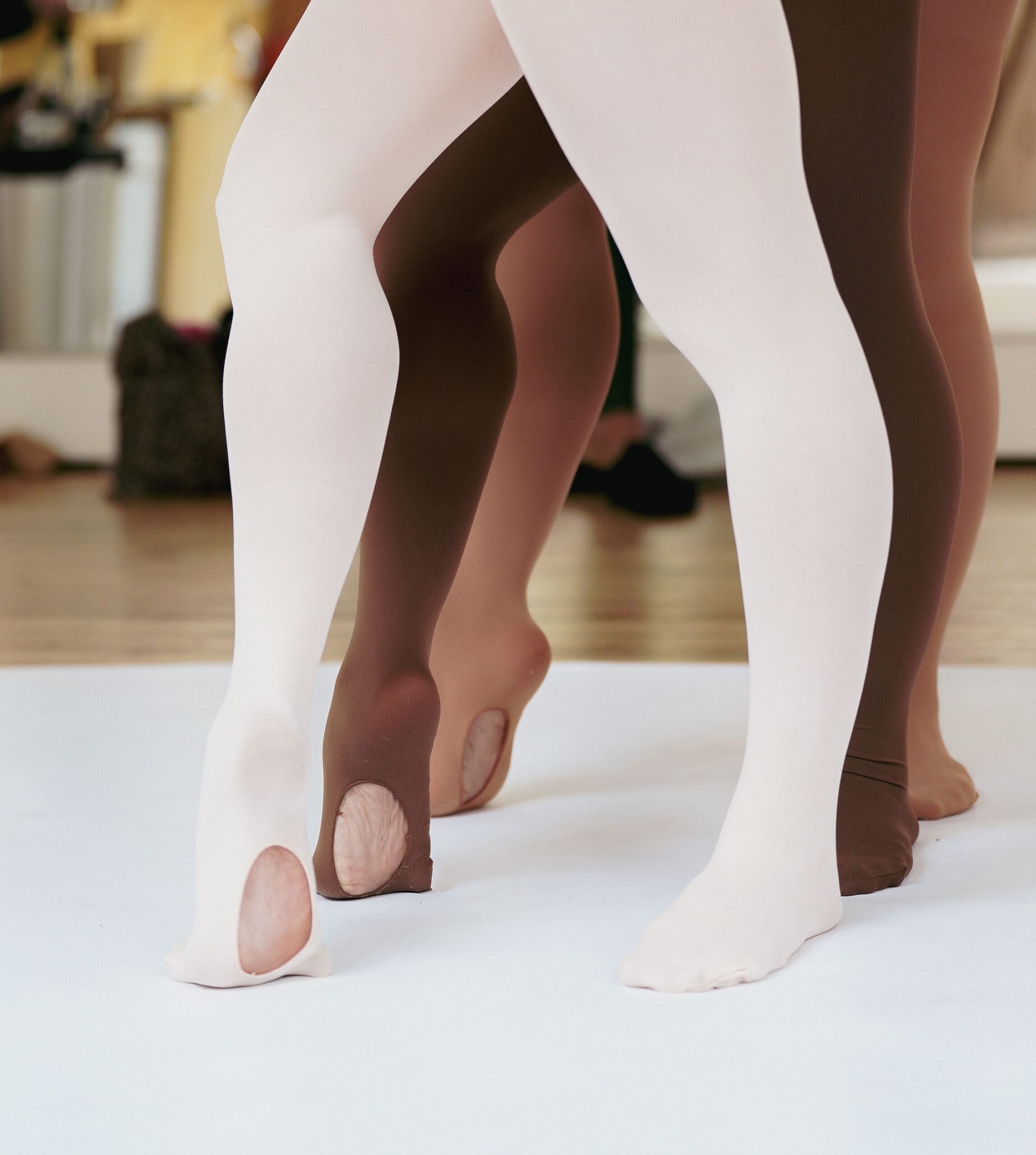
Manufactured at an Italian factory that uses renewable energy sources, like solar and wind, the color-fast tights come in four shades, are designed to last four times longer than traditional ballet tights, and were selected as the tights of choice by English National Ballet, beginning with its 2024–25 season.
Imperfect Pointes also uses ECONYL in its leotards and unitards, which are made at a family-run factory in England. All packaging is compostable, a tree is planted with each order, and the company has a tights recycling program. Mail in three or more pairs from any brand to get a discount code for 10 percent off. The tights are then eventually recycled into furniture or industrial items. The company also launched a storefront on the e-commerce platform Depop (under the name @dancewear_dilemmas), where it sells samples and “pre-loved” dancewear to help keep items out of landfills.
Founder and CEO Helen Banks started her company in 2020 after being laid off from her sportswear job at the start of the pandemic. She saw it as the perfect opportunity to create more sustainable dancewear options, not only for her daughter but for all dancers regardless of body shape, size, skin color, or gender. “The next generation of dancers will not only want to wear sustainable, long-lasting dancewear, but they’ll also want to know where it is being made and the conditions of the workers,” Banks says. “The ‘why’ of what I’m doing is really important, and it resonates with dancers.
SteelCore Studio
SteelCore Studio, a multifaceted dance business in Bethlehem, Pennsylvania, was founded by former New York City Ballet dancer Marisa Cerveris after she retired in 2001. In addition to teaching ballet and Pilates, Cerveris designs dancewear, activewear, and streetwear, with a strong focus on sustainability and studio-to-street style. “One of the biggest trends right now is the rise of multifunctional pieces that are versatile enough to be worn in multiple ways or across different training modalities,” Rowles says. “Pieces like this are not only practical, but they align with the growing demand for sustainable consumer habits, such as buying fewer items that serve more purposes.”
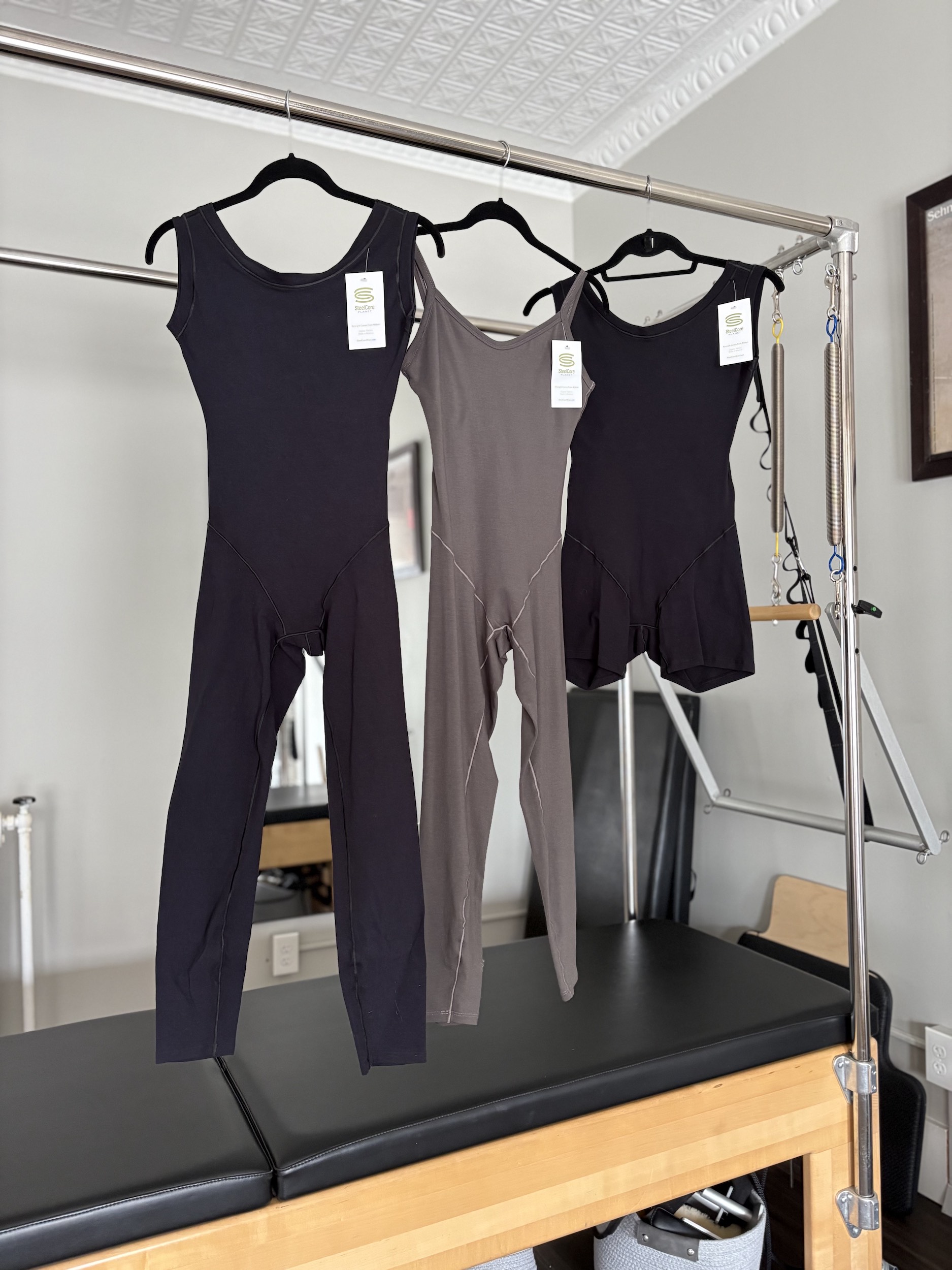
SteelCore Studio’s Sustainable Planet collection features unitards, unishorts, shorts, and leggings made with organic cotton, and tops and dresses made with organic bamboo. The organic, four-way stretch cotton/spandex blend is custom-knit in North Carolina. Its trademarked SkinSilk fabric is produced at a Blue Sign–certified mill in Italy, adhering to global sustainability standards. And, some of the brand’s collections use upcycled, first-run fabric sourced from the same mills that supply Lululemon and Beyond Yoga. All of SteelCore Studio’s pieces are sewn in Pennsylvania.
“We should be thinking about not only the fabric we are using and wearing, but also how the product is made,” Cerveris says. She’s invested in a special sewing machine that allows her team to manufacture what she calls “UnSEAMly” styles. That means activewear with no elastic bands and no center front seam or side seams that will cut in or ride up. “Our new seaming is virtually undetectable, with no seam selvage whatsoever on the inside,” she says. “It’s also 30 percent stronger with twice the stretch capability of regular flatlock stitching that our competitors use.”
Aurora Skirts
After repeated requests for her handmade rehearsal skirts, Sophie Williams launched her Aurora Skirts Etsy storefront in 2017 while she was an Oklahoma City Ballet apprentice. “The dance world isn’t immune to the waste of fast fashion, and while we don’t need to be perfect, I think dancers care deeply about what they wear and the values behind it,” says Williams. “There’s so much beauty in slowing down and choosing something made with care.”
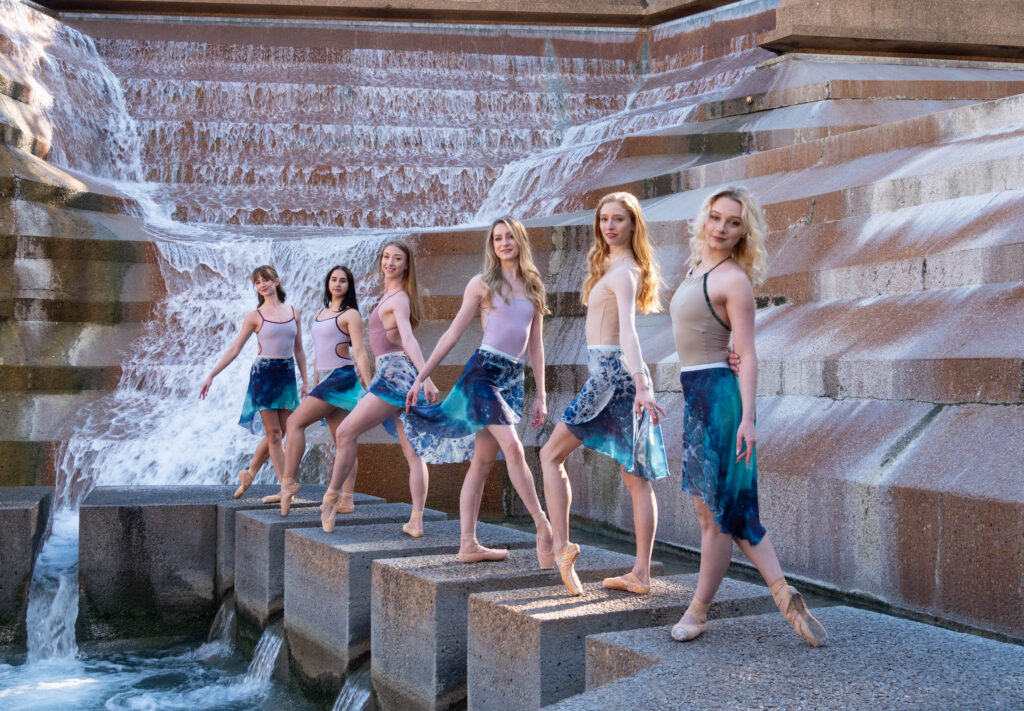
Williams uses 100 percent recycled polyester (rPET) in her solid-colored designs to provide the lightweight, flowy feel dancers expect from chiffon, but it “uses far less energy and doesn’t rely on new petroleum,” she says. Aurora Skirts’ printed options utilize fabric she orders from Spoonflower, a company that digitally prints designs with water-based inks at facilities within the U.S. “Each skirt is made to order, which helps reduce excess inventory and water waste,” Williams says. “I also try to repurpose fabric scraps whenever I can, often donating them to local classrooms for art projects.”
A 2022 collaboration with Artists Climate Collective, a group of dance artists who use art as a tool to grow environmental awareness, featured a (now sold-out) earth-toned line of sustainable skirts, with 20 percent of the proceeds going to three environmental organizations supported by the ACC. “The collaboration brought together artistry, sustainability, and climate action in such a meaningful way,” Williams says. “Working with artists, commissioning new works, and translating that into dancewear feels like such a natural extension of the creative process.”
Williams, who currently dances with Texas Ballet Theater, continues to design and sew every single skirt that her company sells. That means sometimes putting Aurora Skirts on hold during busy performance seasons. “I plan to keep things small and intentional,” Williams says. “Growth for me doesn’t necessarily mean scaling up production. It means deepening the artistic impact and connection.”