Indianapolis School of Ballet Pairs Serious Balanchine Training and Professional Insights

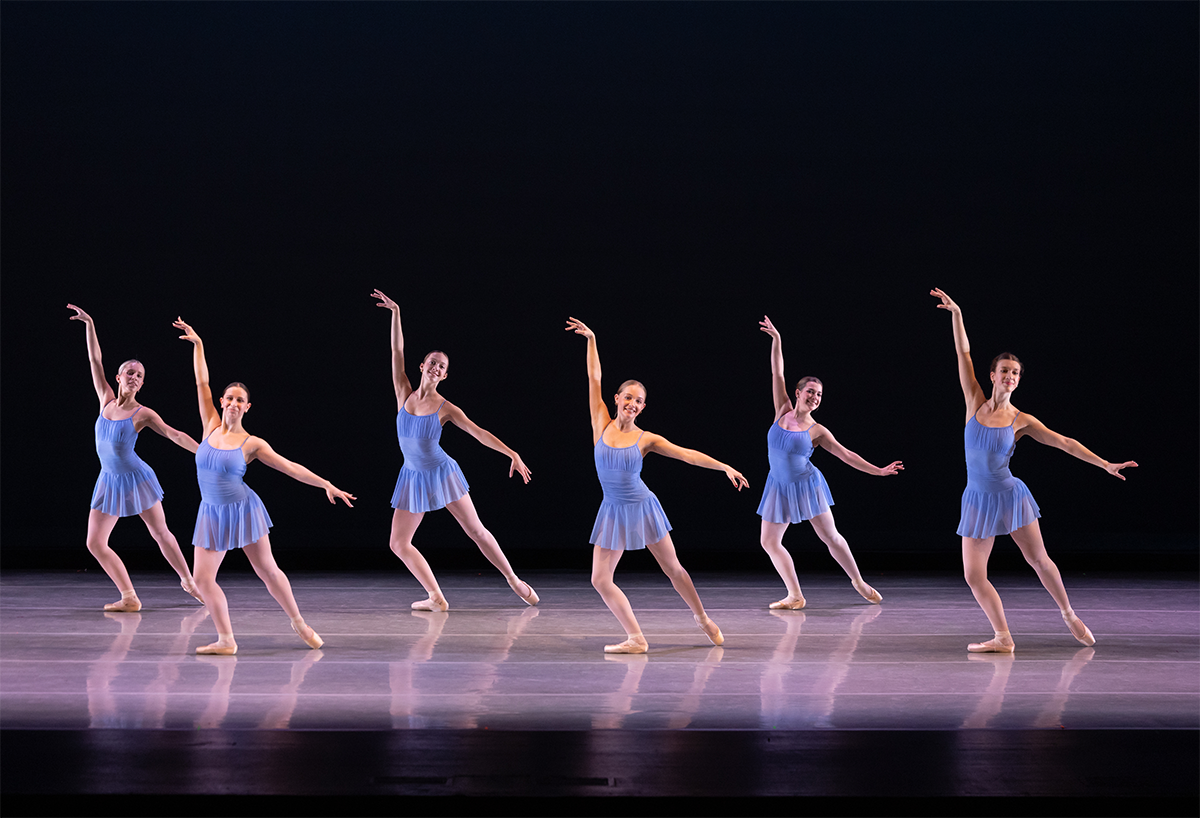
Professional dancers can sometimes feel a bit out of reach for students. But at the Indianapolis School of Ballet, “it’s really like the company ends and the school begins back to back,” says Lauren Fadeley Veyette, who joined as the head of school in January and had Balanchine-rich careers at Miami City Ballet and Pennsylvania Ballet. “Students get to take class from the Sugar Plum Fairy and then see her onstage. It’s humanizing the dancers—the career seems a little bit more attainable. But also you see the hard work (and the level of respect) that goes into it.”
This close relationship between the company and the school partially stems from the history of the organization: Founding artistic director Victoria Lyras, a former Pennsylvania Ballet principal dancer who trained in Balanchine at the School of American Ballet, started the Indianapolis School of Ballet in 2006 after the city’s former ballet company went bankrupt. She was determined to fill the opening in Indianapolis’ arts scene. “The long-term goal was always to establish Indianapolis Ballet, but we started with the school, and it was really pivotal in creating the company,” she says. Once she had enough advanced dancers, the organization put on performances of Balanchine ballets using students as well as alumni who’d gone on to join such companies as Nashville Ballet, Cincinnati Ballet, and Nevada Ballet Theatre.
The result? By 2018, Lyras had built up enough local interest in Balanchine’s neoclassical repertoire to launch Indianapolis Ballet’s professional company. To this day, Indianapolis School of Ballet remains the only school in the city dedicated to teaching Balanchine technique at a high level.

Close Relationship Between Company and School
Now, pros and students alike share the same studios. Several company members teach on faculty and coach students for Youth America Grand Prix and Universal Ballet Competition. Students are often used in company productions accompanied by a live orchestra. And most years, about one or two dancers graduate from the trainee program into Indianapolis Ballet.
“Giving our students those extraordinary opportunities to dance with a professional ballet company is really where the seeds are planted—that’s what you hope inspires them to continue in the profession,” says Lyras, who points out that this is similar to the model she experienced herself as a student at SAB. Fadeley Veyette adds that even when the company gets invited to perform at an outdoor arts festival, they’ll ask to include an opportunity for the school, too. “If the company’s already performing, we try to get our students in there as much as possible,” she says.
The school also offers formal mentorship opportunities for advanced students to closely interact with faculty members, including the professional dancers who teach. Once a month, they can confidentially speak with and get advice from their mentor, says Emily Nord Womersley, director of young children’s program and manager of student services. “It’s one of the ways we give to the whole student—not just teaching them dance, but everything they need,” she says.
Longevity Meets Versatility of Training in the School’s 20th Year
Nord Womersley, who’s been on faculty since the doors first opened, says she’s not surprised the school is now celebrating its 20th-anniversary season, having survived recessions and the pandemic. Lyras “always had such a clear vision from the beginning,” says Nord Womersley. “I remember people saying, ‘Oh, there are already so many dance schools in Indy.’ And I thought, but not a school like this. And that has held up.”
In addition to serious pre-professional training in Balanchine-based technique, students also study tap, jazz, and modern. “Tap is actually required for ages 4 through Level 5, where the average age is 12,” Nord Womersley says. While it’s an elective for Level 6 through Level 8, most dancers choose to continue taking it. “Tap teaches them precision and musicality and rhythm,” she says. “And also, it’s so different from ballet because it’s heavier into the floor.”

Small Class Sizes and Balanchine Training
With smaller class sizes—the school has about 150 students total—dancers get individualized attention from teachers. Nord Womersley points out that a handful of teachers have been on faculty for 10 to 15 years, and many students stay with the school until they graduate high school, even if they don’t pursue dance professionally.
“Everybody knows each other,” Fadeley Veyette says. “You get to really know who students are as dancers but also as people, and guide them in what they need.”
As an intimate, Balanchine-based pre-professional school, Indianapolis School of Ballet is ideal for any student looking for strong neoclassical technique, invaluable insights into what a professional dance career is like, and training to become more than just the average “cookie-cutter” dancer, Fadeley Veyette says. “I don’t want to see the steps—I want to see you doing the steps,” she says. “That’s really what’s most important: you shining through what you’re doing.”

Auditions aren’t required for the year-round Pre-Professional Program (aside from the Trainee Program). And those who want to take part in the summer intensive can audition in person in Indianapolis and at select tour locations, or via video. To learn more about Indianapolis School of Ballet and how to join, click here.