Pacific Northwest Ballet’s Lucien Postlewaite Looks Back on His 23-Year Career

Chatting with Lucien Postlewaite, it’s immediately apparent that he’s a deep thinker. The Pacific Northwest Ballet principal dancer has done a lot of introspection and self-reflection—skills that he now imparts to others through his work as a life coach.
But he also trusts his gut, especially when it comes to major career moves. So when he was making the decision to retire from performing after 23 years (announced almost a year ago, well in advance of his final bow this month on June 7), Postlewaite tells Pointe that, “through that process of listening, being quiet with myself,” he simply knew that now was the right time.
Postlewaite joined PNB as an apprentice in 2003, the last dancer still in the company to have been hired by longtime artistic directors Kent Stowell and Francia Russell. He swiftly rose through the ranks, becoming a principal dancer in 2008. Pointe recently spoke with the 42-year-old as he prepares for his final show during PNB’s Season Encore Performance.
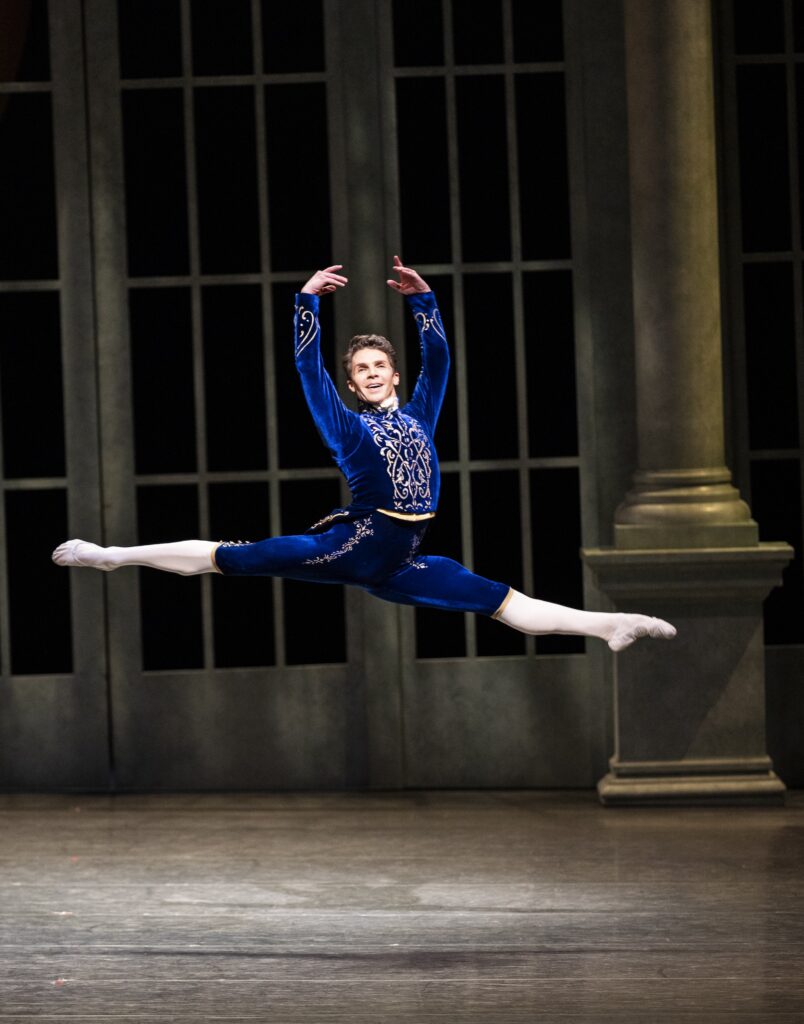
How are you feeling about your 23-year dance career coming to a close?
It’s complex. There’s joy, and also grief. For me, grief tells me how much I love something, and this is something that I really love.
What are the plans for your final performance?
I’ve been processing this for a while, so it’s given me the opportunity to really design what this final moment looks like. We’ll be doing five excerpts. It’s a big, meaty program. In rehearsal, I’m asking myself, “Wow, what did I sign myself up for?” Because as much as I feel at the height of my game, it’s a beefy program.
One of the excerpts you’ll be dancing, from Christopher Wheeldon’s Curious Kingdom, was created during COVID lockdown and never performed for a live audience. How does it feel to finally be dancing it live for the first (and last) time?
Up until now, there’s been some sorrow that it hasn’t made it to a live stage, so that’s part of why I wanted to include it. It’s a solo to Edith Piaf’s “No Regrets,” so that just feels so right, so poetic to offer to the audience: That I have no regrets. I’ve given it all.
Before joining PNB in 2003, you encountered a major career setback: losing an apprenticeship with New York City Ballet after getting caught drinking as a student at the School of American Ballet. How were you able to redirect?
Ballet has trained me to be incredibly resilient. You fall, and you pick yourself back up. I’ve had a few chapters in my life where I felt so broken that I didn’t know how to go forward, and at that point with NYCB, I was just broken. Fortunately, there were people who saw something in me at that time to help me put one foot in front of the next and walk step by step toward building myself.
You left PNB in 2012 to dance with Les Ballets de Monte-Carlo. What did you learn from that experience?
I learned [that] I didn’t have to hold my technique and artistry with such a firm grip. My Balanchine training was a lot about holding tension, and this new gift was one of releasing tension. I also learned how to live in a completely new cultural context, completely new environment. I was in a marriage and got divorced over that time, and being abroad by myself was a really extreme hardship. So I learned, again, my capability for resilience.
Why did you decide to return to PNB in 2017?
Part of it was, I wanted to take all the tools that I had learned in Monaco and apply them to a more classical rep. Even though PNB’s rep is very diverse, it still swings more classically than Ballets de Monte-Carlo, so I wanted to reintegrate and understand what it felt like to do these roles again—but as the new dancer that I was.
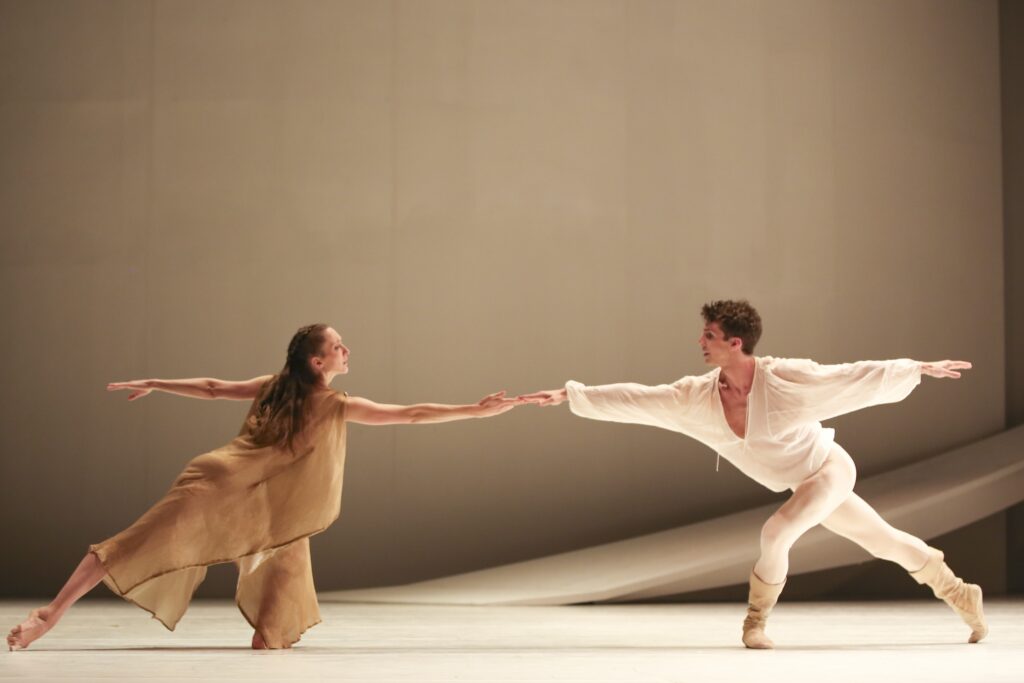
Postlewaite in Jean-Christophe Maillot’s Roméo et Juliette. Photo by Angela Sterling, courtesy Pacific Northwest Ballet.
You’re renowned not only for your dancing but for your ability to really bring characters to life. What’s your secret?
I use my life experience to expand my artistic tool belt. So the anguish that I felt when I lost my NYCB apprenticeship, the depth of those emotions, that became a well that I could draw from when I’m playing the Prodigal Son or Romeo, or these characters that go into these pits of despair.
Most ballets still portray heteronormative characters. As a gay man, how have you navigated incorporating that part of yourself as an artist onstage?
I’ve felt really fortunate to work with choreographers who allow all of me to come into the space. A piece that comes to mind is Edwaard Liang’s The Veil Between Worlds. Liang said, “Don’t hold back. Be all the things that you are.” One of the first times I danced it, I remember feeling so connected to the audience and to myself that I came offstage in tears. I wasn’t “dancing gay” or whatever, I just didn’t feel like I had to leave that part of myself at the door. To allow myself to be seen so fully is such a gift.
What are the biggest challenges you’ve overcome as a professional dancer?
In my mid-to-late-30s, I found myself in a deep mental health crisis. I was living for this projection of who I thought I needed to be. Perfectionism lived in that space, a lot of self-criticism, and I didn’t know who I was. That landed me in what I call “my rock bottom,” and it taught me how to reach out for help.

Why did you decide to pursue work as a life coach?
I’ve spent my life honing my values, working on resilience, confronting and healing my limiting beliefs, writing new scripts for myself—which is all stuff in the coaching space. Now, I have the opportunity to help other people be their most luminous selves. That comes from not being afraid to explore the dark, and not being afraid to dig into the pain so that we can learn from it.
What’s next for your life-coaching business?
I’m opening a coaching studio! Currently, I see all of my clients virtually, so this will be a brick-and-mortar space where I can see clients in person. Part of my work is somatic coaching—listening to the body, learning from the body—so having space to explore that with clients is something I’m really excited about.
What do you think you’ll miss most about being a professional dancer?
Experiencing flow with a partner. We develop a shared language. When I can do that with a partner—[when] our nervous systems sync up, our energies sync up, we’re communicating nonverbally—that is a rare gift. And I will miss that.
What do you hope audiences will remember you for as an artist and dancer?
A younger me would have said my technique and my artistry. Sitting here right now, what I know they’ll remember me for is my spirit.