Oakland Ballet’s Angel Island Project Shines a Light on the Immigrant Experience
On March 22, Oakland Ballet dancers ferried to Angel Island to perform excerpts of their upcoming premiere, Angel Island Project, at the island’s historic Immigration Station. They danced at the water’s edge facing the detention barracks, with the bay at their backs, where nearly a century ago approximately 500,000 immigrants from 80 countries arrived and walked onto the same shoreline.
From 1910–40, the Angel Island Immigration Station served as an immigration port located in the San Francisco Bay. It is often referred to as the “Ellis Island of the West,” but while immigration processing occurred at each location, the similarity stops there. Angel Island was more of a detention center during the era of the Chinese Exclusion Act in the U.S. Immigrants there could be held weeks, months, sometimes even years, waiting for their fates to be decided.
During the long detention periods, some of the Chinese detainees carved poetry into the barracks’ walls. The poems survived decades past the decommissioning of the station and served as inspiration for Angel Island, an original oratorio by Chinese American composer Huang Ruo, commissioned by the San Francisco–based Del Sol Quartet in 2017 and premiered in 2021. Now, on May 4, Oakland Ballet will premiere the entirety of Angel Island Project to a live performance of Ruo’s composition at the historic Paramount Theatre in downtown Oakland.

“It’s our biggest production to date,” says artistic director Graham Lustig. “We have seven choreographers, three designers, the Del Sol quartet, and Volti choral group, and more than 70 costumes.”
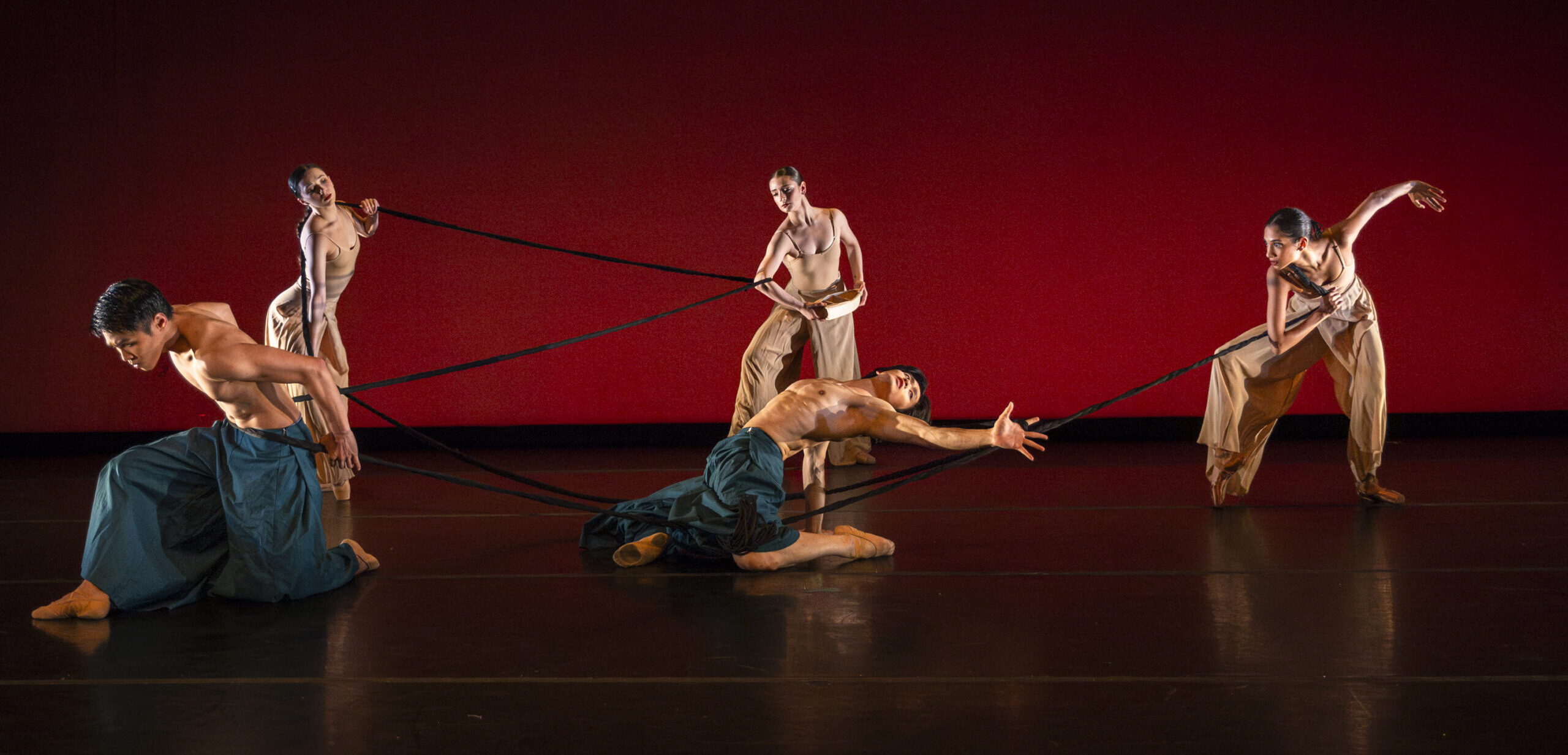
The evening-length ballet will feature work by seasoned choreographers like Natasha Adorlee, Phil Chan, Ye Feng, and Elaine Kudo, and dancers early in their choreographic careers, including Lawrence Chen, Ashley Thopiah, and Wei Wang. Either individually or in pairs, they have choreographed sections of Ruo’s score.
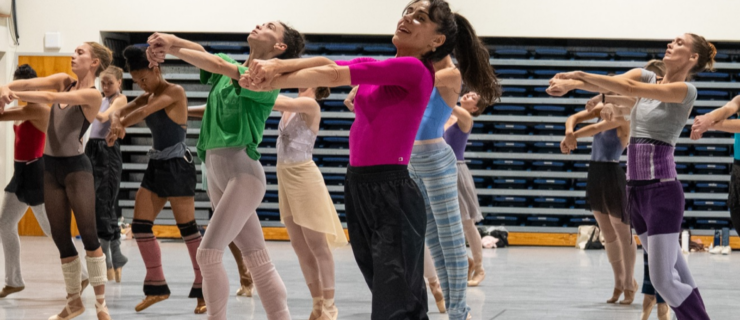
In January, Lustig brought the Oakland Ballet company, the board of directors, and the staff to Angel Island for a private tour of the Immigration Station. For Chen, a company member since 2021, the experience of touring the barracks, reading the poetry on the walls, and performing on the island brought further clarity to his choreography.
“After the initial tour, everyone had a newfound sense of purpose; there was a good creative surge,” says Chen. “Being able to perform on the island felt very different from any rehearsal or previous performances.”

Chen’s piece, co-choreographed with fellow company member Thopiah, is inspired by poems in the barracks that describe being able to see life beyond the island but not experience it, shedding light on those who have suffered under systems that alienate them from their identity and community. “Those feelings of anger, frustration, and grief are the main driving factors for the piece,” he says. “It’s centered around people who are awaiting a decision.”
For Feng, a National First-Class Chinese dancer, her own immigrant experience connected her to the poetry: “This is my ninth year in the United States,” says Feng. “When I first arrived, I felt like I was living on an island alone. When I saw the poems carved into the walls at Angel Island, I broke into tears. Though we are separated by time, history and human feeling are like a thread that ties us together.”
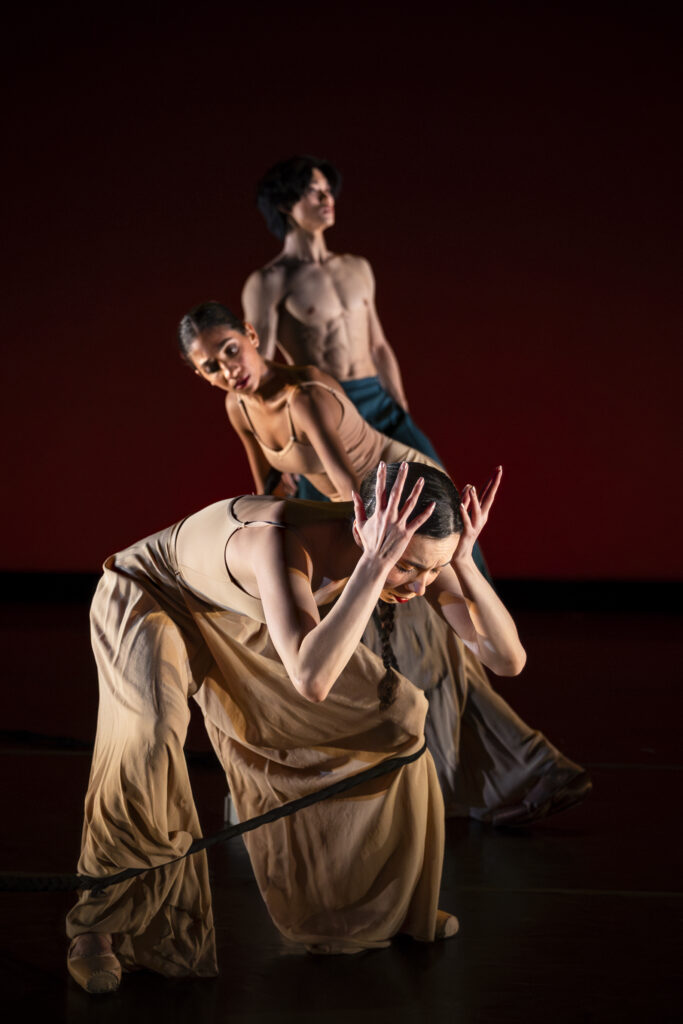
Feng brought her expertise in classical Chinese dance to the project, her first commission from a ballet company. “Classical Chinese dance and ballet are fundamentally different in structure,” Feng says. “In Chinese dance, the center of gravity is in the heels, and movement is driven from the lower abdomen (dantian). In ballet, the weight is more forward, and movement flows from the center outward. Chinese movement tends to be subtle and poetic—like the short verses on the Angel Island walls, filled with deep nostalgia in just a few words.”
Wang, a principal dancer with San Francisco Ballet, used his experiences dancing with choreographers like Yuri Possokhov, Liam Scarlett, and Akram Khan to create movement about “the hopeful dreams within every immigrant,” he says. His section draws on the life of Quok Shee, a woman who was detained on Angel Island for nearly 600 nights.
However the history, the poems, or the music are brought to life through dance, the Angel Island Project, this year’s iteration of Oakland Ballet’s Dancing Moons Festival, is a platform for Asian and Asian American choreographers to bring the voices of the past into the present, and create new stories in their own voices.
“This project is timed in a very interesting place in history,” says Chen. “A similar thing is happening today. I think Angel Island isn’t just about Angel Island, but it can be expanded into the immigration experience in general. Knowing the history of the island and the work that we’re trying to present, it’s not just something to be sad about but something to learn from and never repeat again.”