A Welcome Guest: Ryan Tomash at New York City Ballet

No one knew quite what to expect when, in March 2025, New York City Ballet announced that Royal Danish Ballet principal Ryan Tomash would be joining the company that fall, as a soloist. Tomash, who took a year of absence in Copenhagen to expand his horizons, was not well known in the U.S. He had not previously worked with either of NYCB’s choreographers in residence, Justin Peck or Alexei Ratmansky. He arrived in New York City as an unknown quantity.
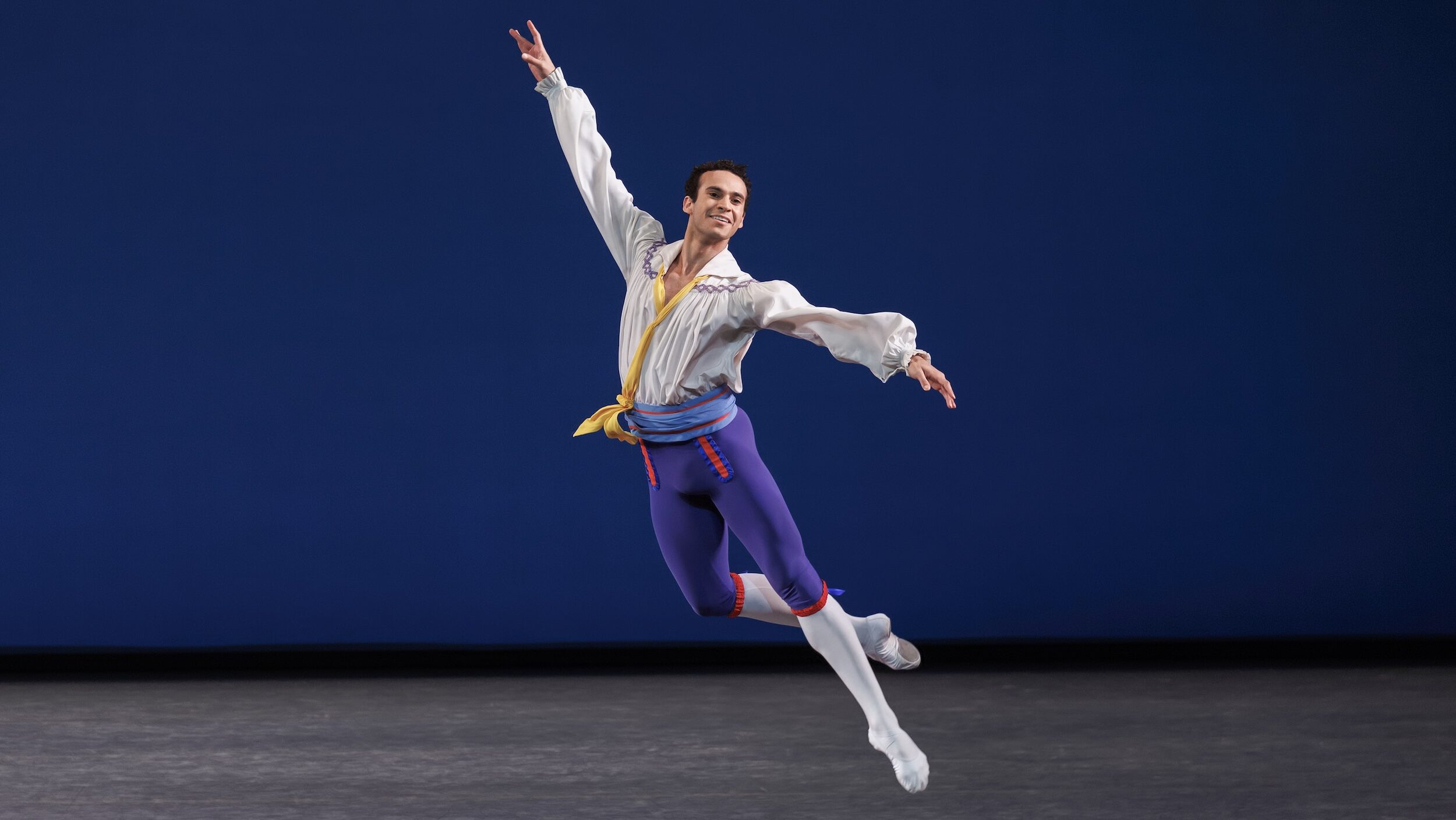
But Tomash did not stay under the radar for long. His very first performance last September was in Western Symphony, George Balanchine’s 1954 ballet about cowboys and showgirls. Wearing a 10-gallon hat and a Western shirt, and dancing with Isabella LaFreniere, he seemed to be having the time of his life. So did she. Just weeks into their new partnership, the two exuded the kind of comfort that usually takes years to establish. “It was an absolute blast,” says LaFreniere, “and we haven’t stopped having fun together since.”
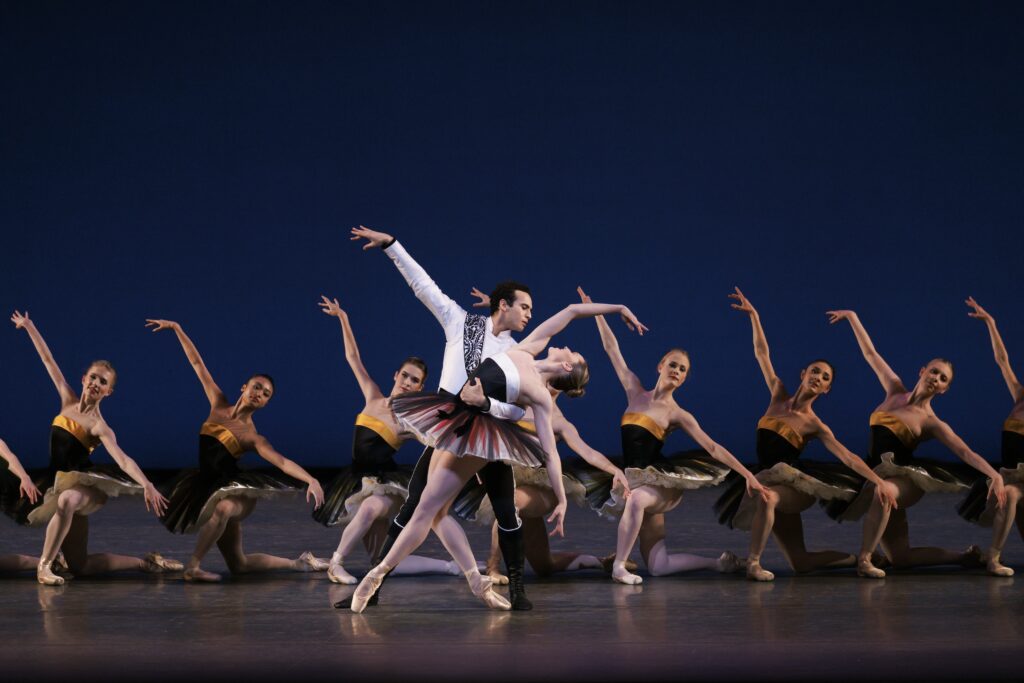
In the months since, Tomash has debuted in 18 roles, everything from the adagio movement in Symphony in C to Christopher Wheeldon’s Continuum to Jerome Robbins’ Dances at a Gathering. He has originated roles in world premieres by Jamar Roberts and Tiler Peck, and danced in new ballets by Justin Peck and Alexei Ratmansky. And he appeared in the most Danish of divertissements: the pas de deux from August Bournonville’s Flower Festival in Genzano, which returned to the repertory this season after a long hiatus. In all of these, Tomash appeared in his element, while bringing a touch of himself: a palpable warmth, a keen engagement with his partners, and a profound focus that allows the choreography to speak through him. “I feel like a huge sponge,” Tomash tells Pointe. “I’m trying to take it all in, the nuances and the style of each ballet, of each choreographer.”
Tomash’s ability to adapt to different roles comes up in conversations with many of those who have worked with him. “Ryan brings an extraordinary breadth,” says Royal Danish ballet artistic director Amy Watson. “From the clarity and rigor of classical ballet to the nuanced physicality of contemporary work, his range is genuinely remarkable.” Wendy Whelan, associate director of New York City Ballet, calls him a chameleon.
In his eight years at the Royal Danish Ballet, where he became a principal in 2022, Tomash absorbed that company’s focus on conveying characters and situations. The Danish repertory is grounded upon the 19th-century narrative ballets of August Bournonville, which are populated by a mix of everyday people and supernatural beings. And that narrative tradition continues in the works of Flemming Flindt, John Neumeier, Christopher Wheeldon, and others. From his earliest days, Tomash has taken a keen interest in depicting characters and immersing himself in their stories. (Since arriving in New York City, he has spent much of his free time going to the theater.)
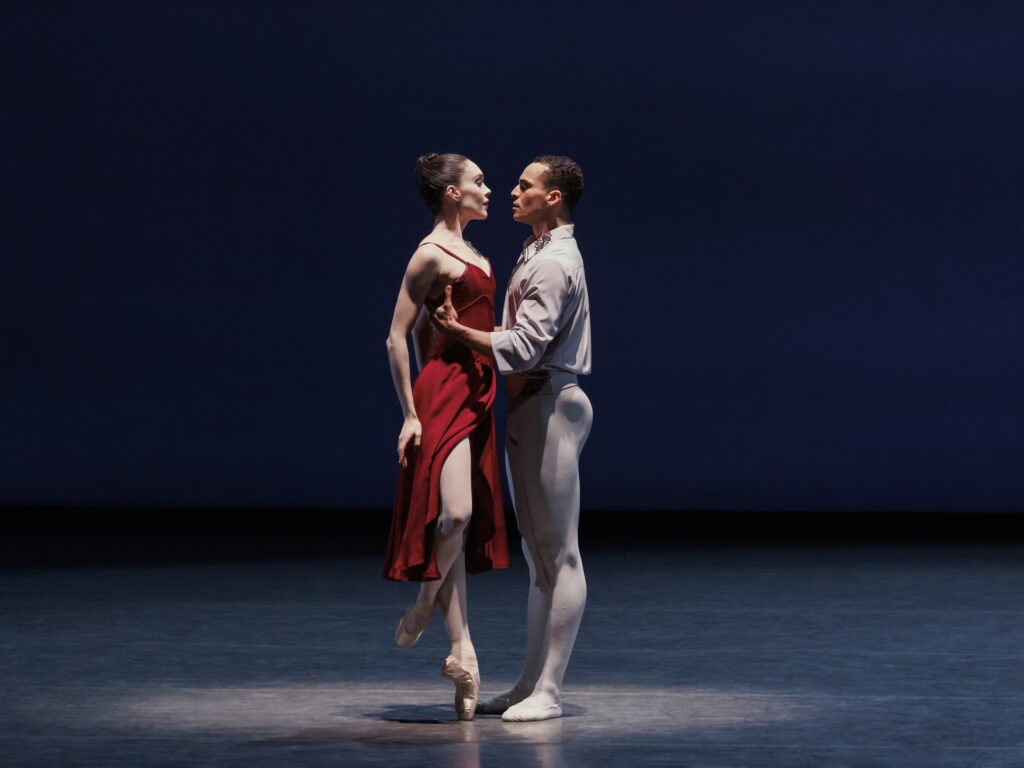
Neumeier, whose ballets are almost like danced plays, took an early interest in Tomash in Copenhagen. In 2019, while still a corps member, Tomash danced the role of Armand, the young lover in Neumeier’s Lady of the Camellias. According to the Danish critic Alexander Meinertz, the sincerity of his depiction was immediately compelling. “The presence and the ardor—you could see all the emotions of the character,” Meinertz says. “He just gave himself completely.”
Tomash’s interest in storytelling goes back to his time as a student at Canada’s National Ballet School. It is there, at age 12, that he began working with Sorella Englund, a Danish dramatic ballerina who went on to become a great character dancer—she was extraordinary as both the Sylph and as Madge, the witch, in La Sylphide—and teacher. For years she taught in Canada, where Tomash grew up. “There he was, this curious sunshine boy who brought everything of himself and did great improvisations of stories,” remembers Englund, who was instrumental in his joining the Royal Danish Ballet.
Together, in Copenhagen (where Englund currently lives) as in Toronto, they have worked on much of the ballet repertoire. She has influenced his way of learning, and even of thinking about ballet. The intensity with which he studies his roles has helped him mold himself to each new part, even in abstract works. “I’m so heavily influenced by storytelling, and stories, that when there’s not necessarily a story, I find myself looking for a mood or something that can inform my physicality,” says Tomash. In Western Symphony he is a cowboy; in Symphony in C, he is the cavalier, there to support the ballerina, to allow her to feel free, to lose herself in the grandeur of the music. “That’s enough story for me,” he says.
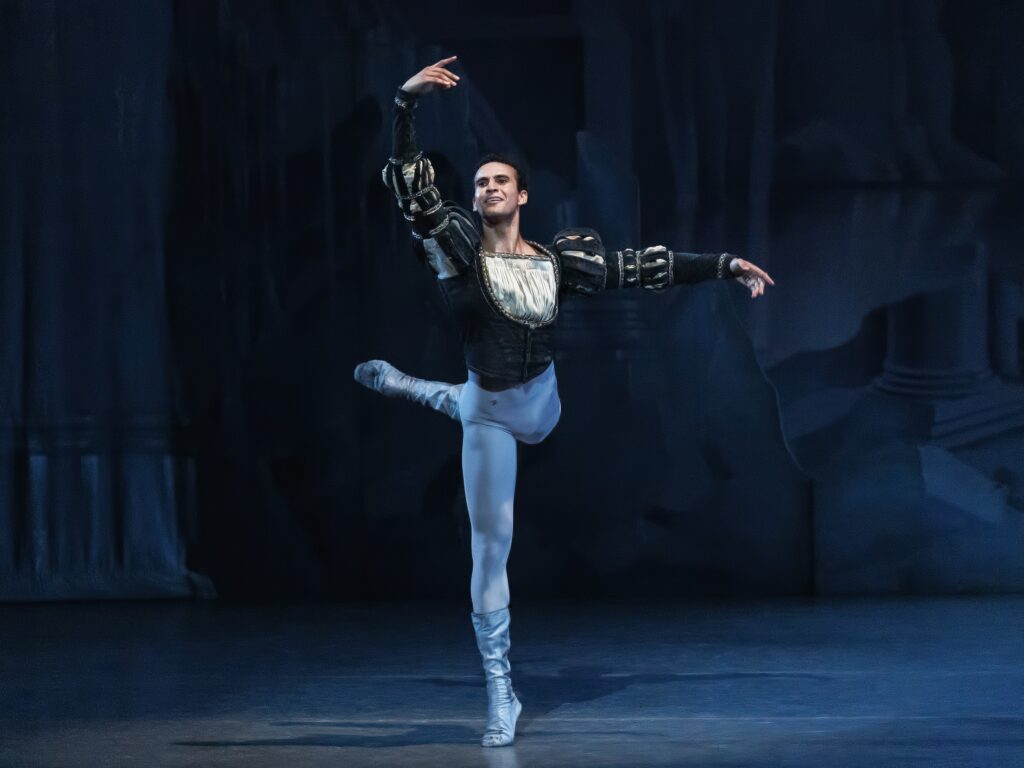
In turn, his time in New York City has brought new hues to his dancing and has even influenced and improved his approach to partnering. Balanchine partnering calls for greater space between the dancers, and with it, greater risk. They touch with the tips of their fingers, and, in turning sequences, the supporting partner comes in to assist only at the very last minute. “Just let them dance, and then be there when they need you,” he says coaches like Andrew Veyette and Kathleen Tracey have told him. Tomash says finding the confidence to trust himself has allowed him to become a better, and more exciting, partner.
And he has gotten faster, he says, capturing that Balanchinean swiftness that is a crucial element of the company’s style. In February, Tomash was elevated to principal dancer.
So, will he stay? Officially, Tomash’s leave of absence from the Royal Danish Ballet ends after NYCB’s upcoming summer engagements. And this fall, he is scheduled to dance with the Danes, in a role he has dreamed of for a long time: James, the male lead in La Sylphide. He is pulled in both directions.
“Honestly, I just need a little more time to decide,” says Tomash. It seems quite clear that both companies would be happy to have him.