Birmingham Royal Ballet Celebrates Sir Peter Wright’s 100th Birthday

When Brits think of Birmingham, they’re more likely to think of it as the birthplace of the industrial revolution than a ballet hub. Yet Sir Peter Wright, the former director of Birmingham Royal Ballet, helped put the UK’s second city on the dance map.
Previously known as the Sadler’s Wells Royal Ballet, BRB relocated from London to Birmingham in 1990 under Wright’s leadership. (Wright served as BRB’s artistic director from 1977–95 before being appointed director laureate thereafter.) In Birmingham, he grew the company into an internationally recognized organization that was “no longer just the touring company of The Royal Ballet,” says Dominic Antonucci, BRB’s current assistant director, who danced with the company as a soloist and a principal from 1994 to 2009. “He raised the level.”
Wright is celebrating his 100th birthday this year. In line with this milestone, BRB will stage a centenary celebration at its home theater, the Birmingham Hippodrome, on June 18. Featuring a mixture of Wright classics as well as works he brought into the company, it promises to showcase the profound influence he had on BRB and beyond.
A Master of the Classics
The quality of Wright’s choreographic work, now performed across the globe, was instrumental in establishing BRB’s reputation. “There’s an incredible sense of romance through all of his full-length ballets,” says Antonucci, pointing to Wright’s sense of dynamic—both in terms of physicality and narrative arc—as something that makes him “a master at framing the classics.” As a result, Wright’s interpretations of The Nutcracker, Swan Lake, and Coppélia have become what Antonucci describes as “the jewels in BRB’s repertoire.”

For company principal Lachlan Monaghan, Wright’s productions set themselves apart by drawing out darker themes in familiar stories—his Swan Lake, for example, delves deeper into the Prince’s psyche. Monaghan adds that Wright’s choreography, while technically challenging, feels natural to dance due to its exacting musicality. “It feels like there’s no other way you could interpret [a given] section of dance,” says Monaghan.
Antonucci simply credits Wright’s success to his impeccable taste. “When you put together a production that has already been done time and time again, it’s a series of choices,” he says. “You can do it this way or that way. Sir Peter always seemed to make the right choice.”
A Repertoire With Range
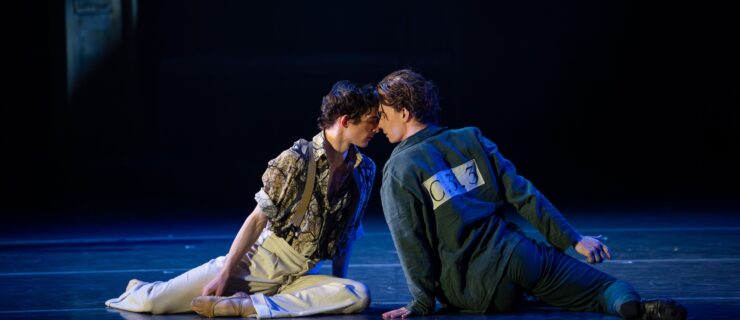
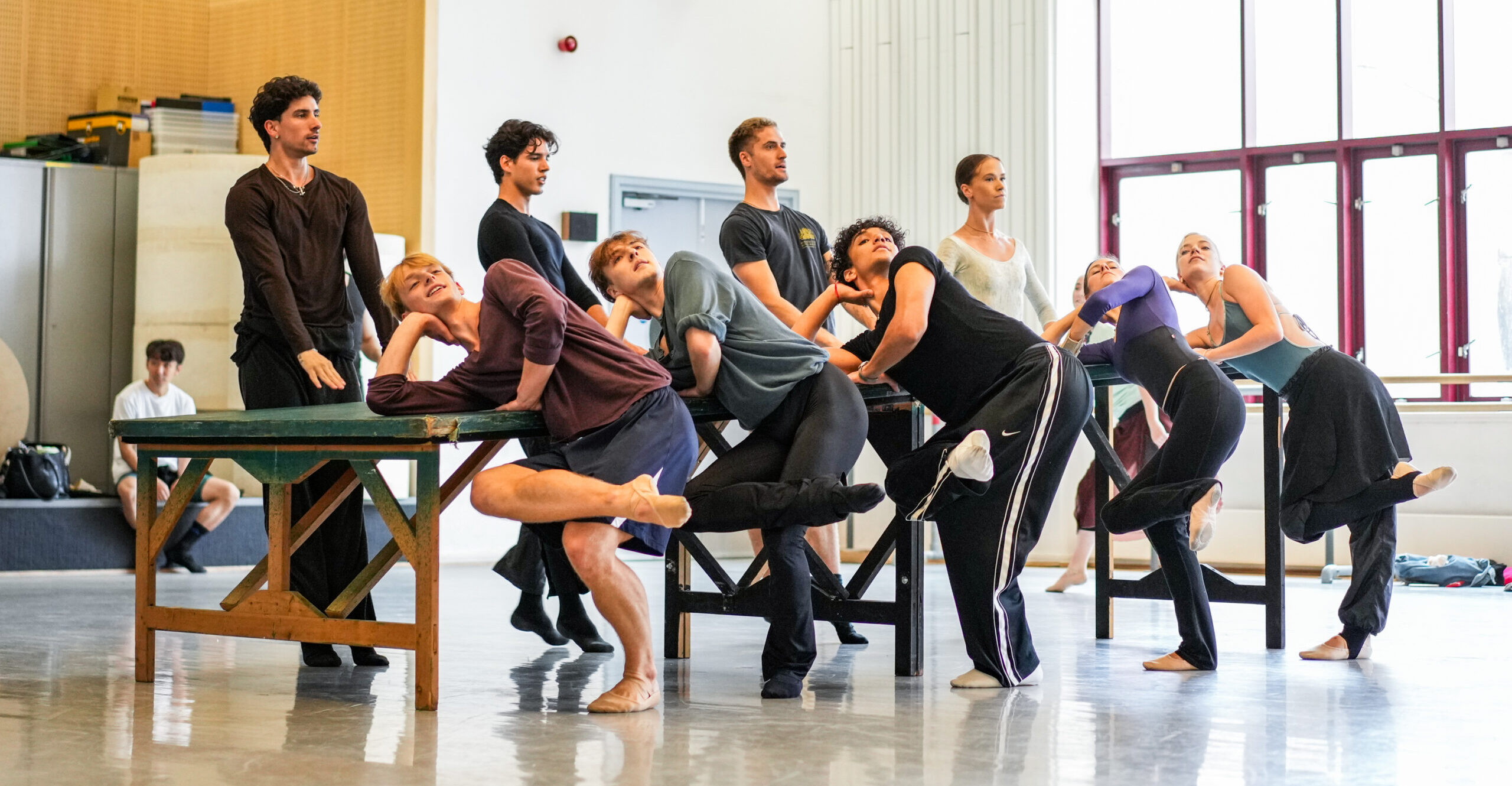
Wright used that discerning judgment to bring pioneering works by other artists into the BRB’s repertoire, too. An example is The Green Table, Kurt Jooss’ 1932 expressionist ballet satirizing the unstable political landscape of post–World War I Germany. Wright’s favorite ballet that he himself performed, its characters include the personification of death, as well as a group of diplomats gathered around a board-room-like table, negotiating an unspecified conflict.
Antonucci explains that Wright’s inclusion of The Green Table in BRB’s repertoire exemplifies how he constructed the company’s triple bills. “He always wanted to have the old with something new, and something challenging,” says Antonucci. “The idea was that you had a piece that was recognizable…to get people in to buy the tickets, and then you could educate them.”


BRB will perform The Green Table as part of Wright’s centenary celebration—the first time the company will have restaged it since the 1990s. Yet BRB’s current artistic director, Carlos Acosta, finds it timely. “With all the wars that are going on and the division and the polarisation of the world…it works so well now,” he writes in a company statement.
Naturally, the celebration will also feature excerpts from Wright’s own ballets, including the Act II pas de deux from Giselle and the Act III polonaise and grand pas de deux from The Sleeping Beauty. And, on Wright’s request, Acosta himself will be dancing the role of Death in The Green Table.
A Living Legacy

Though Antonucci says Wright has been “on the phone quite a bit” inquiring about casting, the celebration is “very much for him, not by him.” So far, Wright hasn’t been in the studio to watch any rehearsals, something he has otherwise done frequently in the years since stepping down as director in 1995.
Multiple generations of dancers have been shaped by Wright’s influence. (Antonucci points to former BRB associate directors Desmond Kelly and Marion Tait, as well as current Royal Ballet artistic director Kevin O’Hare, as individuals who share Wright’s lineage.)
“He respected every element of the production,” says Monaghan, describing Wright as a vibrant presence in the studio. “It wasn’t just about the grand pas de deux or the solo—the way the corps looked in their mazurka boots was just as important. You always felt very seen, no matter what rank of the company you were.”
While Monaghan appreciates that ballet is becoming increasingly open to innovation, for him, Wright’s classics will always be a benchmark for dancers. “Performing one of the four signets in Act II of Swan Lake, or dancing the Prince—those are the classical measures of your career,” he says. “The influence of [Wright’s] work is so much more profound than I think any of us probably realize.”