Peck, Marston, and Osipova: Highlights From The Royal Ballet’s November Programs

This November, The Royal Ballet’s famously diverse repertoire will be on full display with a milestone company debut, a world premiere, and the return of a successful artist-curated program. Running November 14–December 2 is the company’s Perspectives: Balanchine, Marston, Peck program, featuring New York City Ballet resident choreographer and artistic advisor Justin Peck’s Everywhere We Go, an energetic 2014 ballet to music by Sufjan Stevens. This program marks the first time The Royal has performed a work by Peck.
“It’s been a long time coming,” says artistic director Kevin O’Hare, recalling his first meeting with Peck a decade ago. Though the two “got on really well,” scheduling conflicts meant a collaboration hadn’t come to fruition until now. O’Hare initially wanted Peck to make a new creation for The Royal, but after seeing NYCB perform Everywhere We Go in Paris in 2016, he thought it would be a great fit for the company.
The choreography’s speed is “a real challenge [for the dancers],” he says. “We want to bring our own dynamics, but also match [NYCB’s] full-throttle energy.” O’Hare believes Everywhere We Go is an ideal introduction to Peck’s work for audiences in the UK: Not only does it showcase Peck’s meticulous musicality, it’s also “big and bold,” he says, featuring a large cast in contrast to some of the choreographer’s more intimate pieces.
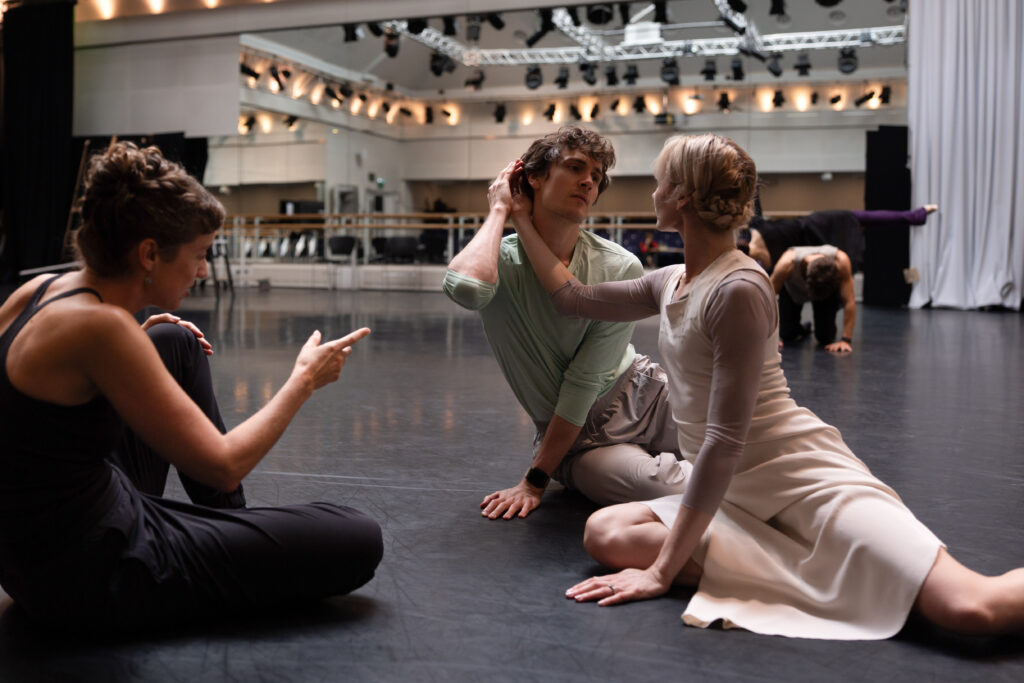
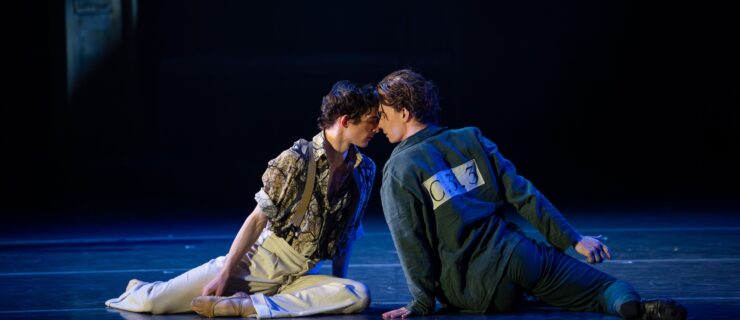
Everywhere We Go will run alongside George Balanchine’s Serenade and a new creation by Ballet Zürich artistic director Cathy Marston. While Marston is known for narrative-driven works with original scores—her first ballet for The Royal’s main stage, The Cellist (2020), told the story of musician Jacqueline du Pré—this currently untitled ballet, her second main-stage commission for the company, takes inspiration from British composer Benjamin Britten’s Violin Concerto (1938–39).
“I love the way [the music] seems to contain a story, and yet Britten doesn’t tell us what it is,” Marston says. To develop movement, “I allowed my mind to roam, noting down the images as the music conjured them,” she adds. While she came into the studio with some preformed ideas, she allowed herself more freedom this time to let the choreography and dancers’ relationships reveal themselves.
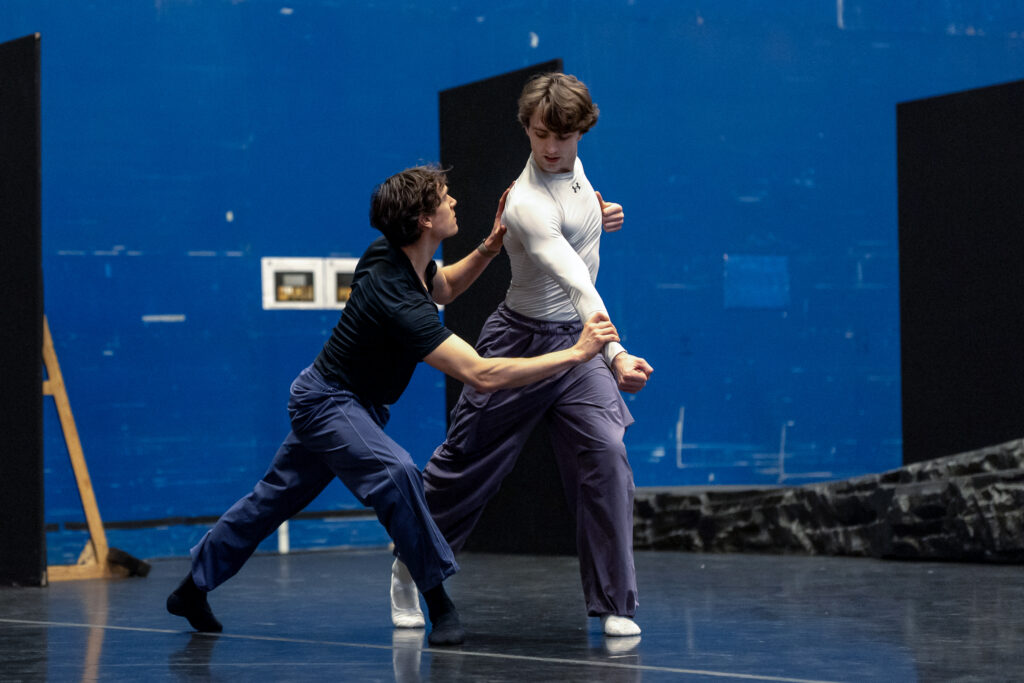
In their respective casts, principals William Bracewell and Matthew Ball, first soloist Leo Dixon, and soloist Francisco Serrano will take leading roles, and principals Melissa Hamilton and Akane Takada will dance the only female part. O’Hare explains that the predominantly male casting reflects the score’s historical context; Britten, a renowned pacifist, composed it as Europe teetered on the brink of World War II, when young men were sent back into conflict just two decades after the end of the First World War. “I hear the oncoming war simmering somehow in the music,” says Marston.
Away from the main stage, The Royal is reviving its Osipova/Linbury program, curated by Osipova, following its sold-out success last season. Running November 10–15 in The Royal Opera House’s smaller, studio-style Linbury Theatre, the evening will honor company principal and internationally renowned performer Natalia Osipova. “She’s spent most of her career with us now, so it’s a nice moment to celebrate that,” says O’Hare.
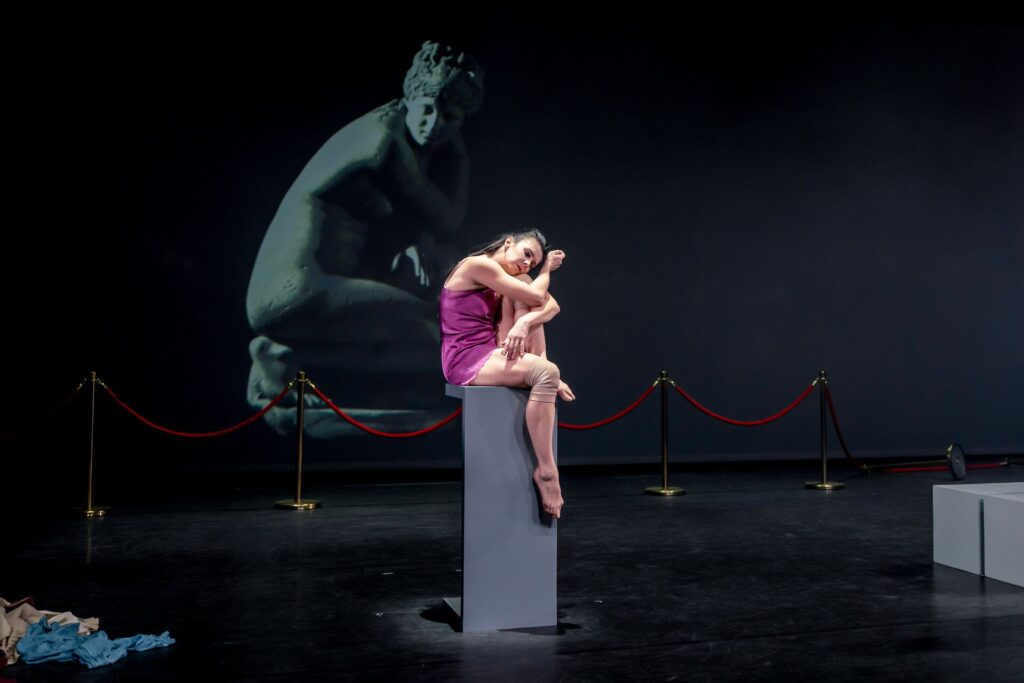
This iteration of the program will once again see Osipova perform in Norwegian choreographer Jo Strømgren’s The Exhibition, alongside a screening of a film in which she dances Frederick Ashton’s Five Brahms Waltzes in the Manner of Isadora Duncan. Two new works have also been added: The first, Mud of Sorrow, is a duet by British Bangladeshi choreographer Akram Khan. A variation on the piece he originally created with Sylvie Guillem in 2006, Khan and Osipova first performed it together in 2021. For this program, duet roles will be danced by guest artist and Queensland Ballet principal Patricio Revé and freelancer Christopher Akrill.The second is a new version of Alexei Ratmansky’s 1998 Middle Duet, created on Osipova when she was at the Bolshoi. While the pair have revised the work together in London, reimagining it to a new score by Philip Feeney, “a lot of the choreographic elements are still there,” says O’Hare. “It’s been a while since we’ve had something from Alexei in the company. It feels like a really lovely full-circle moment.”