Troy Schumacher’s BalletCollective Transports Viewers With The Woods

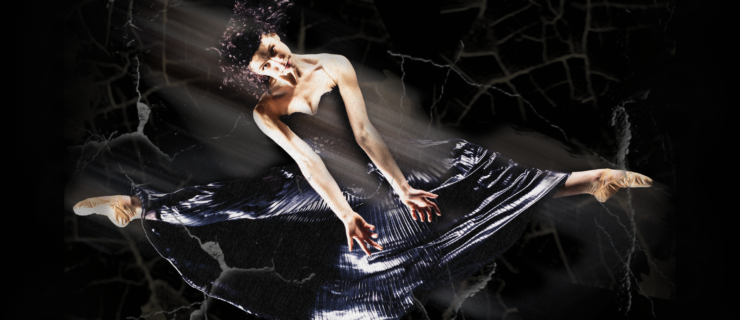
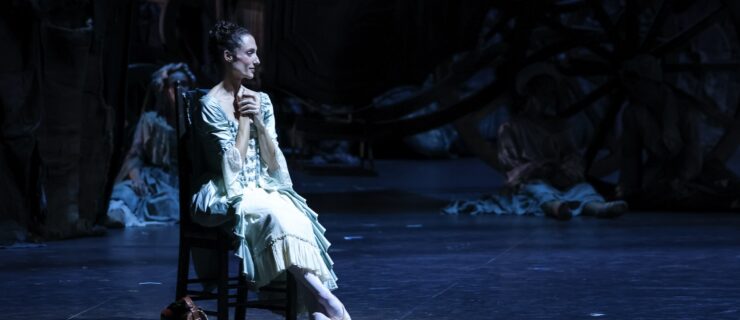
The promotional video for The Woods, a new performance venture by Troy Schumacher’s BalletCollective, evokes the kind of otherworldly atmosphere that wouldn’t be out of place in a film by Ari Aster or Robert Eggers (think: Midsommar or The Witch). Held July 31 through August 2 at Pioneer Works in Brooklyn, New York, the latest collaboration between New York City Ballet soloist Schumacher and composer Ellis Ludwig-Leone, of the band San Fermin, results in what Schumacher describes as “part indie rock concert, part concert dance, and part theatrical immersive experience.”
“San Fermin has this one song called ‘The Woods,’ which is a narrative about two people going into the woods, having an uncanny experience, and then one of them returning,” Schumacher says. “We felt like it was a really interesting starting point for a show.”
The world Schumacher and Ludwig-Leone have created includes San Fermin’s six band members, six featured performers, eight ensemble dancers, and four additional musicians. They will perform inside Pioneer Works, a former factory, and along with the audience will walk through and underneath a sculptural set designed by award-winning scenic designer Jason Ardizzone-West.

Schumacher’s interest in immersive work sprang from the COVID-19 pandemic, when he started experimenting with performances in nontraditional venues. “Dance and choreography has been at times limited by this one-side-proscenium choreographic style, which has led to a lot of conventions within form and pattern, and a certain conception that there’s a good side and a good angle for things,” he says.
He also began to consider how live dance could be used to bring audiences together. “I realized that we have these experiences, like a concert or a sports game in a stadium, where you really see other members of the audience. Oftentimes with a dance concert, you see people before and after, but that experience of being together is not really as present as it could be,” Schumacher says. “As we continue to be more focused on our phones and our screens, having this opportunity for things to feel communal feels like the future of the performing arts.”
One of the featured performers in The Woods is Leslie Andrea Williams, a member of the Martha Graham Dance Company and a regular BalletCollective collaborator. As compared to the bulk of Williams’ experiences with Schumacher’s work, what sets The Woods apart the most is that, for the first time, Williams has been asked to sing in a dance performance.
“Troy emphasized having strong dancers that could sing,” Williams says. “The challenge is doing a crazy dance break and then going straight into singing. Every time I do a run-through, I always think of Beyoncé. How does she do it?”

The movement style, which incorporates moments of performer improvisation through character-based prompts, is also something of a departure for Schumacher, who began his career in ballet. In this piece, he chose to emphasize the individuality of each performer, rather than the uniformity found in a corps de ballet, though the movement and the dancers remain technically advanced. It also differs from a classical ballet in its looser narrative structure—Schumacher imagines the audience as the main character, rather than a group watching a story play out onstage. The musicians and dancers are there, he says, to “craft an experiential plot.”
Schumacher sees The Woods as an opportunity for audiences to have an individual yet shared emotional experience. “Maybe they’re trying to leave something behind, maybe they’re trying to overcome something,” he says. “Maybe they’re searching for a community, and it’s rumored that there are these spirits in the woods that can help with that.”
Williams sees her role in the performance as a creator of the atmosphere and a guide for the viewers. “The choreography is about conjuring, and there’s an aspect of seeking something or remembering things that are lost,” she says. “There is something mysterious about that. It’s otherworldly, even though the woods are of this earth.”