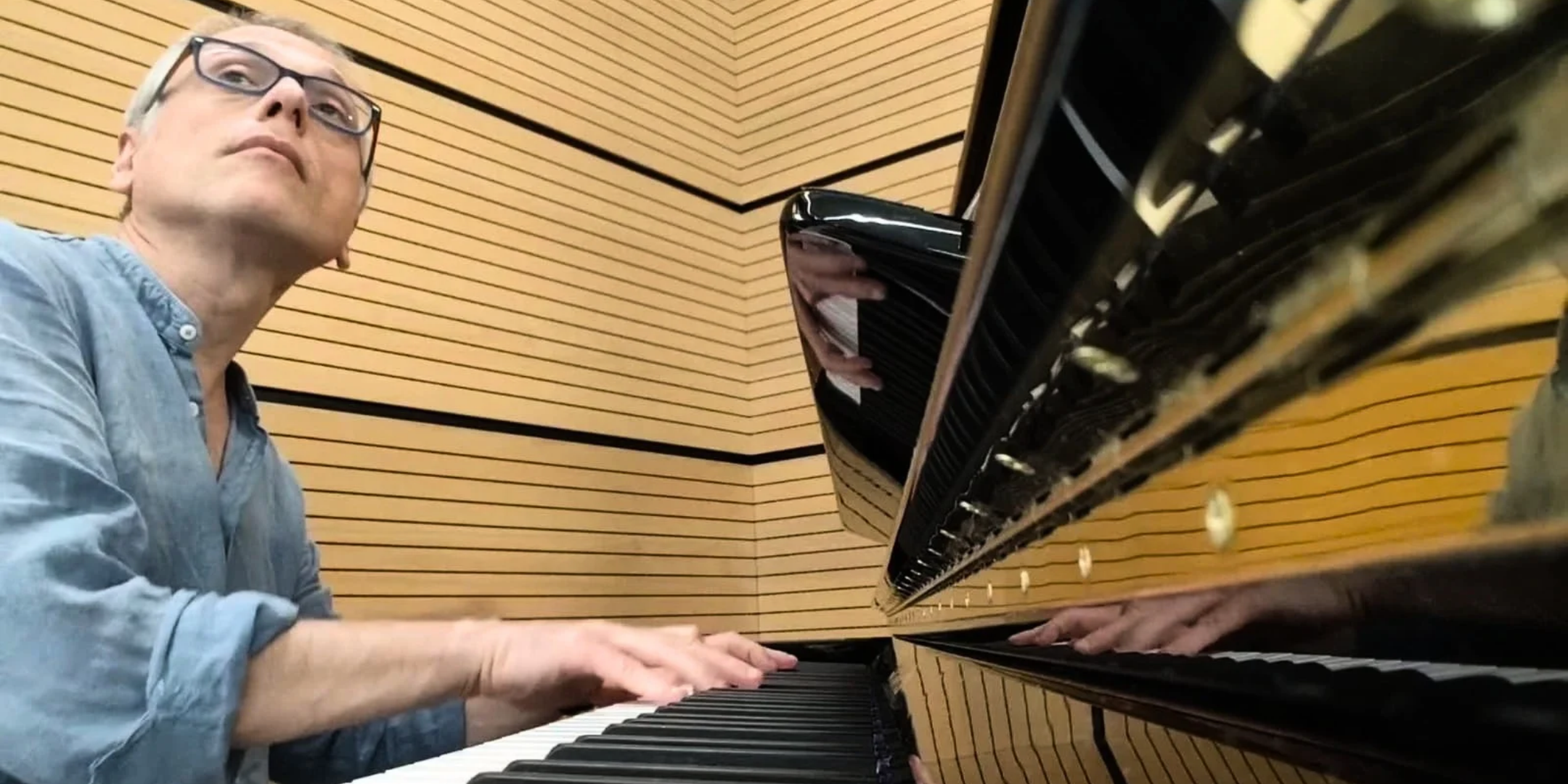
I’m an Accompanist. Here’s How Watching Dancers Changed My Piano Technique.
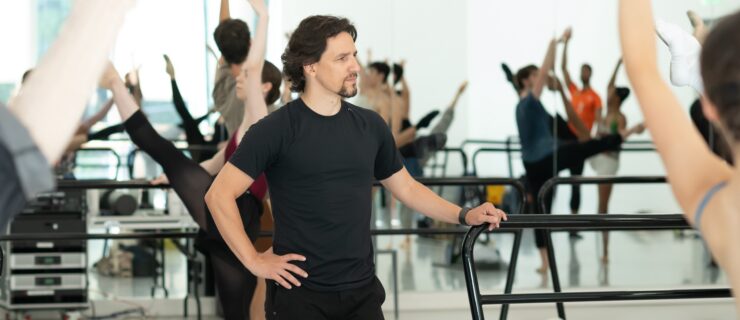
Every day, ballet pianists spend hours watching dancers move. We observe momentum, gravity, breath, and musical phrasing translated into the language of the body. We improvise continuously, adapting every musical decision to the movement unfolding in front of us. Yet there is one question I have rarely seen discussed: Can years of observing dancers actually change the pianist’s technique?
After more than 20 years working daily in ballet studios, I believe the answer may be “yes.”
Traditionally, piano technique is shaped through the study of the score. Pianists learn to interpret notation, dynamics, and articulation, transforming written music into sound through refined control of the hands and body. For the ballet pianist, however, there is another score to read. It is not printed on paper: It is the moving body.
Every combination becomes a living score, communicating timing, balance, resistance, suspension, and release. These qualities are not simply translated into music; over time, they begin to influence the way the pianist moves, as well.
It’s not a matter of imitation. I do not attempt to reproduce a dancer’s movement at the keyboard. Instead, I gradually absorb the movement’s internal organization and translate it into my own physical language. Something changes—not only in the music, but in the body that produces it.
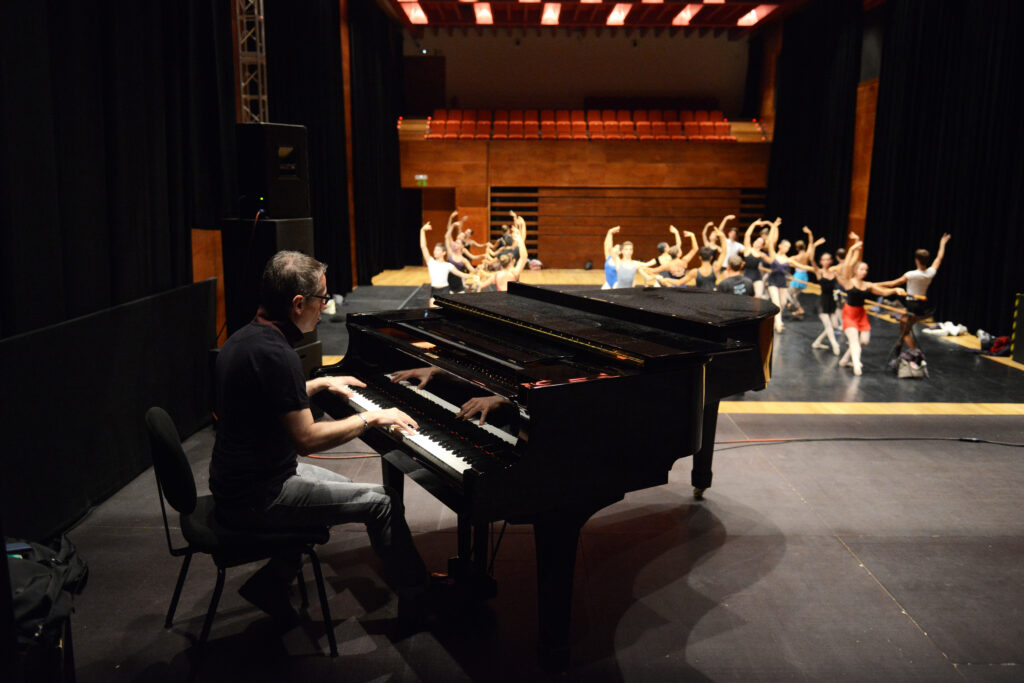
The first transformation, surprisingly, does not occur in the hands. It happens in the eyes. Most pianists use vision primarily to read the score or monitor the keyboard. But the ballet pianist uses vision differently. Every lesson becomes an act of continuous observation: The eye analyzes direction, weight, speed, acceleration, balance, and spatial intention. These observations are processed almost instantly and transformed into musical and technical decisions.
The eye is no longer reading notes. It is reading movement, and movement begins to reshape the pianist’s technique.
Improvisation makes this possible. When performing a written composition, the score remains the principal source of information. During ballet class, however, movement itself becomes the score. Every exercise demands an immediate physical response from the pianist. Over time, this continuous dialogue seems to reorganize the body. Musical concepts such as legato and staccato begin to acquire meanings that extend beyond sound. A legato accompanying port de bras does not necessarily require the same physical organization as one accompanying a grand rond de jambe. Likewise, the staccato supporting a battement jeté is not identical to the one accompanying petit allégro.
The musical result may sound similar, but the body’s organization is not. Little by little, the pianist develops new motor strategies while remaining rooted in traditional piano technique. This transformation also affects endurance. Playing several hours every day requires an exceptional economy of movement. In my own experience, constant interaction with dancers has gradually changed the way I distribute muscular effort, tension, and release. The body learns to breathe intentionally with movement. Perhaps this is one of the least explored aspects of the ballet pianist’s profession.
Much has been written about pianists’ role in supporting dancers and teachers, and about improvisation and musical collaboration. Far less attention has been given to the possibility that dance itself may reshape the pianist.
Perhaps the ballet pianist may represent something quite unique: not only a musician specialized in accompanying dance, but an artist whose technique evolves through the continuous observation of human movement.
I believe this is where one of the most fascinating intersections between music, dance, and motor learning remains to be explored.