What’s Powering the Recent Ballet and Pop Music Crossover?

From Sting to Taylor Swift to Prince to Debbie Harry, musicians have collaborated with ballet dancers through music videos and live performances for decades. In recent months, however, the crossover of ballet and pop music has boomed significantly.
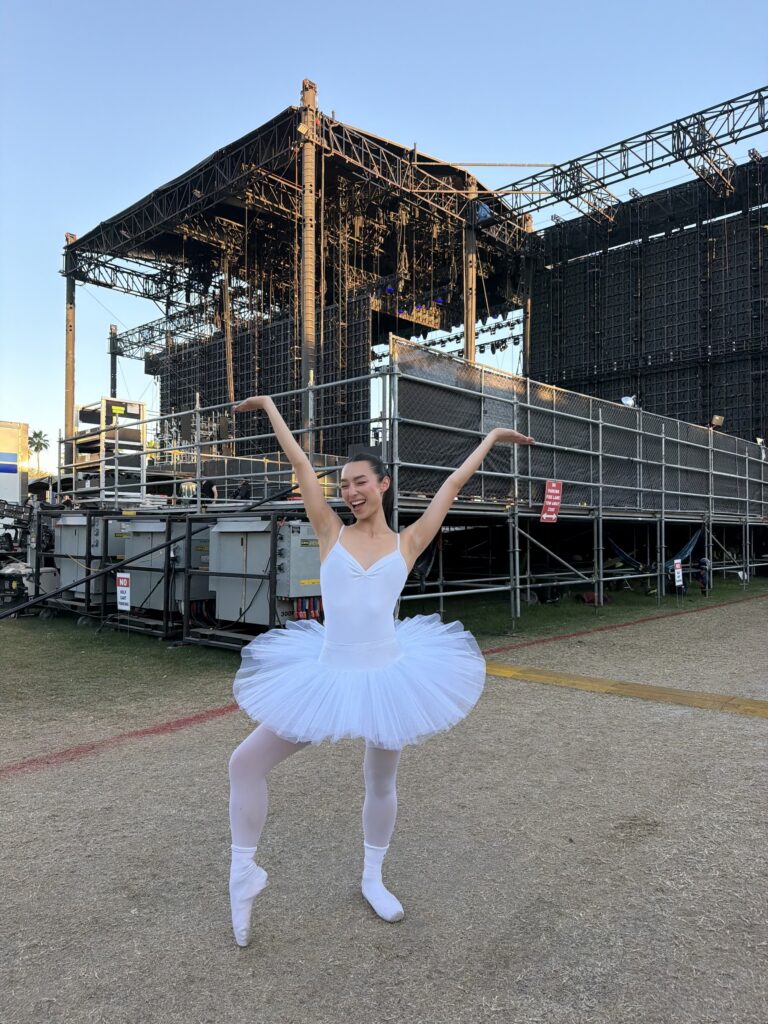
At this year’s Coachella, for instance, New York City Ballet soloist India Bradley accompanied Giveon on the main stage, while over at the Outdoor Theatre stage, another artist, Sombr, was joined by a troupe of ballet dancers for a performance of “Potential.”
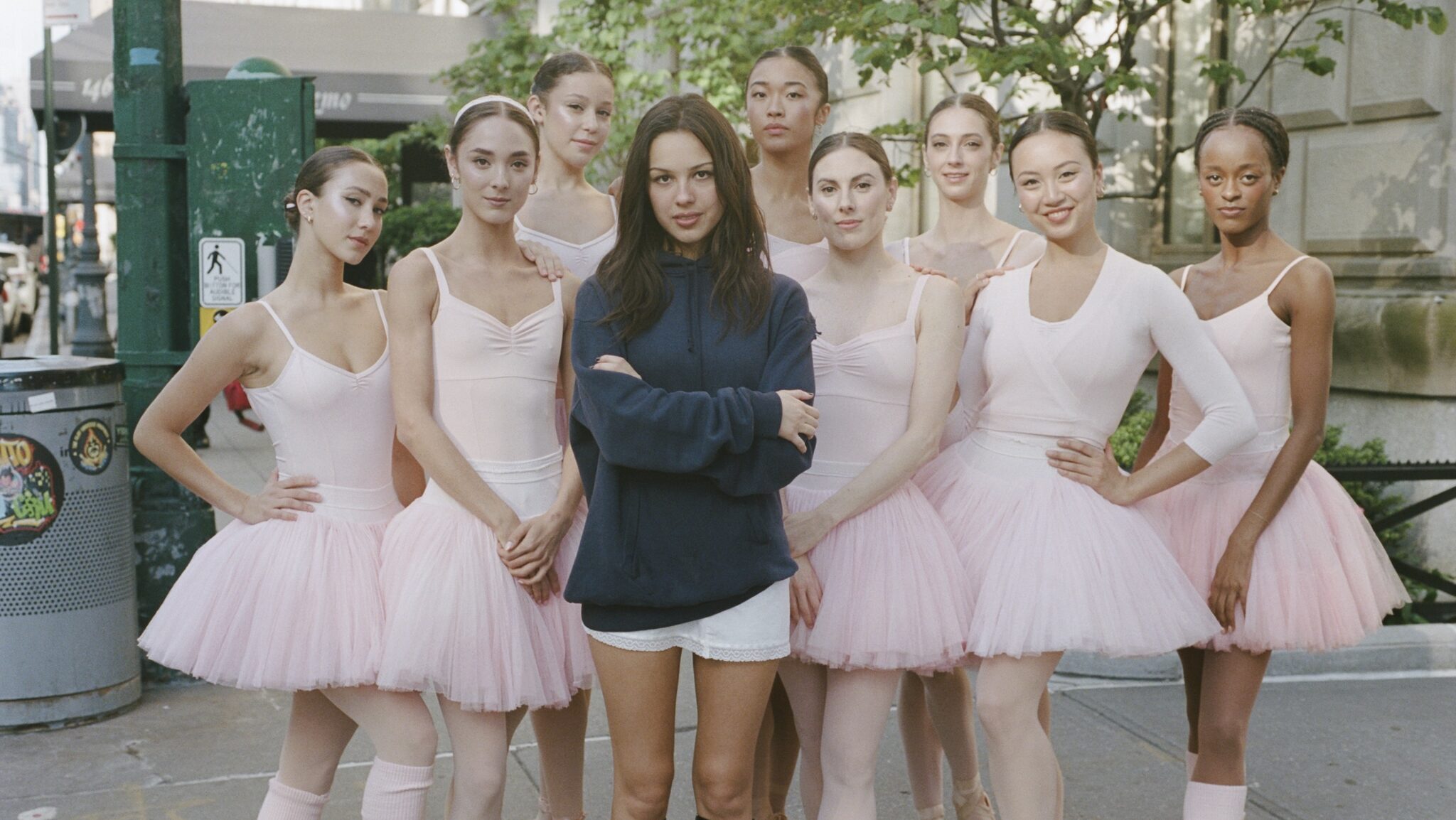
Days later, rising star Adéla released her music video “KGB,” which included a full prelude on pointe. Rosalía, meanwhile, featured ballet heavily during her Lux tour. And in June, Olivia Rodrigo unveiled the music video for “Stupid Song,” choreographed by NYCB principal Tiler Peck, who performed in it alongside seven other professional ballet dancers.
While the crossover of ballet and pop music is hardly a new phenomenon, the dancers at the center of 2026’s collaborations have a few theories behind its surge.
Trends, Technology, and Social Media
Kara Covaleski, who danced with Sombr at Coachella and in the music video for “Potential,” believes that, while ballet has always been relevant, the balletcore trend laid the groundwork for the art form to make a significant, dancer-led impact on pop culture.
“Balletcore started a few years ago, and at the time, I thought, Okay, this is interesting. This is my lifestyle and it’s becoming a trend,” she says. “But then people started to tune in to ballerinas as a whole and it brought more light to our artform.”
In a similar vein, social media has given dancers more visibility, says fellow NYCB and “Stupid Song” dancer Grace Scheffel, with algorithms igniting curiosity about ballet and its practitioners. “With social media, you can hear ballerinas speak, you’re able to see what their days look like,” Scheffel says. Collaborating with pop musicians makes the art form even more accessible, she continues. “This was an opportunity for ballet as a whole to be experienced by people who wouldn’t have seen it in the first place.”
While “balletcore” has whet audiences’ appetites for dance, a much stronger force may also be propelling ballet into mainstream culture: technology. NYCB corps member Rommie Tomasini, who is among the dancers featured in “Stupid Song,” believes the proliferation of AI-generated content has led viewers to value real, authentic performances. “In ballet, you’re just as much an actor as you are a dancer, and nothing will beat the true emotion of live performance,” she says. “It’s impossible to replicate through artificial intelligence, and I think that’s something people are having a greater appreciation for.”
Getting Ballet Right
As online interest in dancers has grown, it’s perhaps not surprising that a surge of pop artists have chosen to spotlight ballet in their work.
This uptick also raises valid questions about how mainstream artists engage with the art form. For instance, when “balletcore” first began to gain popularity, many dancers were concerned that people would view ballet only as a trend, rather than engage with its reality. By contrast, the dance community’s response to pop music’s ongoing dalliance with ballet has been resoundingly positive, in part because of the care musical artists have taken in showcasing it. This is what Houston Ballet principal Harper Watters relayed to Rosalía onstage during her recent concert in Houston, when he was selected to partake in the singer’s “Confessions” segment of the show.
“It’s really clear that Rosalía has surrounded herself with people who are immersed in the dance world,” says Watters. She has indeed done her research: Her LUX tour has been partially choreographed by (La)Horde, the French dance collective currently directing the Ballet National de Marseille, while former company members from Marseille and Nederlands Dans Theater partner her onstage.
“A lot of times, in music and fashion, people will slap on a pointe shoe because of the aesthetic, and it’s clear to the trained eye that they’re not meant to be in it,” Watters continues. “But with Rosalía, the knees were crossed, the feet were shaped, she was on her box. She put in the work, which highlights the work we do on a daily basis.”
Similarly, Madison Olandt, the associate choreographer for “Stupid Song,” credits Rodrigo and her team for their respectful treatment of ballet.
“Even when it came down to the costumes that they were wearing, they used NYCB rehearsal tutus that had been handsewn,” Olandt says. “They were really diligent about honoring the aesthetic, but also in hiring true ballerinas and a ballerina to choreograph it.”
Scheffel recalls how the video’s stylists studied the popular Instagram account Models Doing Ballet to avoid a balletcore faux pas. “They wanted to make sure this looked as authentic as possible, and even though we were in pink, we all took leotards and legwarmers home because it’s stuff we wear,” she says.
While it’s hard to pinpoint a single driving force behind these recent pop music collaborations, one thing is clear: Dancers hope the momentum continues showcasing ballet’s versatility.
NYCB dancer Kennedy Targosz, who also performs in “Stupid Song,” says she’s grateful that Rodrigo hired real dancers. “It had millions of views within its first week; to be able to reach that many people is amazing,” Targosz says. “Music videos like this are so helpful for the art form. This is just a sneak peak of what ballet truly is.”