Patricia Delgado Returns to Miami City Ballet—as a Choreographer

Patricia Delgado’s return to Miami City Ballet has been a long time coming. It’s been at the top of artistic director Gonzalo Garcia’s mind ever since MCB announced he would be taking over as head of the company; that same day, in an interview with The New York Times, Garcia said he’d like for the former MCB principal dancer to choreograph her first piece there. Almost a year and a half later, that vision will materialize with the world premiere of Delgado’s first-ever ballet, Push the Buttons of the Civilized, on October 16 as part of MCB’s American Rhythms program.
Since leaving Miami in 2017, Delgado has been dancing, teaching, producing, and making a name for herself as a choreographer alongside her husband, Justin Peck. The two have worked together on projects such as the Broadway musical Buena Vista Social Club, for which they won a Tony in 2025. Delgado recently choreographed solo for the first time, for the musical Basura, which features music by Gloria Estefan and her daughter Emily Estefan. But Push the Buttons of the Civilized is the first time Delgado has created a ballet on her own.
“With so many of the other projects I’ve worked on, the dancer also has to act and sing, and dance is serving the script,” she tells Pointe. “This feels like I have the ability to craft the dance in any way I want.”
Delgado is teaming up again with Emily Estefan for this new commission at MCB. The project is also a literal homecoming for Delgado, who not only danced as a company member with MCB for 17 years and trained at its affiliated school, but was also born and raised in Miami. Last month, Pointe spoke with her about what the experience has been like so far.
How did this ballet first come about?
The initial seeds happened when I was working on Basura. Emily Estefan really struck me as an artist and a like-minded individual. We both grew up in Miami, and we’re first- or second- generation Cuban Americans [Delgado is first-generation, and Estefan is second-generation], and yet we were from such different worlds. I was really taken by her 2017 debut album—listening to it, I was imagining a dance coming into fruition, and that’s never happened to me before.
Most of the music for Push the Buttons of the Civilized is from Emily’s debut album. What’s been her role in the process?
During the ballet, Emily will be onstage—singing, playing guitar, and playing the drums—and the orchestra in the pit will be playing the songs she composed and produced. She’s been involved every step of the way. She’s like the backbone, the spirit of the movement, and I’m so glad that she’s as invested as she is.
What has it been like returning “home” to MCB, this time as a choreographer?
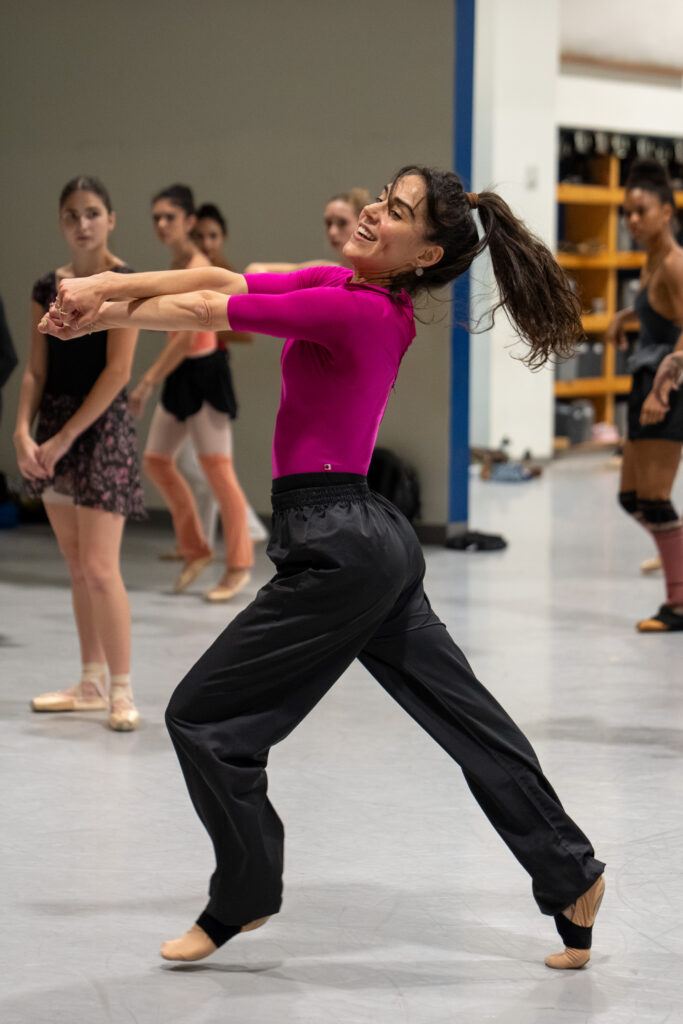
I was nervous, because I’ve never been offered this sort of opportunity to have a voice and to give back in a way that’s mine, not participating in another’s vision. And the minute I got back, it was the most connected to “self” that I’ve ever been. It felt so full and very natural.
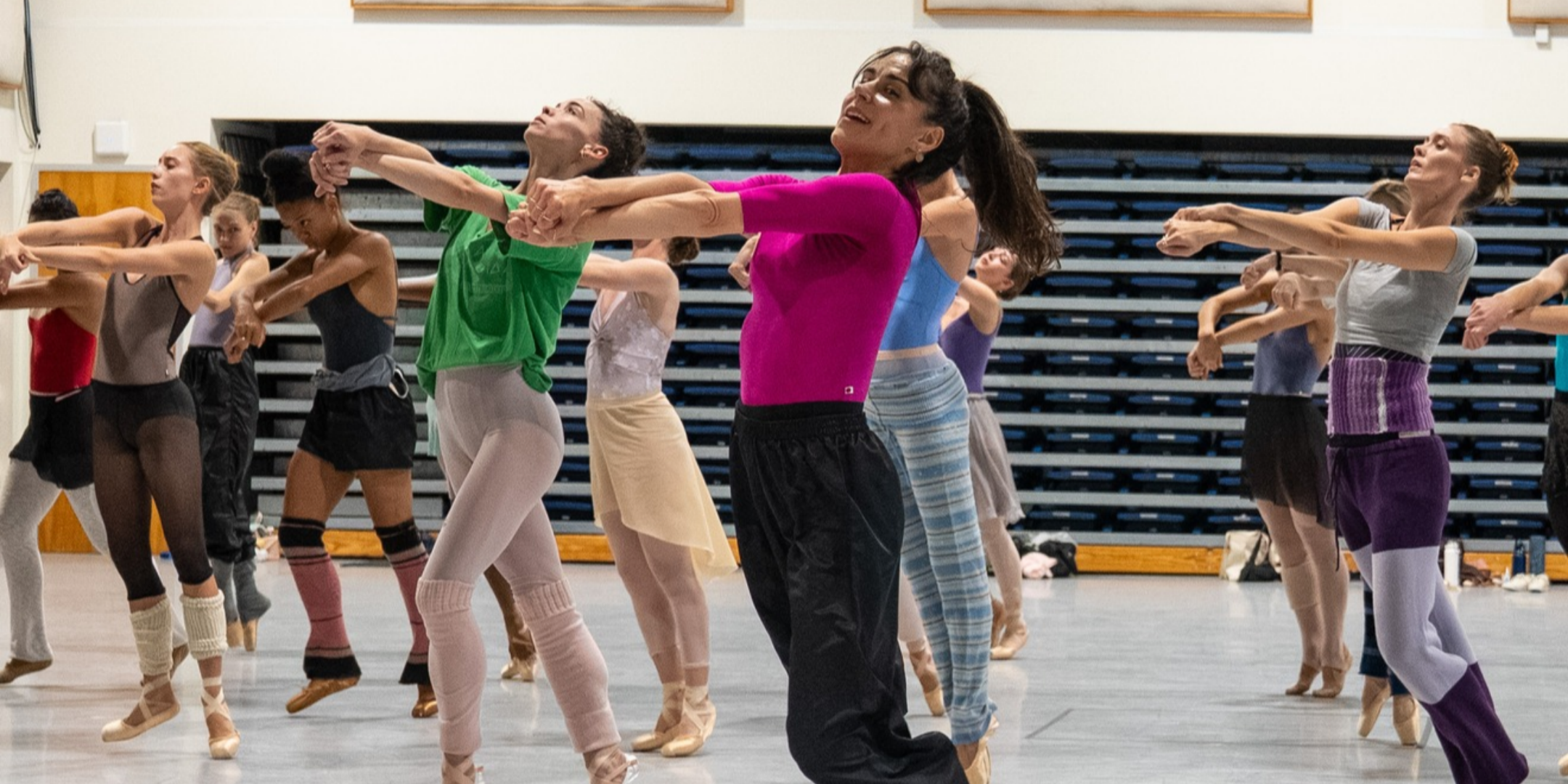
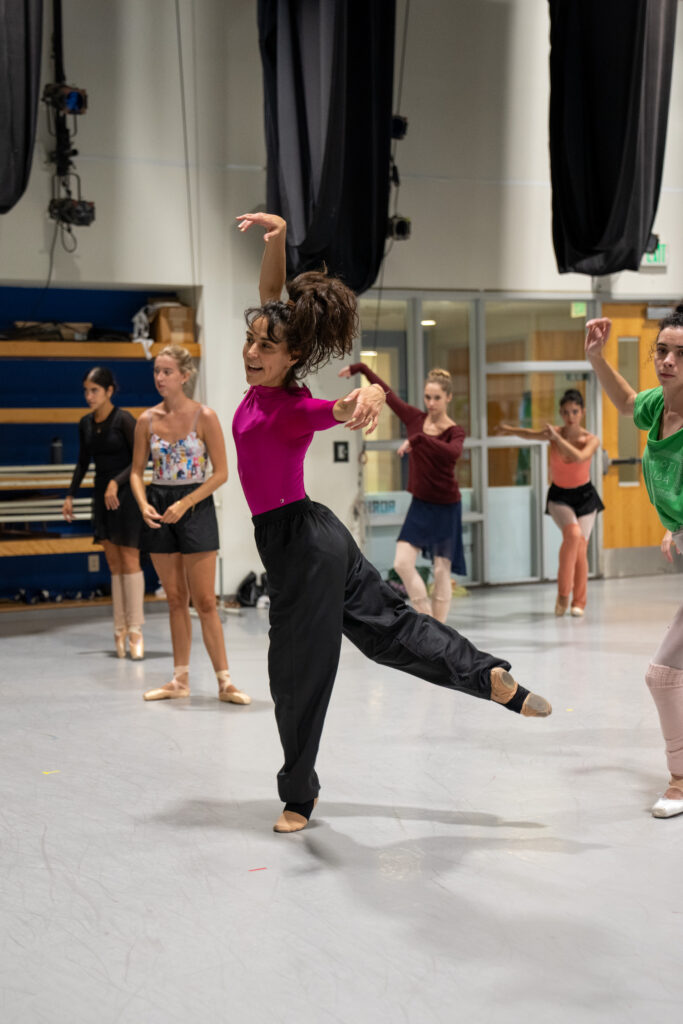
The very first day, I got choked up saying hello to the company, because I remember being a student there. I started working with the dancers on the first day of their season, but I really started on the ballet a year ago, by myself in the studio. I came in with a lot of preparation and adrenaline pumping. It was a very fast exchange. The dancers understood what I was trying to do from the very beginning and were right with me.
What was your vision for this ballet?
I wanted to create a world where there was concert-like energy, with a lot of honest, sensitive dancers communicating with each other and with the audience—in a very classical way, yet with some Latin social dance and Afro-Caribbean style influence. What moves me the most is when dance is really human, and the dancers don’t necessarily look like dancers before they start moving.
Your previous choreographic projects have had set scripts or musical numbers. How have you gone about creating something totally new?
It was very intimidating to know how to begin. The first thing I did was create a loose narrative, because I felt like that was going to be the easiest place for me to go from. There was definitely a story in the process of making it, as the seed of where the movement comes from and where the characters are deriving from. But I don’t know that I can call it a story ballet or narrative-driven yet.
One particular song, which has now become the prologue of the ballet, has Emily’s grandmother singing a lullaby. It made me think about what our grandparents must have experienced having to leave Cuba with a small child and start a new life. So I started with these mother/father parental figures and their struggles as they’re bringing this baby daughter into the world, and what will come of their life in this new world.
It sounds similar to your own family history. Would you describe it as autobiographical?
Not autobiographical at all, but deeply personal, because sometimes I see myself in all the characters. There’s a lot of Emily—or my perspective of Emily—in it as well.
Have you learned anything from the process so far that you’d like to apply to future projects?
I’ve learned that there are different ways into choreography. Being so close to Justin’s way and how in awe I am of him and his work, it sort of used to make it daunting for me to say yes to something. I think now, I see it as inspiration. Not having to figure it all out myself on my own body is another beautiful lesson. There’s a lot these dancers brought to this experience, and I feel like now I can trust that it’s that collaboration that’s going to create something new.
This interview has been edited for length and clarity.