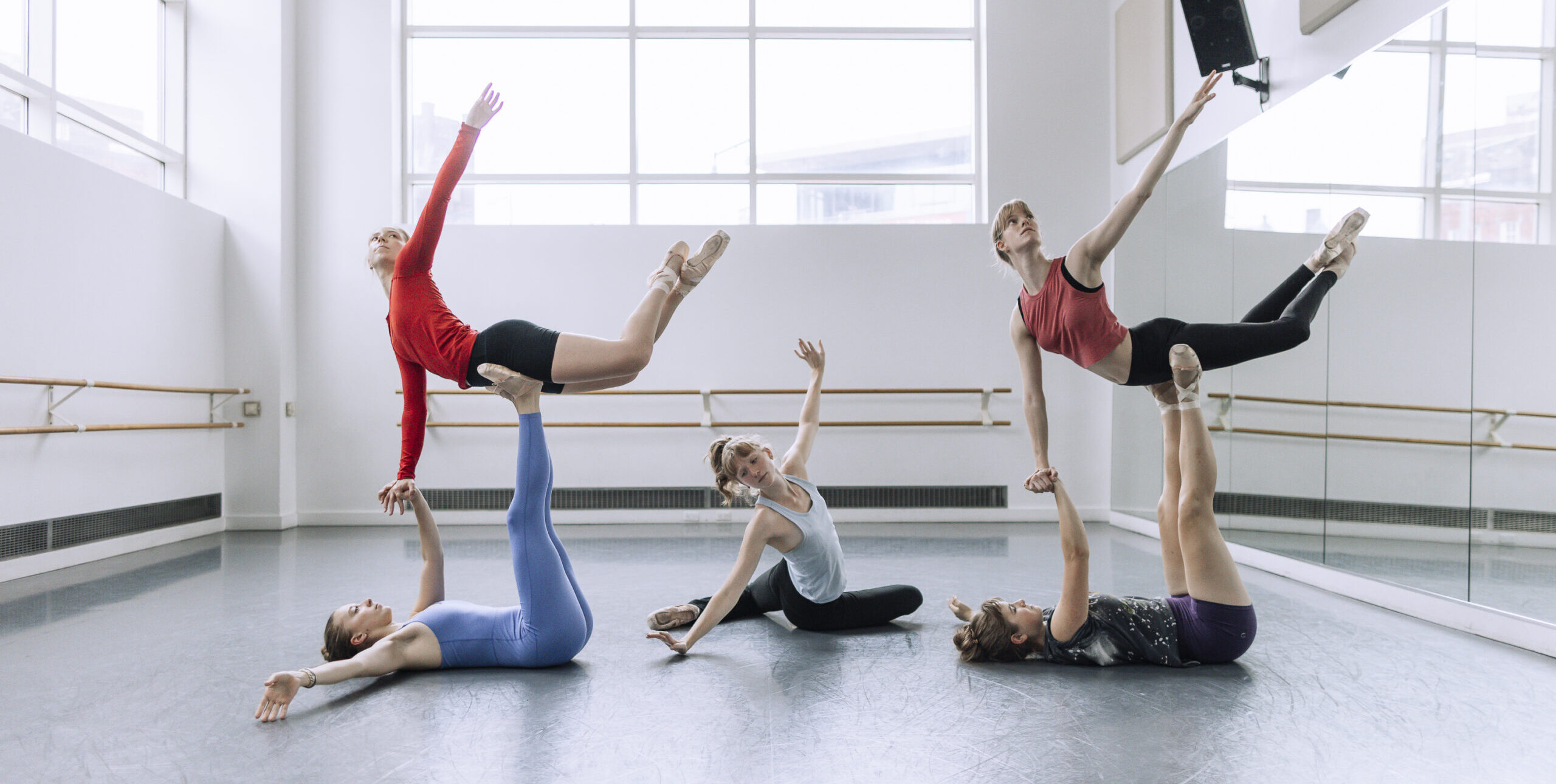
The Steadily Growing New Chamber Ballet Explores High-Level Mathematics in Last Light

Watching New York City–based New Chamber Ballet’s productions feels like being in a research lab for the art form. The pocket-sized group, featuring six female dancers, has been producing dances since artistic director Miro Magloire founded it in 2004. He has created over 150 new ballets on the company since then.
Magloire’s latest project, Last Light, will premiere on November 20 at Mark Morris Dance Center in Brooklyn. The work is just under an hour, and the abstract music, composed by pianist Wang Lu, will be played live—qualities common to all of Magloire’s recent dances. Lu’s works evoke floating, otherworldly qualities that suit Magloire’s choreography. Violinist Doori Na and pianist Sophiko Simsive will provide the live accompaniment for Last Light.
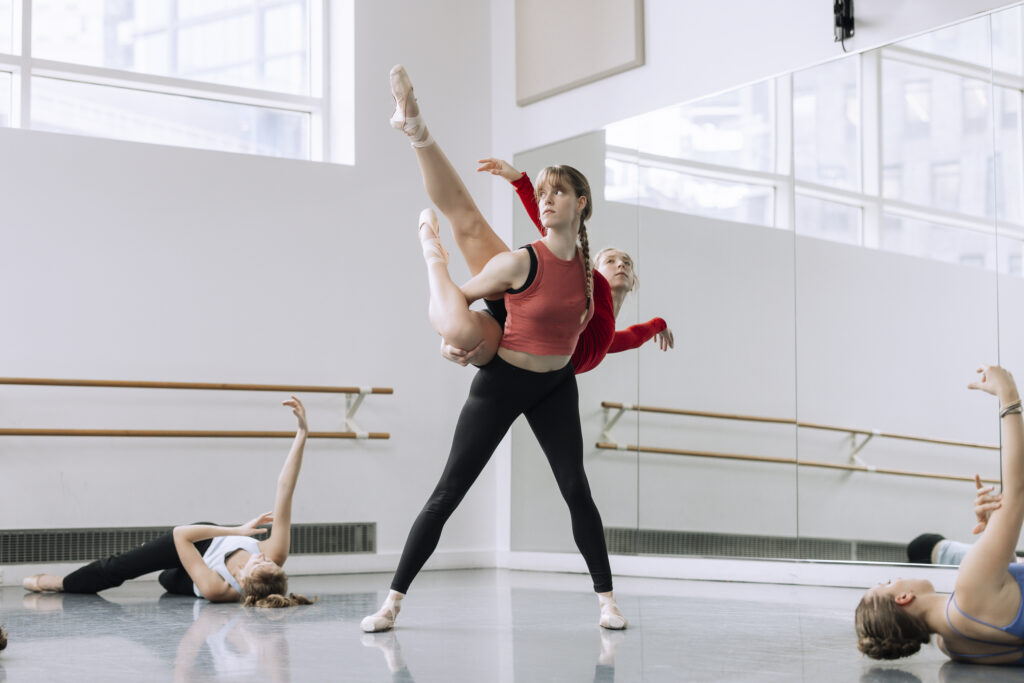
Over time, the director’s ballets have evolved into a series of long-form dances in studio spaces, with the audience surrounding the dancers. It all happened organically, he tells Pointe. He started with a consistent group of women to work with, so he made works for women. Performing in the round? New York City Center had rearranged the studio the company worked in, creating a setup that made proscenium-style performance impractical, so Magliore got creative. Live music happened the same way: A pianist friend was able to play for a show, and Magloire realized instantly that it was too good and they could never go back.
In New York’s hypersaturated dance market, NCB has lasted more than two decades by digging deep into a stable foundation—and its niche. “I didn’t start with the intention of having a company,” Magloire says. “I just started to choreograph, and asked two or three dancers who were free.”
But all-women and all-ballet aren’t just incidental qualities. The same-sex partnering—one dancer curled over another’s shoulders, then tumbling towards the floor, all in pointe shoes—that Magloire and his dancers have developed would be called “cutting-edge” elsewhere. At NCB, it’s business as usual.
Another quality all Magloire’s works share is an inquisitiveness that can get almost nerdy. The company began working on Last Light in September. When Pointe spoke to Magloire two weeks from the premiere, he was feeling that the ballet was just about to reveal itself: “I’ve talked to a friend at Princeton who is a topologist,” he explained. “I’ve gotten very interested in complicated floor patterns.”
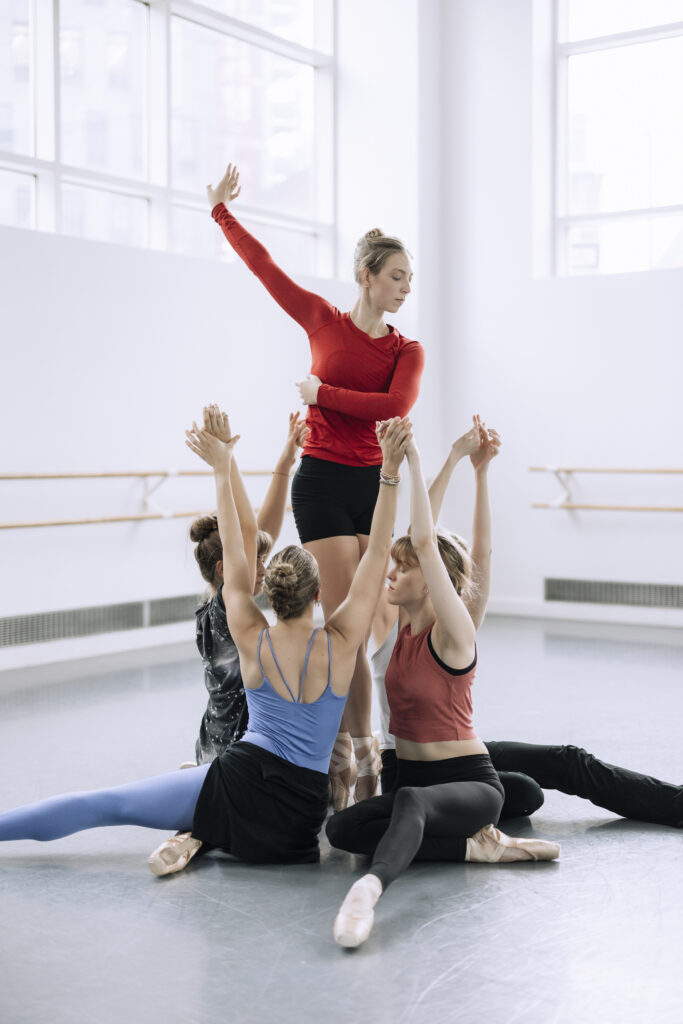
One inquiry led to another: How do patterns look in the round versus in a proscenium? What does that pattern look like to someone watching from a different spot in the room? “In ballet, you have a phrase that’s self-contained, almost a narrative unit,” said Magloire. “What if that were also a basic unit to describe the passing of time?” The choreographer’s original training was as a pianist and composer, which may explain his almost mathematical analysis.
With an hour-long work that was shaping up to be, in Magloire’s words, “the love child of calculus and Trisha Brown,” the passing of time can be a big deal. Magloire acknowledges that with more abstract pieces like Last Light, audience attention can wane after a while, but then it returns. Instead of fighting against it, he says, it’s part of the experience.