On Display This Fall: Jamie Wyeth’s Unseen Portraits of Rudolf Nureyev

In 2023, visual artist Jamie Wyeth was looking through boxes of belongings from his late wife, Phyllis Mills Wyeth, when he stumbled upon a collection of his own paintings of legendary ballet dancer Rudolf Nureyev. The pieces, most several decades old, had never been on display.
“I’m assuming she didn’t want me to sell them,” says Wyeth, chuckling. “Her choices were very interesting—some of them are very personal and inward-looking.”
Now, from September 12 through October 17, New York City’s Schoelkopf Gallery will debut Wyeth’s unseen Nureyev portraits alongside some similarly rediscovered (and also never-displayed) paintings of pop artist Andy Warhol. The exhibition, “Jamie Wyeth: Portraits of Andy Warhol and Rudolf Nureyev,” will take place at the gallery’s Tribeca location.

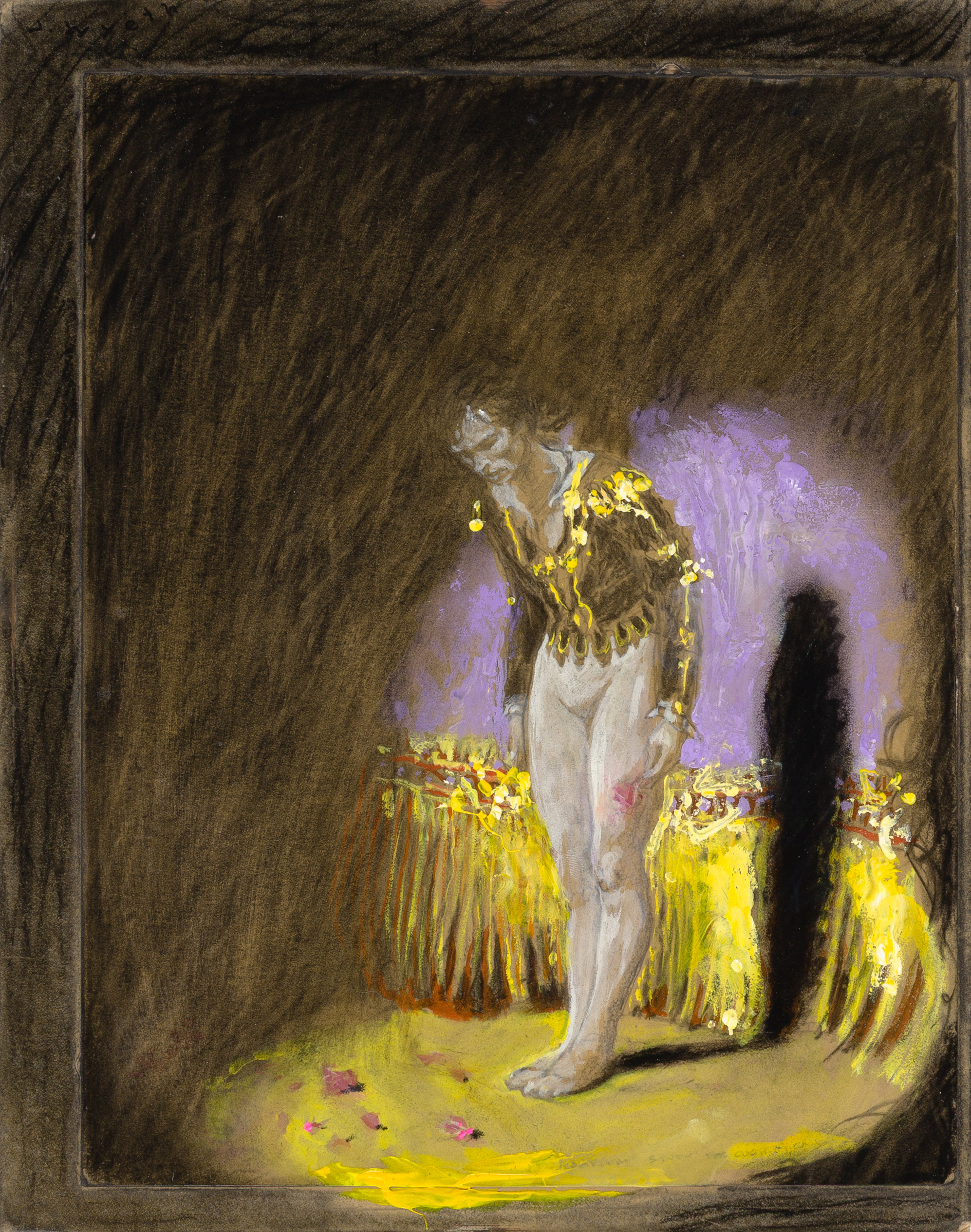
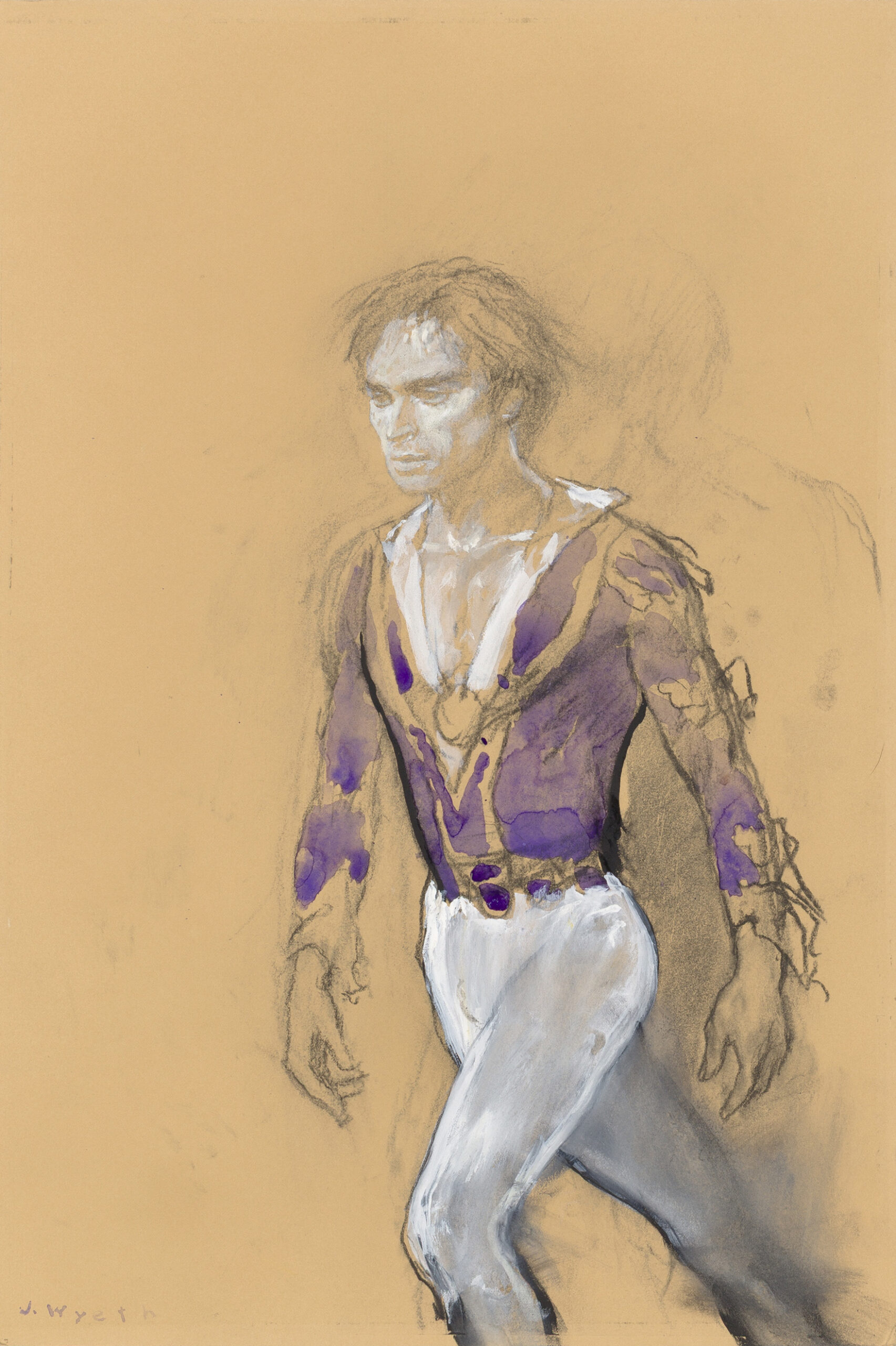
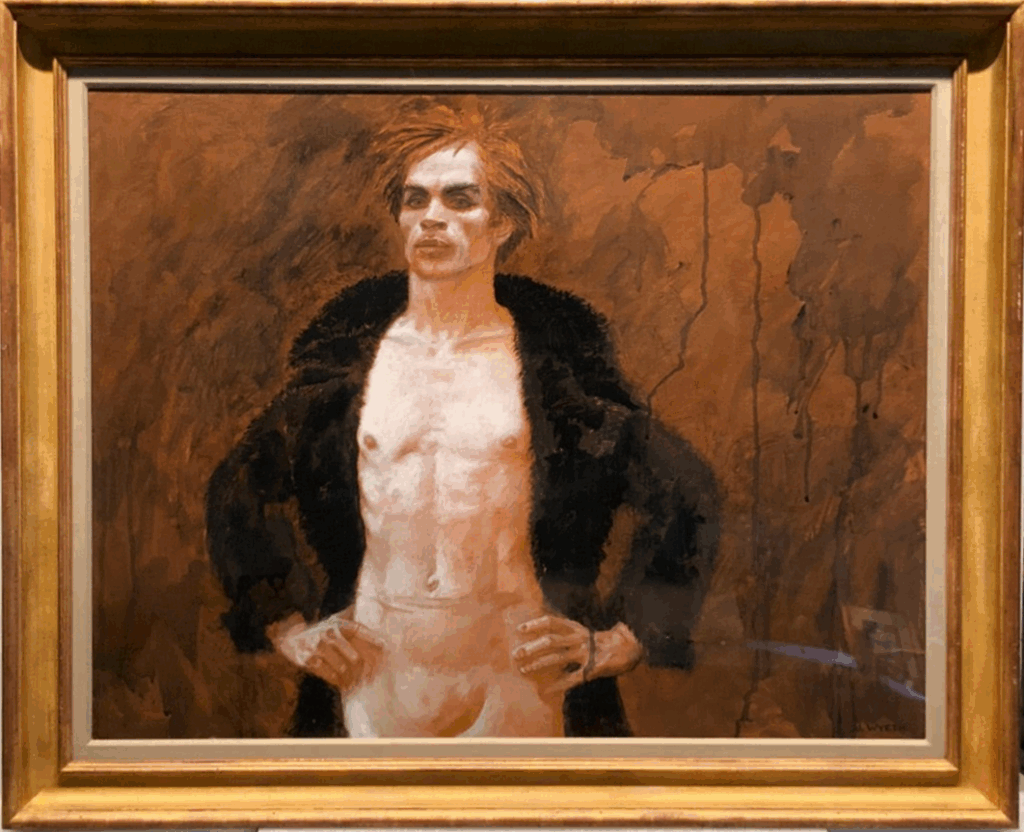
The Nureyev paintings, rendered primarily in watercolor, gouache, charcoal, and pencil on cardboard, feature the dancer both on- and offstage and in varying stages of movement. The majority were created in or circa 1977. At the time, Nureyev was an international guest artist visiting New York City, and he, Wyeth, and Phyllis eventually became close friends—the ballet star was a frequent visitor of the Wyeth family’s farm in Pennsylvania.
Here, Wyeth recalls what it was like to befriend, study, and paint Rudolf Nureyev.
How did you come to paint Nureyev?
I happened to be in a friend’s apartment across from Lincoln Center, and he walked in, which brought the room to a standstill. I was absolutely fascinated—I had seen him perform and was struck by him—so I asked, “Would you ever have the chance to pose for me?” He said, “Of course not.”
But in the ensuing years, I had an exhibition in the Soviet Union which interested him, so he asked if I was still interested [in painting him]. Of course I was. So he said, “Well, I am here.” I would go to the class he’d take with Stanley Williams, at the School of American Ballet. It was at that class one day that I realized that he was never going to sit still. I was getting desperate, and there was a student in the class who had a similar physical shape, so afterward I said to Rudolf that obviously he didn’t have the time to sit for me, so would he mind if I used this young man as a model? He went into this rage (the poor student!), but, after that, he allowed me to sit onstage and watch him prepare for performances—as long as I stayed quiet.


Rudolf and I became quite good friends. But I could never figure out what he was: Human? A panther? In the farmhouse for the weekends, it would be like having some incredible creature in the house. Nureyev offstage was exactly as he was onstage. He was intense; he didn’t relax. He had a mind like a steel trap.
It seems like he wasn’t keen on posing. How did you capture him still, and in motion?
It’s a bit of a contradiction to paint a dancer who is constantly moving. I’d never painted a dancer before. But a mentor of mine was [New York City Ballet and School of American Ballet co-founder] Lincoln Kirstein, so I spent a lot of time at the company and the school. (Kirstein, at first, was furious that I was doing Rudolf’s portraits. He thought Nureyev was too “Hollywood.” But at my first exhibition of the drawings he bought three of them!)
Out of anybody I’ve ever painted, Rudolf was the most concerned as to what I was doing and how it would look. That was a bit stressful. I’d be in his dressing room, drawing his foot or something, and he’d leap up, look over, and say, “No, my foot is more beautiful!”

The most revealing time to me was just before a performance. The first couple times I watched, I was so struck by it that I couldn’t even draw. He would have the stage cleared, and he would come out in a heavy bathrobe to go through the movements, removing layers of clothing as he warmed up. There was no sound other than his landings and his breathing. The curtain was down, the audience would begin coming in, and finally he would reach a fever pitch and dash off to Luigi, his dresser, who’d throw a big coat over him. Off they’d go to the dressing room for showtime. I did many, many paintings during those periods.
After Rudolf’s death, I was freer, in a sense, to paint him. I’d studied him so much—measuring the lengths of his fingers. They’re perhaps my most revealing [portraits] of him.

What are your thoughts on pairing Nureyev and Warhol in the exhibition?
I’ve never seen two opposites more than those two men. Rudolf never could understand my interest in Warhol. He thought he was an ugly person. Andy was very, very shy. But he asked to take pictures of Rudolf, who grabbed Andy’s camera and threw it to the ground. They are a complete contradiction!
It strikes me that some of the paintings of Nureyev are much darker than the others.
He had that sort of dark, Russian quality. He was a tragic figure, too. He’d left his country, which meant so much to him, and not because of politics. He just wanted to dance. He wanted to dance Graham and Balanchine. If he’d stayed in the Soviet Union, he’d be dancing Swan Lake for the rest of his life. When he returned, he’d expected a huge crowd at the airport, and nobody was there. The country never forgave him. His mother didn’t even recognize him at first—she hadn’t seen him in 30 years.
Could you speak more on your painting materials?
Oddly enough, I got fascinated with cardboard during that period. I wanted to work larger and larger, and, of course, backstage is a world of sets and costumes. So I just would cut up the boxes they came in and use that. The white gouache on the dark cardboard just thrilled me. And then the whole idea of painting this sort of Prince of Dance on crappy cardboard was fascinating. Cardboard tends to self-destroy.
That’s interesting, because we always say dance is an ephemeral art form—it disappears the minute it happens.
That’s the thing about dance that totally intrigued me. Rudolf would always come into the dressing room and say, “One more down.” He said he was like a glass of water, and each performance kept taking from it. How many more did he have in him? We’d have to see.