Scottish Ballet Tackles the Dramatic Life of Mary, Queen of Scots

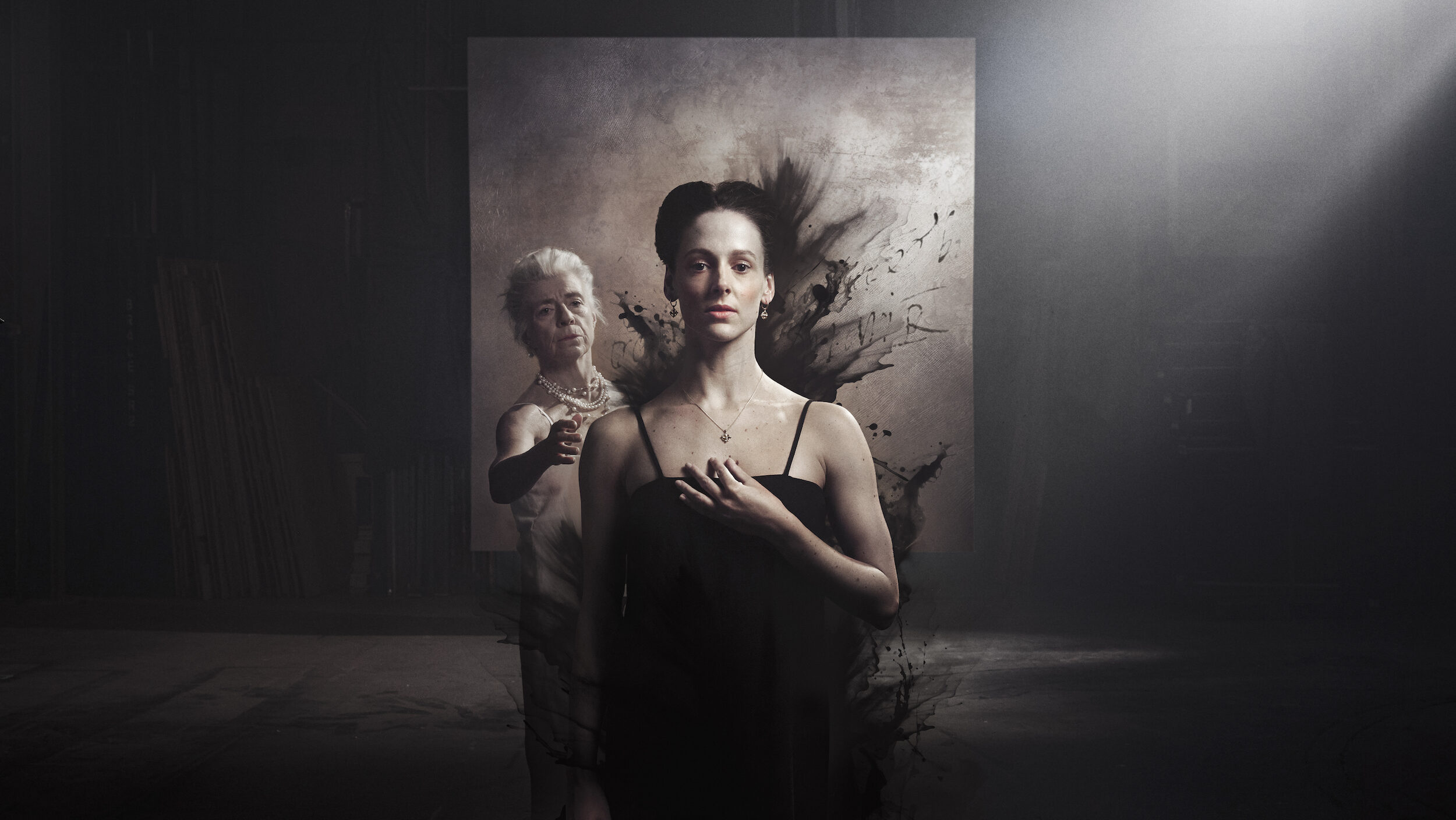
This month, Scottish Ballet takes on one of the most fascinating historical figures in its country’s history: Mary, Queen of Scots. The Scottish monarch, who lived from 1542 to 1587, was a cousin and rival of England’s Queen Elizabeth I, who famously had her beheaded. The company presents its world premiere Mary, Queen of Scots at the Edinburgh International Festival from August 15–17 before taking it on a national tour in September and October. Co-created by choreographer in residence Sophie Laplane and director James Bonas, the new full-length features costumes and sets by Soutra Gilmour and an original score by Mikael Karlsson and Michael P. Atkinson.
Scottish Ballet principal dancer Roseanna Leney, who is first-cast as Mary, says there’s been a heightened energy in the company during the ballet’s creation process. “This being a Scottish story and danced for a Scottish audience, there’s added pressure,” says Leney. “It is such a big honor to take on such an epic role, and I want to do it justice.”

Mary’s life was, simply put, tumultuous. Inheriting the Scottish crown as an infant, the Catholic queen, who was Elizabeth’s first cousin once removed, was considered a legitimate threat to Protestant England’s throne. With her country controlled by regents until she came of age, Mary, who was betrothed to the Dauphin of France, grew up in the French court and married at age 16. She was widowed by 18 and sent back to Scotland, where, as a Catholic monarch, she faced near-constant political and religious conflict among her mostly Protestant council. She married her cousin, Lord Darnley, and had a son, James (who would succeed both Mary and Elizabeth as king). But the marriage soured after a jealous Darnley helped murder her private secretary and confidante. Soon Darnley was dead too, found at the scene of a mysterious explosion that many suspected Mary had helped plot with the Earl of Bothwell. (They married soon afterwards.) An uprising ensued, Mary was forced to abdicate to her infant son, and, after a brief imprisonment, she fled to England in hopes that Elizabeth would protect her. Instead, the English queen placed her cousin under house arrest for over 18 years, and ordered her execution after her advisors implicated Mary in an assassination plot against her.
It’s a lot to pack into a ballet.
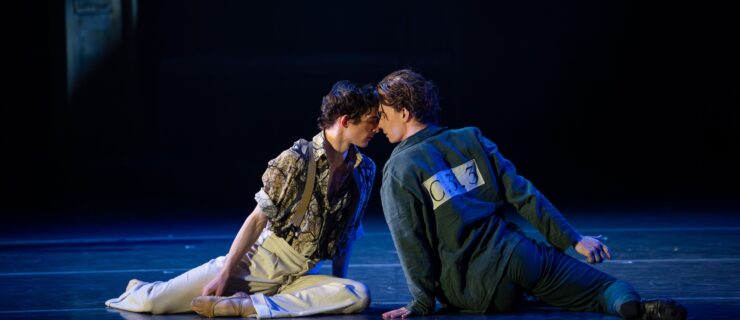
Laplane and Bonas’ production focuses on the relationship between the two queens, who corresponded frequently but never met. The ballet is seen through the eyes of an older Queen Elizabeth (to be danced in Edinburgh by guest artist Charlotta Öfverholm), nearing death and haunted by memories. Flashbacks depict Mary’s early life and heartbreaks, as well as the younger Elizabeth as she establishes her authority and keeps watchful spies intent on Mary. As the Scottish queen’s life devolves into scandal, the two cousins begin communicating, revealing both their desires to connect and their power struggles.

“They kind of longingly want to get along, but can’t,” says Leney. She adds that Mary and the younger Elizabeth—a nonbinary role with both male and female casts to reflect her place in a man’s world—rarely dance on the same level. “She lifts when I drop, to show that we can never be in power at the same time.”
To tell such a complicated story—and explore questions about whether Mary was a plotter or a political pawn—the creators streamlined historical events and added elements of abstraction within the narrative. For instance, for Darnley’s death scene, Elizabeth imagines Mary as a giant spider about to consume her husband. “It leaves you with that idea of, ‘Did Mary orchestrate the killing of Darnley, or did she not?’ ” says Leney.

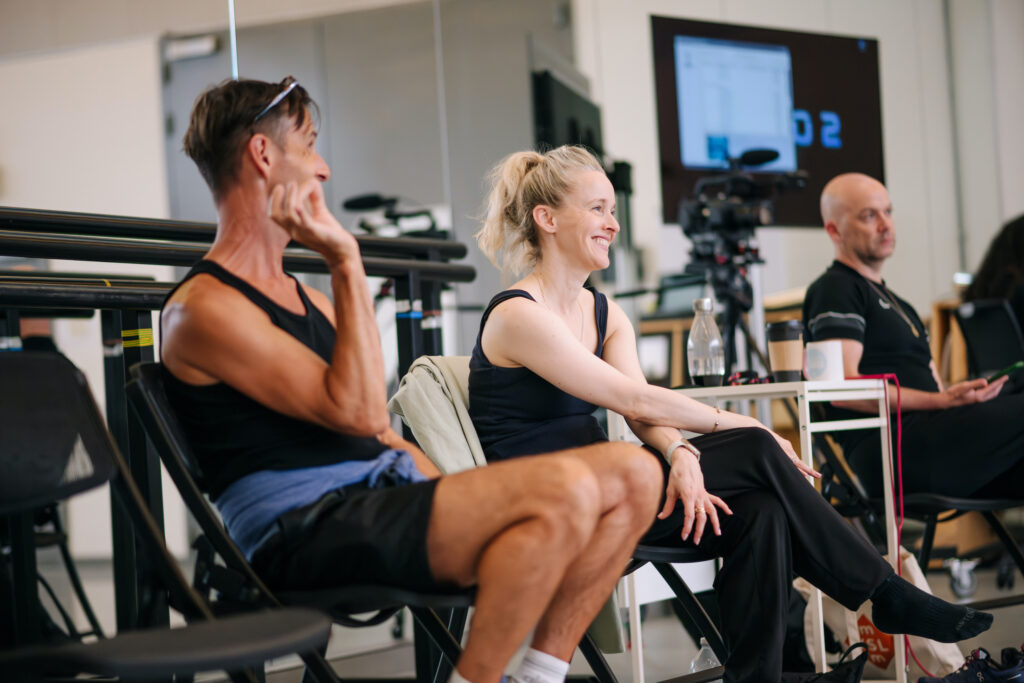
The creation process has been deeply collaborative. Laplane’s choreography has a “neoclassical quirkiness,” says Leney. “Sophie has created some lifts and partnering work I’ve never seen before—she’s incredibly inventive.” Bonas, as director, has questioned the characters’ motivations throughout. “He breaks things down to the point where maybe in ballet we wouldn’t think to go that far. Like, ‘Why is she looking over there?’ And Sophie questions him back,” says Leney, who’s been encouraged to share her own thoughts about Mary’s motivations during rehearsals. “I really feel like I’ve had a voice with them to create this.”
Leney adds that each movement starts with the emotion behind it, “so it feels quite genuine.” Showing Mary’s operatic journey from a vulnerable adolescent to a proud monarch condemned to death is challenging, she continues. “It’s like trying to portray 12 different emotions throughout the ballet, but trying not to peak too soon.” Between Mary’s private feelings of betrayal, loss, heartbreak, fear, and love, Leney wants to emphasize her outward-facing resilience above all. “I can’t imagine what these experiences do to a person. She went through so much, but, above all, she was so strong.”