Terpsicorps Honors Hurricane Helene Heroes With Appalachian Phoenix

When Hurricane Helene struck western North Carolina in September 2024, it destroyed homes, businesses, and utilities, and plunged the area’s residents into isolation. Locked in place by impassable roads and left without electricity, cell phone service, or internet connection, people could not communicate with anyone beyond shouting distance for weeks. But the desperate situation sparked a bitterly beautiful reaction throughout the region. Neighbors who’d lived side by side but never met shared supplies and resources, and comforted one another. Those who escaped serious harm rushed to the aid of people who weren’t so lucky.
Heather Maloy, founder and artistic director of the Asheville-based summer company Terpsicorps Theatre of Dance, is memorializing that spirit of resilience and community with a new ballet, Appalachian Phoenix. The work will premiere July 17–19 in Winston-Salem, North Carolina, then run in Asheville July 24–26.

After counting her blessings (her home was undamaged and a friend in South Carolina provided temporary housing until running water was restored in Asheville), Maloy immediately stepped up in the hurricane’s aftermath, helping friends rebuild and volunteering. Inspiration struck when she saw truckloads of donated clothing, some of it too dirty or worn to be used, piling up at her volunteer distribution site. “There was 10 times as much as anyone would be able to utilize,” she says. “I thought the clothes represented so many things: water, trash, need, how we help and comfort each other. I imagined them covering the stage in a way that represented those things.” She asked other volunteers to set aside unusable blue-colored clothing and called for empty plastic water bottles (Asheville residents relied on bottled water for months after flood-damaged reservoirs made tap water unusable) to be dropped off at her house.


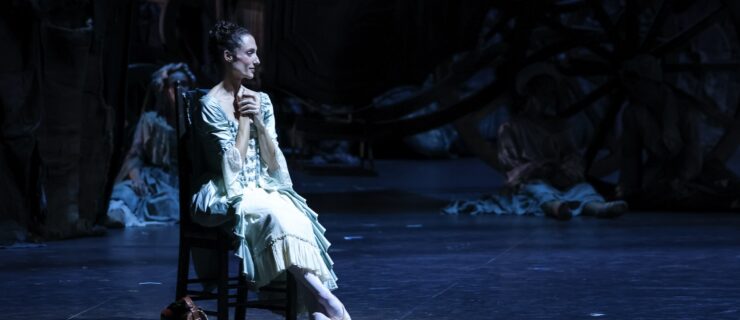
Those old clothes and bottles now form part of the set for Appalachian Phoenix. Thirteen thousand clear-plastic water bottles, painstakingly banded together in hexagonal bundles by volunteers, form a backdrop that will reflect projected images reminiscent of western North Carolina. Swaths of donation-site clothing, stitched together, will become props symbolizing both the flooded rivers and the care shown by hundreds of volunteers. The stories of these volunteers, who were nominated as “hurricane heroes” by area residents, are recounted on Terpsicorps’ website. Each of the ballet’s seven sections weaves together elements from the 52 heroes’ stories.
Western North Carolina, like many areas in Appalachia, has a reputation for staunch self-sufficiency. “We’re not a community that really gels and does things together,” says Maloy. “But this storm changed all that. We had people from all walks of life standing side by side, working together. My overarching hope for this project is that by having all these people sitting in the theater together, we can see that, in our hearts, we’re all the same.” In that spirit, the production features cooperatively developed music by regional musicians, singers, and songwriters. An Asheville artist’s metal sculpture of a winged figure, etched with odes based on the heroes’ stories, will stand in the theaters’ lobbies. Motion sensors will trigger a recorded reading of the poems as people pass by.

Knowing the storm is still all too fresh in many people’s minds, Terpsicorps dancer Alexandra Zakharchenko has made a point to educate herself on the hurricane and its wide-ranging effects. (Like most of the dancers, Zakharchenko is not a year-round Asheville resident, though many of them have spent multiple summers there performing with Terpsicorps. This is her third season with the company.) Zakharchenko visited some of the storm-ravaged parts of the city, watched a documentary on the disaster, and carefully read the heroes’ stories. In Appalachian Phoenix, she portrays a nurse who cares for a dementia-afflicted woman who was separated from her husband during the flood. “I didn’t live through it, but it’s my place to understand what people went through so I can depict them onstage and connect with them,” she says. “They will relive it, but hopefully find a different perspective and a different ending than just destruction.”
Zakharchenko explains that Appalachian Phoenix concludes with all the dancers onstage in an uplifting, rousing finale. “That illustrates the point that we, as people, can’t do it all ourselves—we need each other,” she says. “I believe people can envision themselves through us and find hope. It’s about more than just a hurricane.”