Legendary Ballerina Natalia Makarova Returns to ABT to Restage Paquita

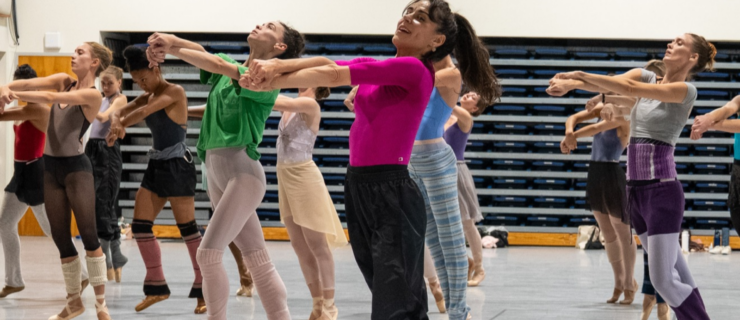
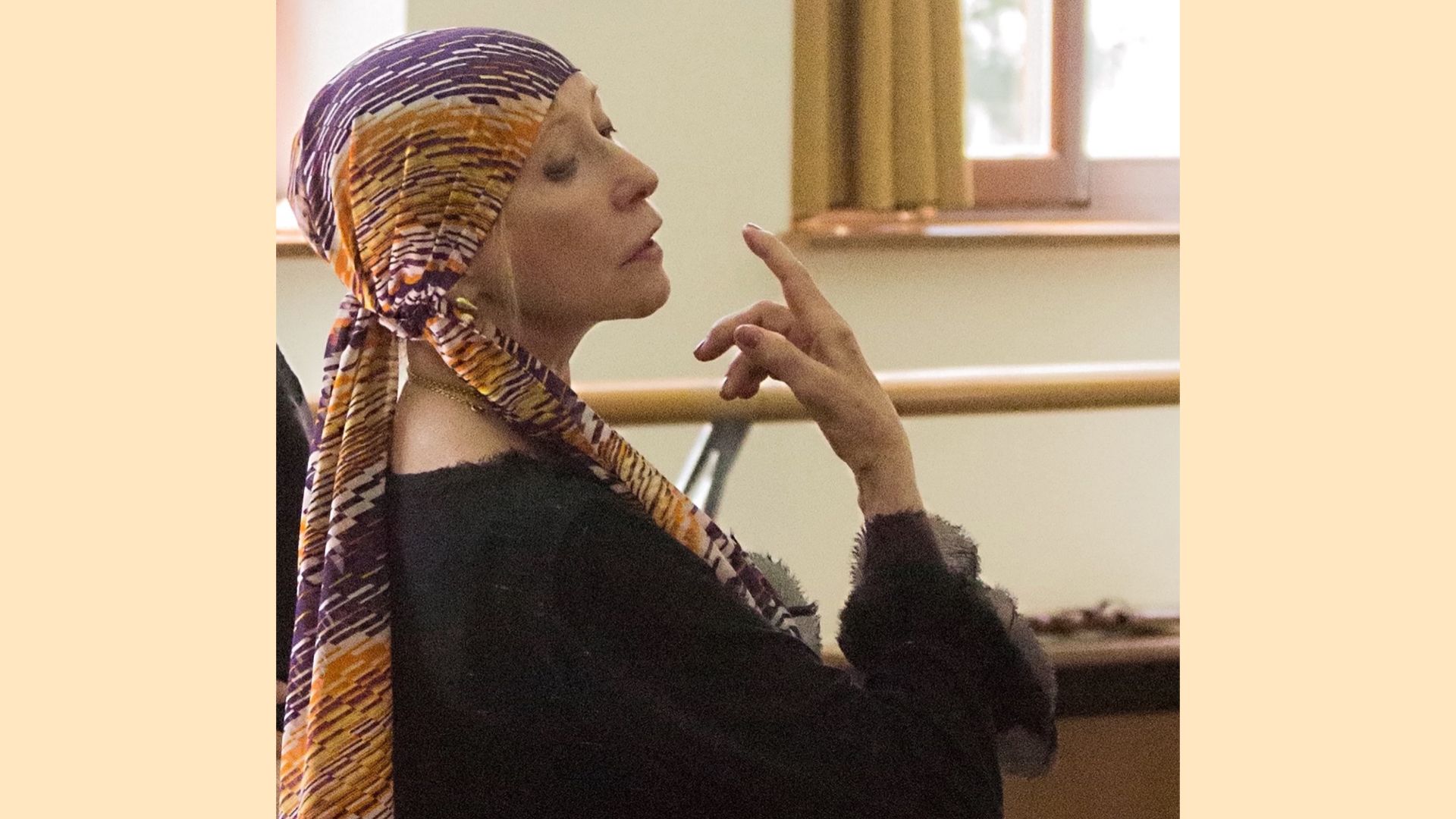
Natalia Makarova sits at the front of the studio at American Ballet Theatre, watching the corps intently as they run through her staging of Paquita’s grand divertissement. Dressed comfortably in a black velour sweatsuit and red Converse sneakers, Makarova, 86, traces their movements with her arms, her port de bras reflecting the expressive soulfulness of her Russian training.
The ABT dancers, in a rainbow of pastel practice tutus, have been working with Makarova to perfect the details in advance of the company’s fall season (October 21–31) at Lincoln Center. The corps inhales collectively, watching each other peripherally as they transition from pose to pose; they know this time with her is important.
Makarova, widely considered one of the greatest ballerinas of the 20th century, starred with Russia’s Kirov (now Mariinsky) Ballet before famously defecting to the West in 1970. She then joined ABT, where she would dance for roughly 15 years and have a celebrated partnership with Mikhail Baryshnikov. In 1974, she staged La Bayadère’s “Kingdom of the Shades” on the company, mounting the full ballet six years later. Her production of Paquita’s Act III grand divertissement debuted at ABT in 1983.
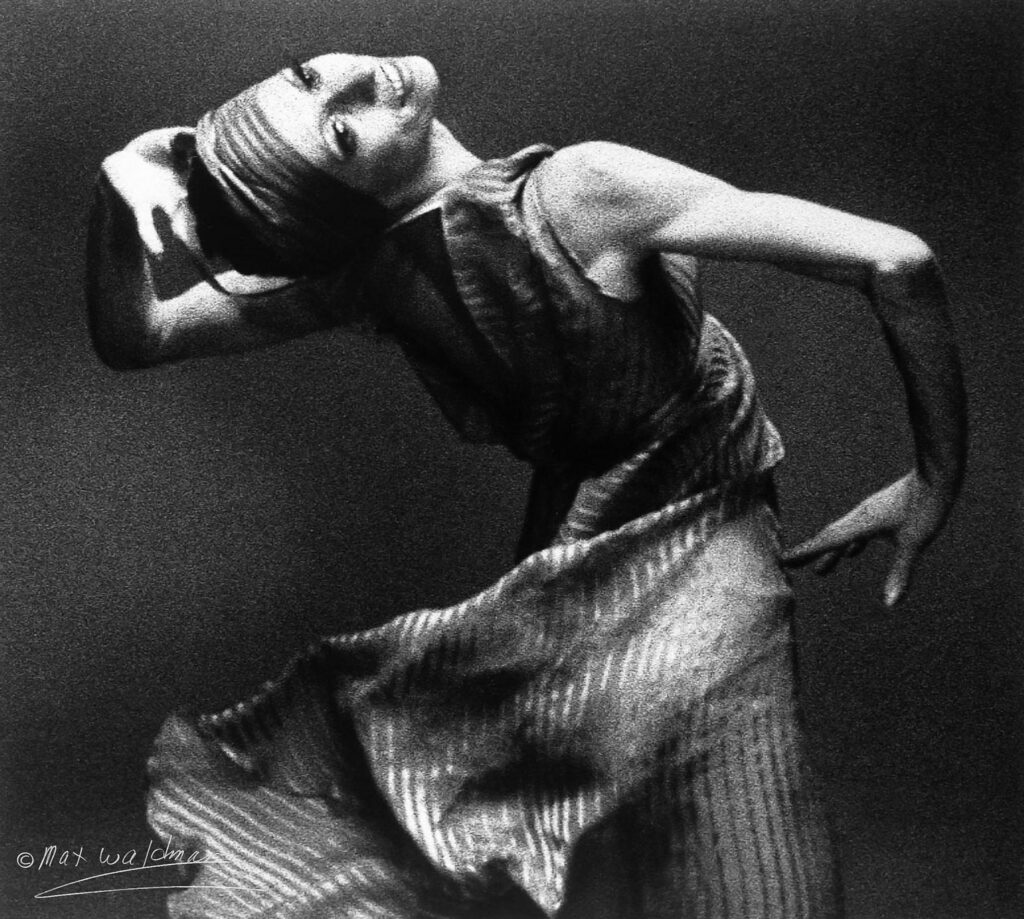
“Good, good, good,” Makarova says softly after the run. “Needs a little more panache.” Makarova, rehearsal director Nancy Raffa, and artistic director Susan Jaffe comb through each section with the dancers, paying special attention to the ballet’s style. “More waist in the emboîté,” Makarova says to a quartet of women, twisting her torso slightly to illustrate. “Feel opposition from the shoulders to the waistline.”
Many of her notes concern upper-body coordination—the head must first go up to go down, or down to go up. “From elbow to fingers, more expressive,” she tells principal Devon Teuscher privately after rehearsal, stroking the curve of her own inner arm. “More side to side with the body.”
Raffa, who has a long history with Makarova, jumps up frequently to help clarify her notes with the dancers. In 1980, Makarova, who had briefly run her own company, chose Raffa, then a 15-year-old student, to dance in a special performance of Paquita on Broadway opposite Fernando Bujones; Raffa joined ABT soon afterwards. “To come full circle now, entrusted with passing on the lessons she taught me to a new generation of dancers, is an extraordinary gift,” Raffa says. “I hope the dancers will carry the inspiration and lessons of this experience with them throughout their own artistic journeys.”
In an email interview with Pointe, Makarova shares her thoughts on returning to ABT, staging Paquita, and passing on the Russian ballet tradition.
Your staging of the Paquita grand divertissement is celebrated for its beauty and virtuosity—hallmarks of Russian ballet. Can you describe the pride you feel in Russian ballet and your Russian training?
Russian ballet training is something special known throughout the whole world. The Russian school, the Vaganova Academy, I am most proud of.
Why did you want to stage Paquita in the West?
[As a Vaganova Academy student] I danced the jeté variation from Paquita as part of a mixed program at the Leningrad Conservatory. I first saw Petipa’s Act III [excerpt] from Paquita performed by the Kirov Ballet when they were on tour in Paris [in 1978]. The Russian execution was exceptional, especially by Olga Tchentchikova as Paquita—her incredible technical ability and plasticity. I was truly impressed by the Kirov dancers, and so was the audience. Then I decided to put Paquita on for ABT. This ballet says a lot about the Russian classical way of dancing—the manner, the style, and an indescribable quality.
You’re coaching three principal couples. All of them come from different training backgrounds. What direction do you give them so they can capture the style and spirit of Paquita?
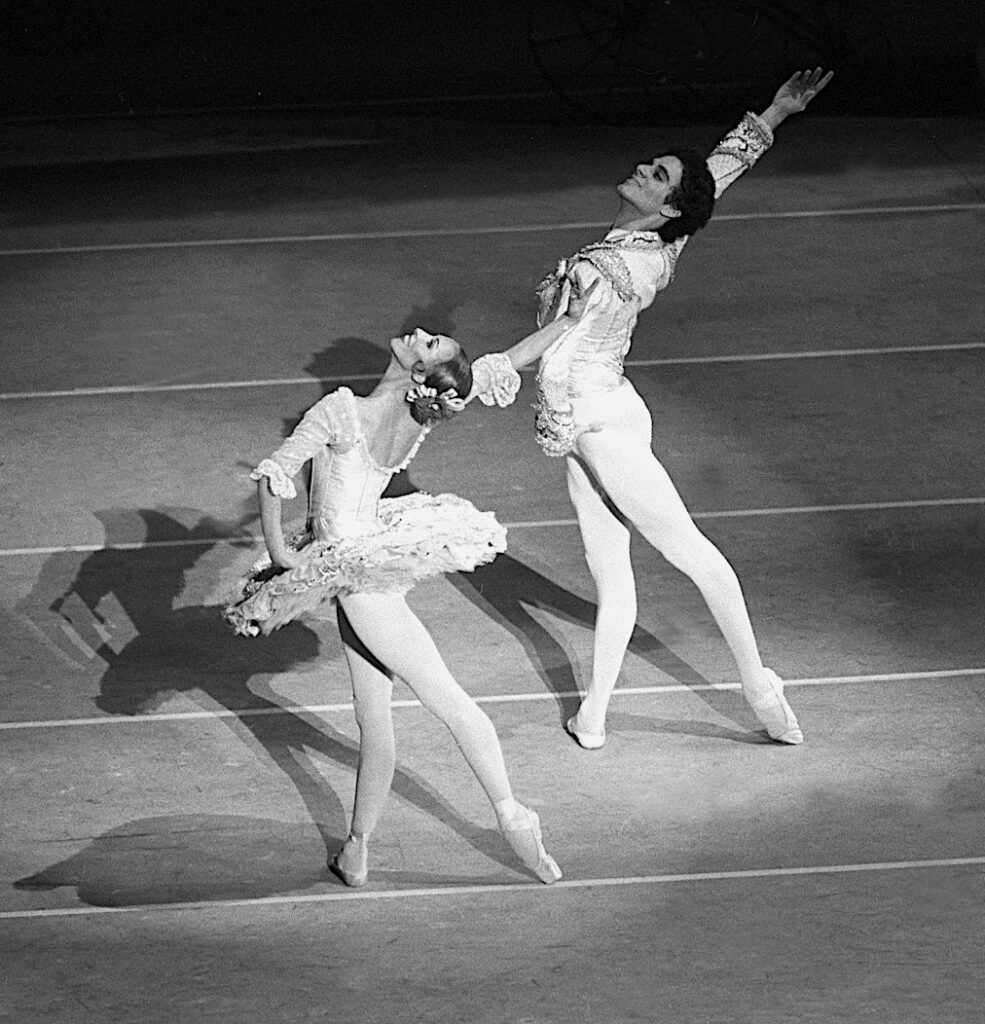
I have a different approach to each individual, solo, or couple. I very much enjoy this process, as much as I enjoyed working on “The Kingdom of the Shades.” It seems like they really appreciate this coaching. I am pleased to bring from Russia to America the many nuances in my approach, both artistically and professionally—the manner, the dignity, the finesse, the detail and stamina that they need to perform this ballet. The technique is very difficult and demands strength and professionalism. And it is joyful to learn these Petipa steps. The steps speak for themselves, but I did tell the dancers the story, the subject of the full-length ballet, which finishes with a celebration of the couple getting together. Technically, it is very demanding. There are so many good dancers in the company—the newer principal Chloe Misseldine, and Devon Teuscher and Christine Shevchenko, who I’ve worked with in the past on “The Kingdom of the Shades.” Their partners in Paquita, Aran Bell and Joo Won Ahn, are wonderful.
In addition to being grounded in classical technique, each Paquita variation showcases different qualities. How do you draw out the dancers’ strengths and individualism as you coach them through these challenging solos? What coaching do you give to the corps de ballet?
I remind them of the phrasing and how they listen to the music, to be inspired to put that into their bodies. The body is their instrument; they must use it with full strength, full devotion. The Minkus music, with its bravura—especially for the corps de ballet—is an appealing way to show a sense of humor and, even more, dignity and pride. They have all these qualities, which makes me extremely happy. I am particularly happy to have Nancy Raffa and Susan Jaffe to help me enjoy the process. I coached Nancy in her youth in Paquita, and she remembers that vividly. I am grateful to her and to all that are involved with the process.
In your autobiography, you speak passionately about your love for Russia but also your desire for artistic freedom. What role has ABT played in fulfilling your artistic aspirations?
ABT did a lot for me, particularly Lucia Chase [ABT’s co-founder and longtime artistic director]. She gave me total freedom to put on “The Kingdom of the Shades” [in 1974]. The dancers and everybody who was involved helped me enormously. I remember working closely with Pierluigi Samaritani, the renowned Italian scenic designer, and Theoni V. Aldredge, the wonderful costume designer. I am so grateful to Lucia, who opened the new road for me, gave me carte blanche to create my production, enough rehearsal time, and she raised money for the production and to have part of the scenery painted in Italy.
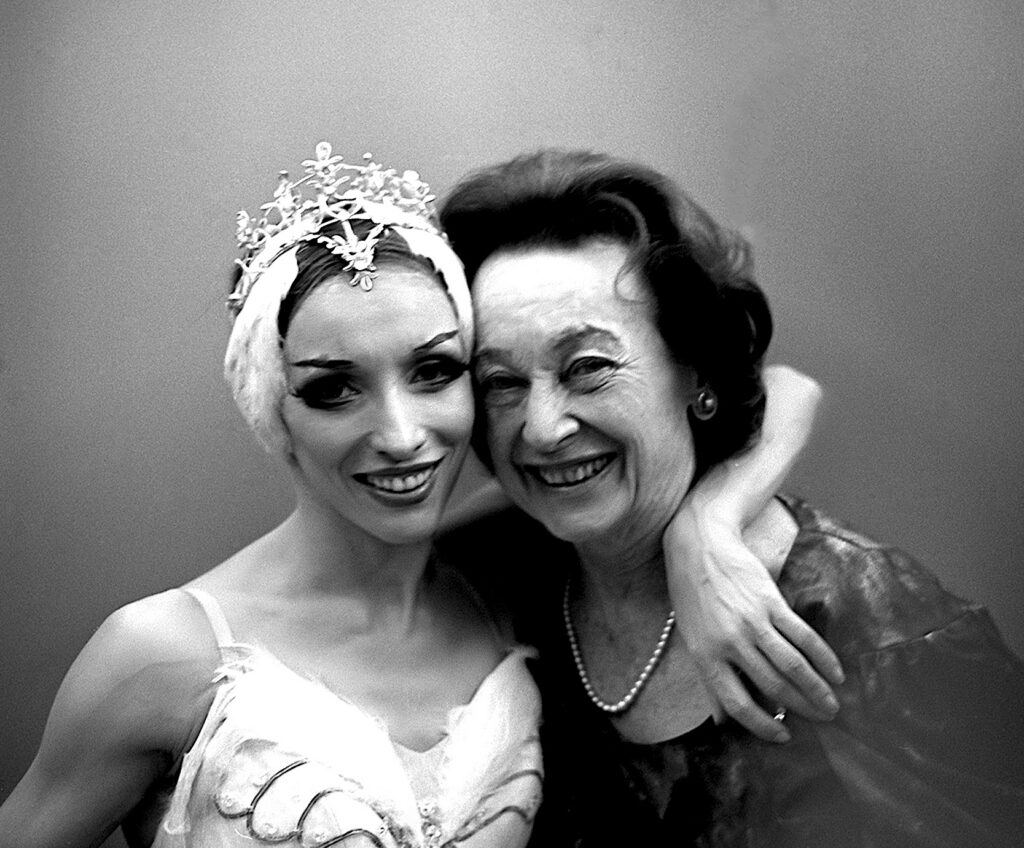
I am thankful to ABT and the wonderful dancers who danced in the first production of my Paquita, especially Cynthia Gregory and Fernando Bujones. The ballet fit them perfectly; it fit with their presence, exceptional technique, and sense of presentation. I am dedicating these performances to Fernando’s memory—he danced Paquita with extraordinary brilliance. It was a joy to see how effortlessly he met every technical challenge; his endless entrechats six were legendary—a remarkable feat in classical ballet. It is my pleasure to celebrate his greatness.
I am very happy to put Paquita on again in the 21st century, and I believe the audience will like it very much. It preserves danse classique—it is very beautiful stylistically. Now is perfect time to stage this ballet again, because there are so many talented dancers here.
This interview has been lightly edited for length and clarity.