The Bald Prince: Is the Tide Turning for Dancers Experiencing Hair Loss?

Tyler Angle had long been thinking about shaving his head. A principal dancer at New York City Ballet since 2009, he started finding ways to cover thinning spots about 10 years ago. During the company’s long break from performing during the COVID-19 pandemic, he decided to try going bald—and says it was liberating.
“I felt amazing, not trying to be this other thing,” he says. “I was just me.”
When the company returned, he knew his days of wigs, products, and comb-overs were behind him. In September of 2021, he took the stage bald for the first time, dancing the second movement of Balanchine’s Symphony in C.
“I was just completely in my own skin,” he says. “It didn’t feel like I was making a statement.”
But he was. Male-pattern baldness in young men is common: Two-thirds of men are affected by hair loss by age 35, and 25 percent of those will see it by age 21, according to the American Hair Loss Association. You wouldn’t know this by looking at ballet stages, because male ballet dancers have historically always covered hair loss and rarely shaved their heads.
Angle is one of the few in a major company to perform principal classical roles bald. Baldness onstage is usually reserved for contemporary or character roles, like the evil Von Rothbart in Swan Lake, not Prince Siegfried. Angle says the men he knew with hair loss when he came up in his career faced stigma and never thought to shave their heads.
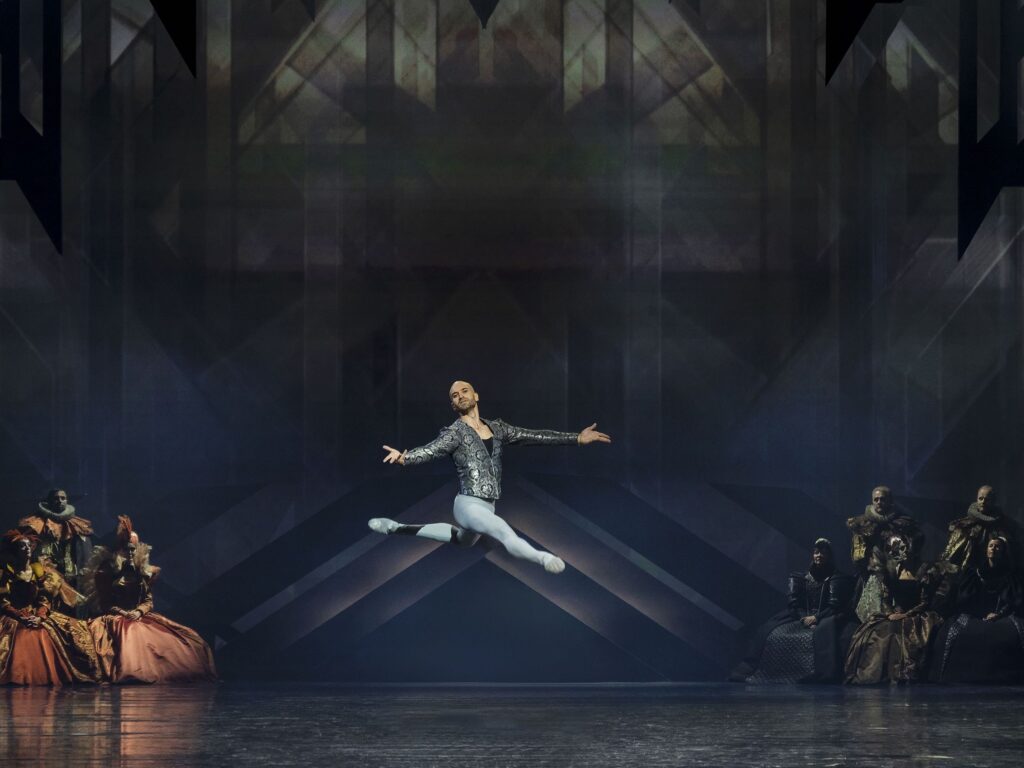
“It was a very sensitive issue. There was this idea that you couldn’t be a robust, virile male dancer without hair,” Angle says. “But maybe that’s changing.”
Earlier this fall, Jonathan Chmelensky, a principal dancer with Royal Danish Ballet, performed Siegfried in Swan Lake with a shaved head. He had already started dancing bald in roles where it felt appropriate, but this was the first time he had performed a classical prince role without hair. “Tyler’s decision to perform bald helped give me the strength to have the conversation here about doing the same,” says Chmelensky. “I know dancers around the world who were very scared to have the conversation and didn’t, and I was one for a long time.”
Early Solutions
Most male dancers with hair loss first turn to a product called Toppik Hair Building Fibers, made of colored keratin protein.

Shane Wuerthner, a former principal dancer with Queensland Ballet who also danced with San Francisco Ballet and Vienna State Ballet, had a ballet master tell him at age 20 to cover a bald spot that he said made him look old. While Wuerthner says Toppik was effective, it had its drawbacks. It took him about 30 minutes to apply before performances, needed adjustments at intermissions, and a thorough scrub to remove. Because the fibers are dyed, he says, his sweat would turn a green-black color and drip down his face.
“I remember doing a double tour and seeing this spray of black fly off me. It’s not ideal,” he says. “The fibers also rubbed off. I’d find them on my pillows and hats—and on my partner’s white tutu.”
When Chmelensky’s hair loss became noticeable at age 21, he was afraid he would be relegated to character roles. But the company helped him find solutions—first with products like Toppik and then a toupee and wig.
Both Wuerthner and Chmelensky knew dancers who went even further, such as paying for surgical hair transplants or expensive hair systems. Neither felt those routes were right for them. “I would have loved to have just shaved my head, but it wasn’t something people did then,” says Wuerthner, whose career spanned from 2005 through 2017.
Embracing Baldness
Angle never asked for permission to dance bald, but he was met with support from the company. When Swan Lake was scheduled later on down the line, NYCB’s artistic director, Jonathan Stafford, talked to him about reprising the role of Prince Siegfried. Angle replied that he wanted to, but not if he had to wear a wig—he recalled his experience a few years earlier wearing the required wig for Prince Désiré in The Sleeping Beauty.
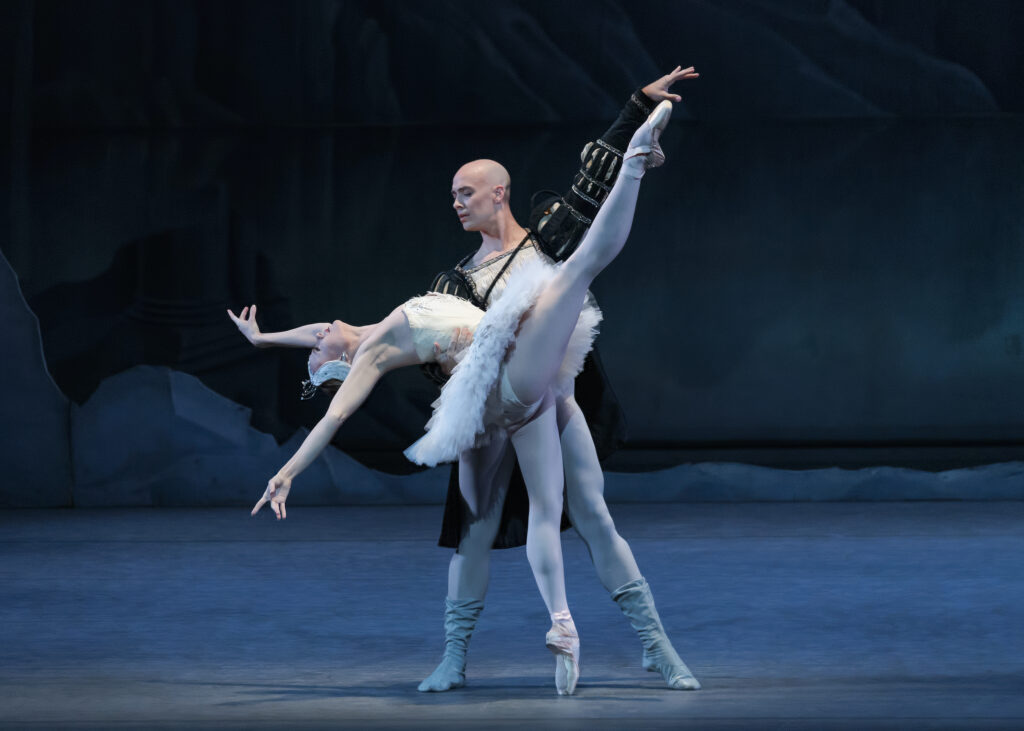
“During the Act III double tours, the back of my wig detached and I could feel it hitting against my head. I worried it would fly off,” he says. “These roles are stressful enough, and I was done with that.”
He recognized that the wig might be necessary for his character in Swan Lake, and was willing to forgo the role. But Stafford supported his preference. “My goal is to always ensure that our dancers look and feel their best onstage, and I was happy that Tyler made a choice that works well for him,” Stafford says.
Similarly, Chmelensky felt a shaved head would be most authentic for him during Royal Danish Ballet’s Swan Lake this season. He approached RDB director Amy Watson to ask her thoughts. Watson, who had become director a year ago, had already begun to question the value of altering dancers’ hair, and had started to limit the use of hair extensions for women.
“My approach is that any extensions or wigs should be essential to the character,” she says. “Jonathan is a wonderful storyteller. I didn’t think he needed a wig to play a prince.” Watson, who danced with RDB from 2000–21, says she had never seen someone dance bald in a classical role there, but that she didn’t hear any complaints about Chmelensky.
Wuerthner and Chmelensky both recently posted about their hair journeys on Instagram. Wuerthner showed a stark comparison picture before and after applying Toppik, and Chmelensky posted pictures from Swan Lake, expressing how emotional it was to redefine what a “healthy young man” should look like. They both say they received messages from younger dancers dealing with hair loss who have difficulty talking about it due to stigma.

All three men recommend initiating a conversation with leadership and not assuming it will be negatively received—even if you’re in the corps de ballet. When asked if corps dancers might also perform bald, Stafford says he’s “supportive of other dancers making similar decisions” to Angle’s.
Watson takes a similar stance.
“Dancers in the corps don’t always have to look identical,” she says. “They’re portraying humans, and there are bald humans. Why not see them onstage?”