The Expressive Power of Hands

There’s a telling moment in John Cranko’s Onegin near the end of the Act III pas de deux. Onegin, who had broken Tatiana’s heart years earlier, falls at her feet, begging for forgiveness. “Tatiana married a good and loving man, but in her heart, Onegin was still her first love,” says Franco De Vita, American Ballet Theatre National Training Curriculum co-author and artistic associate. “She wants him to leave, but in an instant when he’s not looking, she almost caresses his hair, only to quickly pull away her hand when he looks up. It is a riveting moment that expresses complex emotions and the human condition with a small hand gesture.”
Hands can be immensely expressive and are an integral part of a dancer’s body language. “They can express strength, grace, weakness, excitement, lethargy, joy, sadness, love, hate, goodness, and evil,” says De Vita.
Lyndette Galen, principal of the Richardson School of Texas Ballet Theater, says that hands and fingers can signal changing emotions, “by being soft, hard, or curly.” She compares fingers to the punctuation marks in a sentence: commas, periods, and exclamation points to help tell a story and interpret the music.
Read on for insights on what makes hands such an expressive tool, how different training methods approach them, and how to shape and energize them without tension or affectation.
What Makes a Graceful Hand?
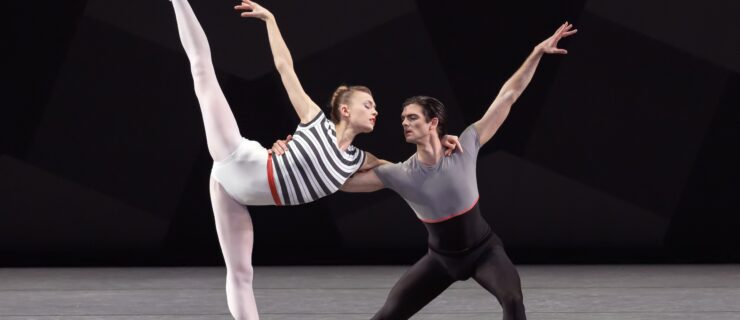
Hands complete your upper-body lines, says Daniel Duell, founder and artistic director of Ballet Chicago. “The fingers and wrist need to resolve in a curve that’s congruent with the rest of your arm,” he adds. This applies both when the arms are curved (second position, for example) and when the arms are stretched (like in first arabesque), “where again the fingers remain separate but follow the line of the arm so as to complete it.”

Your hands’ ability to move and flow into positions is also key. “One should think that they move like a paintbrush, flowing one way and then the other, drawing pictures with movement that finalize at the end of your arms,” Duell says. He adds that it can take time for dancers to discover how much energy needs to circulate through them.
It’s a tricky balance; hands must be both relaxed and engaged, says De Vita. And when dancers perform different roles, the energy used in their hands, and the shapes they make with them, needs to reflect each character. He says a perfect example of this can be seen in Marius Petipa’s 1890 premiere of The Sleeping Beauty. In the original production, Enrico Cecchetti danced two nearly opposite roles: the Blue Bird and Carabosse. “These two roles require extremely different use of the hands to convey the characters’ intent and their extraordinary distinct nature.”
Schools of Thought
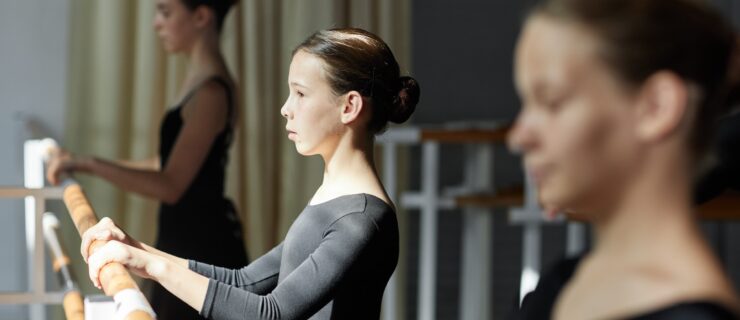
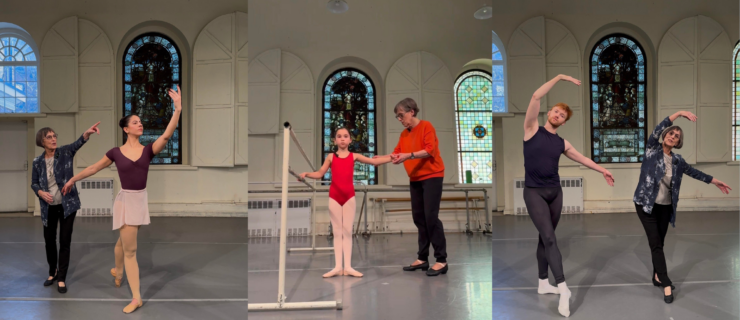
Different ballet curriculums teach different ideas about what makes an ideal hand. De Vita, who trained in Italy and received the Enrico Cecchetti Diploma, explains that the Cecchetti method uses three hand positions when training dancers. The first is preparatory, to correctly group the fingers, and is used primarily at the barre. “The middle and ring fingers are slightly more bent than the index and pinky fingers, and the tip of the thumb is touching the upper side of the middle finger.” The second position, used in most of center work, is the same, but with the thumb detached and “gently reaching towards the middle finger.” In the third position, “the hand ever so slightly winged towards the pinky, and this is the position generally used in arabesques and when executing an allongé movement,” De Vita says.
Galen is a registered teacher of the Royal Academy of Dance. “RAD teaches a relaxed hand position with the middle finger slightly lower,” Galen says. “The thumb is in a natural position slightly under the middle finger.” She adds that the thumb doesn’t tuck under or stick up. “The aim is for the hand and fingers to complete the curve or line, and they are never a distraction to the eye.”

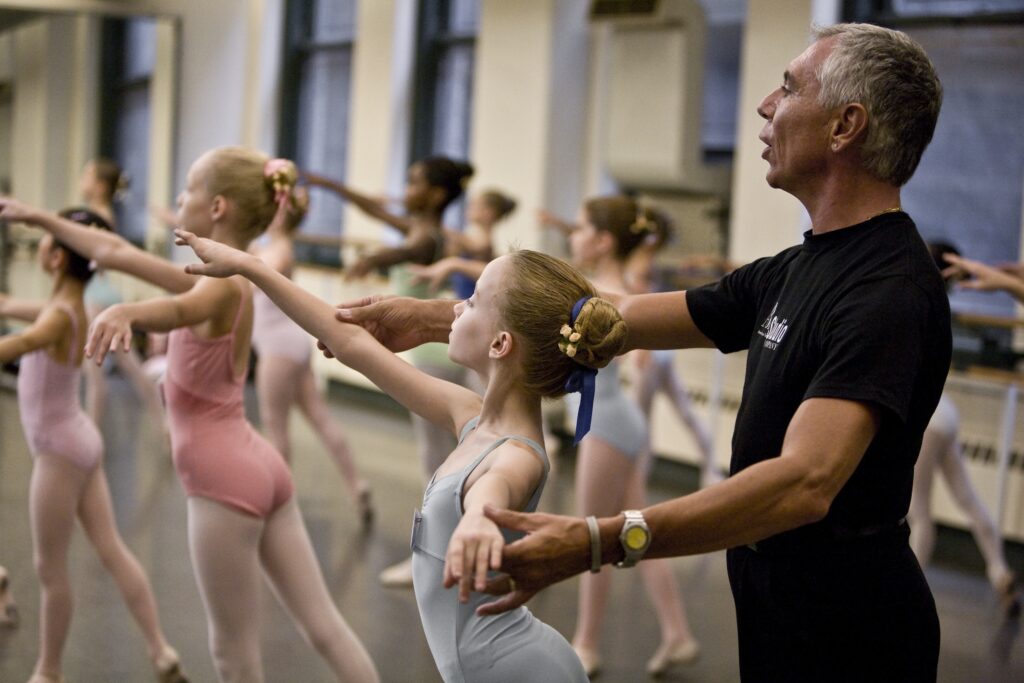
Galen says young students begin by sitting on the floor and placing their hands on the ground with only the middle fingers touching the floor. “The other fingers remain lifted, and the thumb should naturally fall into place.” When they stand up, they focus on keeping this shape as they create arm positions, “and progress to the full port de bras coming from the support of the upper back.”
Duell danced for New York City Ballet and worked directly with George Balanchine, who he says paid great attention to the hands and fingers, and their timing. “Mr. B. said, ‘Not limp, not tense, not stiff, but formed and held like a flower.’ ”
Duell passes this down to his students, teaching them to keep their fingers separate “but not spread out; no two fingers are parallel or touching each other.” He notes that this results in a less compressed hand. He adds that Balanchine also used flower imagery as a means of developing port de bras: “He said to imagine picking a flower from a bush in front of you, placing the flower in the palm of your hand, and when you open the arm, you are offering it to someone as a gift.”
In general, says Duell, the arms should lead and the hands should follow. “We have a favorite saying: ‘Elbow, wrist, finger.’ It develops the flow of the motion.”
Common Mistakes
Because hands require a great deal of detail, they can be hard to perfect and distracting when not used well. “The most common mistake that I see is when dancers maintain the same hand shape throughout when they dance,” De Vita says. This limits expressive range.
“Hands need to have their own energy and form and be ready to change and resolve in definite shapes,” Duell says. “If everything else is finished and complete, but the hands are not, you will look unfinished.”
Dancers also need to watch for excess floppiness or rigidity. “When the hands unconsciously take tension, the most frequent appearance is an overly bent wrist, which breaks the continuity of the shape of the arm,” says Duell. He adds that the fingers need their own degree of curve. “You must delineate between the curved, rounded hand and the straight allongé hand. And when changing from the rounded shape to an allongé shape, you must time that change to flow.”
Galen says, “The little finger is also important in finishing the circle shape of the first, fifth, and bras bas positions.” Imagine water droplets flowing from the wrist to the ends of the fingertips, she adds, “with no blockage or rigid adjustment.”
De Vita notes that dancers can only succeed as artists when audiences understand what emotions they’re trying to transmit. The hands should be an extension of what dancers want to convey, “be it on an aesthetic, stylistic, intellectual, or emotional level.”