Are You Gripping Your Quads? Here’s How to Beat the Habit

As a teen, my quads used to drive me crazy. Whether I was doing a tendu, a développé, or even a plié, they’d take over, and accessing my other leg muscles seemed frustratingly impossible. As teachers cued me to “lift from underneath” and “stop gripping” my quads, I struggled to figure out how to engage everything correctly.
Quad gripping is common, and it’s often a matter of faulty muscle firing, weight placement, and mental imagery. So how can dancers beat the habit and start engaging the right balance of muscles? Here, two experts—rehearsal director Juan Carlos Peñuela (Dance Theatre of Harlem) and founder/artistic director Georné Aucoin (International City School of Ballet)—share their best advice.
Why So Tense?
The quadriceps are an essential part of the muscular system dancers use every day, and they should be strong. (The goal is not to turn them off completely—to lift the leg, for example, the quads do need to fire to maintain knee extension, working together with the hip flexors and other supporting muscles.) The issue, according to Aucoin, is when a dancer becomes quad-dominant, using them as the main source of stability. “When dancers grip, they’re often trying to hold themselves in a position instead of allowing the whole chain—from the tops of the legs to the bottoms of the feet—to work together,” she says. That imbalance can contribute to unnecessary muscular tension and compensation throughout the body. “The hips look locked, and the dancer starts to sit back in their weight,” continues Aucoin. “They lose length, freedom, and stability. Efficient ballet technique comes from balanced muscular coordination rather than one muscle group trying to do everything.”
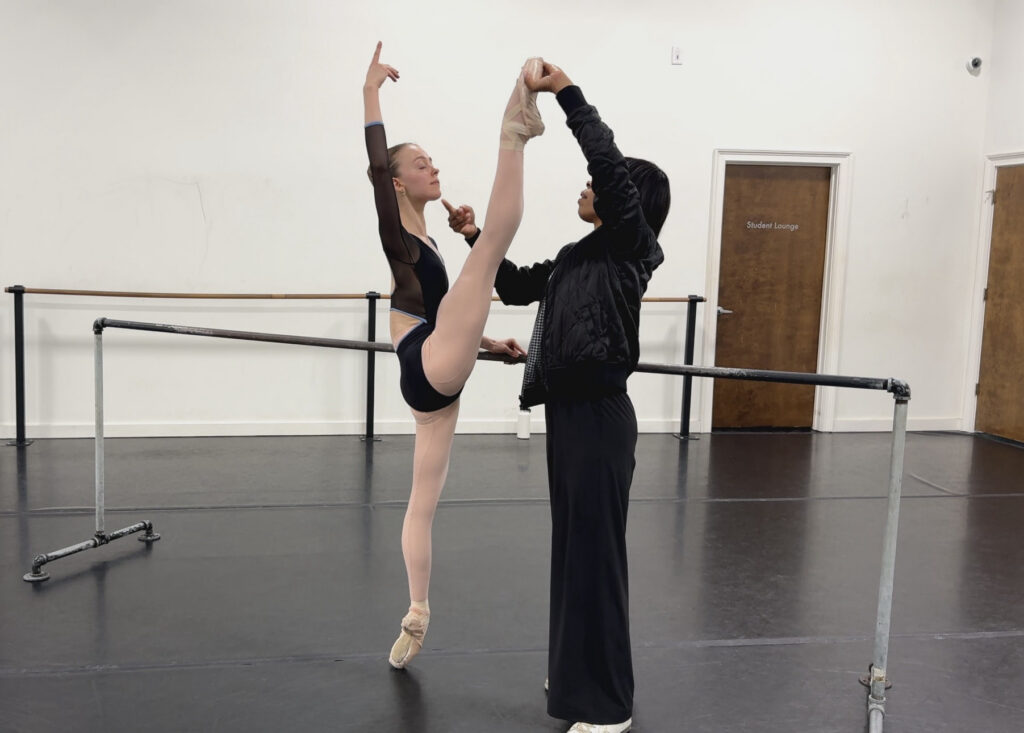
Peñuela explains that a common cause of excess tension is misplaced weight on the standing leg. “Your weight should always be over your toes,” he says. Placing the weight toward the heels makes it difficult to engage the glutes, hamstrings, and inner thigh muscles, so the quads often take over to compensate. (Repeatedly doing so can train the body not to engage the back of the leg, and those muscles may become weaker or fire less easily over time.) That throws off alignment throughout the entire body. “It’s all connected,” he says.
More Isn’t More
Sometimes, Peñuela continues, a dancer will mistake overusing the quads for hard work. He often sees this in students who try to “muscle through” movement or force their turnout. “You shouldn’t be sweating in pliés,” he says. “There’s a way of rotating without tension. It’s all about the feeling of gently turning the femur inside the hip socket—from inside, out.” (Turnout is always active, he adds, so if a dancer thinks about turnout as a static, held position rather than as a constant motion, chances are they’re gripping.)
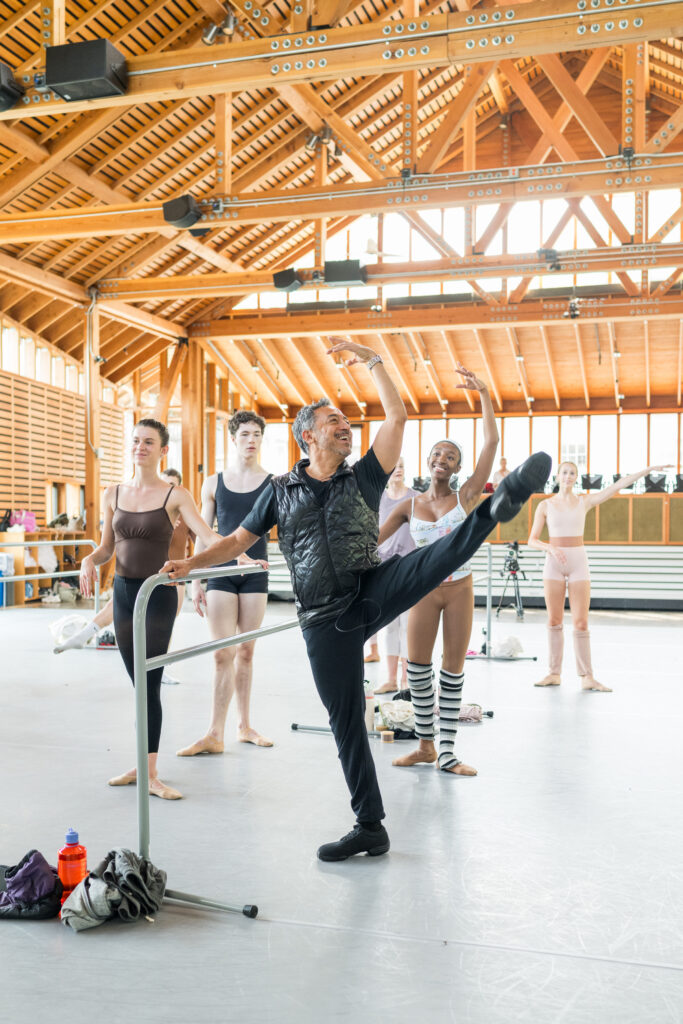
Aucoin often notices excess quad tension in movements that require extension, such as a relevé lent or développé. She says that quad overuse is often accompanied by increased hip flexor activity. “It usually happens if you don’t have enough strength in your supporting leg and core.” Her philosophy is to work from the backs of the legs: Visualize energy traveling from the pelvis, down the back of the working leg, and extending out through the toes. “Feel the glutes, hamstrings, and the deep rotators,” she says. That mental shift can help dancers tap into the whole muscular chain, and it creates a longer line in the working leg. She recommends practicing with simple tendus à la seconde, retraining the brain and muscles with the basics before moving on to more complex steps.
Quick Anti-Grip Tips
Visualize it: Aucoin suggests dancers envision their legs as barber’s poles, with red and white spirals wrapping around each leg in opposite directions. “The energy moves away from the center in both directions,” she says. “Like taffy, it’s elastic, and doesn’t ever pull apart completely.” These visuals encourage length and active engagement throughout the entire leg.
Down and under: “[DTH founder] Arthur Mitchell used to say that the secret is the hip,” says Peñuela. “If you have good hip alignment, everything falls into place.” If a dancer feels pain or tension in the hip while lifting the leg, they are likely gripping. “Rotate the femur back inside the hip socket, and you can release the quads.”
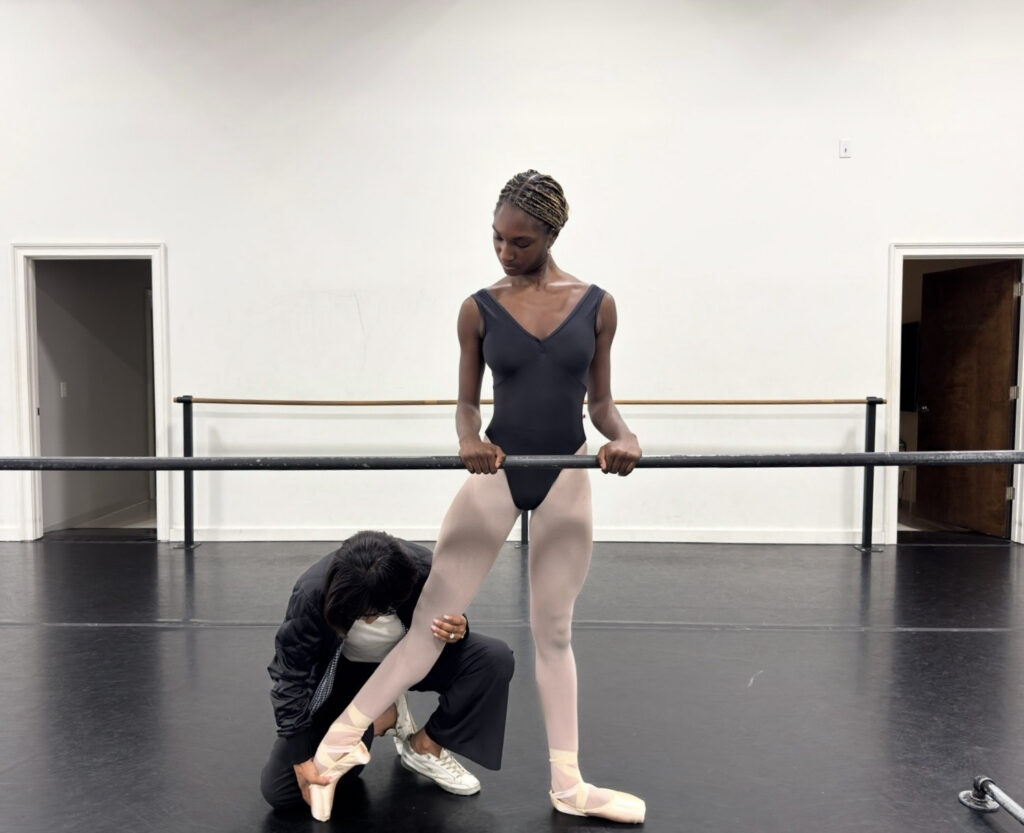
Grab your TheraBand: To retrain leg-muscle activation, Aucoin has dancers wrap a TheraBand around the metatarsals of their working foot in tendu à la seconde. “Holding the band in their opposite hand, at the hip, they’ll roll through the foot—flexing and pointing.” This helps dancers focus on maintaining support from the back of the leg while noticing whether the front of the thigh starts to grip.
Condition: Peñuela recommends Pilates for any dancer struggling with quad dominance. “It’s so good for strengthening all the tiny muscles in the legs and adding length,” he says. Aucoin also emphasizes the importance of strong glutes, hamstrings, and abdominals. At her International City School of Ballet, students do regular conditioning with elevated bridges using an exercise ball. “That helps them practice and understand the sensation of correct engagement,” she says.
Patience: Retraining the body (and mind) takes time. “It could be a year by the time a dancer fully understands how to fire the muscle chain correctly,” says Aucoin. Be patient, she continues, and remember that training is a process. The results are worth it.