Straight Knees in a Hyperextended World

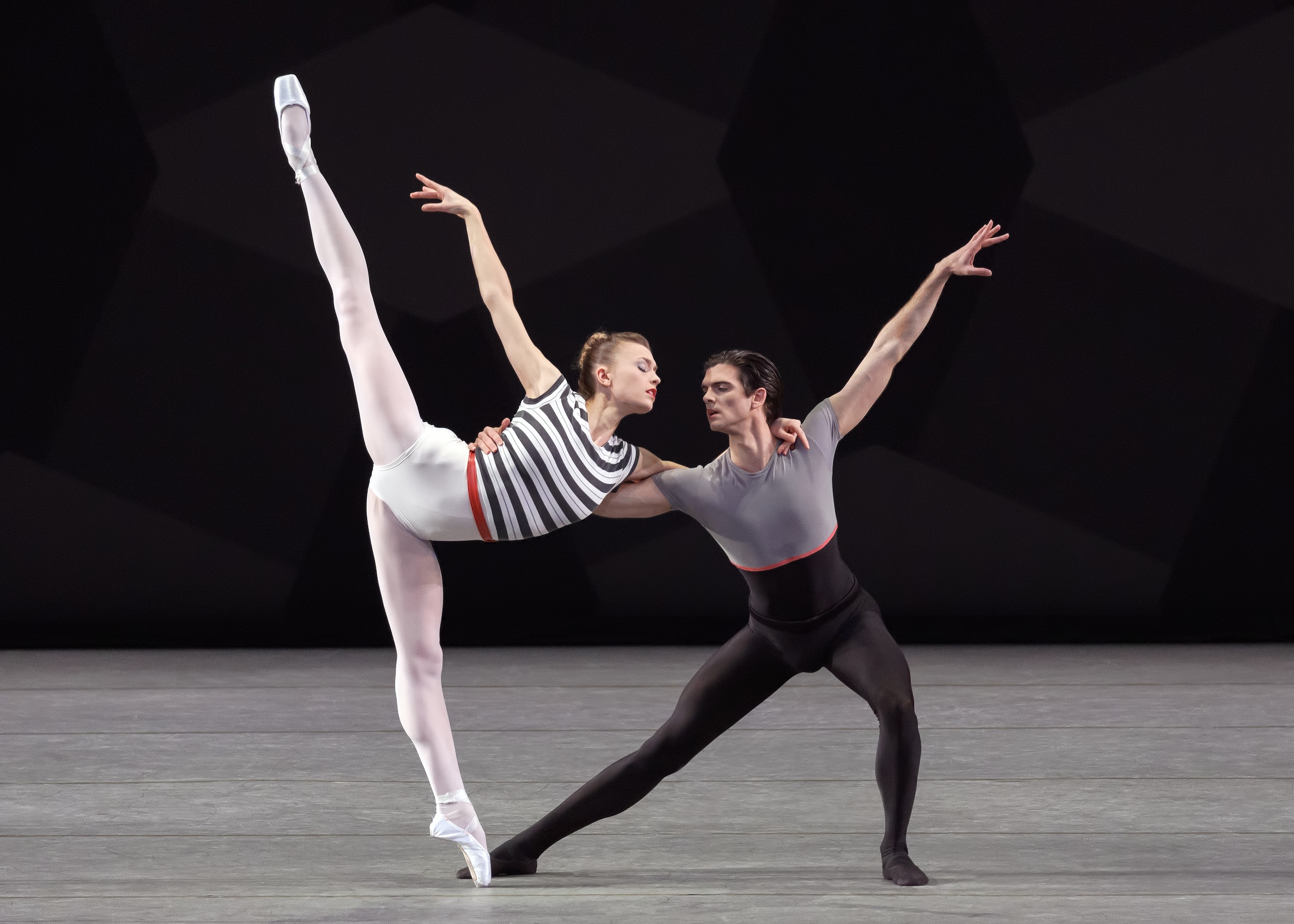
New York City Ballet principal Miriam Miller remembers feeling insecure about her leg lines growing up, especially next to her classmates with hyperextended knees. “ It was something that I always wished that I had, because I felt like my knees never looked straight,” recalls Miller. “I would be told, ‘Straighten your knees, pull up.’ And no matter how much I tried to do that, I would grip in the wrong places.”
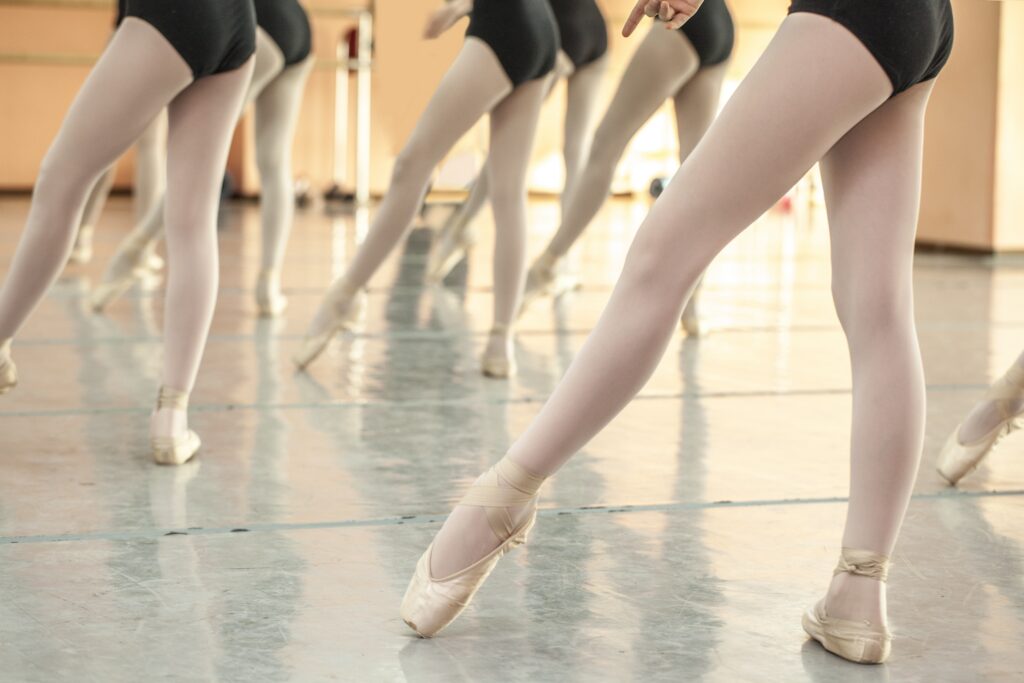
While health experts and nondancers might call neutral knee alignment perfectly straight, the ballet industry often favors the aesthetic that a few degrees of hyperextension creates. Dancers without hyperextended knees may covet the swooping leg lines they see in their favorite professional dancers, or in the student next to them at barre. However, having straight knees can mean better stability and balance. Plus, plenty of dancers like Miller have been able to work with their anatomy to achieve fully stretched lines. Read on to learn how.
What Is “Straight”?
Danielle Farzanegan is a sports physical therapist at Texas Children’s Hospital and the founder of Power Pointe, her private practice for pre-professional ballet dancers. She defines a “straight” leg as forming a zero-degree angle at the knee joint when the tibia and femur are fully extended. With hyperextension, the knee moves beyond that neutral alignment; the tibia extends past parallel with the femur. (She notes that this joint anatomy is different from generalized hypermobility syndrome, a genetic condition involving laxity across multiple joints; it may accompany, but does not necessarily cause, hyperextended knees.)
“Normal range in a general population is zero degrees of hyperextension,” says Farzanegan, “but I think a lot of dancers hope to have more than that for the aesthetics and a longer-appearing line.”
In-Class Lengthening Strategies
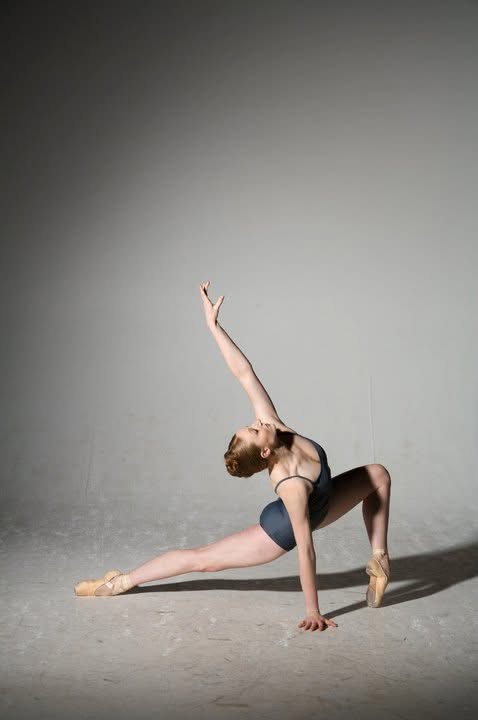
In an attempt to “pull up” for straighter knees, dancers may overemphasize their quads and hip flexors. New York City–based dancer and teacher Temple Kemezis, who, like Miller, does not have hyperextended knees, works with her students to help them find length in the backs of their legs. The second combination she gives in class, after pliés, is what she calls her “walk.” Beginning in first position, she has dancers do a series of flexed-foot dégagés in a pattern that shifts the weight from leg to leg, such as: outside leg devant, inside leg derrière, outside leg à la seconde.
“You’re pressing into the ground and reaching your energy from the top of your hip down the leg, full through the heel,” she explains. She has them repeat with tendu and again with tendu demi-plié.
Kemezis recommends visualizations while working in class. For example:
- When closing leg positions, think of closing higher, at the inner thighs instead of at the ankles. This helps access more length in the back of the leg and find optimal height in the pelvis.
- When extending the leg in développé arabesque, lead with the upper thigh rather than the ankle. “Send the thigh back; everything will align and stretch from there,” Kemezis says. “If you lead with your ankle, it’s going to be a quarter of the picture—you’re not going to straighten that knee or engage your full line.”
- Similarly, when extending the leg devant or à la seconde, reach first from the upper leg to create an attitude position. Then extend the ankle to the knee line, “spiraling” the heel from underneath as you press through the ball of the supporting foot (which allows greater height of the pelvis).
Cross-Training for Maximum Length
Young dancers may try to “stretch” themselves to hyperextension, but Farzanegan warns that pushing the joint past its anatomical range is dangerous. “If dancers go into forced hyperextension, putting a lot of pressure onto the knee, they could stretch out some of its ligamentous structures,” says Farzanegan. They also risk putting excessive stress on the joint capsule surrounding the knee.
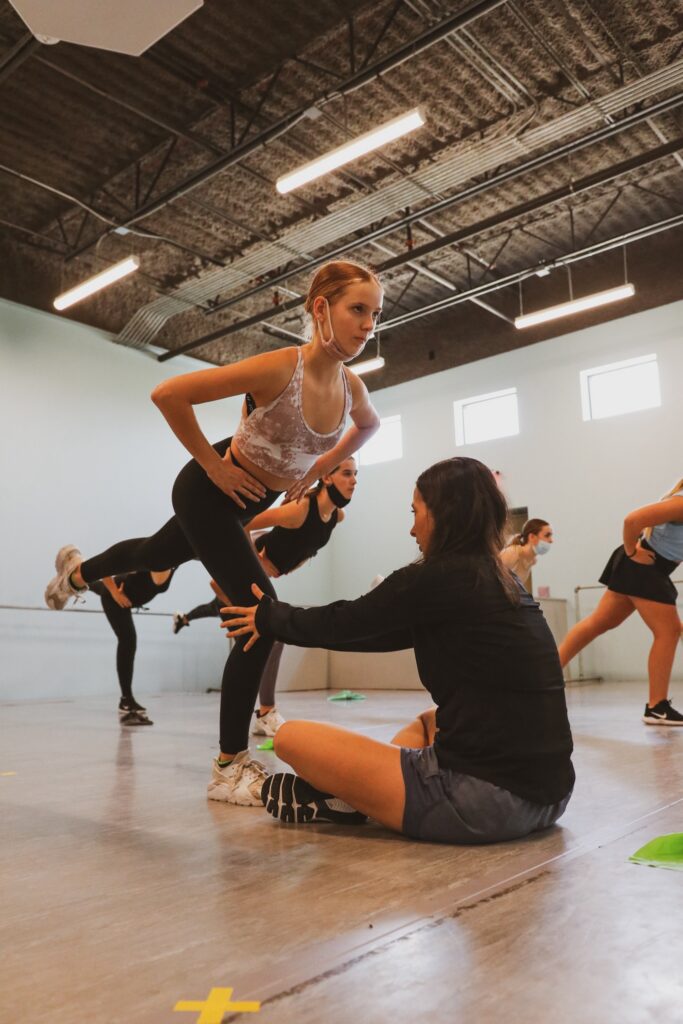
She adds that while the dance world has historically prioritized aesthetics over health and injury prevention, “we’re starting to value strength, cross-training, longevity, and well-being.” Thus, she says, “the key is to use what extension you have, whether it’s zero, five, or 10 degrees, and to strengthen the muscles that support the knee.” The quadriceps are especially important, but to prevent muscular imbalances, Farzanegan recommends also training posterior muscles, like the hamstrings and glutes, to build strength throughout the kinetic chain. (Check out some example exercises below.)
Miller says yoga and Gyrotonic have helped her find more back-of-leg engagement and supported length. Both practices include exercises, she explains, “where you have to work through the extension of your heel, with the whole line of the back body moving out and through.” In addition to making her stronger, her regular yoga and Gyrotonic practice has made a visual difference, she says. “My legs have transformed in shape and been able to find length while also staying strong,” she says.
Focus on the Positives
Having neutral knees comes with advantages. “You’re so stable,” says Kemezis, who notes that she had “impeccable balance,” resulting in solid turns and coordination.

Miller says her knees no longer feel like a personal battle, and she focuses on the positives. During partnering, for example, “ I’ve been told that when I’m on my leg, I’m just directly on it. My legs are so straight that there’s only one option.”
Greater stability also means better joint health, improved power, and movement efficiency. Farzanegan says that dancers with hyperextended knees can be more prone to overuse injuries, especially if they haven’t developed proper strength in the surrounding muscles. “If we’re just resting on our ligamentous and bony structures when we’re on our leg, then that could lead to injury, especially in transitions in and out of movements.”
Ultimately, Miller says, accepting that hyperextended lines are physically impossible for her body to achieve allows her to focus on what matters at the end of the day: movement. “ I’m not interested in a picture, because people are there to view it live in the moment,” she says. “There’s a lot more to get out of dance emotionally than just a photo image.”
Exercises for Knee Stabilization

Physical therapist Danielle Farzanegan recommends that dancers take a holistic approach to strengthening the muscles above and below the knee. Here are some examples for building a comprehensive routine.
Quadriceps:
- Non-weight-bearing exercises, like seated knee extensions with a resistance band or using a knee-extension machine, directly isolate the quadriceps.
- Weight-bearing exercises, like squats, lunges, step-ups, and Bulgarian split squats, build strength while improving stability and control.
Glutes: Banded clamshells, single-leg bridges, and hip thrusts stabilize the pelvis and contribute to hip extension and power.
Hamstrings: Deadlifts, single-leg Romanian deadlifts, and Nordic hamstring curls balance strong quadriceps with adequate posterior chain support.