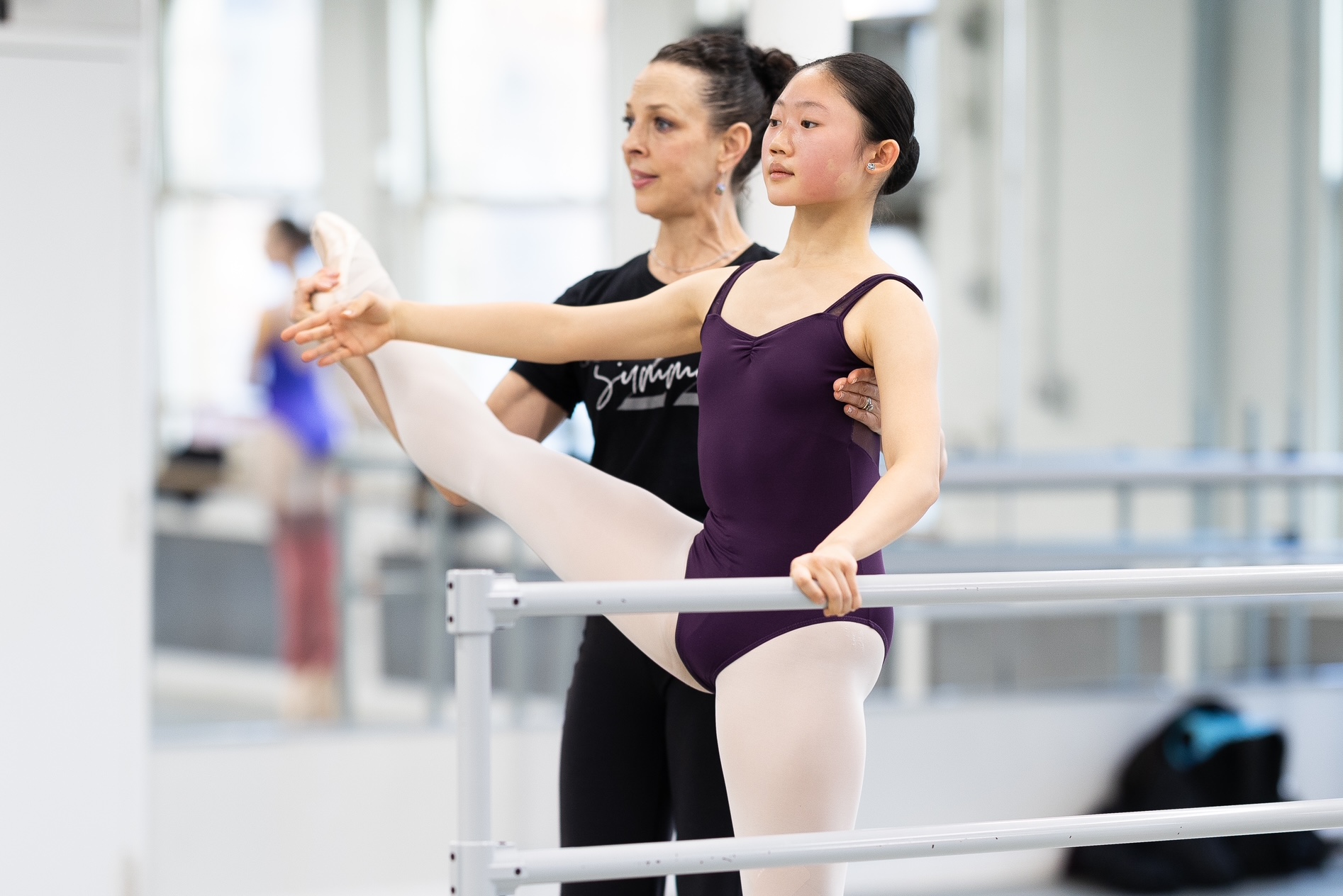
Irene Hogarth-Cimino Breaks Down Glissade Assemblé for Elementary to Advanced Levels

“Everything we do is plié and tendu.”
Irene Hogarth-Cimino’s poetic philosophy wouldn’t be out of place on a beloved T-shirt, on a notebook cover, or as screen wallpaper—anywhere young dancers might look for inspiration every day. The principal faculty member for youth ballet and ballet trainee programs at New York City’s Joffrey Ballet School believes that the two fundamental steps are like DNA, building blocks for every subsequent step learned in ballet technique.
Therefore, when she’s teaching her students in the youth after-school program, and even in the pre-professional Ballet Trainee Program, Hogarth-Cimino will break down steps like glissade assemblé systematically. Clean technique in the building blocks—rotated thighs and aligned pelvises in plié, fully stretched feet in tendu—need to become innate muscle memory before progressing to connecting steps and quicker timings. “ If you skip those first fundamental counts and attention to detail, it’s really hard to get it in the end,” she says.
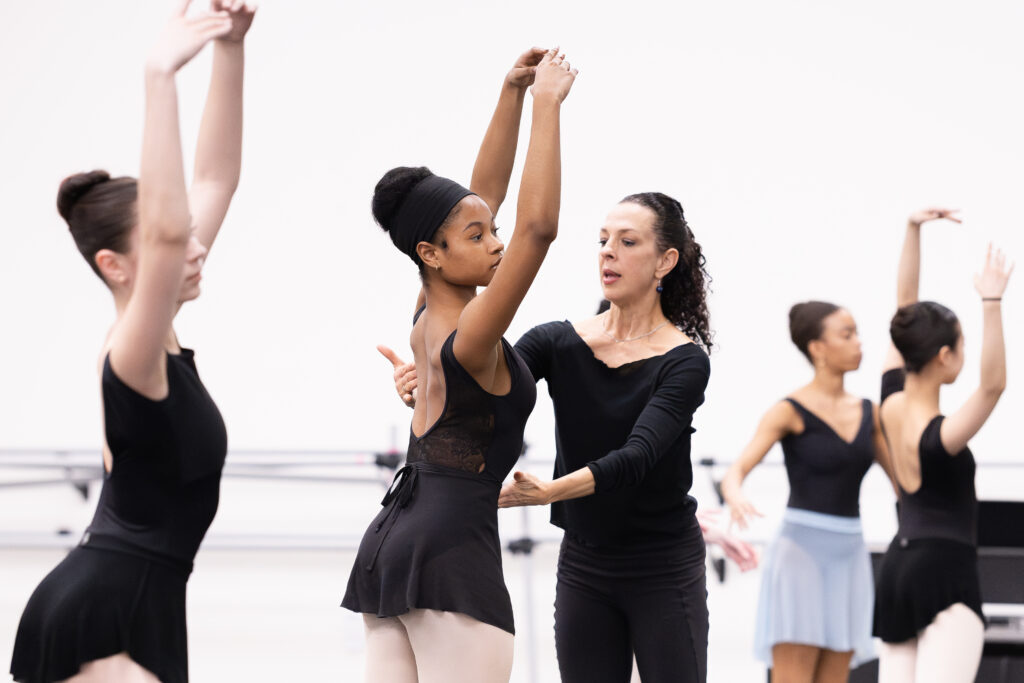
The following glissade assemblé video demonstration, from our friends at Dance Teacher+, offers a progression for beginner dancers moving through intermediate and advanced levels. First, Hogarth-Cimino offers a step-by-step instruction for the two separate components that make up glissade assemblé dessus (over)—pas assemblé, then pas glissade—with very slow counts and different rhythms to emphasize the plié or the tendu. For example, in the Pas Glissade Progression 3 outlined below, she has dancers practice the step with a “cha-cha-cha” rhythm, emphasizing the “and” accent between counts. She explains, “The change in dynamic introduces a change in the physicality and reaction in the muscle, which prepares the dancer for the firing of the muscles needed for the final form.”
Hogarth-Cimino will spend a couple of weeks on the Pas Assemblé Progression 1 timing before moving to Pas Assemblé Progression 2 and beyond. This may mean months before glissade and assemblé are connected, but slowing things down is worth it. “ Patience in the process is going to give you the right end result,” Hogarth-Cimino reiterates, “and you want to have an end result that’s correct and not have to retrain.”. (Scroll down for her step-by-step lesson plan for teachers.)
Avoid Common Pitfalls
As a connecting step, the glissade needs extra care to avoid bad habits, says Hogarth-Cimino. Avoid these common glissade pitfalls:
- Don’t let the glissade position get too wide, to prevent the “seesaw” effect. Practice this by removing the jump in the glissade, instead coming to a relevé seconde between the two tendus, legs stretching diagonally down from the hips as they would at the top of the glissade.
- Don’t dip the ribs from side to side in the glissade as the weight shifts from leg to leg, which can also tip the pelvis out of alignment. Think of the ribs as “two goalposts,” says Hogarth-Cimino.
- Don’t neglect pushing off the second leg. Pushing off with power will help you close that leg quickly to prepare for the following step.
Step by Step for Teachers
Demonstrated By:
Allegra, Level 2 Youth Ballet
Destiny, first-year Ballet Trainee
Pas Assemblé: Assembling Step
Note that in pas assemblé, the working leg assembles to the supporting leg. This is different from assemblé porté, or grand assemblé traveling when the supporting leg pushes and assembles to the throwing leg.
Pas Assemblé Progression 1—Allegra
Count 1: Demi-plié with the right leg fifth derrière and arms en bas.
Count 2: Tendu the right leg à la seconde.
Count 3: Beginning in the “and” half-count, assemblé by throwing the right leg
with a battement tendu jeté à la seconde, simultaneously jumping off the left
leg. The legs must assemble in fifth at the top of the jump and then finish with the
right foot in front in plié fifth.
Count 4: Straighten the legs in fifth position.
This slow, one-to-one count per step gives the student time to register every moment.
Pas Assemblé Progression 2—Allegra
After beginning dancers master the first timing, which may take a number of weeks, progress to the following quicker timing with half-counts:
Count 1: Demi-plié with right leg fifth derrière and arms en bas.
Count 2: On the “and” before Count 2, battement-tendu-jeté the leg à la seconde and jump to assemblé, landing the right leg in front in a plié fifth. This should all happen by the end of Count 2.
Count 3: Straighten the legs in fifth position.
Count 4: Hold the fifth position.
Progression 3—Destiny
This is the final form of the assemblé, preparing dancers to link the assemblé to another step.
Count 8 (preparation): Demi-plié with the right leg fifth derrière and arms en bas.
Count 1: In one smooth movement, beginning with the “and” before Count 1,
battement-tendu-jeté the right leg à la seconde to 45 degrees, brush into
assemblé, and land in a plié fifth with the foot devant by the end of the count
(assemblé dessous).
Count 2: Straighten the legs in fifth position or stretch and plié if repeated in
succession.
Repeat left and in repetition. Possible variations may include assemblé in reverse
(brushing the front leg à la seconde to close back) or assemblé devant or
derrière.
Pas Glissade: Gliding Step
Progression 1—Allegra
Count 1: Demi-plié with right leg fifth derrière and arms en bas.
Count 2: Tendu the right leg à la seconde.
Count “and 3”: Push off the left plié leg to glissade towards the stretched tendu leg, the left foot closing in front.
Count 4: Straighten the legs in fifth position.
After pushing off the plié leg for the glissade, the other leg should go through a clear tendu position before closing in fifth.
Progression 2—Allegra
Count 1: Starting in the preceding “and” half-count before Count 1, demi-plié with
right leg fifth derrière and arms en bas, finishing Count 1 in a tendu with the right
leg à la seconde and the left supporting leg still in plié.
Count 2: Hold a single count, with the right leg in tendu à la second and the left
leg in plié.
Count 3: Starting in the preceding “and” half-count before Count 3, glissade in a
single count, landing in fifth plié with the right leg derrière.
Count 4: Straighten the legs in fifth position.
Progression 3—Destiny
Count 8 (preparation): Demi-plié with right leg fifth derrière and arms en bas.
Count “and-a-1”: Starting in the “and” before Count 1, glissade to the right. After landing in fifth plié, immediately release the right leg again in a tendu à la seconde by Count 1. This “cha-cha-cha” or “and-a-1” rhythm prepares dancers to connect another step or jump immediately following the glissade.
Glissade Assemblé: Combining Two Steps
Progression 1—Allegra
When traveling to the right, begin with the right leg derrière fifth.
Count “and 1”: On the “and” before Count 1, demi-plié. Tendu the right leg à la seconde by the end of Count 1.
Count 2: Hold a single count, with the right leg in tendu à la seconde and the left leg in plié.
Count “and 3”: Glissade and close with the left leg in fifth devant in a single count.
Count 4: Straighten the legs in fifth position.
Count 5: Plié in fifth position.
Count “and 6”: Assemblé in one count, brushing the right leg à la second 45 degrees and landing with the right in front in a demi-plié fifth. Allegra uses a simple demi-allongé breath of the arms to help lift her back into the jump.
Count 7: Hold demi-plié fifth.
Count 8: Straighten the legs in fifth position.
Repeat left.
Progression 2—Destiny
When traveling to the right, begin with the right leg derrière fifth. When moving more quickly, continue to make use of the “and” accents between counts to go through clear pliés fifth and tendus. At this level, dancers may also add the coordinations: either a small demi-allongé on the assemblé or a first port de bras with the glissade assemblé.
Count 8 (preparation): Demi-plié with right leg fifth derrière and arms en bas.
Count “and 1”: Glissade to the right in one count.
Count “and 2”: Assemblé in one count, landing with the right foot in front.
Count 3: Straighten the legs in fifth position.
Count 4: Demi-plié to prepare for the left side.
Counts 5–8: Repeat left.