4Pointe Founder Lynne Charles on Her Innovative Training Method for Pointework

When Lynne Charles was working in Germany as a ballet mistress in Gelsenkirchen and as a professor at the Folkwang University of Arts, she noticed an uptick in lower-leg and foot injuries in dancers. This aligned with conversations she’d had with teachers and choreographers indicating that these types of injuries were on the rise. “This is due to a change in repertoire,” she says, with most companies now programming a range of classical, neoclassical, and contemporary ballets into their seasons. “With all the boundaries merging between dance forms, and with dancers being challenged with such a wide range of repertoire, this was causing more stress on the feet and lower legs.”
To address this, Charles—who had a 35-year international career as a principal dancer with Hamburg Ballet, Ballet Béjart Lausanne, and as a permanent principal guest artist with English National Ballet, among others—started working with a doctor and several dancers, putting exercises together to strengthen specific muscles in the legs and feet for pointework. Articulated footwork had been one of her strengths as a dancer, Charles says. Over time, she developed a somatic method that she would later copyright as 4Pointe. “It’s not meant to replace traditional pointe class,” she stresses. “It’s meant to go hand in hand, alongside it, like Pilates or Gyrotonic.”
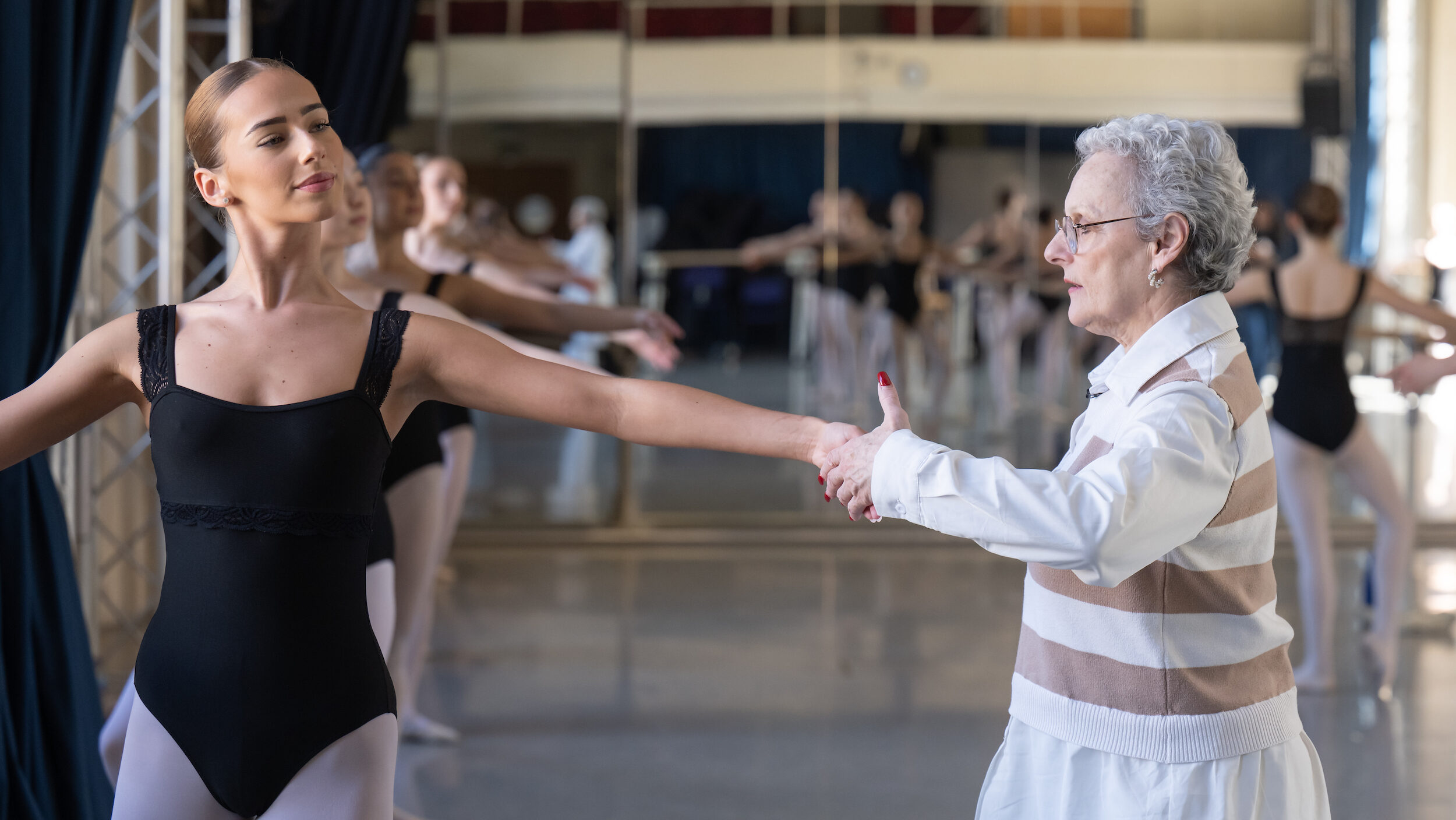
The COVID-19 pandemic allowed Charles’ training methods to gain more visibility and cultivate an international following. “I was able to create a lot of videos of specific 4Pointe exercises that people could do at home in a small space,” she says. She’s continued to evolve her method; 4Pointe now includes a teacher-training certification program that encompasses three levels (from recreational students/adults to intermediate-advanced students to professional dancers) and three rehabilitation programs (including one that’s non-weight-bearing). English National Ballet School, which appointed Charles artistic director in 2024, is the first vocational school to incorporate 4Pointe into its curriculum, and all ballet faculty members at Brigham Young University are certified to teach every level.
Charles recently spoke with Pointe over Zoom. Here she describes her training method for safer pointework, as well as her tips for easing back onto pointe as the new school year begins.
Why Pointe Training Needs Advancements
While ballet training has continued developing over the decades, Charles notes that pointe training hasn’t progressed much. “We’re still doing the same thing we did 50 years ago,” she says. “If we’ve been able to teach dancers better because we’ve made improvements in ballet training, why aren’t we doing the same thing in pointe?”

Her goal is to make dancers more sustainable, with proper training from the pre-pointe stage up “so that proper alignment and foot strength is already developed before they go on pointe.” She also notes that it is taking longer for early-career dancers to attain company positions. “Until there are jobs available during these gap years, where they’re going to university or going into junior companies, we need to be able to holistically and mindfully keep them healthy long enough to sustain a career with the kind of repertoire they’re being required to do, which is getting more and more difficult.”
Charles says an internal study conducted at BYU noted a decrease in foot injuries among its dancers taking 4Pointe classes. There is now a scientific research study underway to examine the 4Pointe method’s effects on the Achilles tendon and lower leg.
Alignment, Articulation, Stamina
Dancers perform all 4Pointe exercises at the barre. “You work different sets of muscles at different times, to different tempos, to prepare the feet in a different way,” Charles says. “Traditional pointe class is mostly about the up and down, and a lot of it comes from the legs. With 4Pointe, everything comes from the feet.”
Much like a regular ballet barre, exercises involve frequent repetition and build dynamically—“going from slow to quick and back to slow,” Charles says. Combinations include sixth position, since contemporary repertoire frequently incorporates turned-in legs (which uses different muscles).
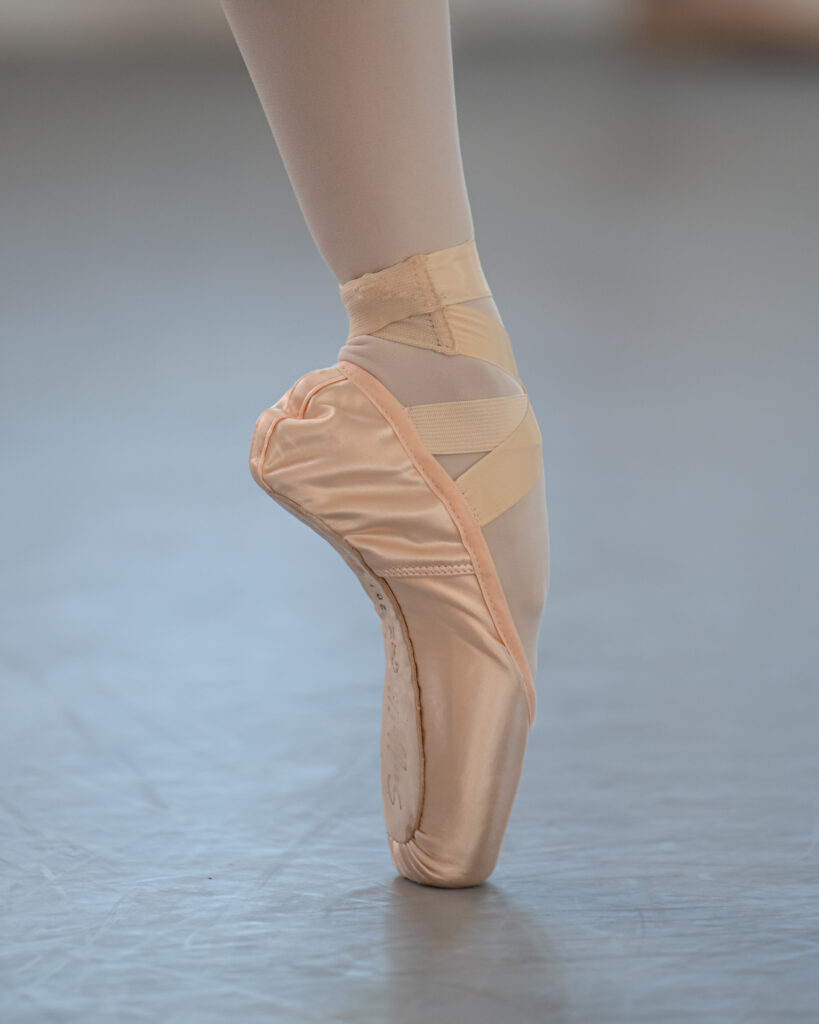
4Pointe focuses heavily on foot articulation, especially the transition between three-quarter pointe and demi-pointe. “When you look at your hand, what’s the strongest part of it? It’s this,” she says, pointing to her metacarpal joints and palm. “It’s the same with [the metatarsals of] the feet. But the toes can grab just like the ends of your fingers can. So it’s about training so that all the muscles of the feet are acknowledged and engaged, whether going up or down.”
Charles also wants dancers to understand how to stay balanced within the foot’s tripod—the space between the big toe, pinky toe, and heel—so that the foot neither pronates nor supinates, as well as feel proper alignment between the knee and the second toe.

This training, she says, results in a higher level of foot articulation and a better connection to the floor—a feeling dancers often lose when they put pointe shoes on. “Dancers tell me they feel more grounded. There’s more control in their push-off and landings because of a higher use of the intrinsic muscles. The feet extend more, and there’s more of an awareness of the foot itself. I call it ‘speaking feet.’ ”
Back-to-Class Prep
For dancers returning after a summer break, Charles recommends reintroducing pointework gradually, a few weeks before your first class back. “If you jump back in without doing anything beforehand, you’re really going to be sore,” she says. “This is something you can do at home, or even on vacation in your hotel room.”
She recommends starting by simply wearing your pointe shoes around the house to reacclimate your feet to them, she says. Then start practicing slow relevés, articulating through the feet, she says. “Even in sixth position—demi-plié, stretch, roll up, roll down.” Add tendu exercises from both first and fifth positions to continue strengthening your feet. “Tendus work every muscle in the foot if you do them properly,” she says. Be sure to do exercises with both the accent out and the accent in, “slow and then quick.”
If you’re able, Charles recommends, supplement relevés and tendus with somatic work like with Pilates or Gyrotonics. And practicing barre exercises in a pool, working against the resistance of the water, will help strengthen the entire body in advance of the new school year or company season. “All of this is good for the mind, good for the soul, and good for the feet.”