Jennifer Archibald’s Maslow’s Peak, for BalletX, Considers Civilization and Savagery

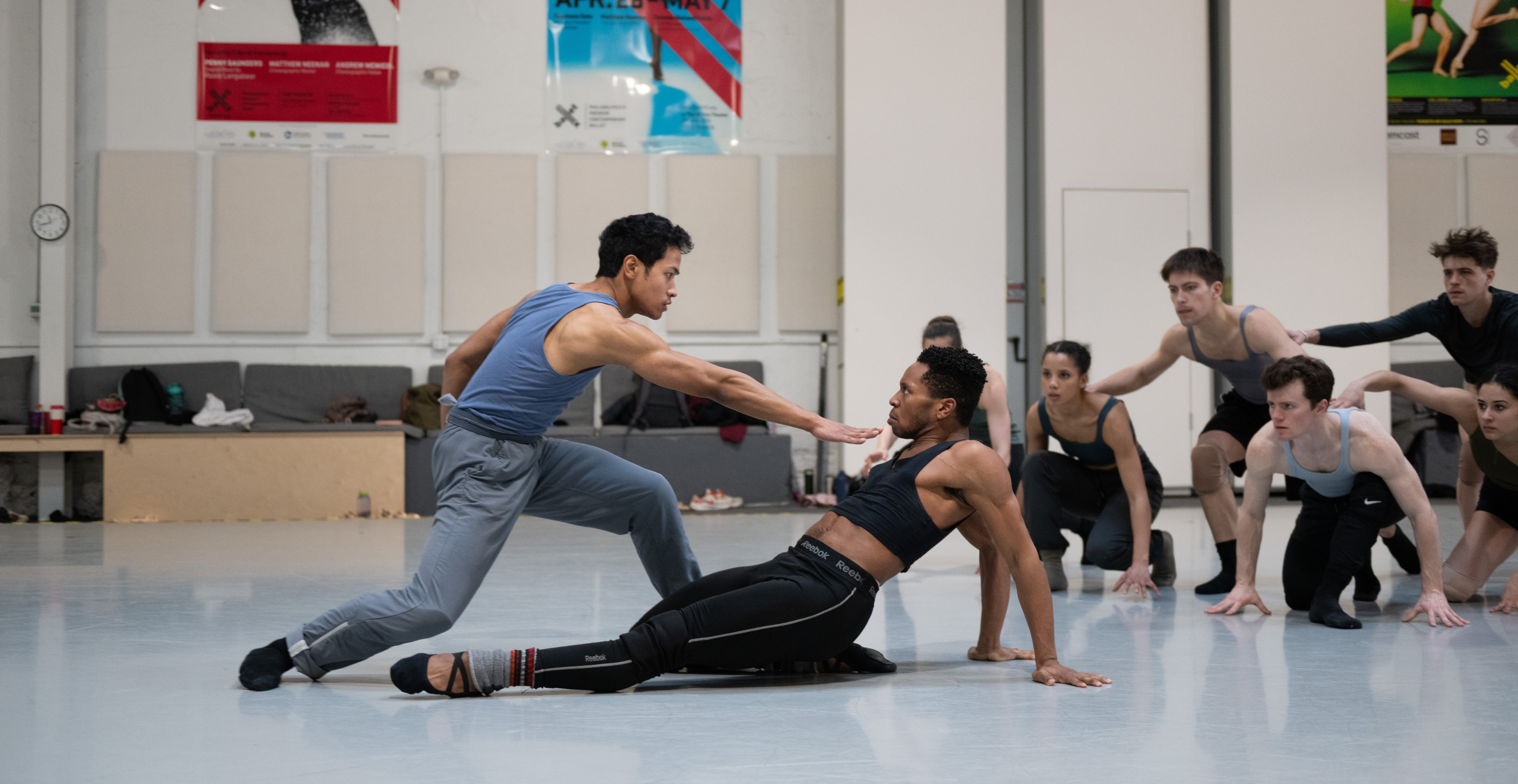
Jennifer Archibald has had an uncommonly busy year, with nine separate commissions set to premiere by the end of this season. Next on the docket is Maslow’s Peak, a full-length for Philadelphia’s BalletX inspired by the themes of Lord of the Flies, William Golding’s 1954 novel about a group of boys stranded on an uninhabited island. Having presented a 23-minute preview of the ballet in March 2024, BalletX will premiere the completed work May 2–3 during its annual Festival at the Mann.
Pointe caught up with Archibald to learn more.
What was the initial seed of the idea for Maslow’s Peak?
I was asked [by BalletX] to do a story ballet about two years ago. A lot of producers and directors are looking for ballets that could be family-friendly; a fantasy, an escape. I’m more attached to stories that reflect what’s happening today and the human spirit. I thought Lord of the Flies would be a good story that a lot of people have read, but it also has a lot of different layers and themes that I could explore—the tension between civilization and savagery, the nature of evil, power and leadership, the beast within, survival. Maslow’s Peak is not a literal version of Lord of the Flies; it’s an abstract transformation of the themes within the book.
Regarding that abstraction, the book is, notably, a lot of boys, but this is not that narrowly cast.
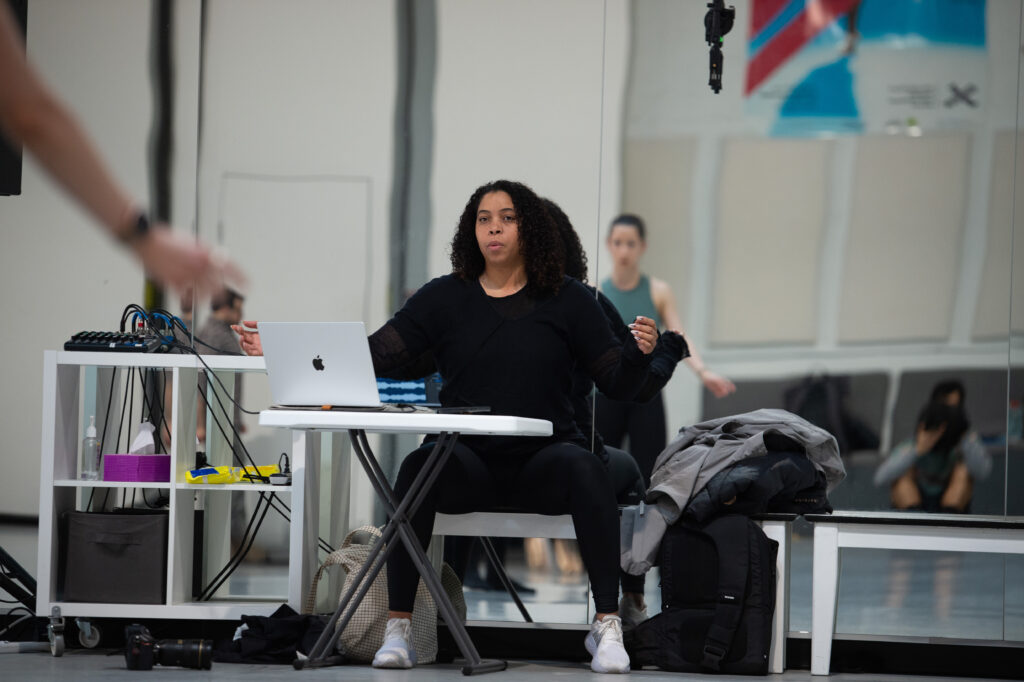
I don’t think the themes matter in terms of gender. Emily Morgan is our costume designer, and if you look at the costumes, they’re all gender-neutral. What’s the learning lesson of this book? It has nothing to do with the fact that they were boys. That’s what helped me in terms of navigating how abstract I needed to be.
The title is inspired by Abraham Maslow’s “hierarchy of needs.” We dive into different layers of human motivation. When the characters are pushed to the edge, they have to look within themselves and at each other to figure out what they really need to do to survive. It prompted a lot of discussion throughout the rehearsal process with the dancers.
There’s an aerial element to this work—did that idea come from the set design, or was it a choreographic idea first?
It was both. I wanted Guy de Lancey, my scenic designer, to create something that looked like a jungle gym—if the plane crashed into the jungle, what would it look like? How would the dancers be able to interact with it? Guy created these vines and trees that are coming from the ceiling and it turned into this aerial vine. That was a challenge for me as a choreographer. I’m not an aerialist, so it was really an in-depth dive of trying to make this environment come to life.
In terms of movement generation, how much do you show up to the studio with on the first day of creation?
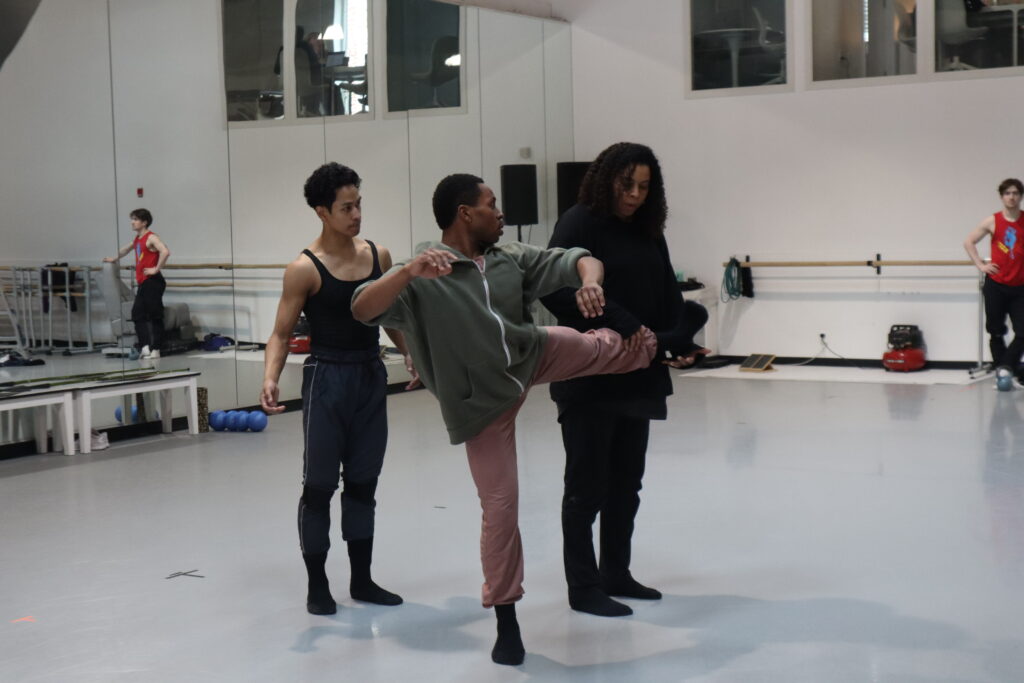
I choreograph on the spot. I find that when I choreograph things before I walk in, there’s something that’s disconnected between the dancers and myself and my body. I have to have a truthful physical response to what I’m creating, and it happens right in front of the dancers. I usually choreograph for four hours, and then I sit and look at it.
What in particular did you find yourself responding to with these dancers?
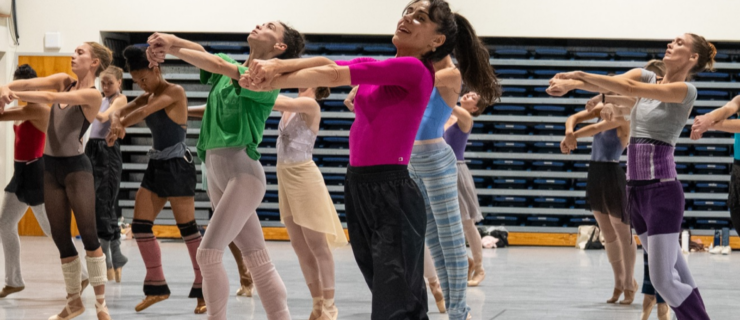
It’s their versatility. They’re very fast; their adaptability is heightened. It’s also a smaller company. All 15 BalletX dancers are in the piece, and it creates a different dynamic than when you have half your corps de ballet sitting on the side watching. I’m a fan of, “If you’re going to be in the room, you’re going to be dancing.”
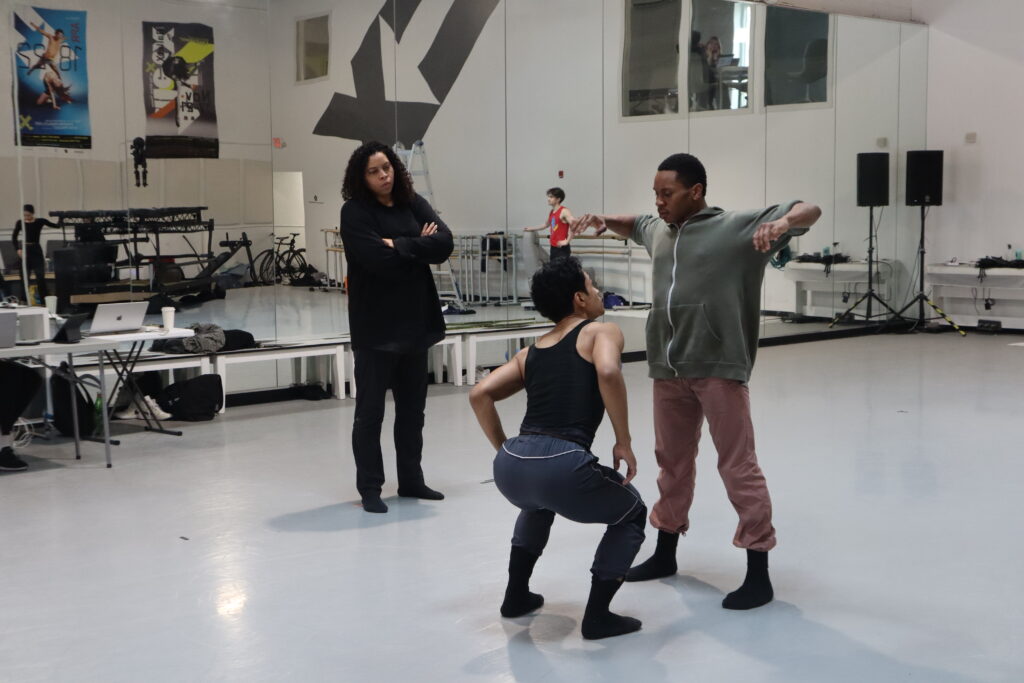
We asked the dancers to read Lord of the Flies. They became much more vocal by the third week of residency. They had opinions about who they were, and gave themselves names. We were building the story together. You always want the dancers in front of you to really dive deep into their range and find growth in what they’re bringing to the table. You also have to trust each other, because this is not an easy set to navigate. Everyone has to be alert.
What was the biggest surprise of the process?
It’s a huge learning curve. There’s logistics to creating a design that I never knew. It takes a lot of time and meetings and conversations to figure out what can happen, and to make sure that these dancers don’t get hurt. You have to have an opinion about everything when you’re choreographing a full production. It’s been intense, because you want it to be different, to stand out amongst the general formula of story ballets that we’ve seen. I’ve been trying to push the boundaries as much as I can.
I think when people talk about going to see a ballet company, sometimes there might be reservations that it doesn’t reflect them, or it’s something we’ve already seen or heard about before. I think introducing a new story, for someone that’s not used to going to see dance, strikes an interest for them to show up. I think that just pushes ballet storytelling into a new medium.