Dancing Through the Change: How to Cope During the Stages of Menopause

Lori Boggan, a nurse and dancer in Sweden, has struggled with hormonal challenges since she was a teenager. She was diagnosed first with premenstrual syndrome (PMS) and, later, premenstrual dysphoric disorder, a debilitating condition that can feel like PMS on steroids. The combination of mood swings and other symptoms she experienced reached a crippling point in her 30s when she started getting migraines and having trouble sleeping, too. She chalked it up to perimenopause and thought she could manage it on her own.
Until it started affecting every part of her life.
“I was missing work. I was just struggling,” says Boggan, who also runs the adult-student school Ballet Gothenburg. “I was so irritable that there was no way to hide it anymore. It felt like a complete loss of control.”
Perimenopause—the transition phase before menopause—is marked by hormonal swings, irregular menstrual cycles, emotional changes, and sleep disruption. It can last anywhere from two to eight years or even longer. According to the Cleveland Clinic, it usually starts in a woman’s mid-40s, but, for some (like Boggan), it can start much earlier. Perimenopause can pack an emotional, physical, and mental punch. Our bodies may feel off-balance due to symptoms such as hormonal weight gain, breast tenderness, brain fog, hot flashes, insomnia, and joint pain. And when perimenopause shifts into menopause (marked by 12 months without a period), many of those symptoms remain.
For dancers, the changes brought on by these hormonal shifts can do a number on one’s self-esteem. The symptoms are wide-ranging and affect women in different ways. Feeling sluggish, less limber, and having more aches and pains is, frustratingly, normal. Fortunately, practicing ballet can offer unexpected perks.
How Ballet Can Help
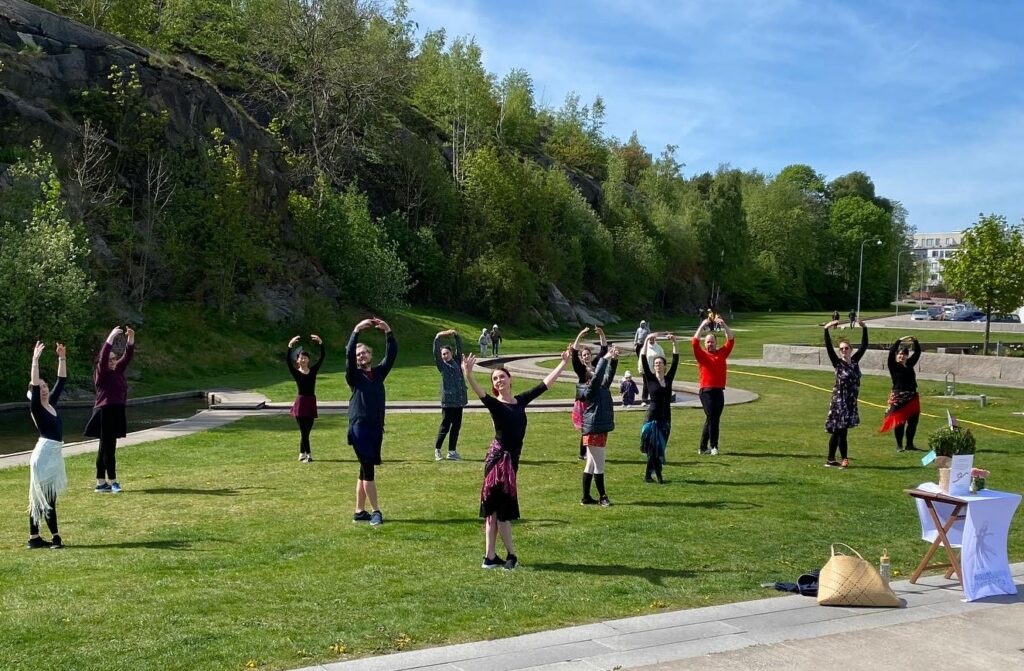
Sally Mae Dunn, PT, DPT, a former professional dancer who is now a physical therapist at Duke Physical Therapy and Occupational Therapy in North Carolina, believes ballet to be therapeutic on so many levels, especially during this massive life change. “It creates social engagement, it helps you balance, and it helps you get in touch with your body,” she says.
Dance, she says, brings forth an improved sensory awareness, as well as more stabilization and balance. Thanks to ballet’s repetitive class exercises, dancers are used to engaging their core, pulling up to lengthen the spine, and deep stretching. All those pliés, jumps, and développés help improve strength, which can give them a huge head start when heading into menopause.
Bone Up on Cross-Training
Still, dancers need to boost bone health; building bone density can prevent fractures as bodies age.
The jumps that punctuate ballet class help, but Dunn also recommends jumping rope, jumping on one leg, and side-jump squats. These moves force bones to carry extra weight, which is good for building density. The goal, Dunn says, is for the jumping impact to be three times your body weight.
Dunn also stresses the importance of lifting heavy weights, which stimulates the cells to grow stronger. If you’re new to strength training, she suggests starting with lighter weights and being very mindful of your form (with the understanding that light weights aren’t challenging enough to create more bone density). Consider booking a few one-on-one sessions with a personal trainer who understands osteoporosis, the condition where bones become weak and vulnerable to fracture.

And while neither Pilates nor yoga build bone density, Dunn says both are great for calming your nervous system down, developing body awareness, and activating your muscles.
Embrace the Change
The roller coaster of emotions that accompany perimenopause and menopause can feel endless at times. Tiekka Tellier, a former professional dancer and the founder of Everyday Ballet in New York City, suggests reframing how you see yourself by leaning into the ways your body is evolving.
“There needs to be a gentleness and an acceptance of what we’re capable of and what we love and enjoy, without this pressure [to fit] into a certain idea or mold,” Tellier says. Ballet, she continues, is a great way to feel connected to changes you may be experiencing physically and emotionally.
“Ballet is such a saturated experience,” says Tellier, who offers basic ballet classes on her website for adults, including menopausal women. “You can’t be in the past, and you can’t be in the future. You have to be in that moment.”
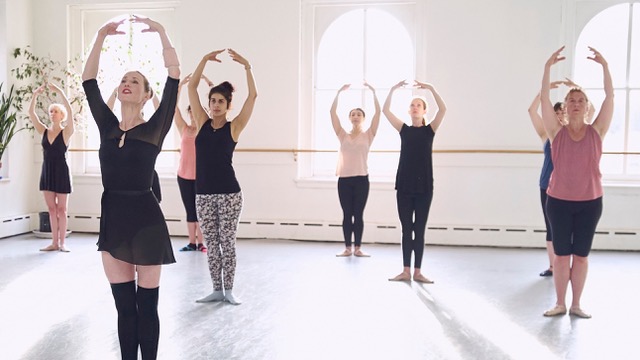
David Michael Popoli, MD, medical director for the Atrium Health Wake Forest Baptist Performing Arts Medicine Program, advises dancers to think about optimization rather than dramatic change. Ballet, he says, can counteract some of the flexibility changes you might have with natural aging, but it’s not going to give you back the flexibility you had as a teenager.
“You can still be powerful, you can still be beautiful, you can still emote music if you’re dancing. It just might be in a slightly different way,” he says.
Dunn also reminds dancers to stay connected with their ballet buddies, as social engagement boosts endorphins and reminds us that we’re not alone. “If you were a dancer before, you’re always going to be a dancer,” she says. “It just feeds your soul.”
Ways to Cope
Boggan ultimately found relief in 2024, when a gynecologist prescribed hormone replacement therapy (HRT). She felt better almost immediately. “It’s been life-changing for me,” she says. (Novant Health gynecologist Claire Bowles, MD, recommends discussing treatment options with your doctor to determine whether HRT is an appropriate therapy for you.)
Boggan says the combination of medication and ballet has helped center her during a time of major transition. “I don’t care if my leg doesn’t get up really high anymore,” she says. “I don’t care if I don’t hit that turn. I’m there for the joy of it, for the musicality, and for the benefit that I know I’m getting from dance.”