How to Make Sure Strength Training Will Pay Off in the Studio

More dancers these days are catching on to the value of strength training.
“Just like with any sport, in order to perform at a higher level, you always want to be stronger,” says Kurt Gorrell, PT, DPT, CFMT, ACSM EP-C, CSCS, a former dancer who’s become a physical therapist, exercise physiologist, certified strength-and-conditioning specialist, and USA Weightlifting coach. Strategic muscle strengthening can help you balance longer, jump higher, move faster, and dance with more precision. Plus, it can help your body become more resilient, reducing your risk of injuries.
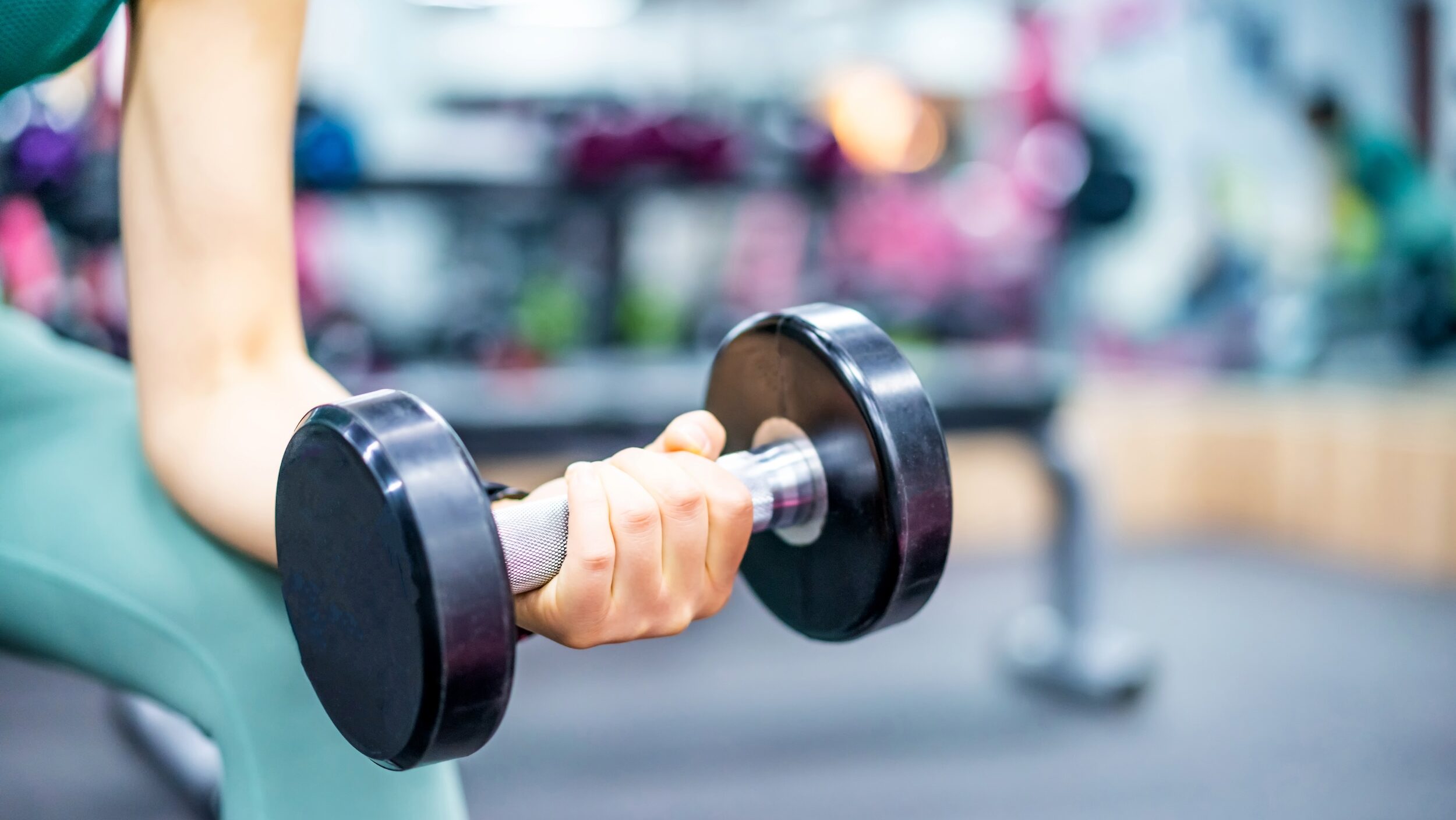
Many dancers gravitate to bodyweight exercises like mat Pilates since they feel familiar. But experts say that using free weights like dumbbells, kettlebells, and barbells can actually be a more efficient way for already-very-fit dancers to target their major muscle groups. “When you add weight, you’re giving your body an extra challenge and it starts adapting to that, so when you take away that load in class, you have more strength and power,” explains Audrey Lugo, PT, DPT, SCS, CSCS, a physical therapist, dance medicine specialist, and strength-and-performance coach in South Florida.
Ready to pick up some weights? Here’s how to get started—and how to make sure your workouts will pay off in the studio.
Consider Your Goals
Different types of cross-training can build different components of fitness, so Marissa Schaeffer, PT, DPT, MBA, OCS, CSCS, founder of FlySpace, a physical therapy practice for performing artists in New York City, suggests clarifying your goals.
Are you a corps member who needs to get through snow and flowers during Nutcracker? Or are you a soloist struggling with petit allégro during your 45-second variations? While the corps dancer might benefit from programming that prioritizes muscle endurance and overall capacity (for instance, lots of weighted squats and lunges), the soloist might be better off doing power moves like box jumps. “There are different ways you can focus your training,” Schaeffer says.
Don’t Start With Extreme Stuff You See on TikTok
As impressive as it may be to see someone développé while holding dumbbells on a BOSU ball, that kind of exercise generally isn’t going to be the most useful if you’re just beginning to explore strength training. “If something looks really creative and acrobatic with weights, don’t start there,” Lugo says. Instead, learn the foundational movements, like squats, hinges/deadlifts, rows, carries, and pushes, Schaeffer recommends, saying, “These movement patterns can be quite different from dance-specific movement, so taking time to learn and become comfortable with them is important.” Once you’ve mastered the meat and potatoes, you can build off of that.
Work With an Expert
Just as you wouldn’t try a new dance style without taking a class first, you don’t want to start training without guidance. Schaeffer and Gorrell both recommend booking at least a couple of personal training sessions to set yourself up on the right track.

A trainer will tailor a program to your body and your challenges. They will also teach you proper technique and offer feedback. “You don’t want to injure yourself because you didn’t know what you were doing,” Lugo says.
This isn’t necessarily as expensive as it might seem. Many gyms offer a complimentary session. You could also look for lower-priced online or small-group sessions. Schaeffer’s clinic even offers reduced-rate strength-training hours for performers, where dancers can work out together with coaches present to help.
Stick to a Plan
Choosing a hodgepodge of random exercises each workout isn’t the most effective approach. “Specificity and consistency are super-important,” Schaeffer says. Experts recommend a strategy called progressive overload, where you repeat the same exercises every week but gradually make them slightly harder by increasing the weight, number of reps or sets, complexity, or intensity, depending on what your goals are. “You need time for your body to learn a movement and adapt to the new stimulus, then build capacity within that,” Schaeffer explains.
Prioritize Full-Body Exercises
Many weight rooms are full of people working one muscle at a time with exercises like biceps curls. Gorrell suggests dancers take a different approach. “You need to train full-body coordination,” he says. He points out that while, sure, stronger calf muscles might help you jump higher, you also use your arms, core, glutes, hamstrings, and quads in tandem to jump—stronger calves are only part of the story.
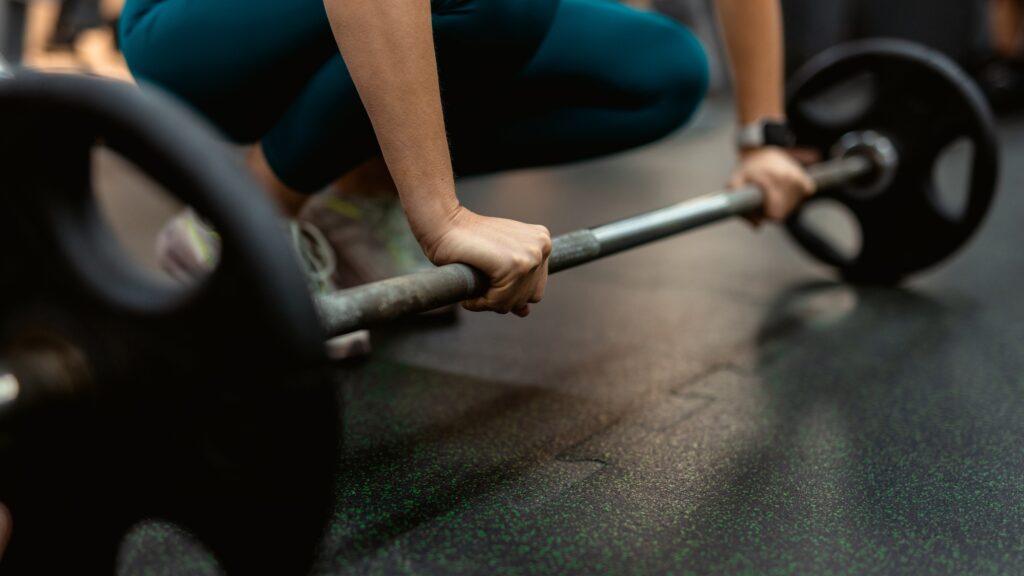
He suggests focusing mostly on full-body exercises. One example is a power clean, where you quickly pick a barbell up to chest height while rising from a squat to standing. “Dancers can create so much power by doing that lift but not totally taxing their legs with jumps,” he says. (Just be sure to get expert guidance first, he adds.)
Pick Up Challenging Weights
Despite old myths, heavy weights generally will not lead to bulky muscles. “You would have to eat a lot of food, probably have a lot of testosterone, for squats to create big thighs,” Lugo says.
To gain strength, you need a load that’s heavy enough to create “muscle fatigue.” “If you’re doing 10 repetitions, by that ninth and 10th repetition, it should be like, ‘I can’t do any more,’ ” Gorrell says.
Don’t Overdo It
The good news: You don’t need to put in a massive time commitment to benefit from this training. “Research shows it takes as little as twice a week for 20 to 30 minutes to make gains,” Schaeffer says.
Also, remember that the goal is to improve your dancing, so cross-training should never get so intense that it takes away from your time in the studio. “If your workout is leaving you super-sore, it’s too much,” Schaeffer says.