The Washington Ballet’s Felecia Baker Uses Gyrotonic for Mobility and Stability

“Fitness is my passion,” says Felecia Baker. The Washington Ballet dancer, who plans to continue fitness training as her career after ballet, has achieved multiple certifications and works as an instructor in numerous forms of cross-training, including Gyrotonic. While dancing with Ballet Memphis, Baker was seeking another certification (she was already an instructor in different Les Mills fitness methods) when she happened upon Gyrotonic. “It changed my life,” she says. “It was created by dancers for dancers.”
While Baker still enjoys a high-intensity Les Mills class on a ballet-free Saturday, she relies continuously on her Gyrotonic practice to keep her body balanced throughout rehearsal, performance, and layoff weeks.
Stretch and Strengthen
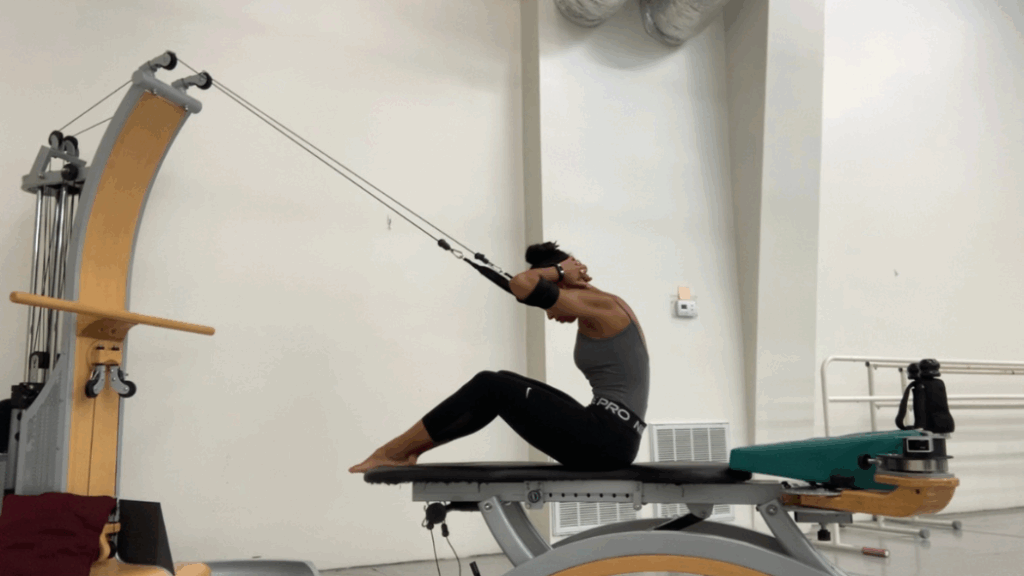
The Gyrotonic method is built on circular motions of the spine, legs, and whole body. “The modality of it—the real nuts and bolts—is to stretch your joints and then strengthen the connective tissue within them,” Baker explains. In contrast to weight lifting, which often works in parallel, Gyrotonic is much gentler, often relying on resistance created by a pulley system. And while many compare it to Pilates, which has similar breath work and also focuses on precision, Baker notes that the fundamental difference between the two is their planes of motion: “While Pilates is more forward-back and side-to-side, Gyrotonic is circular, moving through all of those planes.” Pilates, she continues, requires isolating a leg or arm while holding a position; Gyrotonic allows other body parts to respond to movement elsewhere in the body.
Hypermobility Help
Baker’s Gyrotonic practice has helped her manage her hypermobility. “It helped me use the flexibility I already have without overstretching, or stretching to a point I can’t control,” she says. She gives the example of the term “suppling” in Gyrotonic: “You know how dancers are supposed to ‘pull up’? This helps you ground yourself while stretching your spine in the opposite direction.” The goal of suppling, she explains, is to tighten the core muscles and find lift from that, maintaining the posture whether you’re on your back or side, sitting, or standing.
Adaptive Consistency
Baker likes to maintain her Gyrotonic practice throughout standard rehearsal weeks. Three days a week, she begins her day with a one-hour self-guided session, and if she happens to get an early day off, she’ll find a group practice at a local studio to jump into. But if her schedule is particularly heavy, she’ll take a midweek break. “I always find it hard to work out on a Wednesday,” she says.
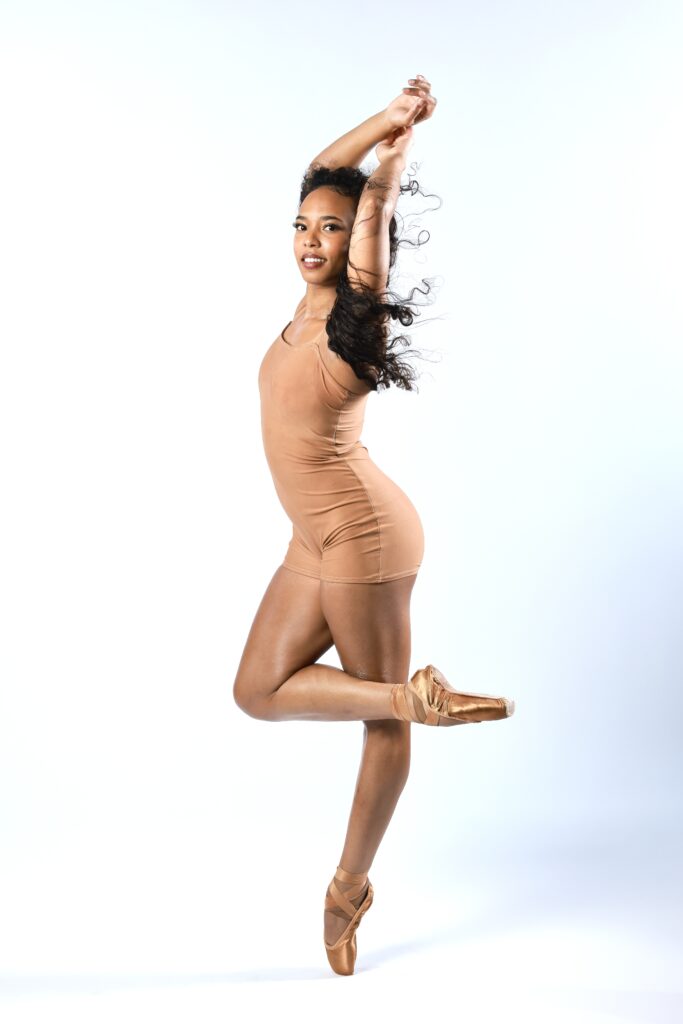
During performance weeks, Baker prioritizes rest and sticks solely to Gyrotonic exercises she can do on a mat. When not performing, she takes Sundays entirely off for meal prepping and “the last bit of sitting on the couch before the week starts over.”
Fueling and Recovery
Baker keeps her energy up with frequent snacks to fuel her workday. “I am not a huge breakfast person,” she says. “I prefer to snack all day, then have a bigger meal at night.” Her go-to dinners often include meat, vegetables, and a “satiating” food like rice or potatoes. Her favorite snacks include de-shelled sunflower seeds, premade tuna packs (like StarKist Smart Bowls), fruit (especially blackberries and pineapple). She also loves pickles and always keeps a jar in the fridge at work.
For recovery, there’s nothing more valuable to Baker than her “emotional-support heating pads.” She has two, and they go everywhere with her. Baker’s former colleague at Ballet Memphis, Crystal Brothers, taught her a trick she’s used since then: heating her pointe shoes inside the pads before putting them on her feet. “Crystal was the first woman I met still dancing in her 40s,” says Baker. “I have adapted so much of my life to mimic hers.”
The Best Warm-Up
Baker’s must-do Gyrotonic exercise? The cradle. On a mat, begin in a seated position with a slight curve in the spine, hands placed behind and flat on the ground (with a slight bend in the elbows), legs bent and slightly turned out in front, and feet pointed either on or off the floor. The goal is to maintain the curve in the spine while rocking back and forth like a ball, using the arms to gently catch momentum at the back of the rock. It takes engaging the whole body to achieve the smooth rocking sensation, says Baker. She does it every morning before class, or during rehearsal breaks, to get her abs going and her entire body warm. She does four small cradles, then four large. For small ones, she goes back only a few inches before returning forward to place her feet on the floor; for large ones, she goes fully onto her back and then returns to seated, but this time keeping her feet off the ground. “That’s what I love about Gyrotonic—you only need four or five reps to get the benefit of every exercise,” she says.