Help! I Can’t Get on Top of My Pointe Shoe Box.

When Indianapolis Ballet company artist Ava Bernardo started pointe at age 11, she faced a major hurdle: getting fully on top of her pointe-shoe box. She had already been working hard to improve range of motion in her feet and ankles, which weren’t very flexible. “But I didn’t realize how much would change from demi-pointe to pointe,” Bernardo says. “With a lack of strength and mobility, my first year in pointe shoes was a recipe for disaster.”
Many dancers struggle to rise fully onto pointe, leading to poor alignment, balance issues, and the potential for injury. And it’s not always a matter of limited foot and ankle flexibility— the wrong shoes or technical weaknesses can play a role too, so it’s important to identify the root cause. If you struggle with this, here are some factors to consider.
Strengthen and Stretch Your Feet
Pointework is especially hard for dancers with limited ankle mobility due to the amount of plantar flexion required to stand completely on the tip of the shoe. Pointe shoe fitter and ballet teacher Kristin Ruggieri, owner of Attitude Dance & Active Wear in Norwalk, Connecticut, assesses if there’s room for improvement when younger students come in for a fitting. “I give their foot a gentle stretch to see if it’s a structural issue or if there’s flexibility they’re not accessing,” she explains. If it’s a matter of developing their range of motion, she continues, “sometimes, they just have to be a little patient and wait until they’re older and stronger.”
While stretching can help improve mobility, Ruggieri stresses that strengthening is more important. “If you just work on flexibility, there’s an imbalance,” she says. “You need the strength to maintain it.” To bolster leg and “stirrup” muscles, plus intrinsic muscles of the feet, Ruggieri recommends basic point/flex TheraBand exercises and doming exercises, as well as calf raises off a ledge.
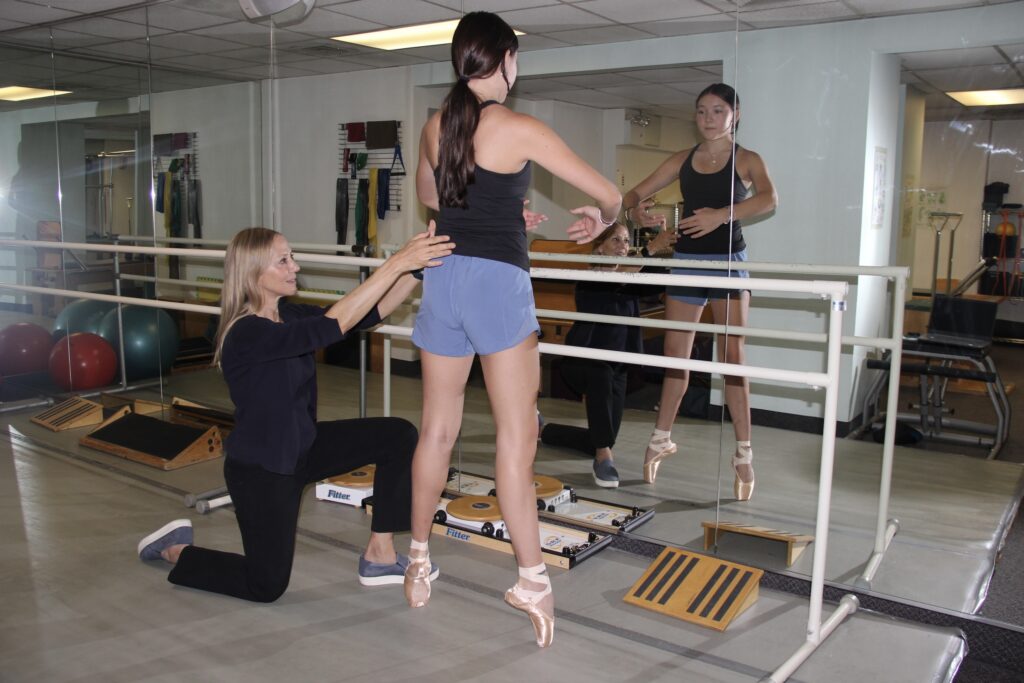
Dr. Emily Sandow, DPT, OCS, a physical therapist at Westside Dance Physical Therapy in New York City, agrees with Ruggieri’s recommendations. She also cautions against using foot-stretching devices. “They may overstretch the ligaments on the top of foot, potentially contributing to ankle instability.”
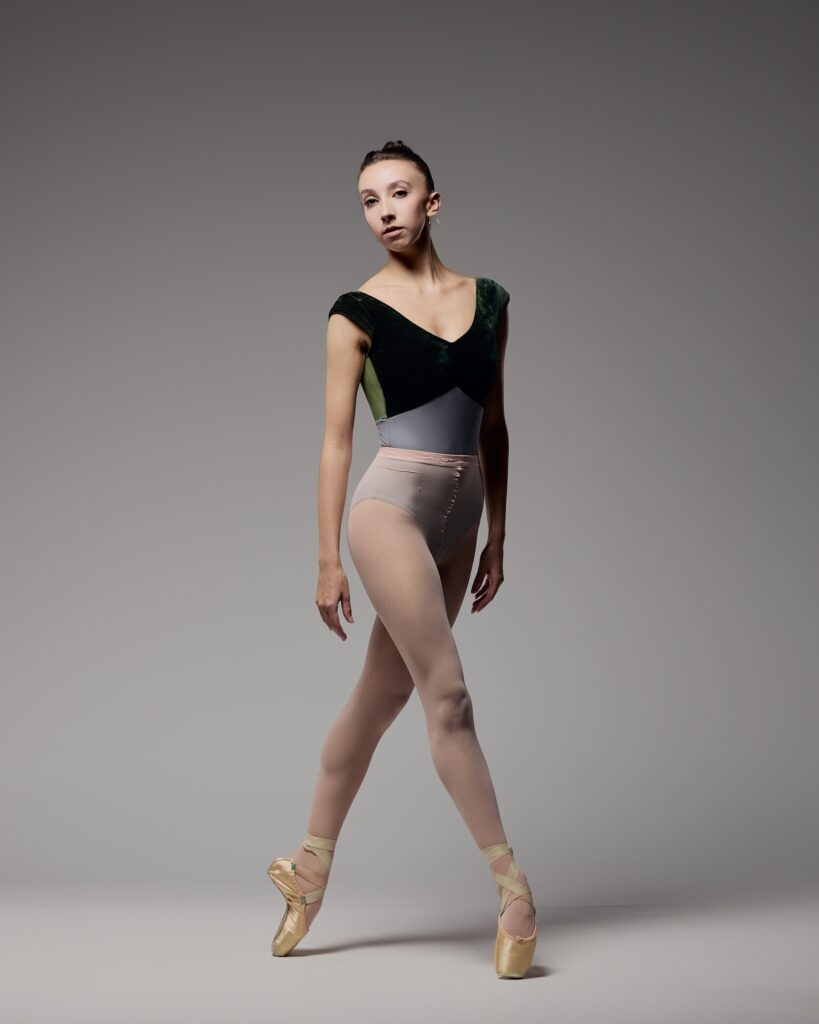
When treating dancers experiencing pointe difficulties, Sandow first checks their overall readiness: good core and calf strength, an ability to balance confidently on one leg, and the “pencil test” (placing a pencil along the top of a pointed foot to see if it creates a straight line from ankle to the toe). If a dancer can’t pass these assessments, they may need to delay pointe training. “It’s a tough conversation, but [necessary] for health and safety,” Sandow says.
If the dancer does meet readiness criteria but still struggles to get over the box, Sandow tests their strength in the flexor hallucis longus, or FHL. “The FHL is the long flexor of the big toe,” Sandow explains. “It’s the last muscle to push the foot off the ground in running and walking and crucial in propulsion onto pointe. If the dancer can maintain long toes when they point, versus curling under, the flexors are coordinating correctly.”
To strengthen the FHL, Sandow advises working on maintaining length through the toes and smooth articulation in tendus, dégagés, and relevés. “That helps the coordination of the foot muscles that are useful to propel onto the box of the pointe shoe.”
Assess Impingements and Injuries
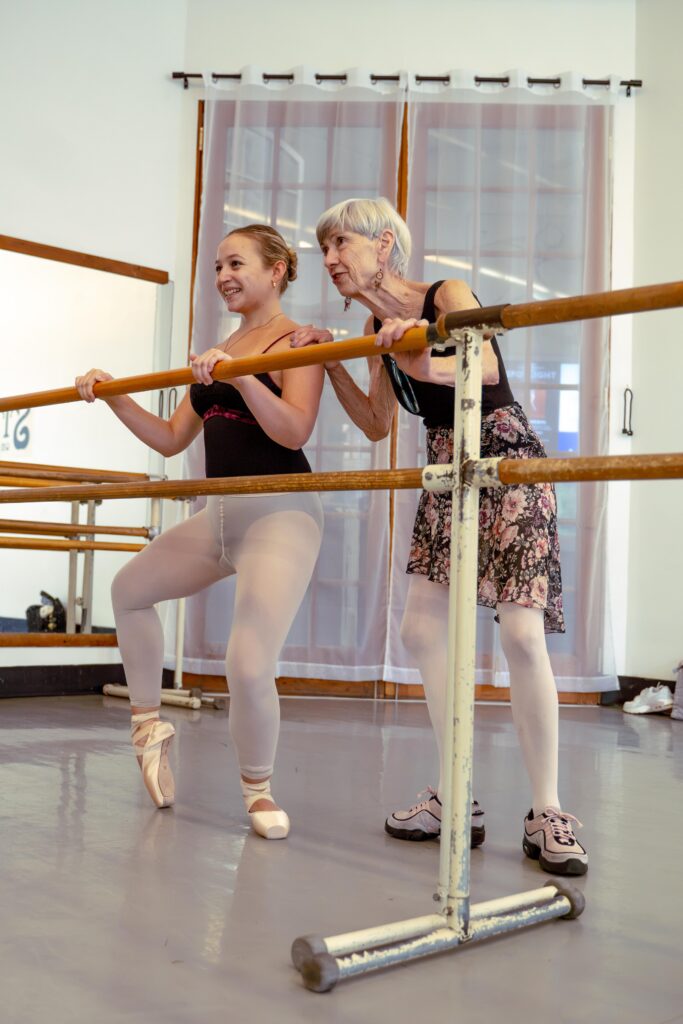
Dancers who experience pain during pointework may have a mechanical issue or an overuse injury that prevents them from rising fully over the shoe’s platform. A posterior ankle impingement, such as an os trigonum (extra bone), or FHL tendinopathy are common examples.
If a dancer’s pain persists after addressing potential technical weaknesses with the teacher, they should seek out a sports medicine professional, Sandow says. “Ideally an orthopedic physical therapist or physician who is knowledgeable about the specific physical and technical demands of ballet.”
Strengthen Your Technique
Strong demi-pointe technique is crucial to achieving an easy spring onto pointe. Kathryn Sullivan, who teaches ballet and pointe at Steps on Broadway and Peridance in New York City says that in addition to exercises outside of class, dancers can develop the correct muscles by working well in class. “Really going through half-toe when doing tendus builds incredible strength in the top and bottom of the foot,” she says. Then, work to utilize those muscles when wearing pointe shoes, she adds. When doing a relevé or simply standing on pointe, “imagine you’re doing a tendu inside the pointe shoe; really push down to get the toes working.”
Good overall technique and posture are critical. If your torso alignment is off, you’ll have a hard time getting up, says Sullivan. “I make sure dancers aren’t back on their heels, that they’re not grabbing their hip flexors, and that their hip bones are forward,” she explains. “Because if your hips are back, you won’t get a full pointe position.”
Evaluate Your Pointe Shoes
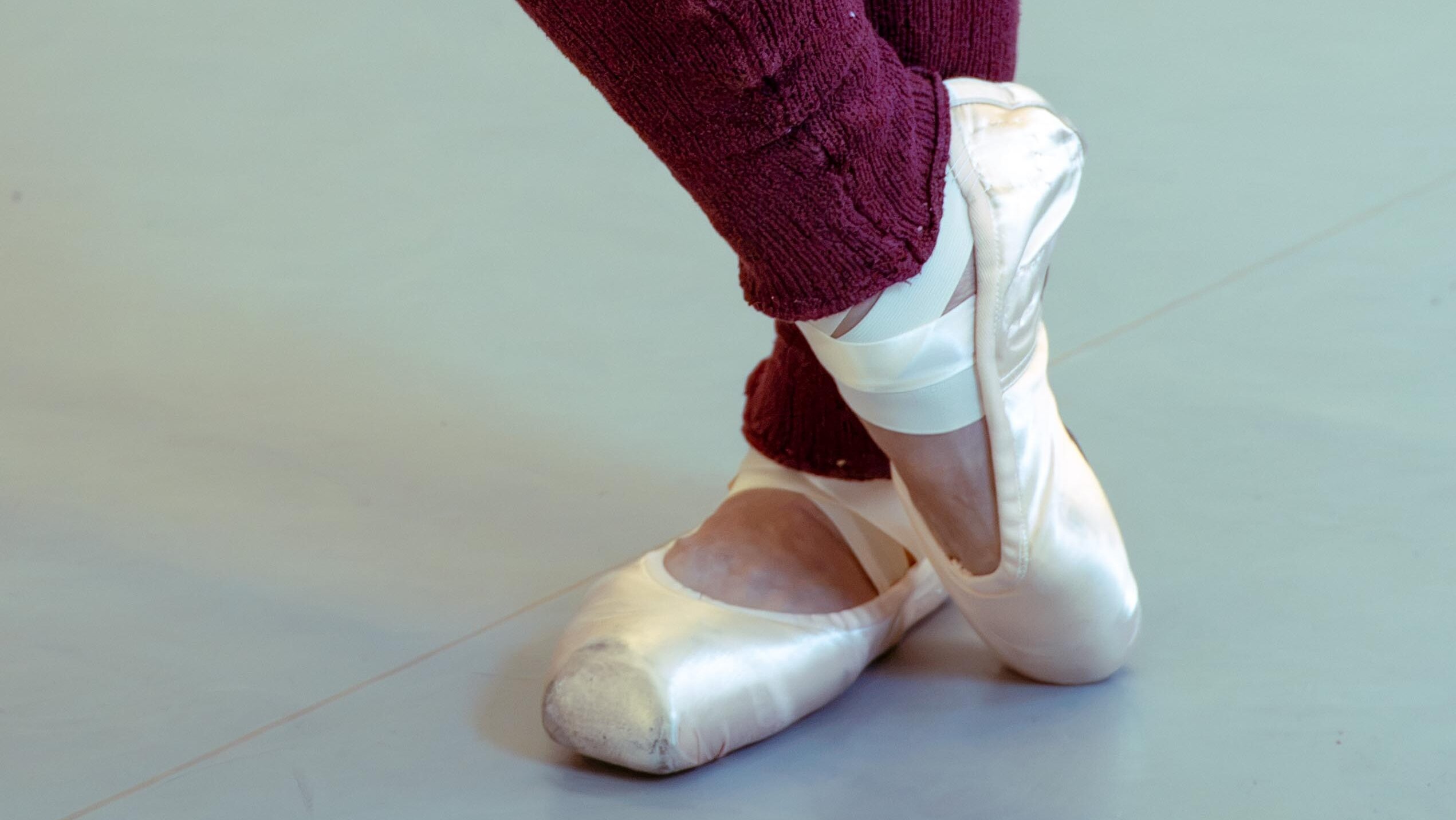
Ill-fitting or suboptimal shoes can exacerbate issues, Sullivan continues. And while dancers often think they need a softer shank, Ruggieri says the box and wings matter more. (Arch height and ankle flexibility are distinct, so “if the issue is ankle mobility, nothing you do to the shank is going to help,” she says.) “If the toes are too constricted, you can’t use them to get on pointe,” Ruggieri explains. To rise more easily onto platform, you may need a wider box or lower vamp (although it should still cover the toe knuckles).
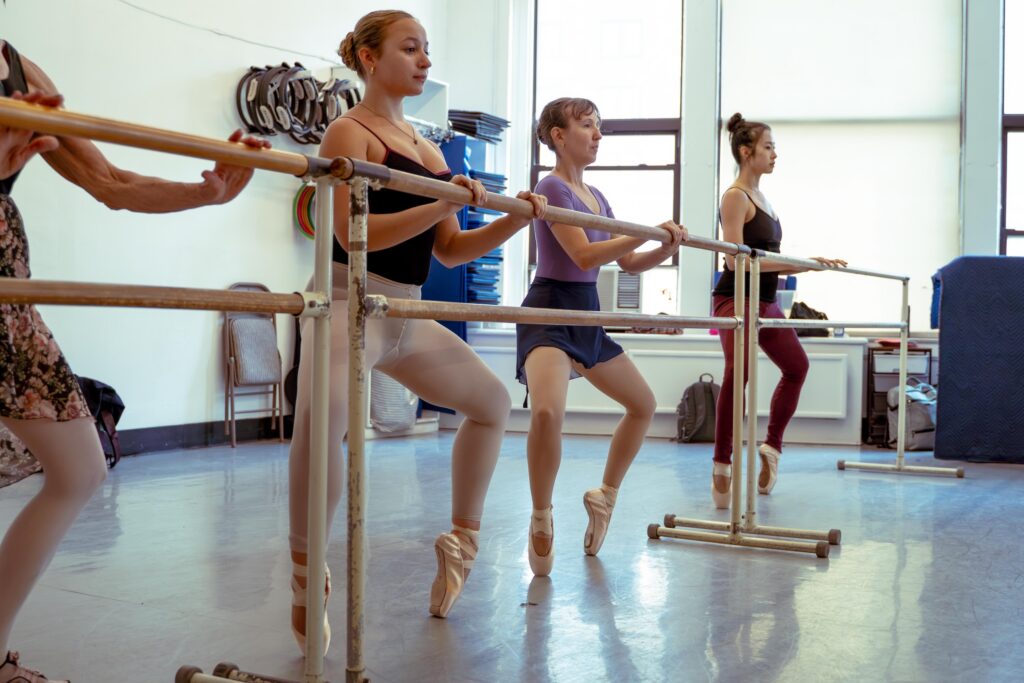
Also, pay close attention to the wings, which are the sides of the box that support you laterally on pointe. While a malleable box is easier for your foot to articulate, sturdy wings keep you from collapsing. “For some dancers, a dead shoe pulls them back,” she says. “If the wings are too squishy and the paste is gone, you should not be wearing that shoe anymore.”
Investigating why you’re struggling to get over your box requires determination, patience, and effort. But it’s worth it. Bernardo, who worked with Sandow to overcome her issues (and still does daily foot exercises), says she continues to develop her pointework, even as a professional. “In the long run, you have to make things work for you,” she says. “It’s hard in the ballet world, because you want instant gratification, but focusing on getting stronger every day changed my outlook on myself.”