Strength, Stretching, and Reformer Work: Working Out With Birmingham Royal Ballet’s Hannah Martin

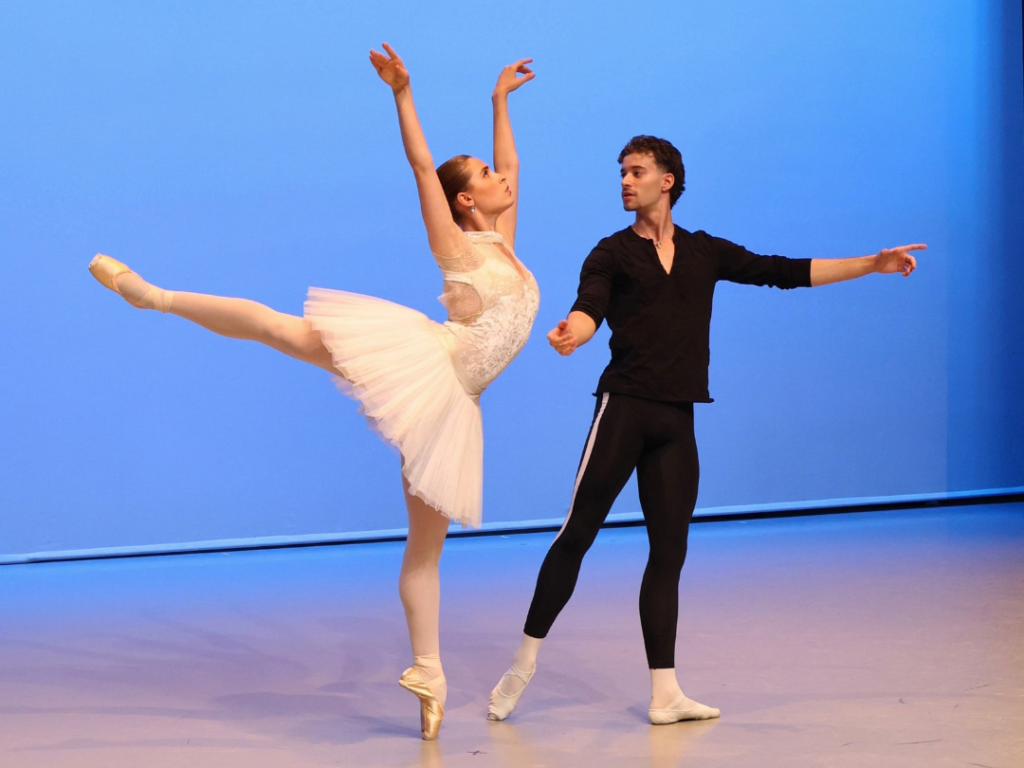
For Birmingham Royal Ballet artist Hannah Martin, stepping away from elite rhythmic gymnastics at age 16 to focus on classical ballet full-time was a lesson in relearning strength. While hyper-flexibility came naturally, mastering classical control meant completely reshaping her approach to conditioning. “My arabesque could hit the back of my bun, but I couldn’t hold my leg above 90 degrees,” she says.
By the time she joined BRB as a 19-year-old apprentice, Martin had learned to channel her high-impact athletic background into the refined precision of pointework. Her journey inspired her to launch her own conditioning programs in 2025: Full Body Flex, an active stretching routine, and Full Body Strength, a mat-based strength-training workout. Here, she breaks down her approach to coordinating extreme flexibility with sustainable strength to maintain peak performance onstage.
Morning Movement
Every morning, Martin spends 15 to 30 minutes on her mat, connecting with her body through a series of gentle, active stretches from her Full Body Flex routine. Then, before class, she spends 30 minutes on the Pilates reformer to warm up her joints, calves, and core. She enjoys low-impact exercises like pliés first in parallel, then in first and second position, with her feet either flat on the reformer’s foot bar or on demi-pointe.
Martin builds what she calls “body trust” through gentleness and consistency. Her approach is “never to push your body beyond where it’s comfortable,” and especially not into pain. The more you can trust your body, the more it gives in return, she says.
Adjusting for the Season
Martin adapts her aerobic work to her performance schedule. During a heavy program like Swan Lake, she skips extra cardio to preserve energy. “Learning the capacity of your body is a big thing as a professional dancer,” she explains. “Once you’re in the midst of a busy performing season, it’s not really the time to try and build a ton of new strength.” Over holidays or lighter periods, she maintains her fitness base with 30 minutes on the elliptical every few days.
When recovering from injuries, or during easier rehearsal weeks, Martin also takes 15 to 20 minutes a day for pointe conditioning with relevés in different positions. To keep her muscles active on tour, she relies on Full Body Strength’s equipment-free, Pilates-style exercises that can be done in hotel rooms.
Fueling and Recovery
Martin prefers eating three or four structured meals a day. She starts with a hearty bowl of porridge topped with fruit and cocoa powder, but she keeps lunch and snacks lighter to keep her stomach comfortable during rehearsals. Her go-to dinner is mincemeat with sweet potato and roasted courgette, followed by hot chocolate before bed.
For recovery, she uses a “trusty little blue ball” to roll out knots in her calves, her tendons, and the soles of her feet. She also walks home from work as a cooldown, takes Epsom-salt baths, and sips electrolytes after long rehearsals.
Try It: Hannah’s Favorite Exercises
[Disclaimer: Martin is not a certified fitness professional; these tips are from her personal experience as a professional dancer and should not be taken as advice on behalf of BRB.]
Lunge Hamstring-to-Hip Flow
This dynamic flow works active flexibility in the hip flexors, hamstrings, and lower calves to build functional range of motion for splits and extensions. While shifting into the front hamstring stretch, keep your foot flexed and bend the front knee slightly to deepen the stretch into the lower calf. Move continuously and smoothly to warm up the hip joints, and keep your core engaged.
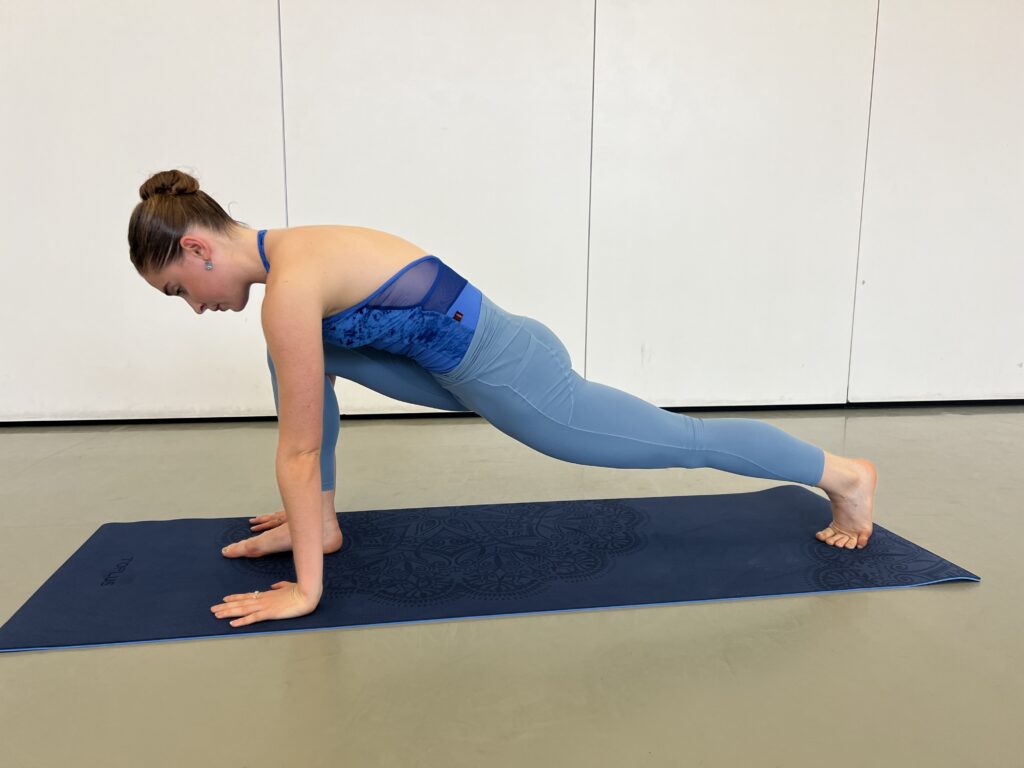
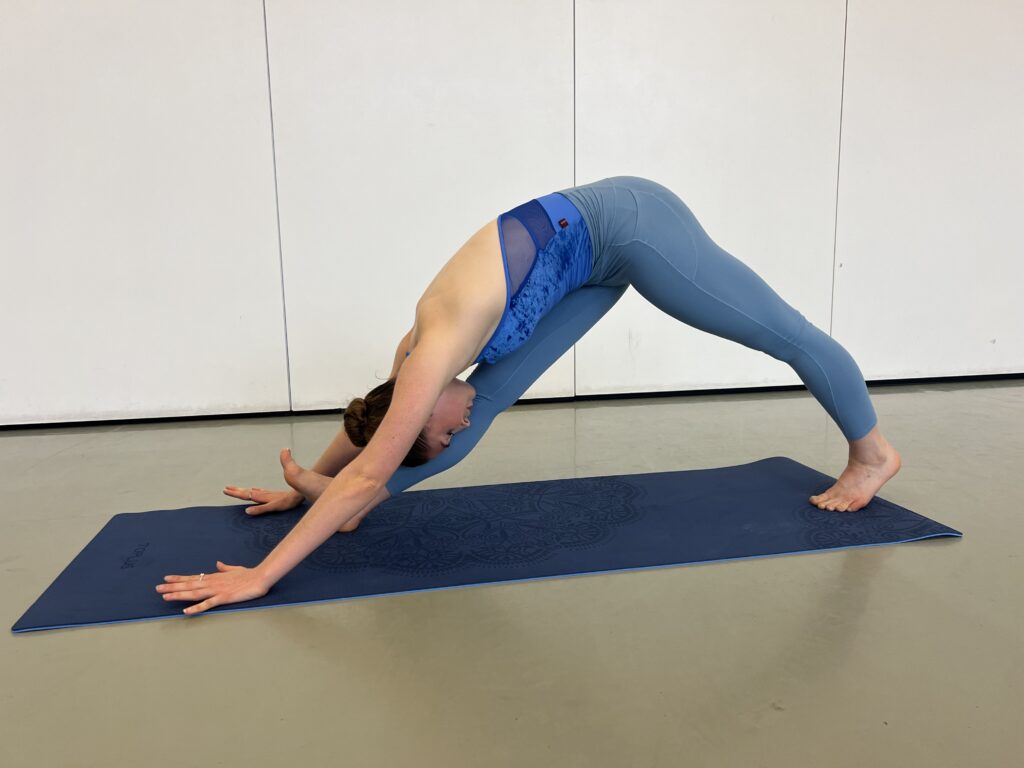
- Begin in a high lunge with your front knee bent past your ankle and your back heel lifted, with the ball of your foot on the floor. Place your hands flat on the floor on either side of your front foot.
- Press your hips forward and down while keeping your torso upright. You’ll feel a stretch along the front of the extended leg’s hip.
- Shift your weight backward, keeping your back leg long as you straighten your front leg and flex your front foot. Keep your heel on the ground and lean forward at your hips.
- Flow continuously back and forth between the low lunge and the hamstring stretch 5–7 times.
- Repeat on the other side.
Rhythmic Turnout Lift
This is a mat-based adaptation of a rhythmic-gymnastics exercise that targets the deep hip rotators, glutes, and outer thighs. You’ll isolate your working leg to train hip stability, core control, and muscular endurance through sustained holds and repetitions. Keep your hands on the ground for support, or, for an added balance and core challenge, lift your arms out to the sides or clasp your hands above your head as Martin demonstrates in the photos below. For increased resistance, you can add ankle weights.
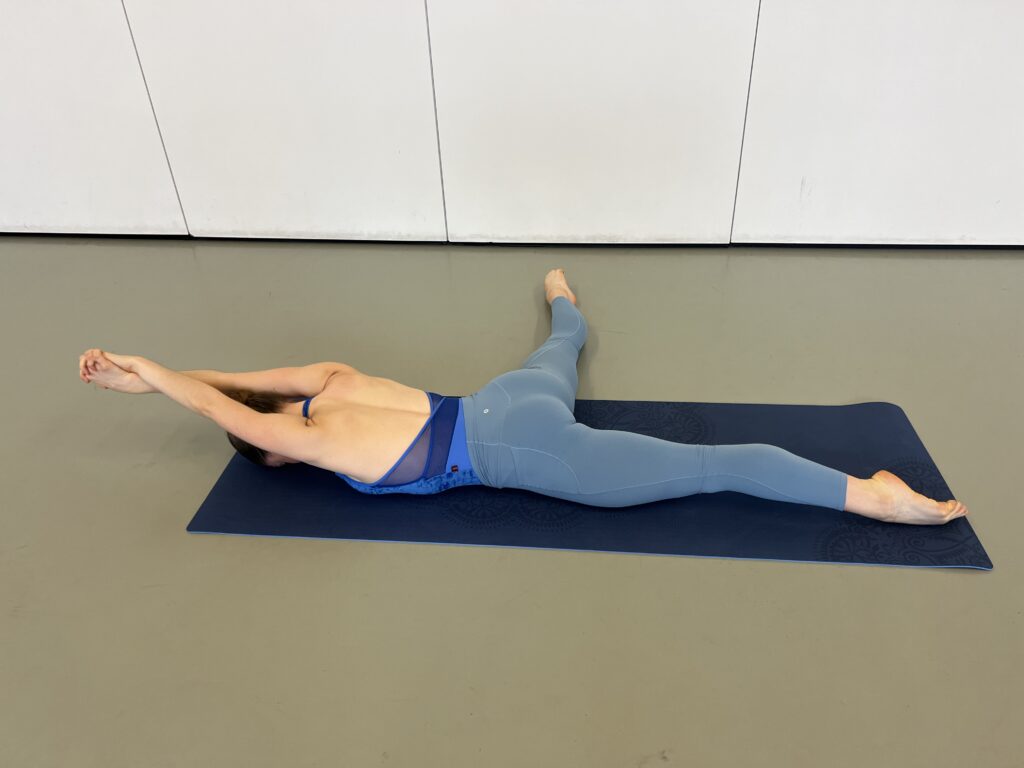
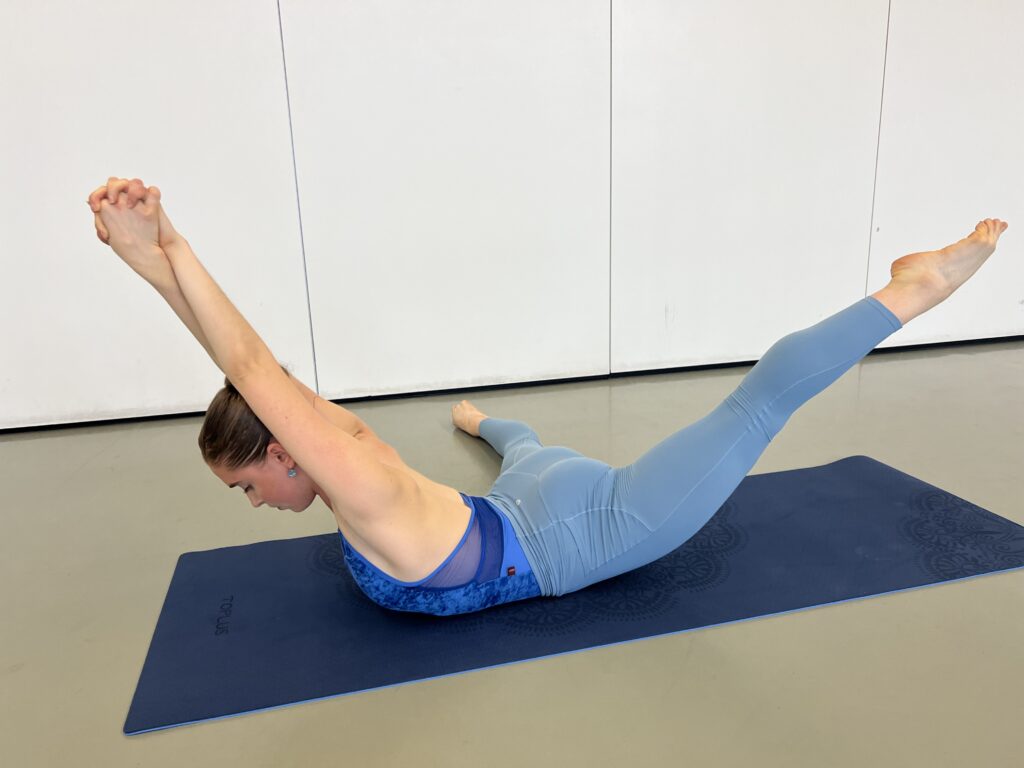
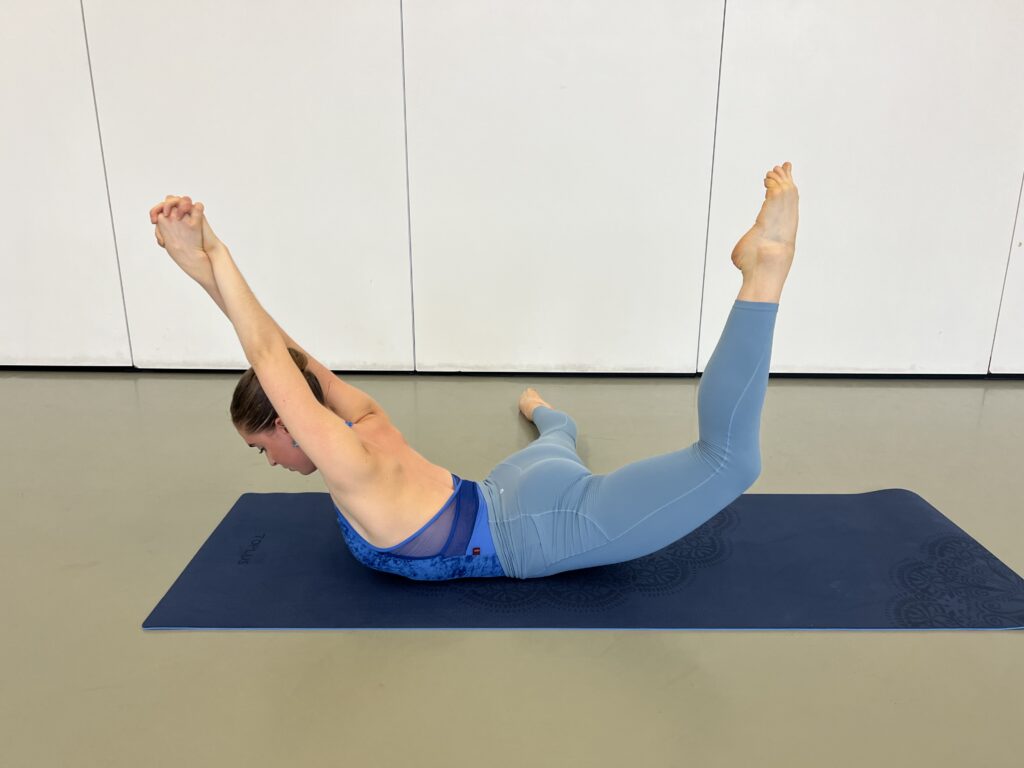
- Lie on your stomach with your legs extended behind you, toes pointed. Place your forearms on the mat on either side of your chest to lift the upper body.
- Keeping both legs straight and on the floor, sweep your right leg along the floor (about 45–90 degrees) as if you’re doing a battement or dégagé. Keep the left leg straight.
- Exercise 1: While maintaining the right leg’s length and turnout, lift your straight left leg 6–12 inches off the floor and lower it, 8 times.
- Exercise 2: Keep the right leg straight and long. Lift your left leg and, while holding it in the air, bend the knee at a right angle in parallel, then fully extend the leg back out. Repeat this 8 times.
- Exercise 3: Keeping the left leg extended and straight, hold it off the floor for a count of 10.
- Repeat the entire sequence on the other side.