After Battling Lymphoma, Philadelphia Ballet’s Nicholas Patterson Savors Every Moment

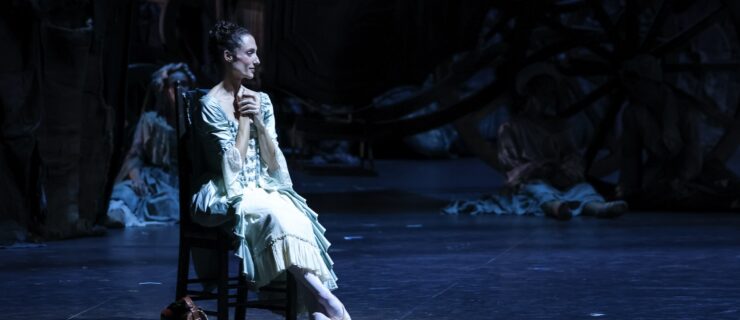
On a Thursday afternoon at Philadelphia Ballet, a group of dancers rehearse the bandit sequence from Angel Corella’s Carmen. Their movement is masculine and energetic, the group galloping on invisible horses or cheering each other on as they sauté through the air one by one. Discussing their counts and facings, the dancers joke around lightheartedly. You’d never be able to tell that one of them finished chemotherapy for lymphoma just months before.
Nicholas Patterson, a 29-year-old soloist with the Philadelphia Ballet, was diagnosed with Hodgkin’s lymphoma in 2024. After taking time off for treatment, he’s returning to the stage stronger for the 2025–26 season. He shares his experience below.
Road to Diagnosis
Patterson was dancing the same ballet—Carmen—in fall 2023 when his symptoms began. He noticed that his lymph nodes were enlarged, and that he was unusually fatigued while dancing. As the season progressed, Patterson’s condition worsened. “I couldn’t get through the day without sleeping. I had lost my appetite,” he says. Despite frequent visits to the doctor, he had no explanation for his mounting health problems.

Lymphoma, typically a difficult cancer to diagnose, can at times resemble other illnesses. During the nine months between his initial symptoms and his cancer diagnosis, Patterson was misdiagnosed with mononucleosis. He says he left appointments feeling that something deeper was wrong, but he wanted to believe his doctors. In October 2024, his symptoms became so severe that he went to the emergency room. “I was experiencing such a terrible pain in my abdomen and my back,” says Patterson. “My neck was just engorged, my armpit was full of [swollen] lymph nodes.” After a scan of his abdomen and a tissue biopsy, he was diagnosed with stage 4 classic nodular sclerosis Hodgkin’s lymphoma. This type of lymphoma, in which B-cells in lymph nodes become cancerous and grow out of control, affects mostly teens and young adults.
The news was devastating, but Patterson felt some relief knowing that after months of misdiagnoses, his disease could now be properly addressed by doctors. “It felt like finally somebody is taking the burden of this off of my hands and they are going to do everything in their power to help me.”
A Company and a Community
One of the first things Patterson did after being diagnosed was tell the Philadelphia Ballet.
Concerned that he’d disrupt casting while he took time off for treatment, he called a meeting with artistic director Angel Corella and company manager Alexis Parente. They reassured him immediately that he would be able to keep his health insurance and receive paychecks during his treatment. “This is an extremely supportive company,” says Patterson. “They said ‘We will take care of you,’ and they did.”
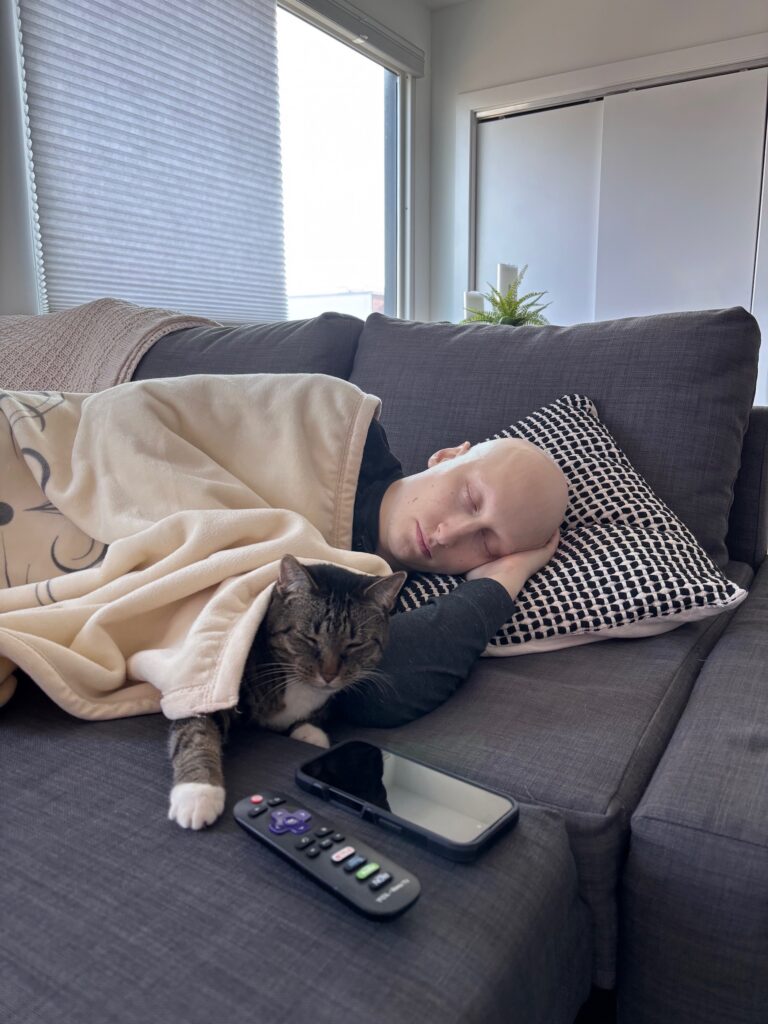
He describes his cancer treatment as “brutal.” Once every two weeks, Patterson endured chemotherapy infusions lasting from 10 am to 2 pm. He experienced intense nausea and vomiting, a common side effect of chemotherapy. Patterson says he couldn’t have made it through without his mother, who drove five hours to be with him on each infusion day and take him to doctors’ appointments.
Patterson felt “an overwhelming amount of love and support” from his fellow company members while undergoing treatment. “Everybody found a way to send a little piece of love my way,” he says. His wife, Erin Patterson, was dancing full-time in the Philadelphia Ballet’s corps de ballet while taking care of him. With this in mind, company members often brought the couple meals to save them the hassle of cooking. Patterson’s nausea made it difficult for him to consume enough calories. When he did crave specific foods (often from McDonald’s or Taco Bell, he says), it was important to take advantage of his appetite and eat it. Philadelphia Ballet dancers pitched in funds to get those foods to him as soon as possible.
Patterson’s best friend, Jack Thomas, bought him a Mario Lemieux jersey to lift his spirits; the now-retired pro hockey player was diagnosed with Hodgkin’s lymphoma during his professional career, underwent radiation treatments, and returned to the NHL to lead his team in a record-breaking season.
Coming Back to Ballet
For the first few months of chemotherapy, the only thing on Patterson’s mind was getting back to full health. Near the end of his treatment, a scan sparked hope that he might be able to return for the 2025–26 season. After his final infusion on March 24, he slowly returned to dance, taking it day by day. “My body at first resisted ballet a little bit,” says Patterson. In the beginning, he rode a stationary bike for 10 minutes, followed by one combination at the barre. Gradually, he added more barre combinations. Patterson recalls that the transition from barre to center was especially challenging as he continued to fight through fatigue.
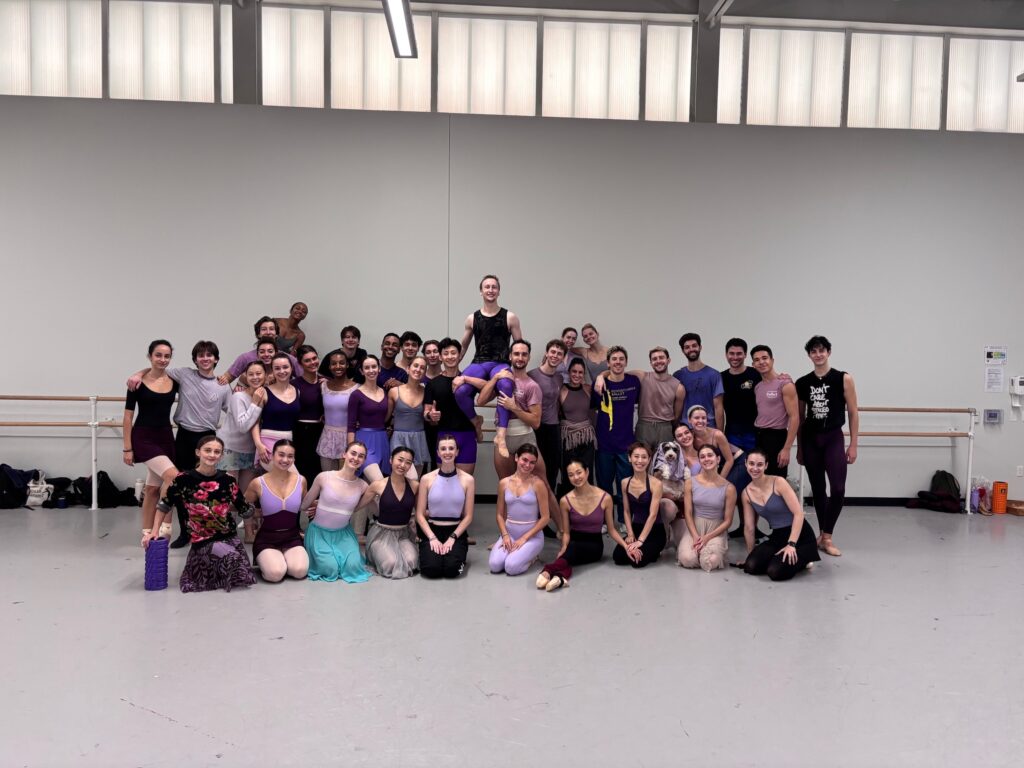
In July, a month before the start of the season, Patterson says he felt frustrated that he wasn’t back to full strength yet. Still, he recognized how far he’d come: In March, he could barely walk up stairs—by July, he was doing jumps and turns. Patterson met with Philadelphia Ballet leadership and, together, they came up with a plan for the season-opening program while supporting his recovery. To avoid the strain of learning new choreography, he would reprise a few previous roles in Carmen.
Days away from his return to the stage in October, Patterson felt strong. “I was struggling to get through ballet class [a few months ago]…now, every time combos come around, I’m doing two different groups,” he says. “I feel like Captain America after getting the super serum.” His wife, Erin, who saw him through every phase of his cancer treatment, is excited to watch him onstage again. “I think he looks better than he did before,” she says.
These days, Patterson relishes every moment spent dancing after wondering if he’d ever make it back to the studio. “I don’t take myself too seriously anymore. In this profession, we’re always striving for success,” he says, adding, “I realized that success for me in this moment is coming in, seeing the sun shining, seeing my peers, and being able to participate.”