The Pros and Cons of Online and In-Person High School for Ballet Students

When Aubrey Daniels was 12, she faced a tough decision. The Houston native had been offered a spot at a pre-professional ballet school, but taking it would have required her to begin academic classes online. “The thought of leaving my school, and my friends, was so sad to me,” she says. “I wanted that normal school experience.”
Daniels, now 16, decided to continue with in-person school in Houston and began training at Vitacca Ballet & School for Dance. But after joining Boston Ballet II this August, she switched to virtual learning for her junior year. “Dancing full-time while studying part-time will be the opposite of my schedule from the past four years,” she says, “but if I keep my work ethic unchanged, I’m confident I can maintain my academic rigor.”
For aspiring ballet dancers, the choice between online and in-person school is extremely personal, and both options have their pros and cons. From learning styles to academic goals, schedules, and more, here’s what to consider.
Ballet Training: Quantity and Quality
Many ballet students pursue online schooling so they can commit more time during the day to dancing, whether through private lessons or a full-time ballet program. For example, at New York City’s Ellison Ballet, students graduate into full-day training starting at age 13. Ellison’s managing director, Diane di Stasio, works with incoming students and their families to determine the best virtual school for them if they aren’t already enrolled or are following a homeschooling program from their home state. “For pre-professionals, that window of training between 14 and 18 is really critical,” says di Stasio. She recommends a handful of programs, though Dwight Global Online School and Laurel Springs School (which are both Ellison partner schools and sponsors) are the most popular.
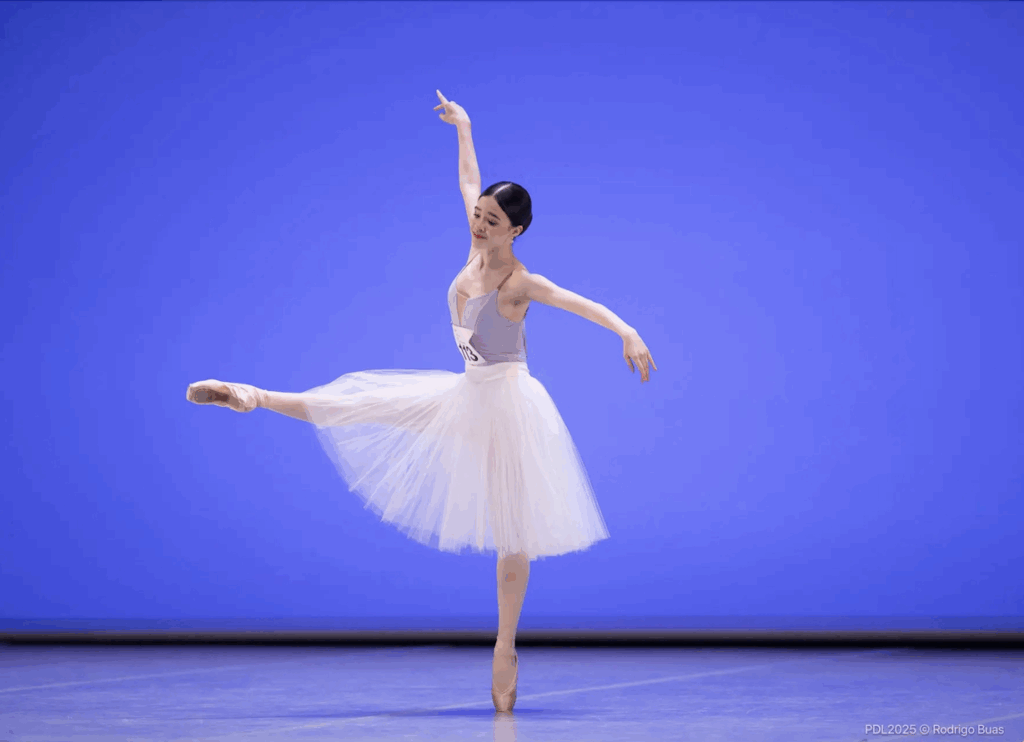
Pacific Northwest Ballet corps member Genevieve Waldorf chose in-person academics instead. “It was important to me to have some balance in my life outside of ballet,” she says, and learning in a physical school environment suited her better. At times, she wondered if she was missing out on extra hours of dancing. But having less time in the studio pushed her to work smarter; training constantly isn’t always helpful, she says. “You have enough time to practice. You just have to spend those hours well.”
Daniels can relate. She recalls noticing how most dancers she met at competitions practiced throughout the day and did school online. But, like Waldorf, she focused on making the most of the dance classes and rehearsals she did have while going to school in person. “I used the time I had to excel in ballet like my classmates.”
Academics: Meeting Your Needs

One of the most common questions di Stasio hears from parents is whether online school can adequately prepare students for college. The short answer is yes, and admissions councils often recognize the dedication it takes to train at a professional level while excelling academically. At Ellison, some alumni have gone on to study at Stanford University, New York University, and Columbia University.
Di Stasio recommends that students and their families meet with the representatives of online schools to discuss the student’s learning style and each school’s electives, Advanced Placement (AP) classes, standardized testing and other assessments, and price. (While many programs are public and tuition-free, some private online high schools can cost tens of thousands of dollars per year.) It’s also crucial to confirm the school fulfills city and state educational requirements, which is the case for each of the programs Ellison recommends.
Daniels has always aimed to attend a top-tier college and wants to pursue neurobiology after dancing. While considering online programs, she and her parents looked at those with strong academics, AP classes, and college counseling. “I need that mentorship,” she says.
Still, some people, like Waldorf, learn best in a physical school space. “I knew it was what I needed, personally, to reach my academic goals,” she says.
Schedules: Balancing It All
Some virtual programs run synchronously, with designated class times over video, and others run asynchronously, with prerecorded lectures. At Ellison, most students choose the latter, which allows them to determine their own weekly schedules. “Whether they’re an early riser or they work better at night, they can learn when it best suits them,” says di Stasio. Some dancers even graduate a full year early.

Daniels, who attends Dwight Global, has opted to attend synchronous classes in the morning (as early as 6 am) and at night (as late as 10 pm). She appreciates the ability to communicate with her teachers and classmates in real time, as well as a greater feeling of accountability. “I felt that synchronous learning would push me to do my best, just like I would do [at an] in-person school,” she says. Daniels’ schedule includes two 45-minute classes per week for each of her subjects. “I’m taking five AP classes, so I’ll have 10 classes a week, and then three to five hours of homework.” If she misses an academic class during performance weeks, she can watch recordings without being penalized. Still, for both synchronous and asynchronous models, in-person attendance is mandatory for some exams, and succeeding in either model requires a great amount of self-motivation. Luckily, says di Stasio, ballet dancers tend to work hard by principle. But if students struggle to stay motivated in school, a hybrid or synchronous program might be a better option.
For both Daniels and Waldorf, the productivity they developed from balancing in-person school with ballet translated outside the studio, too. “I learned how to be efficient with my time,” says Waldorf. “I’d run straight to ballet when the bell rang, get home from dance at 9 or 10 pm, eat, and do homework for the rest of the night.” She’d also chip away at assignments during lunch or small breaks throughout the day. Those time-management skills now come in handy as she manages full rehearsal days, cross-training, physical therapy, and more. But it wasn’t easy, she says. “I probably wasn’t getting enough sleep.”
Social Life: Considering the Whole Person
Di Stasio warns that online students need to build a social life outside the studio, as virtual learning can potentially feel isolating. “Games, clubs, dances—you need to carve out those opportunities for yourself,” she says. “I think many teenagers don’t understand the impact of that.” She continues that the goal is finding balance, “even if that balance looks different than it does for a traditional teenager.”
Waldorf, who recently graduated from Harvard with a major in applied math and a minor in computer science, credits her high school experience for making her a more conscientious person and a versatile performer. “Meeting other people during those formative years broadened my perspective,” she says. “You have to grow your world and be a well-rounded human to be an artist.”

She has also remained close with her high school friends and teachers. “As I’ve gotten older, I’ve realized how much school shaped me in a way I might not have appreciated in the moment,” she reflects. “Even the cheesy stuff—dances and football games. Those are important life experiences that shape you.”
No matter what, says Daniels, you should always listen to your own needs and priorities, even if they’re different from your peers’. “Different families, different kids, have different goals in their lives,” she says. “You don’t ever have to sacrifice your education to dance.”