The Dangers of Asking Dancers to Lose Weight During Puberty

Sarah-Gabrielle Ryan was 10 years old when teachers first started commenting on her body. She was one of the youngest of her peers to go through puberty, and as her shape began changing, she began hearing casual remarks in class. “I had teachers joking that I had a Winnie-the-Pooh belly, or commenting on how my skirts made my butt look,” says Ryan, now a principal dancer at Pacific Northwest Ballet.
The criticism got more serious two or three years later when a teacher sat Ryan’s parents down to tell them she needed to drop 10 pounds. “It was just based on how I looked—no one knew how much I weighed, and there was no medical input,” she says. And, she adds, the advice on how to slim down “was always really bad.” At one point, a teacher suggested an all-liquid diet, so Ryan ate mostly chicken broth for a while. Not once did anyone refer her to a dietitian.
Unfortunately, Ryan’s story isn’t unique, nor is the ballet industry’s emphasis on thinness a relic of the past. Earlier this year, Youth America Grand Prix faced significant backlash for including a field for weight on dancers’ registration forms, which the competition says was requested by some artistic directors and companies. Dancers took to social media to express their frustration, and shared alleged instances of being told they weren’t thin enough at the competition. All over the ballet world, teachers and directors—including those with the best of intentions—regularly suggest pre-professionals in the midst of puberty “lean out” or “lose a few pounds” when they fear a dancer’s body shape will hurt their chances of eventually getting hired.

But calling attention to a student’s weight or body shape, particularly while they’re still developing, can take a serious physical and psychological toll, potentially shortening their career—or even hobbling it before it begins.
The Pressures of Puberty
Puberty is a tricky time for any adolescent, but particularly for dancers. “The pre-professional years—when young people are committing to ballet as a potential career—hit right when their bodies are changing,” says Sasha Gorrell, PhD. Gorrell, a former American Ballet Theatre dancer, is an assistant professor in University of California San Francisco’s department of psychiatry and behavioral sciences, as faculty in the Eating Disorders Program and chief of the Adolescent and Transitional Age Youth Division. “You’re in this really vulnerable stage where you’re guns blazing, but your body could change so much.”
Even if a dancer’s physique as a child meets the “ideal” for classical ballet, their height and weight as an adult is still unknown. During puberty, a dancer’s shape can fluctuate wildly as their body adjusts to hormonal changes, rapid growth spurts, and training demands, says dietitian Christina Chagaris, RD, who works with dancers from the Joffrey Ballet School in New York City.
“When you’re going through puberty, it feels like everything is out of your control, especially your body,” Ryan says.
The Dangers of Dieting in Puberty
Attempting to lose weight when you’re 13 is a different experience from doing it in your 20s or later. “Your body is changing so rapidly during puberty,” says Naomi Brown, MD, a pediatric sports-medicine specialist who works with dancers at Children’s Hospital of Philadelphia. “The demands on your systems are much higher.”
For starters, about 25 percent of our growth in height typically happens during puberty. All that new bone, muscle, and other tissue means the body needs more calories than pretty much any other time of life.

This makes pubescent dancers particularly vulnerable to developing a condition called relative energy deficiency in sport (RED-S) if they don’t eat enough. When this happens, strength, endurance, coordination, and concentration can all take a hit, making it harder to dance well. The risk of injury spikes—partially because of the overall fatigue and brain fog, and partially because muscles and tendons don’t recover as well from the everyday microtrauma that happens in class and rehearsal.
Pubescent dancers who don’t get enough calories can also struggle with stomach pain, headaches, and frequent colds. Their metabolism can slow down. Effects on their brain can leave them depressed and anxious. They might stop getting their period, or not have it start until years later.
“When there isn’t enough energy input, our body goes into a stress state,” Chagaris says. Anything that’s not necessary for immediate survival gets put on the back burner.
This can have major long-term consequences. For one, dancers may never grow as tall as they otherwise might have, Brown says. Research also shows that if extreme dieting affects their period, dancers can later end up with fertility issues and earlier menopause. Plus, there’s a risk of weaker bones for the rest of their life. “You lay down about 90 percent of your bone density by age 20. So if you’re not having normal estrogen in those teenage years to lock in that calcium, then you’re at a much higher risk of osteopenia and osteoporosis when you’re older,” Brown says.
“Can we also adjust our eyes within the system, our expectations for what a dancer looks like? We need to constantly revisit how we can do better to create a safer environment for dancers.”
Sasha gorrell, phD
The psychological toll can be just as rough. Recent lawsuits at both the Royal Ballet School and Richmond Ballet have alleged that body shaming and weight demands led to long-term eating disorders and struggles with body dysmorphia. Ryan says she still sees a body dysmorphia coach regularly due to her experience as a young dancer. “It completely ruined my relationship with food and led to a number of years of disordered eating,” she says. “There were times early in my career where I would leave class just because I couldn’t stand to look at myself.”
The Reality of an Industry That Prioritizes Thin Bodies
In an ideal world, no one’s body shape would be a topic of conversation. But in a field in which many continue to emphasize a lean aesthetic, dancing in an even slightly larger body means facing an uphill battle when it comes to landing scholarships, contracts, and roles.
“It’s such a hard, but somehow relevant, part of this career, unfortunately,” Ryan says.
Gorrell points out that most dance teachers and administrators who tell a dancer to lose weight mean well—they’re trying to help students succeed in a field that still has a very narrow vision of what an acceptable body looks like. And many are simply repeating what they were told themselves as teenagers, oftentimes as a result of longstanding cultural views.
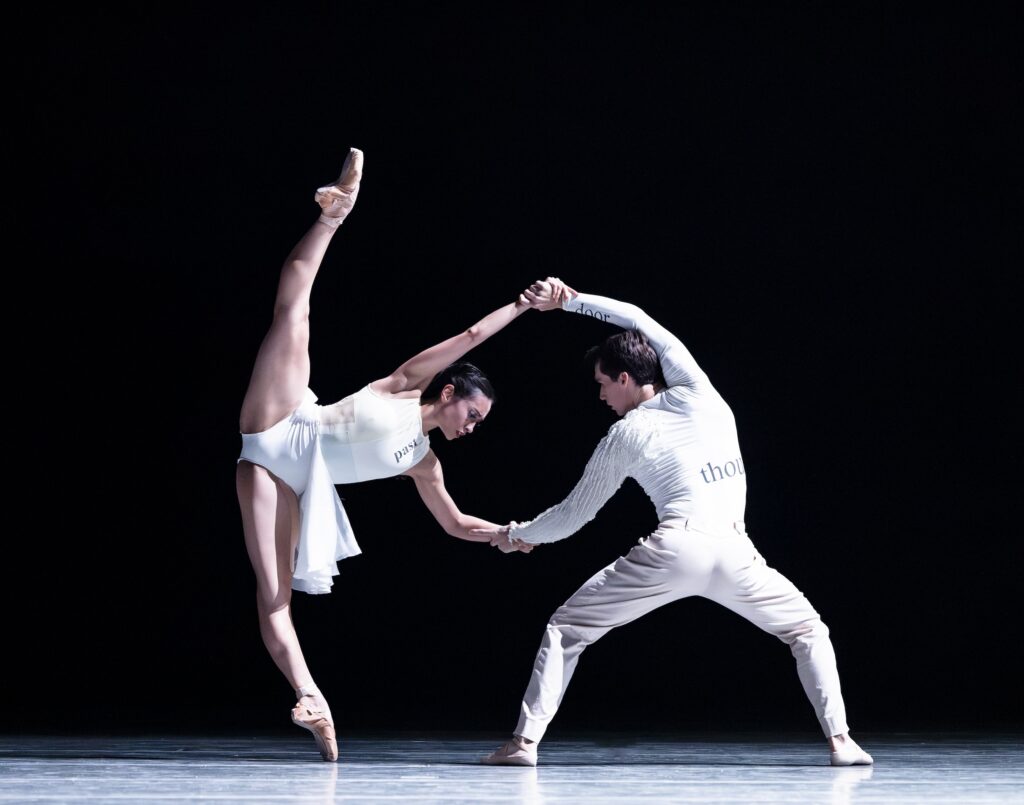
But encouraging a student to lose weight does little more than create shame. “There’s not a single dancer who doesn’t know when they’ve gained weight,” Gorrell points out. Lecturing them about it not only dismisses their intelligence, but raises their risk of disordered eating, she says.
Rather than talking about weight, Gorrell suggests teachers worried that a change in a dancer’s body will limit their opportunities simply check in on how they’re doing more generally, including their current stressors and sense of well-being. “In a pre-professional environment, there’s a lot to handle, and a lot of times people eat differently when they’re anxious or under pressure or unhappy,” she says.
Depending on the dancer’s response, they might benefit from a referral to a sports dietitian or a psychologist, or from help brainstorming more inclusive companies. Or maybe they just need their teachers’ support as they ride out the chaos of puberty.
The reality is that the pressure on students is unlikely to ease unless there are industry-wide changes to how dancers’ bodies are valued. But Gorrell emphasizes that the way teachers address weight and body ideals in this critical period of development can have lifelong impacts. Rather than putting the onus on young dancers, she asks, “Can we also adjust our eyes within the system, our expectations for what a dancer looks like? We need to constantly revisit how we can do better to create a safer environment for dancers.”