Rochester City Ballet’s Lydia Marbach’s Favorite Pilates Exercises for Dancers

When Lydia Marbach tried Pilates growing up, and later as a dance major at the University of Arizona, mat classes didn’t quite resonate. It wasn’t until a few years later, after joining Rochester City Ballet, that she accompanied fellow dancer Jessica Tretter to a reformer-based class and fell in love. “I’m obsessed with the reformer,” Marbach tells Pointe over Zoom. In 2022, she became certified in Pilates instruction to further her practice. She now teaches at the School of RCB and a local studio, Evolution Pilates, both in Rochester, New York. “At 30 years old, I feel like Pilates has helped me stay in tune with my body so I am strong enough to trust it to do hard things,” she says, “like get through another Nutcracker season!”
Below, Marbach, one of RCB’s mainstay artists, shares her Pilates regimen and the exercises that have helped her become a stronger dancer.
An Adaptable Lifestyle
During the season, Marbach practices Pilates on her own about three times a week for at least 30 minutes. When she can, she aims for an hour. “An hour is important for me so I can properly work and warm up, and get to harder strength training at the end,” she says. During time off, she bumps sessions up to six days a week. But she’s always aware of what her body needs; as one of nine full company dancers at RCB, she often performs lead roles like Swan Lake’s pas de trois, the Grand Duchess in Anastasia, and several featured parts in The Nutcracker. “If I’m exhausted, I’ll take a rest day,” she says, “and I’ve tried to adjust my schedule so I’m not over-teaching.”
Perfecting Cambré Back

One of Marbach’s favorite exercises for performers is called the scarecrow. “It helps you feel your shoulders in your back while maintaining alignment,” she says. “It’s a beautiful one for dancers, especially for protecting the spine in a high release or cambré back.” While the scarecrow can be done on the mat with a TheraBand, Marbach prefers to practice it on the reformer; depending on how they’re adjusted, the machine’s pulley system and springs can provide more supportive or more challenging resistance.
Strengthening the Standing Side
Marbach loves Copenhagen planks for a full-body challenge. “It has been my go-to this whole year, and I feel like it has dramatically improved my strength all around,” she says. That has helped her dance with more control and endurance.
She also appreciates any side-lying series, which helps build the strength needed to maintain the standing side against the working leg. “So much of dancing involves standing on one leg while working the other,” she says. These exercises can also be done on the mat, but Marbach likes practicing on the reformer because the moving carriage adds an extra balance challenge.
Keep It Balanced
Before company class, Marbach warms up with some of her favorite exercises, like planks, the pelvic peel (or bridge), and a Pilates roll-up. “I always start by lying down on my back with my eyes closed, tuning into how my body is feeling,” she says. The exercises then help her find her center and engage her glutes, hamstrings, and core so she’s prepared for barre. To recover at the end of the day, she likes to sit on the floor with an ice pack and a cup of tea, icing her legs while reading or watching TV.
Marbach also emphasizes the importance of balance in cross-training. “Anytime you focus on one part of the body, make sure to work on the opposite muscles,” she says. “For example, if you work on your abdominals, counterbalance by working on your glutes and hamstrings.”

Nutrition On the Go
For a boost of energy at the studio, Marbach reaches for grab-and-go snacks like an apple or orange with a Chomps meat stick. “I love yogurt and berries in the morning,” she says. For dinner her go-to combination is roasted potatoes and veggies with pork chops, chicken, or steak bites. “It’s so easy to make, and you can put any sauce on it. My favorite is The Original Japanese Barbecue Sauce.”
Side-Lying Stability
In this side-lying exercise, the supporting hip stabilizes as the working leg moves in a circle. Try it lying down on your side, on one knee, or in a side plank (as shown below). Maintain stillness in the pelvis the whole time.
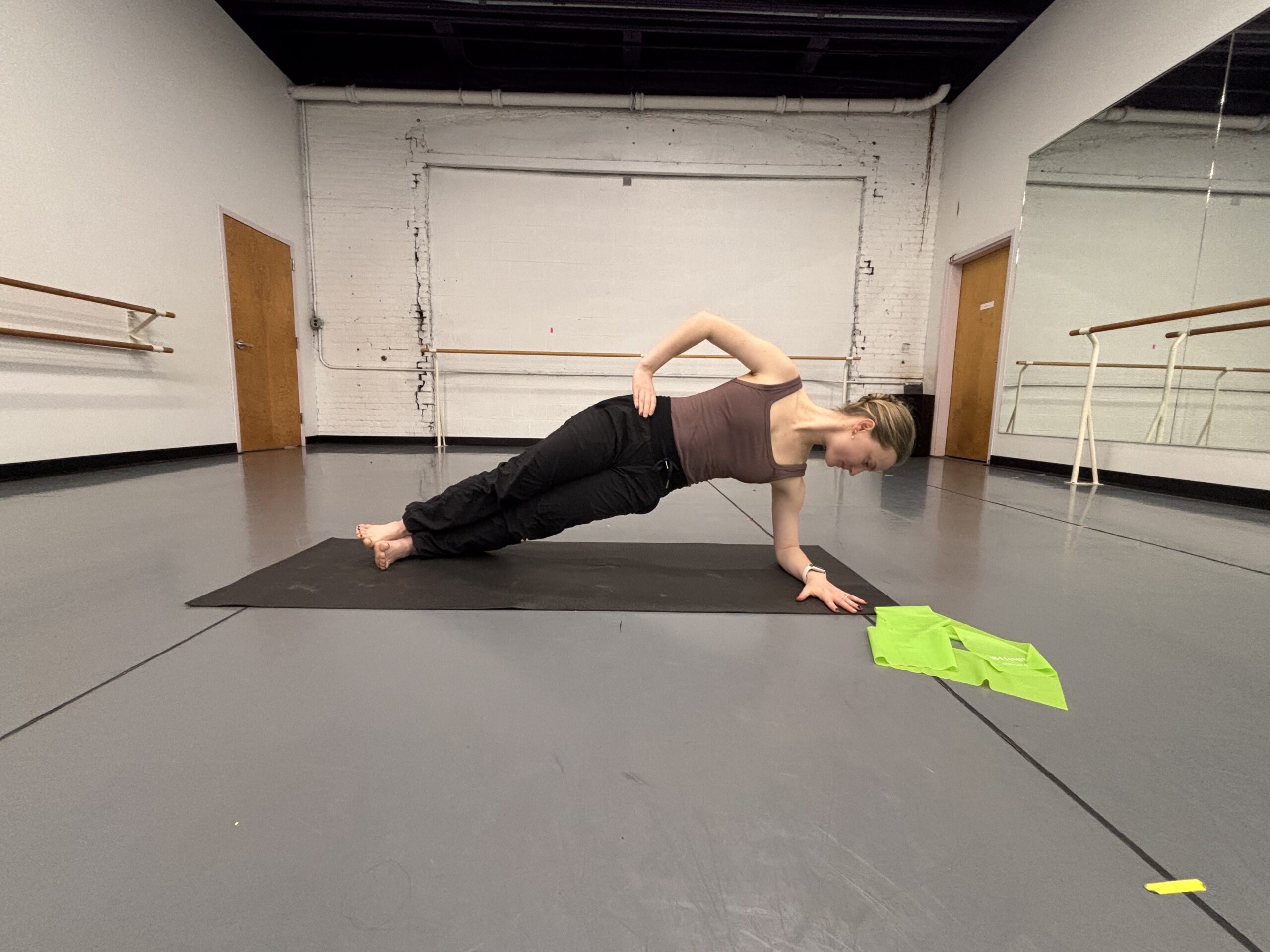
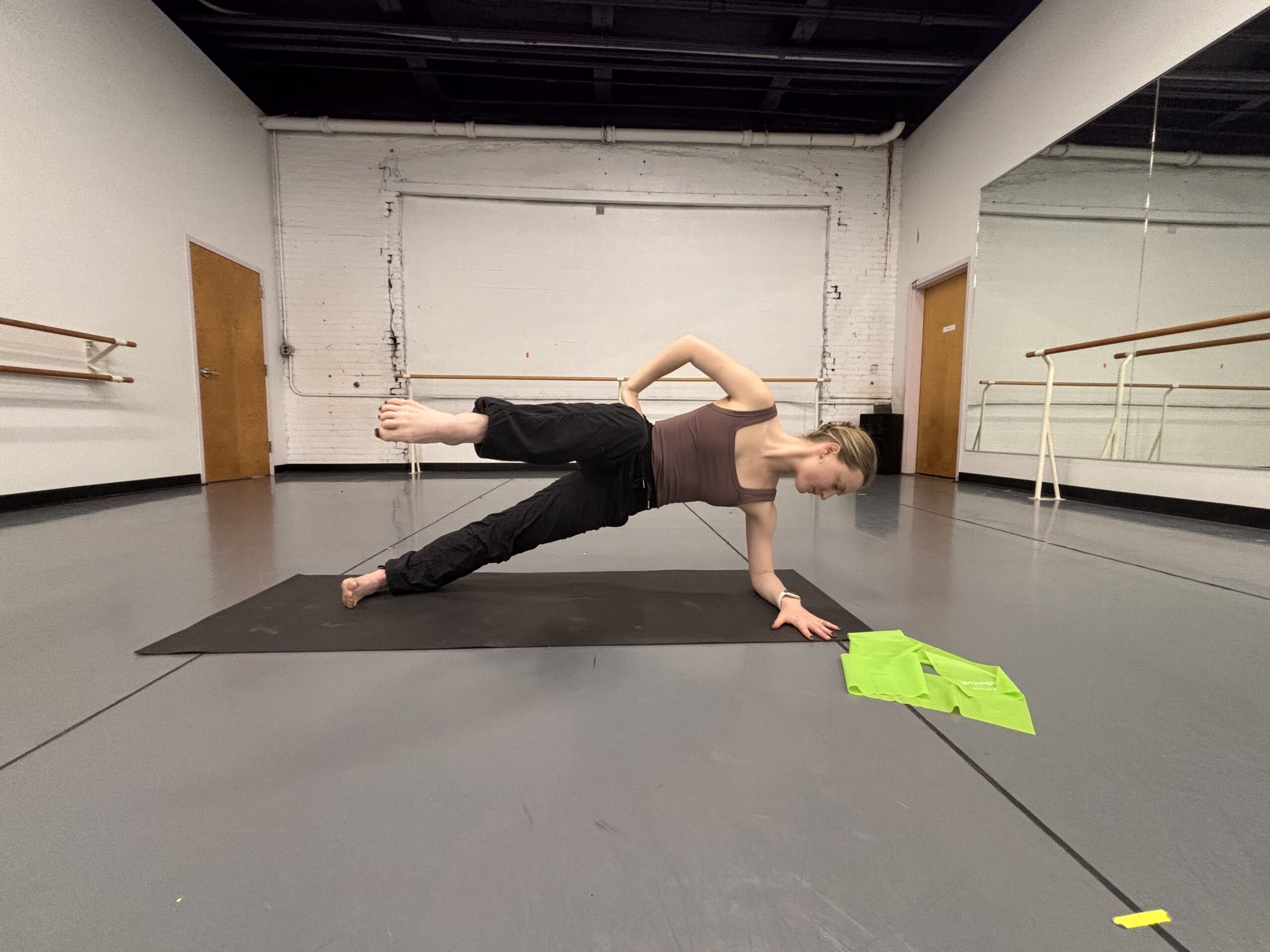
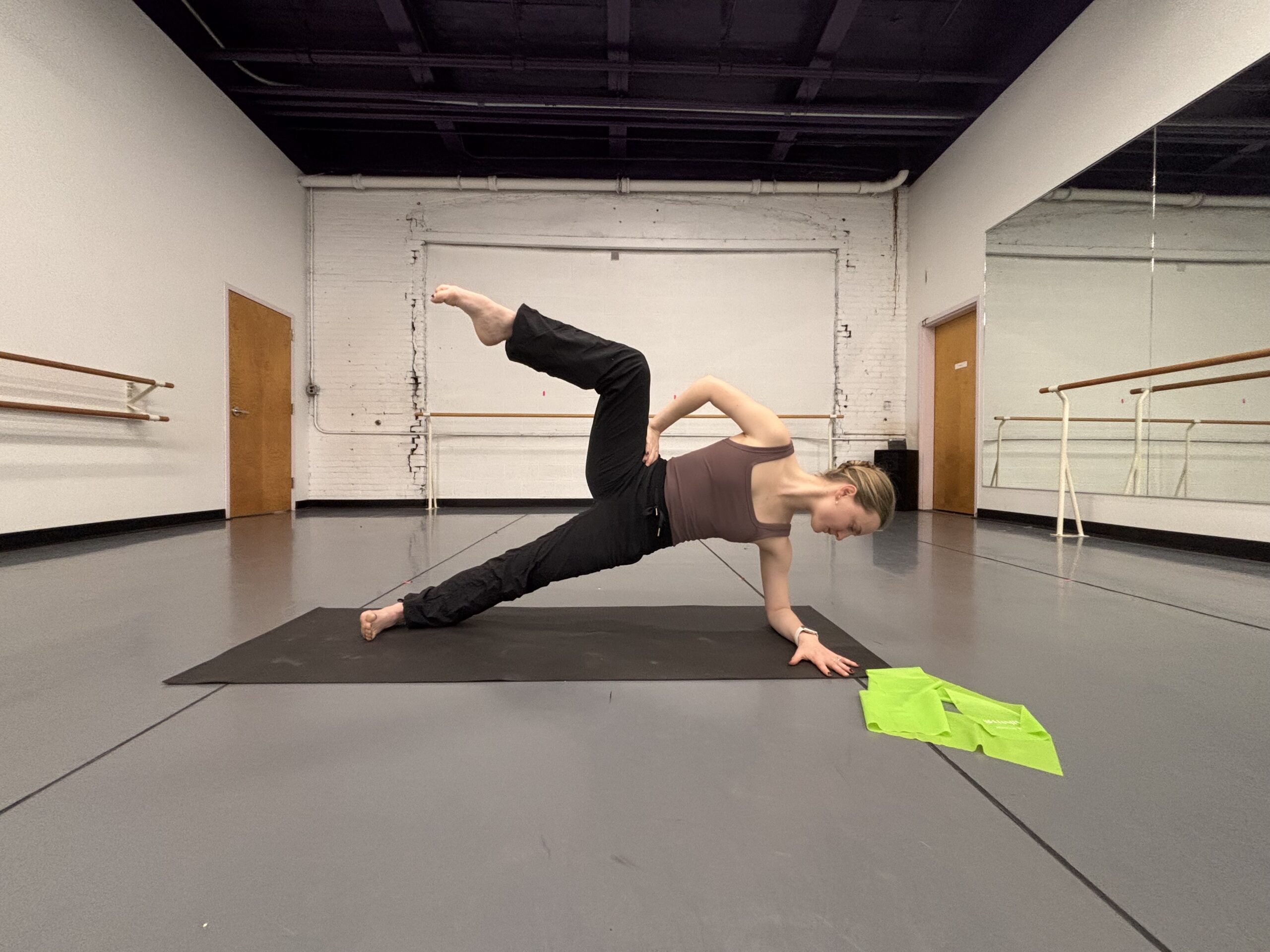
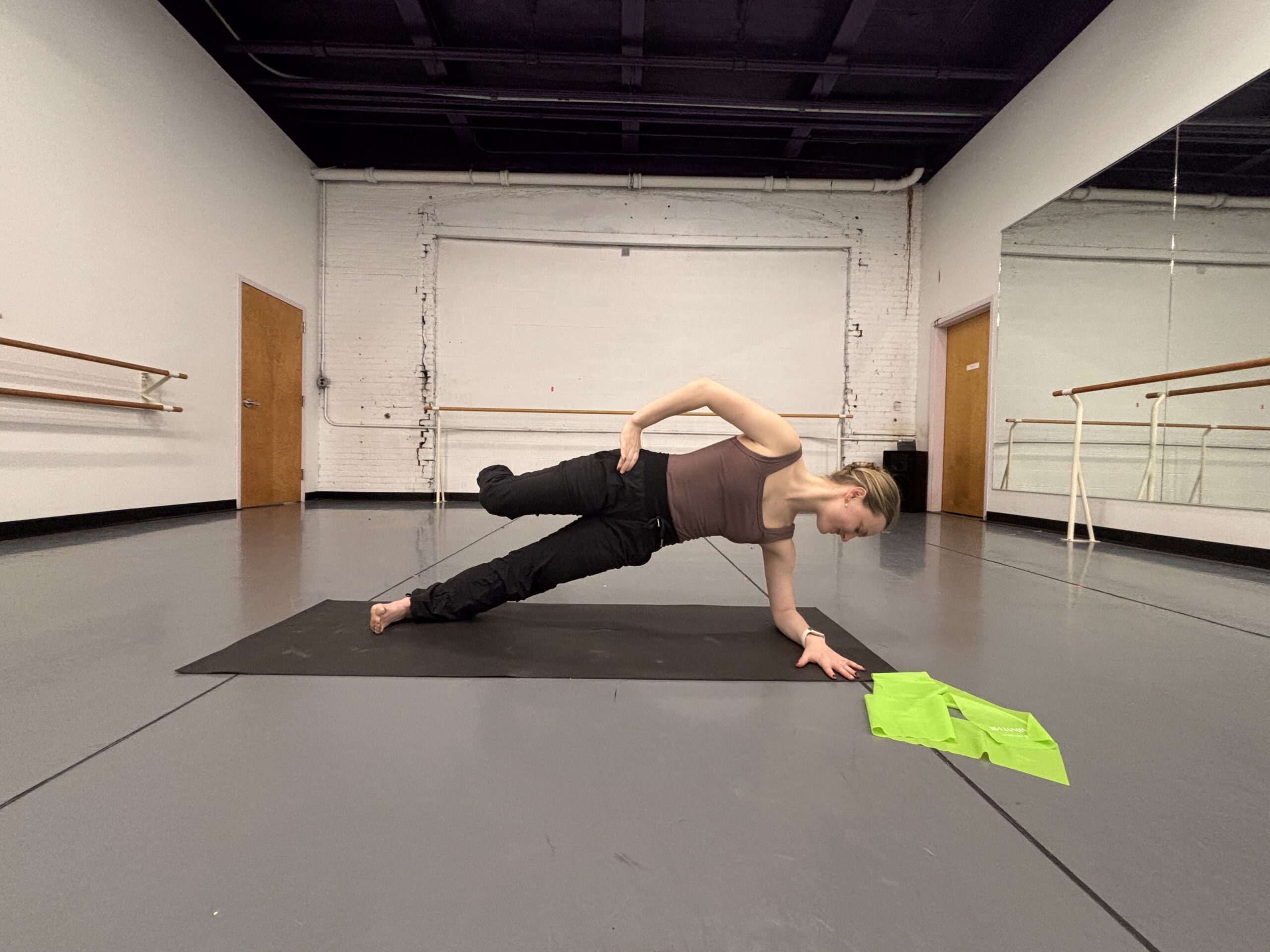
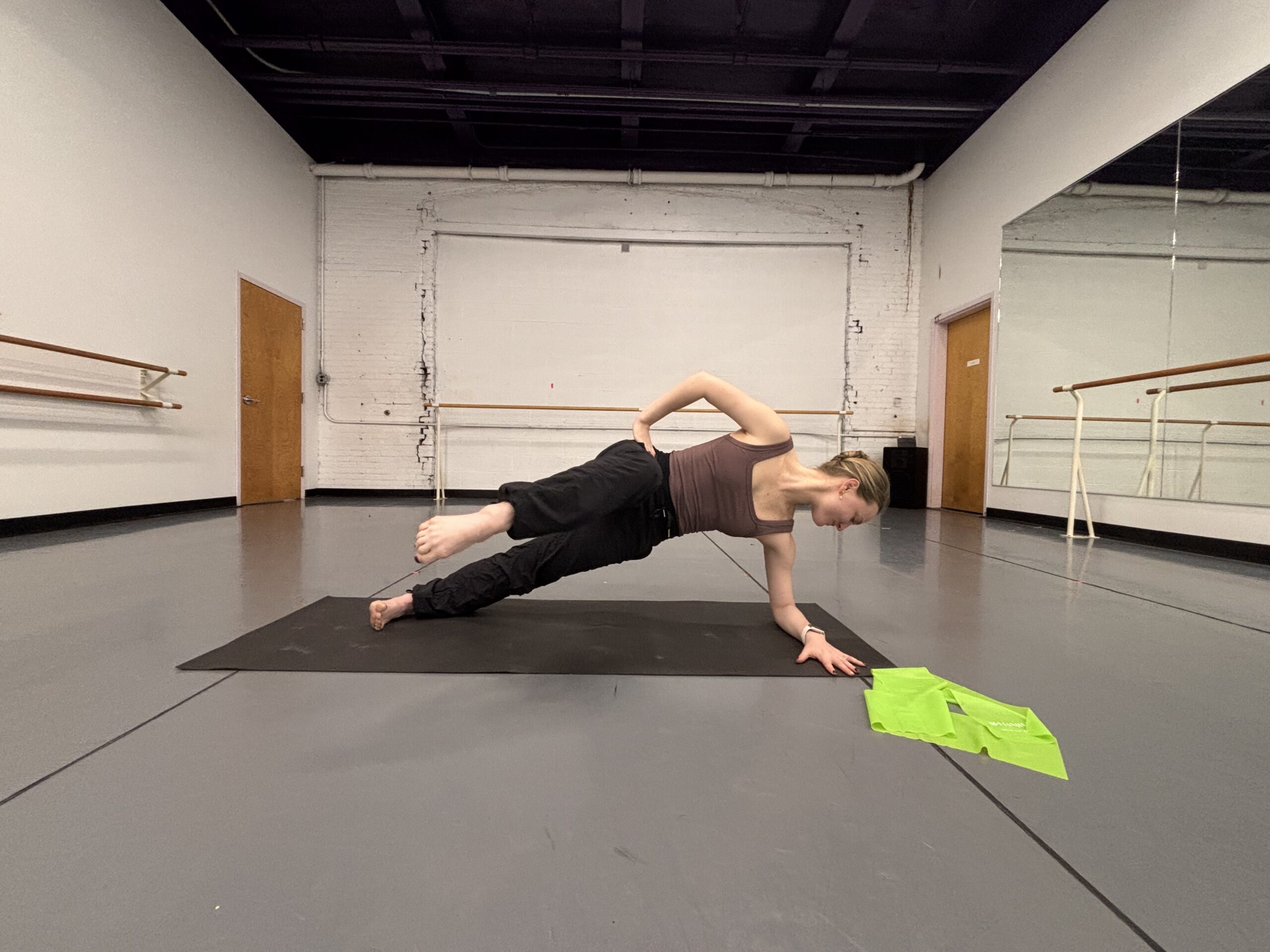
- Start in a side plank, aligning the shoulder over the forearm and stacking the hips and feet.
- Keeping the pelvis still, bring your top knee in towards your belly button, keeping the leg parallel to the floor.
- Circle the top knee out and up until the shin is facing the ceiling, maintaining turnout.
- Circle the knee back behind you, rotating into parallel while keeping the 90-degree shape of the leg. Think “knee down, heel up” while holding on to the low abdominals.
- Drive the knee forward, back to the starting position with the leg in front and parallel to the floor.
- Do 8 complete circles clockwise. Then reverse it, doing 8 counterclockwise (start with bending the knee and sending the leg back in parallel).