In Machinal: A Dance of Defiance, Ballet RI Questions Convention

For its latest production, Ballet RI is reimagining a play inspired by an infamous New York murder case. In 1927, Long Island resident Ruth Snyder conspired with her lover, Henry Judd Gray, in the brutal killing of her husband, Albert Snyder. Ruth Snyder’s execution by electric chair—the first to be photographed—rocked Long Island and beyond. Gray was executed shortly after Snyder, but of the two, the murderess went down in greater infamy, thanks in part to the headline-making photograph—and also because of her sex.
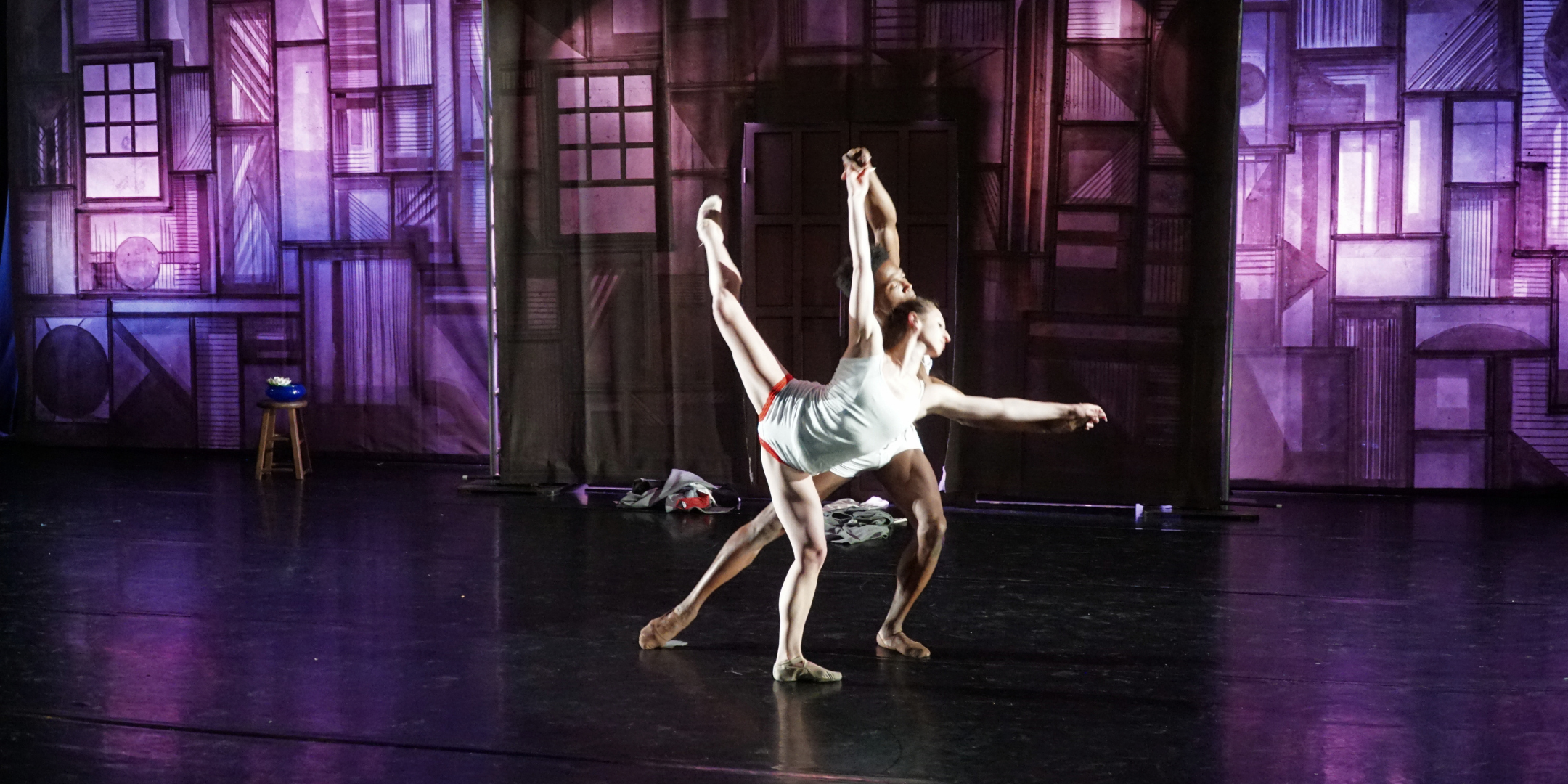
The Snyder case has inspired books and films, as well as the famous 1928 play by Sophie Treadwell, Machinal. Now, Ballet RI is reimagining the playwright’s most famous work. Created in collaboration with the University of Rhode Island and co-adapter Rachel Walshe, Machinal: A Dance of Defiance runs from May 7–10 at Ballet RI’s Black Box Theatre, then at the University of Rhode Island’s J Studio from May 14–17. The production features choreography by Yury Yanowsky, Ballet RI’s artistic curator and resident choreographer.
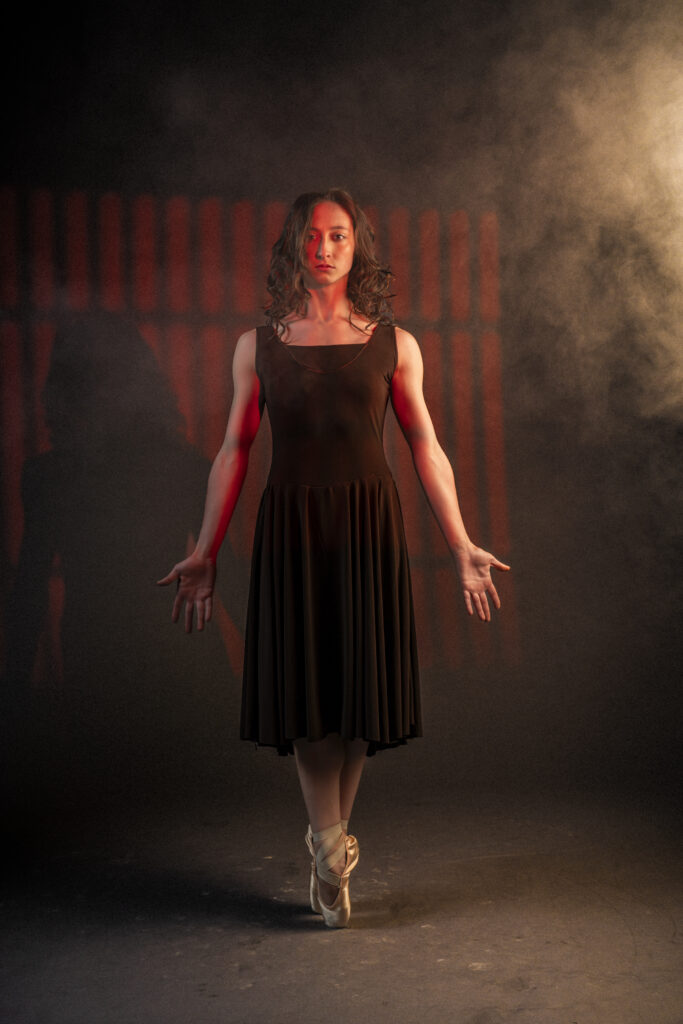
In Treadwell’s Machinal, loosely inspired by the real events, the protagonist is a young stenographer, Helen. When her boss, George H. Jones, proposes, Helen’s mother encourages her to accept; the marriage would provide both women with financial stability. Once wedded, Helen and George have a child, but Helen feels trapped by conventional life. She meets a Mr. Roe and falls in love, spurring a mental break in which she kills her husband. She denies responsibility in court, but when her story falls short, she confesses. The play ends with Helen resisting having her hair shaved before being led to the electric chair.
Yanowsky explains that Walshe, a dramaturg and assistant theater professor at URI, presented him with the idea of a Machinal ballet. “The university had just done the play,” he says, “and they thought it would make a great ballet. The more we started thinking about it, the more we felt the story was very relevant to today.” Machinal’s underlying theme of societal oppression, he says, is visible throughout contemporary life.
Ballet RI dancer Alexandria Troianos has been cast as the Young Woman, as Helen’s character has been named in Yanowsky’s production. Troianos says that the choreography for her role, like that for her fellow office workers, is initially mechanical and precise to represent their machine-like operation under social convention. “I see her as insecure and reserved,” says Troianos. “She’s very unhappy—she wants more for her life.” When she meets her lover and catches a glimpse of hope, her movement becomes more seamless. For Troianos, the most challenging aspect of her role has been understanding the Young Woman’s more sinister motivations so that the emotion she portrays feels (and looks) real. “Human emotion is so elaborate,” she says, “and hers has so many contrasts.”
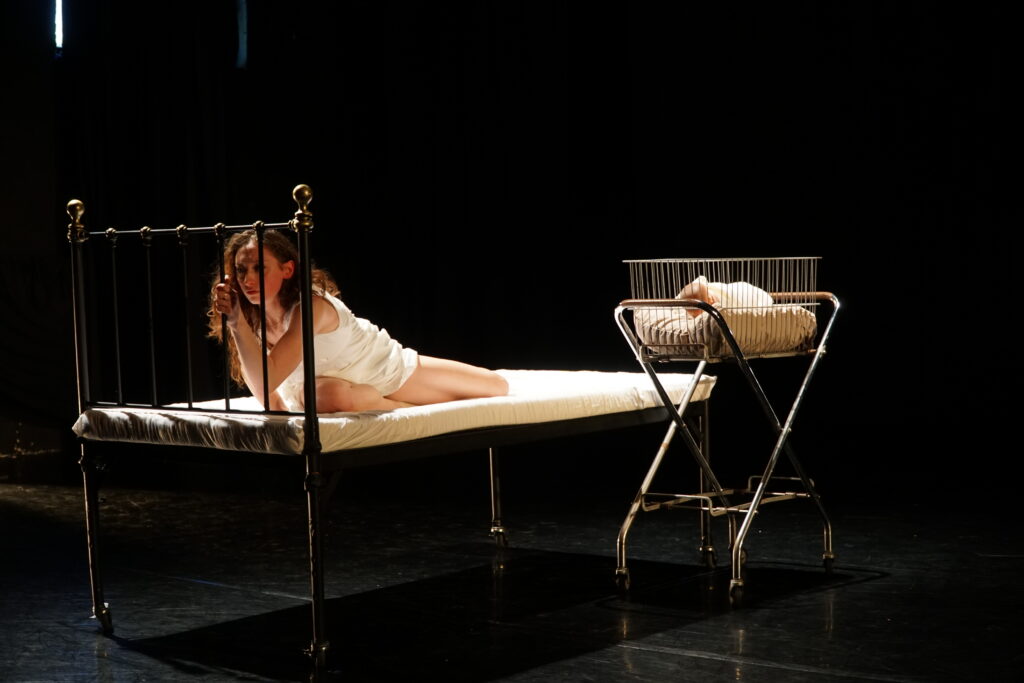
In collaborating with Walshe, Yanowsky decided to make a few changes to the original play, adding a jail-scene prologue and a solo for the Young Woman’s mother. His goal, he says, is to make the production theatrical. The dancers will wear costumes from URI’s play (with some new designs for lead roles) and enter and exit through doors onstage rather than the wings; the minimalist scenic design features a canvas backdrop printed with an image of URI’s wooden Machinal set. Yanowsky has also assembled a cinematic score with music by famous film composers Volker Bertelmann (aka “Hauschka”) and Jóhann Jóhannsson.
In the ballet’s final scene, two large doors upstage open to reveal the electric chair. But when journalists and reporters flood the stage, they look at the audience. This is also how Walshe’s play ends. “I don’t think the execution needs to be seen,” says Yanowsky. “It’s better when you let your imagination take over: What if it was you?”