The Interconnected History of Pilates and Ballet

Today, the presence of a Pilates reformer in a ballet company’s training facilities is commonplace, and many dancers turn to Pilates exercises to cross-train or rehabilitate from injuries. But how did Pilates become a go-to exercise method for ballet dancers? The story can be traced back to the 1930s, when Joseph Pilates met George Balanchine.
The Creation of Pilates
Joseph Pilates was born in Mönchengladbach, Germany, on December 9, 1883. He trained as an acrobat and gymnast, and he and his troupe took their act to England in the early 1910s. When World War I broke out in 1914, they were imprisoned on the Isle of Man as enemy aliens.
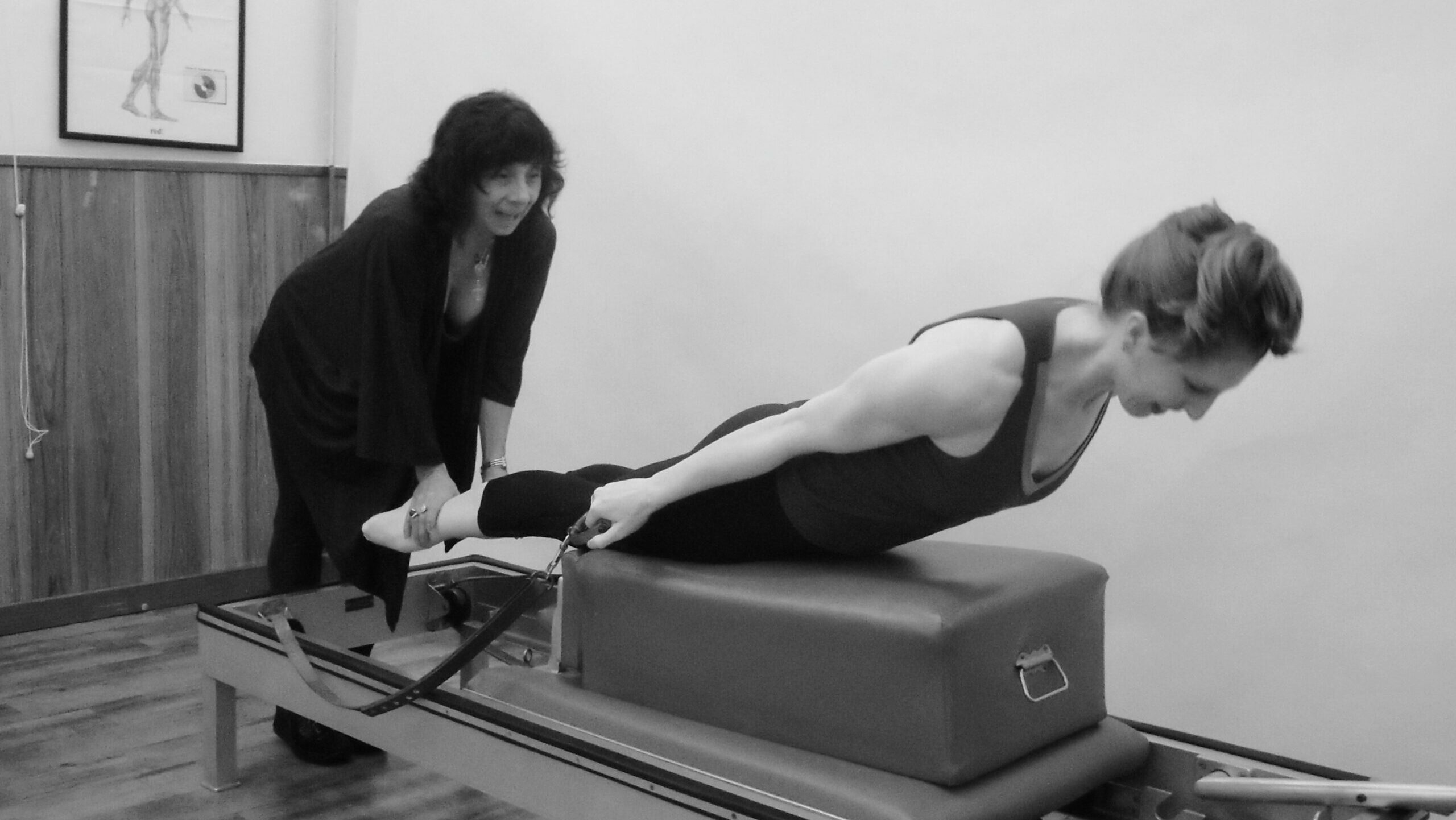
While imprisoned, Pilates began to lead exercise sessions. He helped rehabilitate injured inmates by creating exercises that could be performed while lying in a hospital bed. “Joseph Pilates was this crazy inventor,” says Daria Pace, master instructor trainer and the granddaughter of Romana Kryzanowska, who trained with Pilates and managed his studio after his death. “He made thousands of exercises.” Later in his life, Pilates invented and patented equipment, including the reformer and Pilates chair.
In the mid-1920s, Pilates moved to New York City and continued to refine his exercise method. He and his wife, Clara Zuener, opened a studio in 1929 to see patients. He later met George Balanchine, who was intrigued by his training methods.

Joseph and the Dancers
Balanchine, Martha Graham, Ruth St. Denis, and Ted Shawn all studied with Pilates and sent their injured students to him for rehabilitation. By stabilizing the muscles that ballet did not use as much, and working in a mostly turned-in position, the method (then called “Contrology”) helped dancers improve their control, flexibility, and strength.
For years, Pilates continued to expand his repertoire of exercises. Between 1942 and 1952, he refined and taught his mat exercises at Jacob’s Pillow, the dance retreat Shawn founded in Becket, Massachusetts. Over time, he also invented more apparatuses, like the Cadillac reformer, magic circles, and the barrel.
One student sent to Pilates by Balanchine was Romana Kryzanowska, who was suffering from an injury. “She had this bad ankle, and Joseph completely neglected the ankle, just worked everything else,” says Sari Mejia Santo, grandmaster instructor trainer and Kryzanowska’s daughter. “And she hated it. She wanted to be in ballet class.” But as Pilates helped strengthen the other parts of Kryzanowska’s body, her ankle pain subsided. Kryzanowska, like Balanchine and many dancers who tried Pilates, was converted.
The Legacy
Kryzanowska, who retired from dancing and moved to Peru to start a family, returned to New York City in 1958 and became a teaching assistant to Pilates. When he died in 1967, his wife, Clara, inherited his business and Kryzanowska took over as its manager.
Students who received Pilates’ blessing to teach and open their own studios, like Eve Gentry, Kathleen Stanford Grant, and Ron Fletcher, helped spread the method beyond New York City. Gentry moved to New Mexico in the late 1960s and worked with the Santa Fe Opera. Fletcher, who danced for Martha Graham, moved to California and took on many celebrity clients. Grant brought the method to Dance Theatre of Harlem and eventually became its administrative director. These “elders” in the field made small adjustments to the form but are, along with Kryzanowska, considered the legacy of Pilates himself.
After a failed attempt to trademark the name Pilates in 2000, other brands of Pilates-inspired workouts boomed, including the Lagree Method with its “megaformer,” and newer styles like SolidCore. In 2003, Kryzanowska and her daughter, Sari Mejia Santo, founded Romana Pilates to continue teaching Pilates as close to the original version as possible.
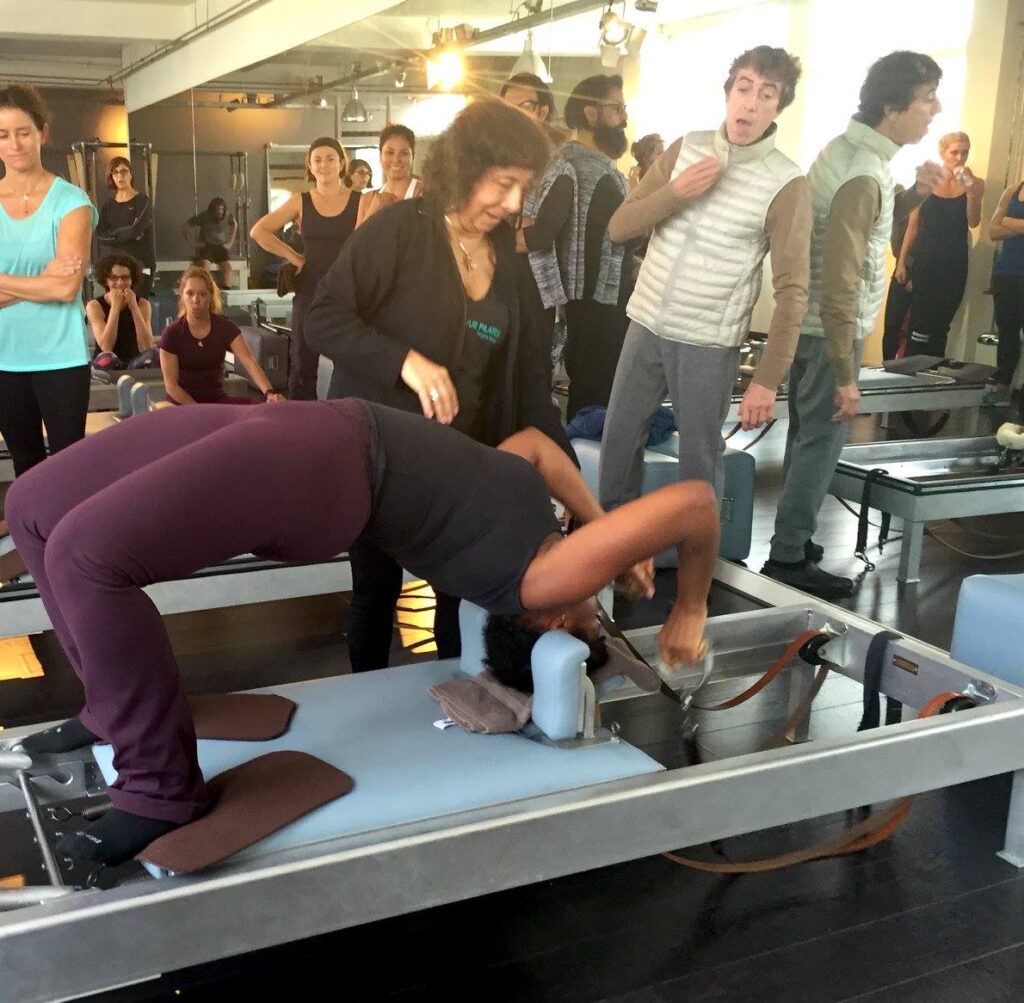
Pilates’ popularity among dancers continues to grow. By the early 1980s, New York City Ballet started bringing a reformer on tour for the dancers to use. Today, many major ballet companies have Pilates equipment in their training facilities, incorporate Pilates into their training for dancers, and keep certified instructors on staff. Dancers use it not just for injury recovery but also for cross-training, core stability, and longevity. Pilates certification is also a popular choice for dancers to supplement their income, or as a post–performance-career choice.
The demands of classical and contemporary dance have only grown since Pilates himself was training students. Dancers have had to find ways to adapt, and Pilates is one way they can hone in on the imbalances in their bodies. “The reason why ballet dancers love Pilates is that it helps enhance their motion,” says Pace. “They can stretch better and balance more. All the little discrepancies they might have can be targeted.”