In Sherlock, Penny Saunders Gives Life to an Iconic Character

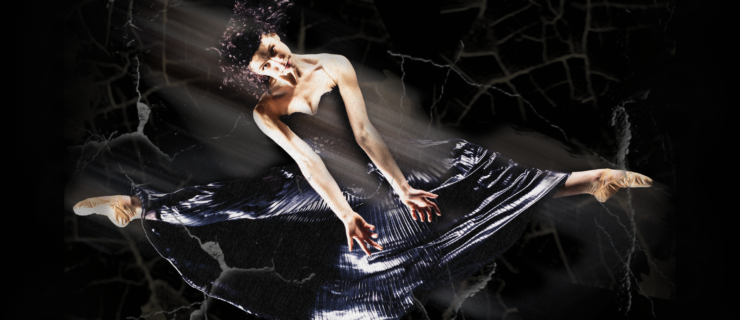
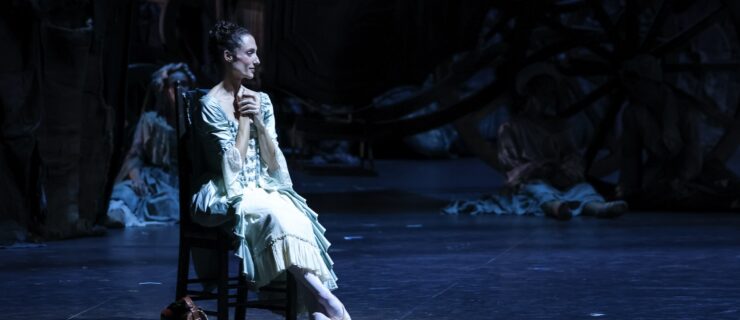
The character Sherlock Holmes, created by Sir Arthur Conan Doyle in 1887, appeared in 56 of the author’s short stories and four of his novels. Since then, the British detective has inspired over hundreds of TV and film adaptations, at least five major radio shows, a play, and a musical. Now, Holmes is the subject of a new ballet, Sherlock, choreographed by Penny Saunders and co-produced by Ballet Idaho, Grand Rapids Ballet, and Nashville Ballet. Opening first in Boise October 10–12, Sherlock will then run October 24–26 in Grand Rapids, then in Nashville May 1–3.
Holmes’ enduring relevancy struck Saunders, who is also GRB’s resident choreographer. “He continues to allure us today, almost 140 years later,” she says. The idea for Sherlock was born from her murder-mystery ballet, Lady in the Red Hat, created for Ballet Idaho in 2023. “I fell in love with the genre,” she says.

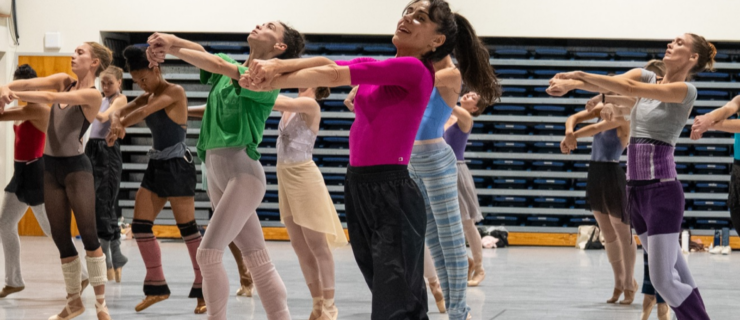
After getting all three companies on board, Saunders brought a select group of dancers from GRB and Ballet Idaho together with Nashville Ballet rehearsal director Kate Linsley for a two-week residency in Boise. While not a common approach for a co-production, the residency was efficient—Saunders generated over half of the material for the 50-minute ballet there. She then spent the following weeks working with each company to teach the material and finish the piece. (She’ll return to Nashville once more ahead of its May program.)
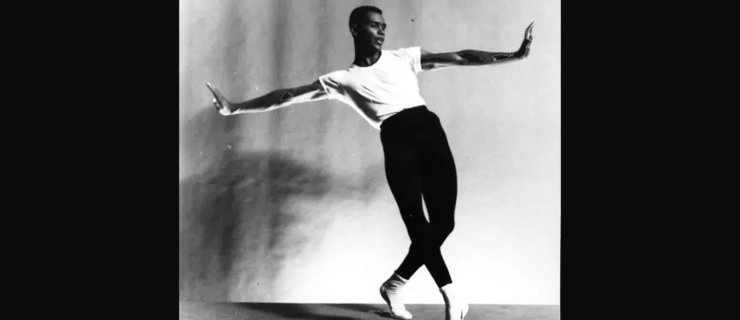
Ballet Idaho principal Graham Gobeille, who will dance the role of Sherlock in Boise, appreciates the unique approach: “It felt like everybody was involved from the beginning.” He and GRB’s Nigel Tau, who will perform the lead in Grand Rapids, enjoyed comparing their artistic approaches in person.
For the ballet’s look, Saunders took inspiration from the 1954 TV series “Sherlock Holmes,” which was set in early-1900s London. To incorporate more female characters, she used the backdrop of one episode in particular, “The Case of the Careless Suffragette,” to introduce Holmes and his right-hand man, Dr. John H. Watson, who in Saunders’ story meets his wife at a suffragette protest. Saunders also chose to include Irene Adler, the only person in the Holmes canon who bests the detective. “I love that [James] Moriarty, Sherlock’s archnemesis, isn’t the one who outsmarts him,” she says. “Irene was the only one to throw him off his game.”
Choreographically, Saunders describes the ballet’s movement language as diverse, with contemporary and dance-theater elements, and some parts on pointe. “There’s a lot of physical comedy,” she says, explaining that she wanted to touch on a wide range of emotions. Tau has enjoyed leaning into the work’s comedic element. “This is one of the first pieces where I’ve gotten to be really silly,” he says.
One of Gobeille’s favorite moments is a pas de deux between Holmes and Watson. “Watson really understands Holmes,” he says. “It’s a good reminder for men, and everyone in the audience, that it’s okay to ask for help and important to have that kind of tight friendship.”

Saunders also created the ballet’s score, taking inspiration from the radio show The New Adventures of Sherlock Holmes (1939–50). Her soundscape weaves together bits of the show’s dialogue and music, supplementing with selections from some of Holmes’ supposed favorite composers, like Mendelssohn, Tchaikovsky, and Sarasate. Finally, to make the piece feel current, she added some selections from the soundtrack of Netflix’s popular 2020 film, Enola Holmes. “That movie was inspired by a graphic novel,” says Saunders. “The story is told through vignettes. I wanted Sherlock to have that same kind of pace.”
She also dug into the complexity of Holmes’ character through casting. In addition to the “main Sherlock,” she says, which Gobeille and Tau will perform, she cast seven dancers as various iterations of Holmes, representing his evolution over the years. Those dancers are onstage often but appear most frequently when several crimes are happening at once (in line with a graphic novel’s cinematic style and rapid pacing). “It allows me to make Sherlock seem extraordinary,” says Saunders. “He accomplishes more than seems possible.”
For Gobeille, Sherlock’s complexity makes the character relatable. “The way that Penny showed all sides of him—represented by more than one dancer—makes him feel accessible. It’s like everybody can be Sherlock.”